 Μake us preferred on Google
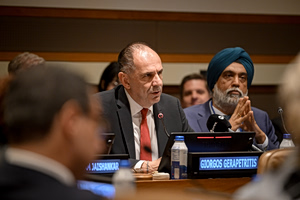
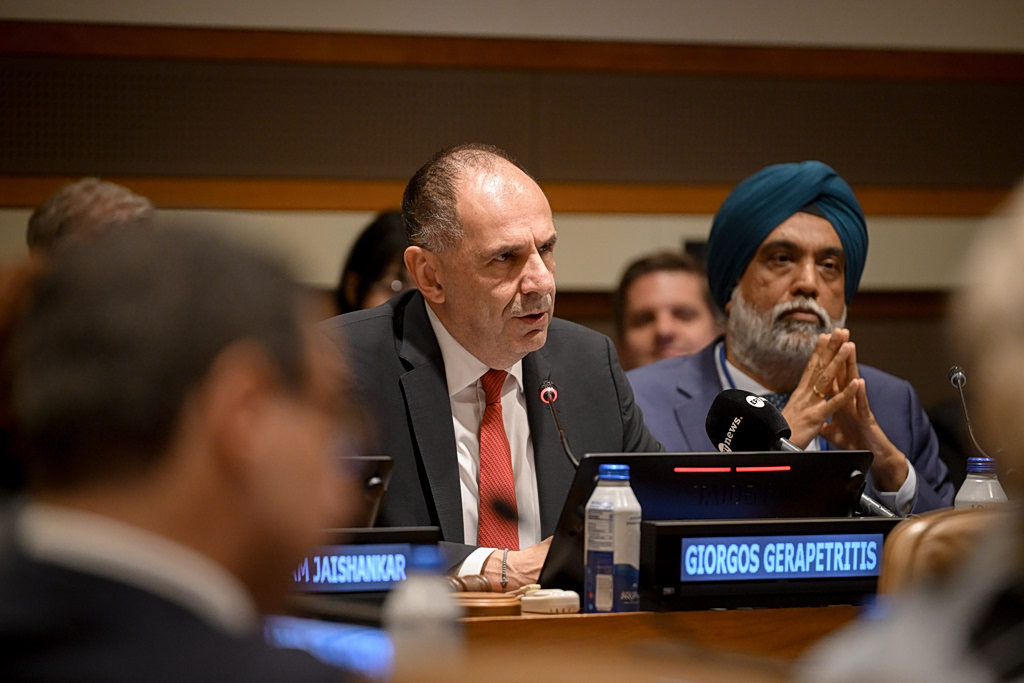
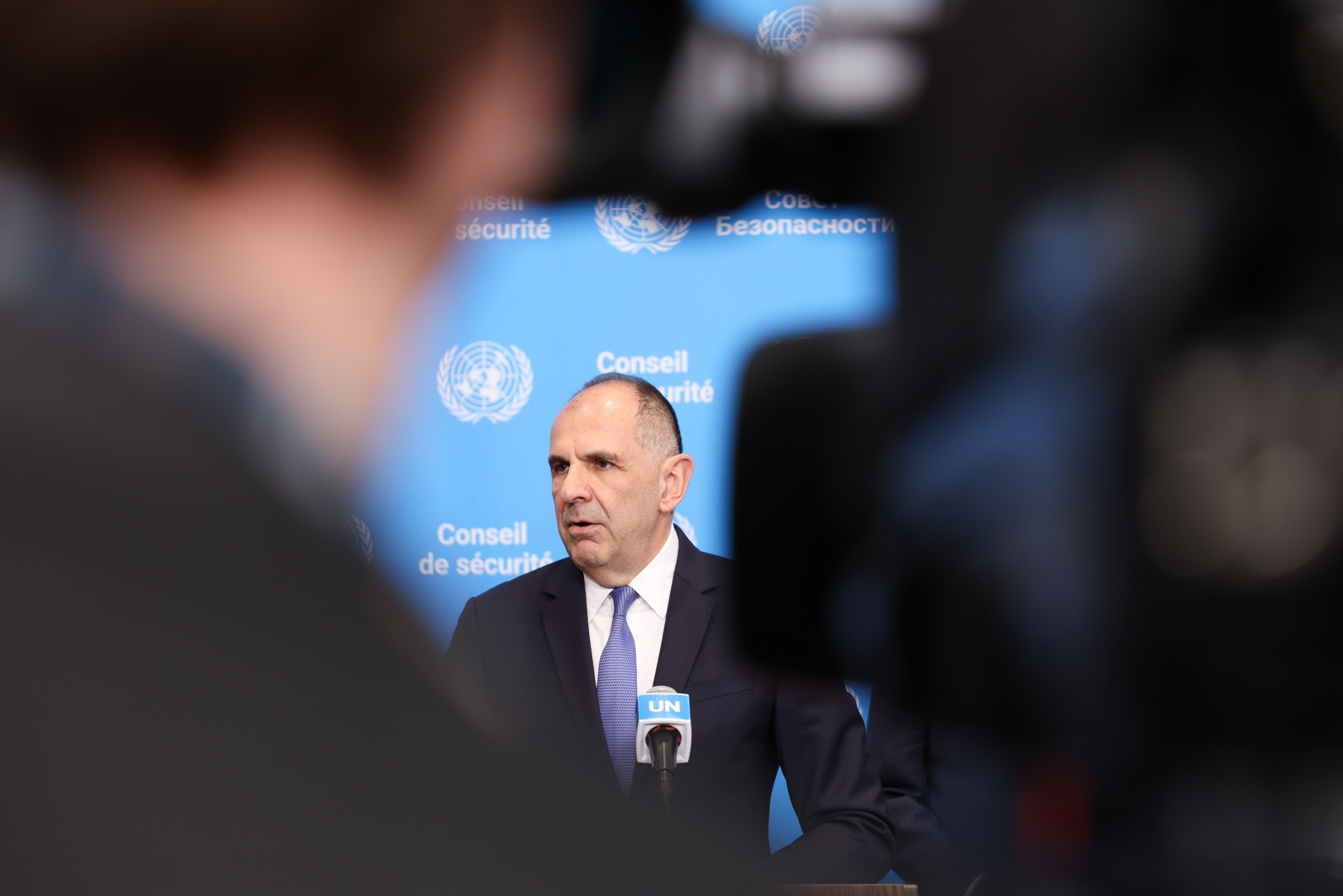
Greek Foreign Minister George Gerapetritis called for the protection of children to be placed at the center of conflict prevention, peacebuilding and recovery, warning that digital technologies are creating new ways to recruit and exploit children in armed conflicts.
Chairing a United Nations Security Council meeting on children and armed conflict on Monday, October 26, Gerapetritis urged governments to demonstrate sustained political commitment, make targeted investments and strengthen cooperation to protect children and prevent violations of their rights.
“Let us ensure that the next 30 years are remembered not for the promises we made, but for the violations we prevented and the children we protected,” he said.
Thirty years after Graça Machel’s landmark report on the impact of armed conflict on children, Gerapetritis acknowledged progress in establishing international protection mechanisms. These include the Office of the Special Representative of the Secretary-General for Children and Armed Conflict, the Monitoring and Reporting Mechanism, and the Security Council’s related Working Group.
Action plans agreed with parties to conflicts have also helped remove thousands of children from conflict zones and prevent further violations, he said.
However, Gerapetritis warned that these achievements stand in stark contrast to the unprecedented scale and complexity of abuses against children in recent years. The UN secretary-general’s latest annual report recorded the highest number of children affected by verified violations since the monitoring mandate was established.
Digital technologies pose new risks
Gerapetritis placed particular emphasis on the dangers children face online, warning that their familiarity with technology can be exploited by those seeking to recruit or abuse them.
“Children are recruited and exploited through smartphones. Their natural familiarity with technology is being turned into a weapon against them,” he said.
At the same time, he argued that technology can help protect children through education, digital literacy and skills that enable them to identify online threats. He called for a joint effort to bridge the digital divide and strengthen countries’ ability to protect children in digital environments while allowing them to benefit from technological advances.
Gerapetritis also highlighted a resolution proposed by Greece and unanimously adopted by the Security Council days earlier, with 93 UN member states co-sponsoring it. The measure preserves the existing framework for protecting children while addressing the effects of digital technologies in armed conflicts, including the risks they create and ways they can be used to benefit children.
The foreign minister called for closer cooperation among governments, the United Nations, regional organizations and civil society. He also urged countries to incorporate child protection systematically into conflict prevention, mediation, peace processes and recovery strategies.
Children and young people should have a voice in shaping policies, he said, with appropriate safeguards to protect their safety, dignity and well-being.
Gerapetritis stressed that action plans require clear responsibilities, measurable steps and sustained support for the release and reintegration of children. He also called for the monitoring mechanism to remain operational, stronger partnerships with local organizations, improved humanitarian access and adequate, predictable funding, particularly for work on the ground.
“Accountability and prevention must be supported by consistent political commitment and effective national justice mechanisms,” he said.
Concluding his remarks, Gerapetritis relayed a message from a child involved in the “Prove It Matters” campaign, which Greece supports: “A protected child is a safe future.”
UN verifies more than 38,000 violations in 2025
Vanessa Frazier, the UN secretary-general’s special representative for children and armed conflict, told the Security Council that the United Nations had verified 38,558 grave violations against 24,174 children in 2025.
“This is the highest number of children affected since the mandate was established,” she said.
For the first time since the mandate began, government forces were responsible for the majority of verified grave violations, Frazier added, describing the development as “deeply concerning.” She said the Monitoring and Reporting Mechanism provides a credible, UN-verified account of serious violations.
The highest numbers of verified violations were recorded in Israel and the occupied Palestinian territories, with 12,445, followed by the Democratic Republic of the Congo with 4,114, Nigeria with 2,560, Myanmar with 2,203 and Somalia with 2,195.
Catherine Russell, executive director of UNICEF, described a “deeply troubling paradox”: although the international community has established a strong framework to protect children, conditions for those living in conflict zones are becoming increasingly dangerous.
Since 2005, the United Nations has verified more than 430,000 grave violations against children. Russell cautioned that the actual toll is likely much higher because the figure includes only cases the UN has been able to verify.
More than 40 action plans have been signed with parties to conflicts, and over 220,000 children have been released from armed forces and armed groups, she said.
Nevertheless, humanitarian access remains a major obstacle. More than 8,000 verified incidents involving the denial of humanitarian access were recorded in 2025 alone. Russell also said explosive weapons accounted for more than 70% of verified child deaths and injuries that year.
Welcoming the adoption of Security Council Resolution 2832 on the impact of digital technologies on violations against children in armed conflict, Russell stressed that technological progress must strengthen child protection rather than expose children to new forms of harm.
“Humanitarian aid saves lives,” she said, adding that protection mechanisms can prevent abuses and support survivors. Neither, however, can replace political solutions to conflicts.