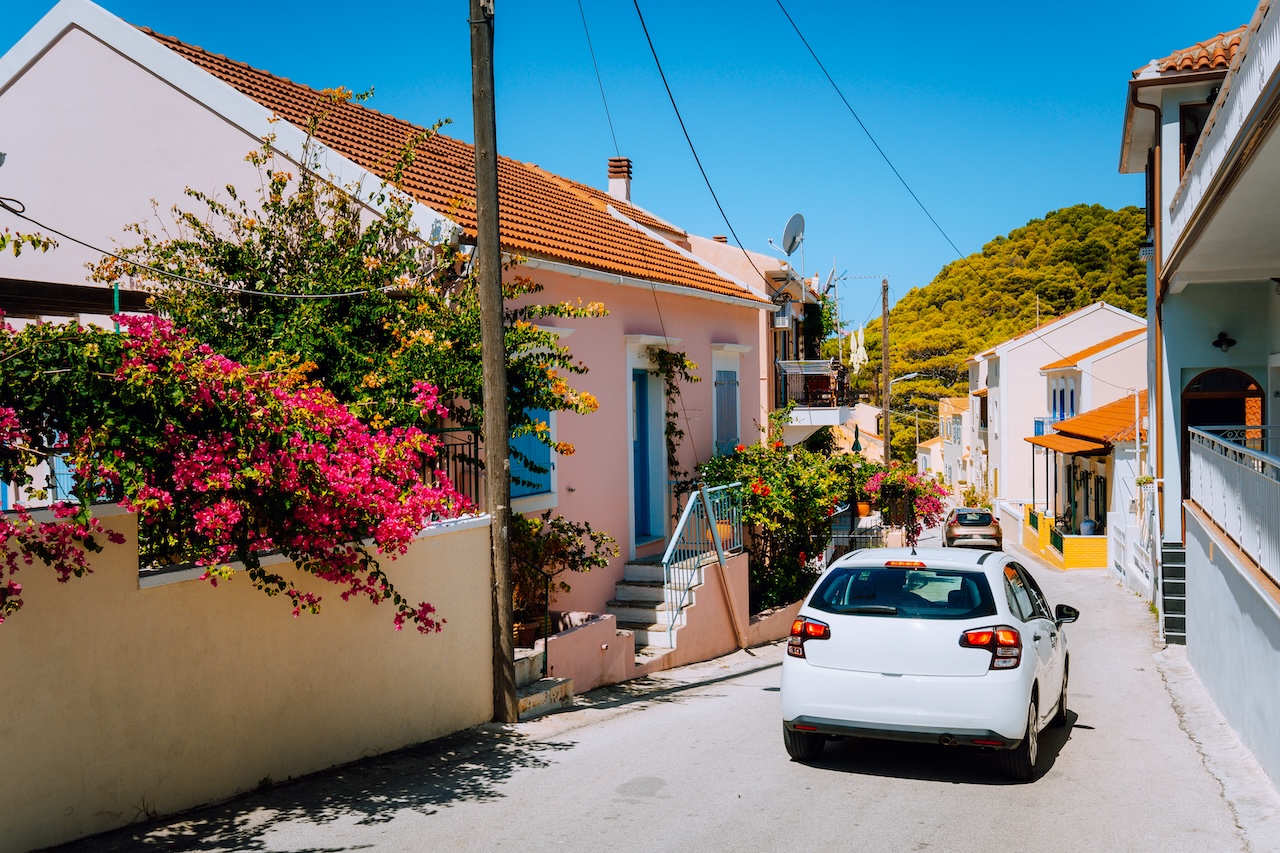
 Μake us preferred on Google
 One of the main concerns visitors have when coming to Greece is whether driving will be easy. Let’s put it this way: if you’re planning to visit the mainland, for the most part, yes, driving is straightforward. If you’re looking to hit the road on the islands or explore small mountain villages, things change. And if, for some reason, you want to drive in Athens, you may find it challenging.
The most honest answer is that driving in Greece isn’t necessarily difficult, but it does require some adjustments.
Welcome to “All About Greece”, part of “TO BHMA International Edition Travels Greece With You” series. Here, we answer your questions and introduce you to this wonderful country we call home and you call vacation!
Driving in Athens

Too close for comfort: cars, motorcycles, and public transportation sharing the road in Athens.
Like all big cities, Athens has its own characteristic driving culture, which can be intimidating for a first-time visitor. You should, of course, expect heavy traffic and parking difficulties. But what makes driving in Athens particularly hard is having to pay attention to scooters, bikes and motorcycles, which rarely stay within lanes and can pop up out of nowhere. You will also need to watch out for pedestrians, who usually do not follow signals and may decide to just cross the street from any point. Add to this buses and trolleys that will stop frequently or hog up a lane and you’ve got the pretty picture.
So, if you’re staying in Athens for a short time, it may be easier to just use public transportation or taxis rather than rent a car.
Driving Outside Athens
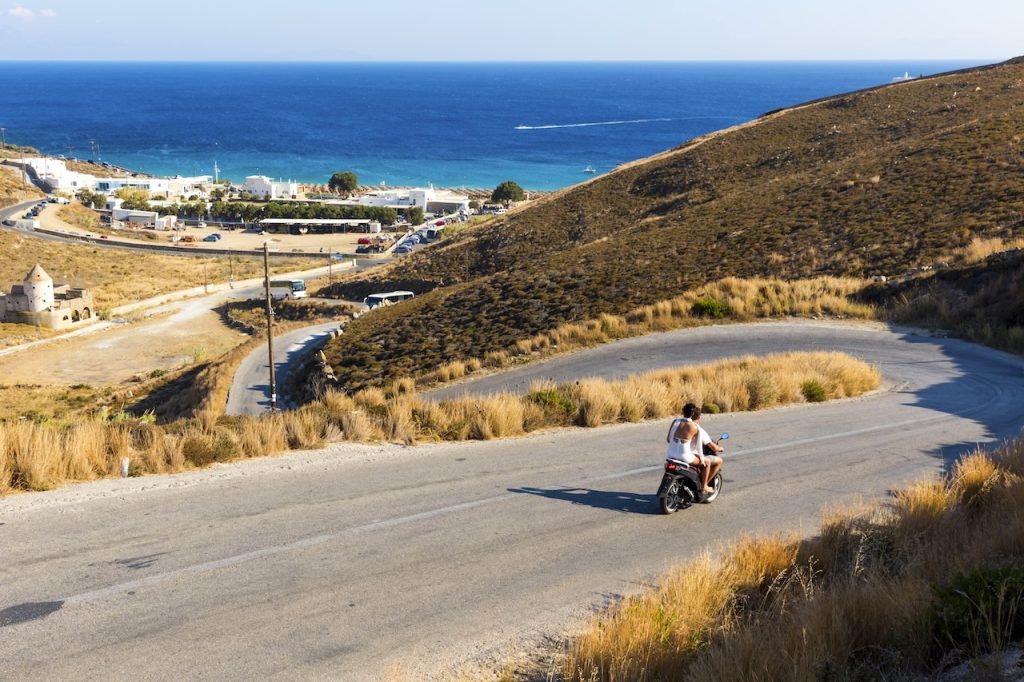
Driving on the Greek islands in the summer means coming across many tourists on scooter rentals.
Things change significantly once you leave Athens and head into mainland Greece. Driving is generally more relaxed. Highways and main roads are easy to navigate, with toll stations and rest stops along the way.
Veering off the highway and into towns is usually easy, but rural and mountain roads require more care. They can become narrow and winding, with limited lighting, sharp turns, and steep drops. Other challenges include potholes, animals, pedestrians, unexpected obstacles on smaller roads and unclear signage.
So, slow down and have in mind that some locals tend to drive fast and aggressively often overtaking you on the craziest part of the road. Don’t let local motorists pressure you into driving faster than you’re comfortable with. Remain calm, follow road rules, and maintain a safe distance from the vehicle ahead. Locals may know the roads extremely well and can drive surprisingly fast so let faster drivers pass when possible.
Driving on the Greek Islands
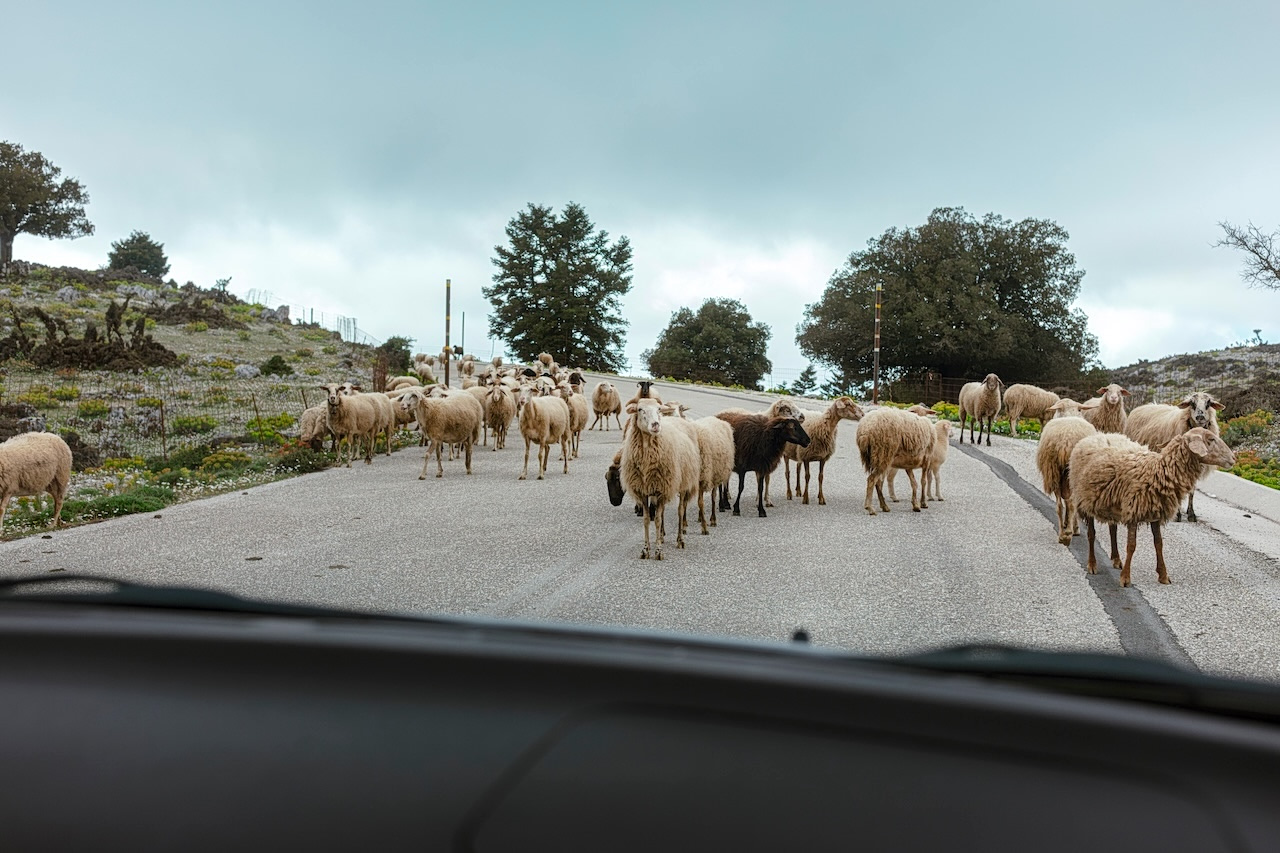
In some places in Greece you’ll be making way for the local sheep. Keep cool!
For the most part, the largest Greek islands have good roads. Crete, for example, has a main highway that makes it easy to travel from the east to the west side of the island between Heraklion, Rethymno, and Chania. However, the roads crossing the island from north to south are a very different experience.
I should stress that most Greek islands have narrow, steep, and winding roads that require extra caution. Some smaller roads are barely wide enough for two cars to pass, while others may only fit one vehicle at a time. Rural roads are also often poorly lit, making signs and turns difficult to spot at night.
And then there is the notorious summer traffic. On these same narrow island roads, expect to encounter happy tourists on mopeds, buggies, ATVs, plus the island bus service! So extra caution is needed.
Should You Rent a Car in Greece?

Drivers trying to get to Balos beach on Crete.
Overall, driving in Greece is manageable, particularly for the more confident drivers who want the freedom to explore at their own pace. Undeniably, a car is extremely useful for exploring the mainland and larger islands, especially for families. It’s also worthwhile if you want to visit beaches, villages, archaeological sites, or more remote areas that aren’t covered by public transportation.
But I should note that you don’t really need a car to enjoy the Greek islands. You can get around perfectly well using local buses, taxis, and other transportation services. And yes, there are also car-free Greek islands which you may find to your liking.
When it comes to Athens, renting a car may be more trouble than it’s worth, particularly if you’re only staying for a few days. Traffic, parking, and navigating the city can easily outweigh the convenience.
Driving Rules Foreigners Should Know

And of course, on popular Greek islands, you’ll definitely come across the ATV crowd.
– In Greece, we drive on the right-hand side of the road.
– Seat belts are required by law.
– Speed limits vary depending on the type of road and location, so always follow signs.
– Follow the signs and road rules. Don’t assume that local drivers will always do the same.
– Make sure your driving license is valid in Greece. It’s a better idea to get an International Driving Permit before your trip. Some rental companies may require one, even where your home-country license is legally recognized.
In short: Driving in Greece isn’t something most visitors need to be afraid of. Just be prepared for a different driving culture, take extra care on mountain and island roads, and don’t feel pressured to drive like the locals.
*Send your questions to Maria Paravantes at mparavantes@tovima.com