
 Μake us preferred on Google
 Denmark heads to the polls on March 24 in a parliamentary election shaped by both domestic concerns and geopolitical tensions linked to Donald Trump’s past push to take control of Greenland.
Prime Minister Mette Frederiksen is seeking a third term, despite projections that her Social Democrats could record their weakest result in over a century. Even so, she remains the frontrunner to stay in power, with analysts pointing to a fragmented opposition and stable support within her bloc.
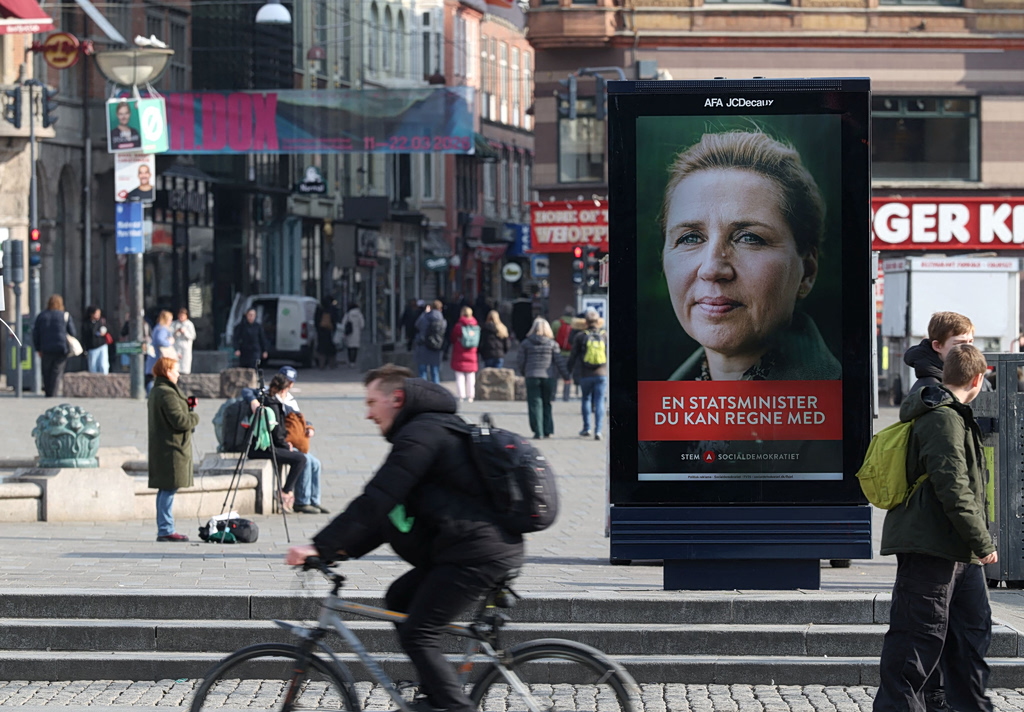
People pass an election advertisement for Mette Frederiksen, Denmark’s Prime Minister and leader of the Social Democrats party ahead of parliamentary elections in Copenhagen, Denmark, March 23, 2026. REUTERS/Leonhard Foeger
Trump’s repeated calls to annex Greenland — a semi-autonomous Danish territory — injected an unusual geopolitical dimension into the campaign. The rhetoric briefly boosted Frederiksen’s standing in opinion polls, particularly when the U.S. president did not rule out military force. However, the issue has since receded, with voters turning their focus back to everyday concerns.
Cost of living pressures, inequality, and a proposed wealth tax have dominated the campaign in recent weeks. Frederiksen has pitched the tax as a way to fund education and welfare, signaling a shift to the left, while critics have dismissed the proposal as divisive. Immigration policy has also remained a point of debate.
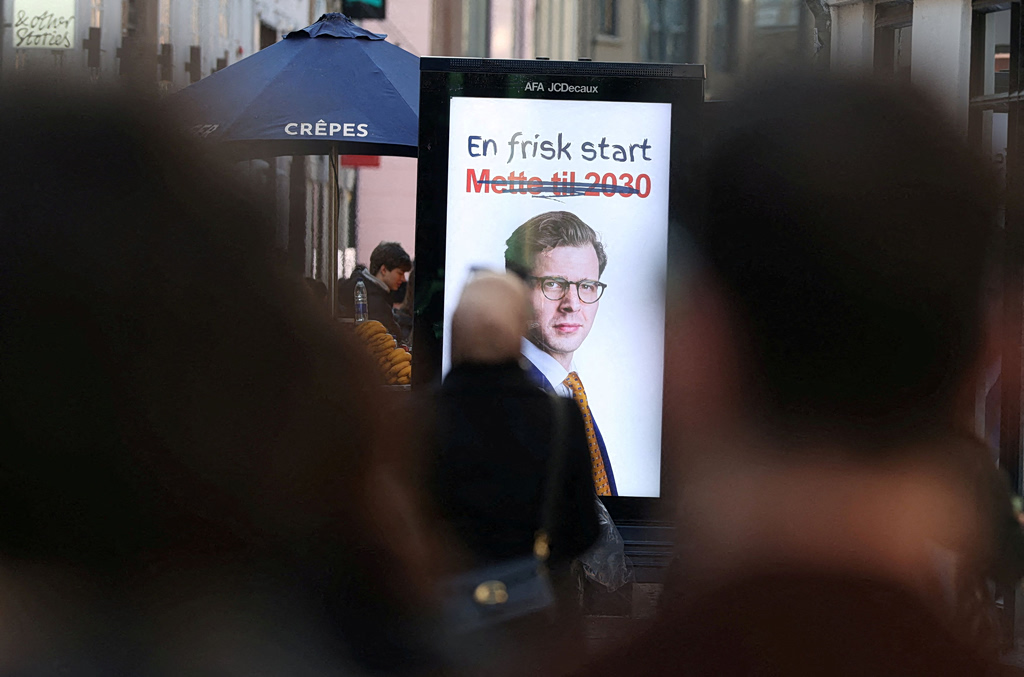
People pass an election advertisement for Alex Vanopslagh, leader of the Liberal Alliance, ahaed of parliamentary elections in Copenhagen, Denmark, March 22, 2026. REUTERS/Leonhard Foeger
Polls suggest neither the left-leaning nor right-leaning bloc will secure a majority in the 179-seat parliament, known as the Folketing. Frederiksen’s coalition is projected to fall short of the 90 seats needed, pointing to a closely contested outcome.
Despite this, political analysts expect her to remain in office, as the left bloc’s support is seen as more cohesive than its right-wing counterpart. The final result could hinge on centrist parties, particularly those led by former Prime Minister Lars Lokke Rasmussen, who may play a decisive role in post-election negotiations.
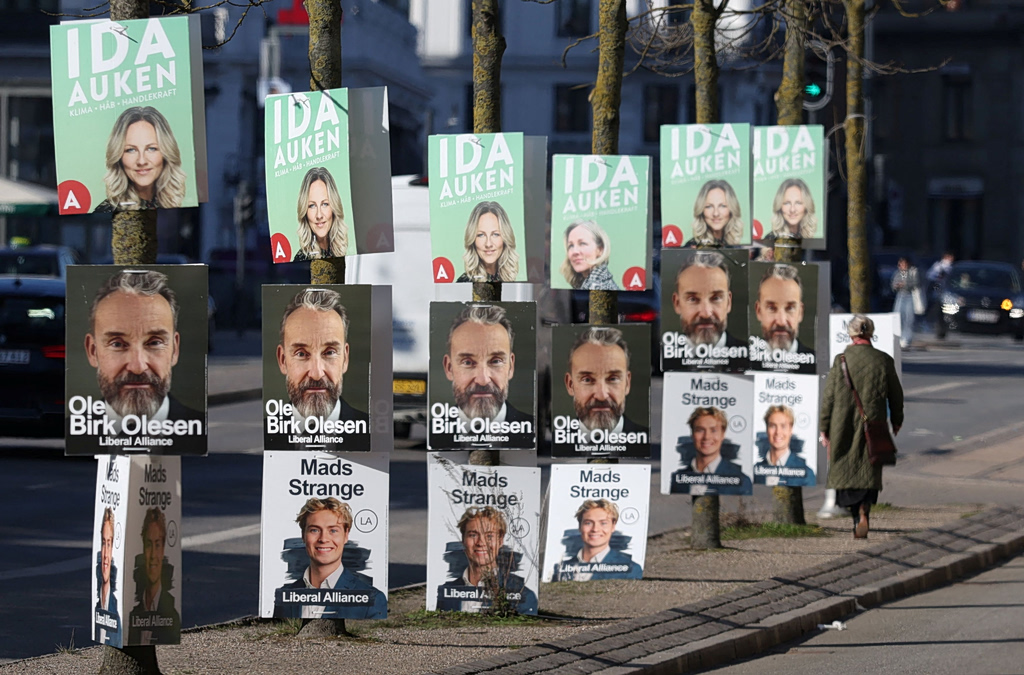
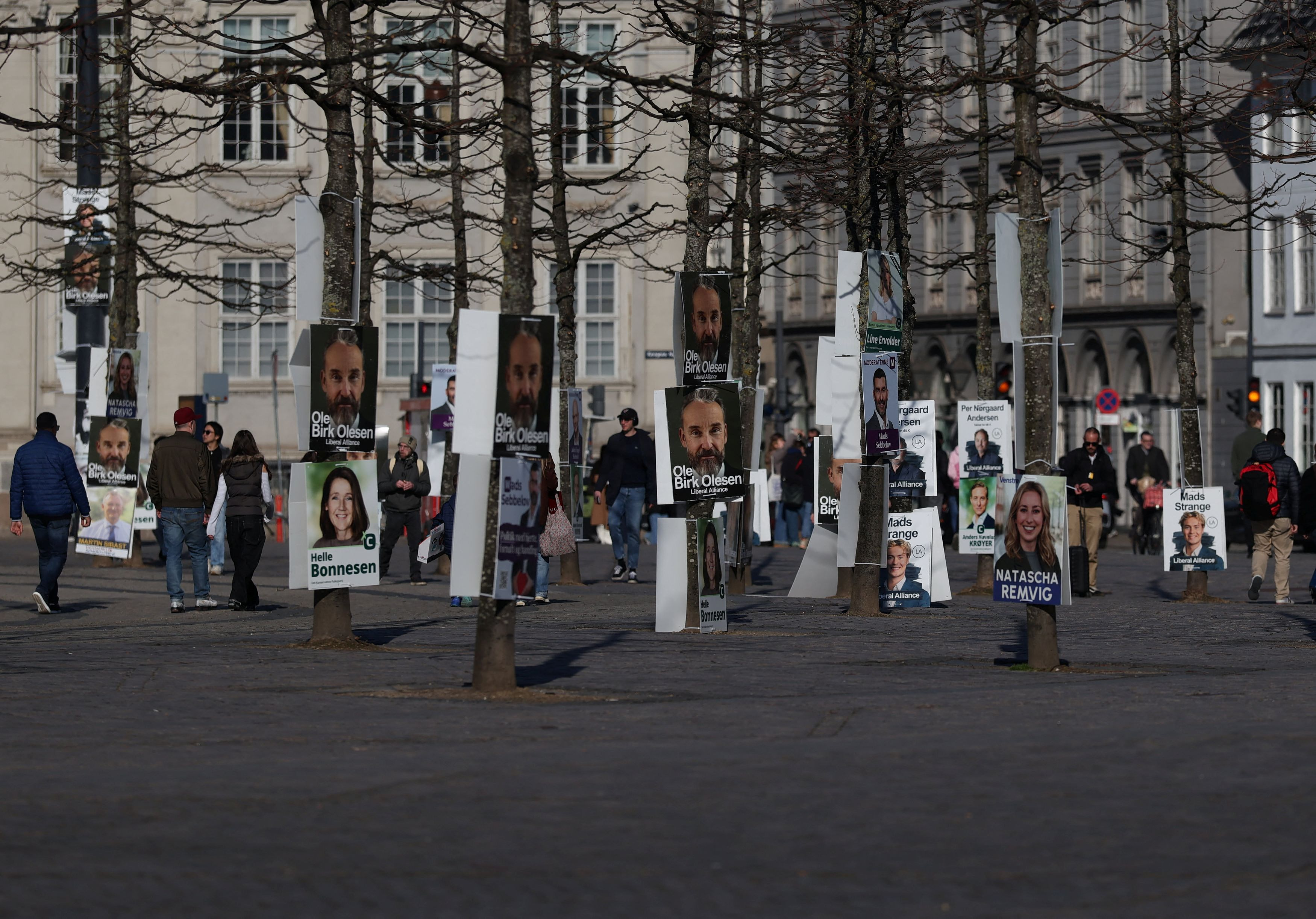
A person passes posters for candidates in the upcoming parliamentary elections in Copenhagen, Denmark, March 22, 2026. REUTERS/Leonhard Foeger
With 12 parties contesting and additional seats allocated to Greenland and the Faroe Islands, the election outcome is likely to usher in complex coalition talks — with leadership, as much as policy, at the center of the vote.