 Μake us preferred on Google
 For years, Aeolos Kenteris was the undisputed flagship of Greece’s high-speed ferry fleet, earning comparisons to the Concorde aircraft for its unprecedented speed and cutting-edge technology. Named after Greek Olympic sprint champion Kostas Kenteris, the catamaran transformed travel across the Aegean when it entered service in 2000, slashing journey times between the mainland and the islands.
The vessel was regarded as one of the world’s fastest passenger ferries, combining record-breaking performance with amenities rarely seen on ferries at the time, including satellite television, aircraft-style seating with individual audio systems, escalators and hotel-style reception areas. Powered by exceptionally powerful engines, it was reportedly capable of generating very noticeable waves along coastlines as it passed.
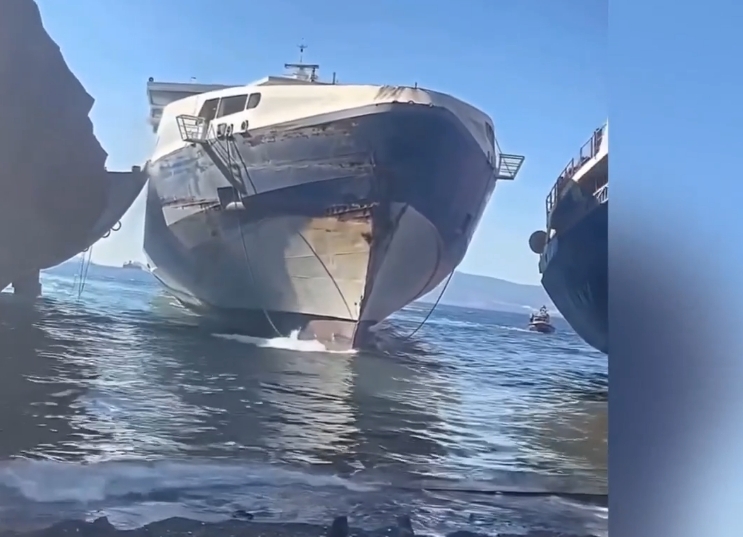
That era, however, has long since ended. Twenty-six years after its launch, the once-iconic ferry has been reduced to a stripped steel hull awaiting dismantling at shipbreaking facilities in southern Turkey, marking the final chapter in the life of a vessel that symbolized a new generation of high-speed maritime transport in Greece.
The vessel’s decline had already become apparent in 2024, when images of the abandoned ferry moored off the Sicilian port of Augusta circulated widely online. The photographs, taken by urban explorers who boarded the derelict ship, showed a stark contrast with its former glory.
Rust-covered and partially flooded, the ferry’s broken windows, empty passenger lounges and debris-strewn decks illustrated years of neglect after repeated ownership changes and financial difficulties sidelined the once-celebrated vessel.
The fate of Aeolos Kenteris also reflects broader changes in the Mediterranean ferry industry over the past two decades. While high-speed catamarans remain an important part of Greek coastal transport, rising fuel costs, stricter environmental regulations and evolving commercial strategies have made operating large, gas-turbine-powered fast ferries increasingly uneconomical.
Many pioneering vessels from the early generation of high-speed ferries have since been retired, sold abroad or scrapped, bringing to a close a transformative chapter in Aegean passenger shipping.