 Μake us preferred on Google
European members of NATO are preparing for the possibility that Tuesday’s U.S. midterm elections could make things much harder for the alliance.
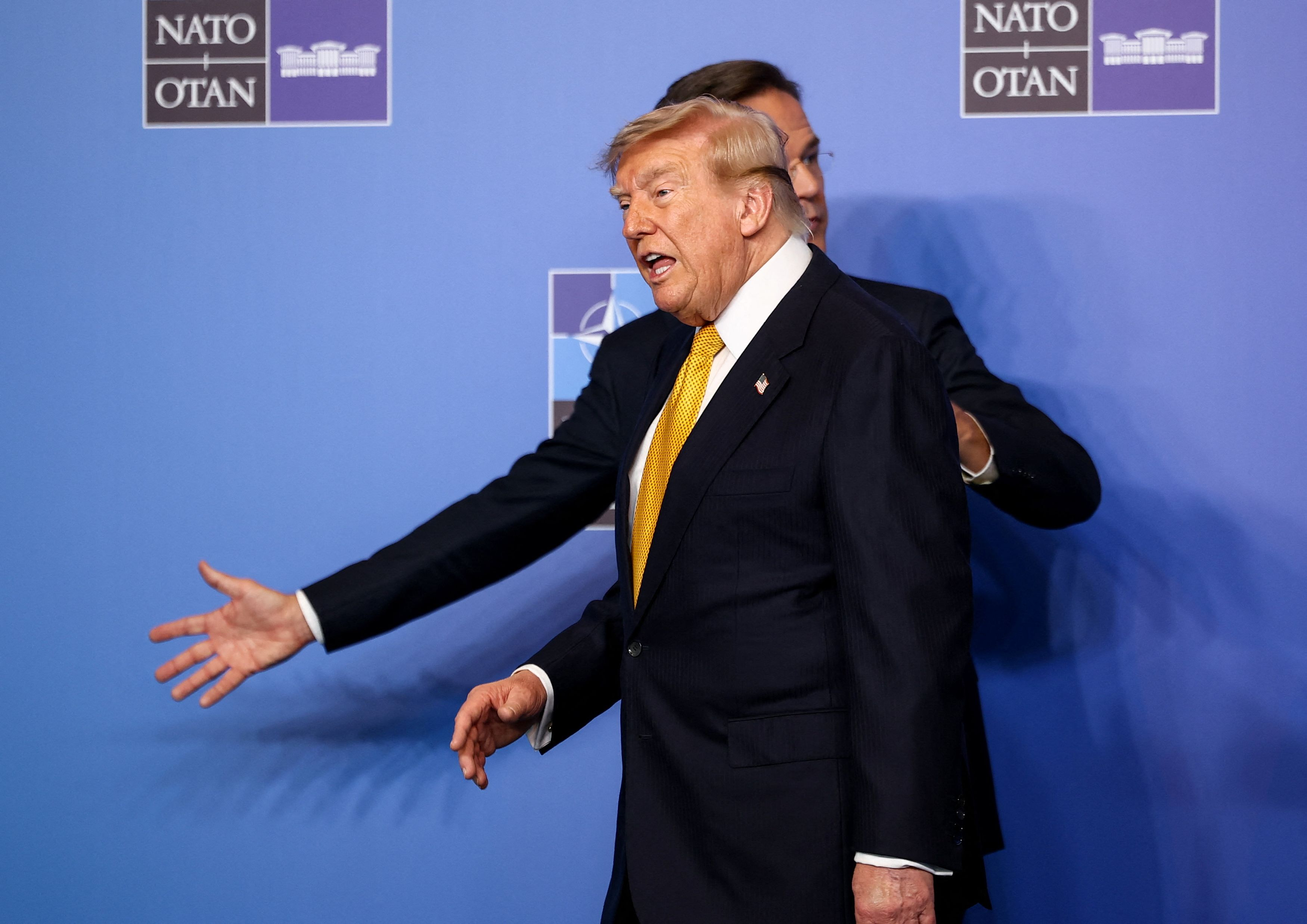
Five NATO diplomats, speaking on condition of anonymity because of the sensitivity of the issue, told POLITICO that a Republican defeat could lead President Donald Trump to sharply escalate his criticism of NATO. Their concern is that if a Democratic Congress limits what he can do at home, Trump may turn to foreign policy, where as commander-in-chief he faces fewer constraints, to shape his legacy. Three of the diplomats said this could include withdrawing thousands more U.S. troops from Europe.
A senior European defense official said presidents in their final stretch often combine venting with bold moves abroad, adding that hostility toward NATO appears to be a steady feature of Trump’s outlook.
The White House pushed back. Assistant Press Secretary Olivia Wales said Trump has done more for NATO than anyone, pointing to allies’ commitment to raise defense spending to 5% of GDP by 2035, a stronger U.S. military presence in Greenland and his efforts to end Russia’s war in Ukraine. She also said Trump still believes NATO allies should have supported the United States in the war with Iran, and that he will keep advancing U.S. interests without apology.
Democrats are widely expected to take the House and could also win the Senate, while Trump’s approval ratings have dropped to the lowest level on record.
The concerns come amid rising tension across the Atlantic, following a U.S. cutoff of Starlink satellite service for Ukraine and a renewed warming of ties between Trump and Russian President Vladimir Putin in the weeks before the vote. New pressure on NATO would come as Russia intensifies sabotage and hybrid attacks across Europe. One diplomat warned that an angry Trump could respond very harshly.
Troops, funding and Ukraine
A key worry is a review of U.S. forces in Europe due by December. Three diplomats said that if Trump is blocked domestically, he might expand the planned drawdown to energize his MAGA supporters.
Oana Lungescu, a former NATO official now at the Royal United Services Institute, said Trump could also make the continued U.S. presence in Europe conditional on Europeans accepting a U.S.-backed peace deal for Ukraine. She warned that force posture, Ukraine and Europe’s security order could end up folded into a broader bargain with Putin, which she said would be very dangerous for European security.
According to the diplomats, Trump could also reduce U.S. contributions to NATO’s common budget, restrict the PURL program through which allies buy U.S. weapons for Ukraine, and move even closer to Russia.
Pressure on Hegseth
A heavy Republican loss could also bring changes at the Pentagon. Defense Secretary Pete Hegseth is deeply unpopular in Congress, particularly among Democrats, because he has refused to give lawmakers regular briefings on budgets and operations.
This has fueled speculation that he could leave after a major defeat, partly because a Democratic Congress would likely investigate his dismissal of dozens of generals and admirals without cause and the struggling war with Iran. Such probes would tie up Hegseth’s team and could embarrass the administration. If he left, a Pentagon transition could delay decisions on troop withdrawals from Europe by weeks or months.
Limits on the president
In principle, Democratic control of both chambers would restrict Trump’s options even on defense and foreign policy, and current law sets a floor of 76,000 U.S. troops in Europe.
Jennifer Kavanagh, a senior fellow at Defense Priorities, doubted that floor would survive a legal challenge and noted that Trump has shown willingness to ignore the courts. She said the administration has also repeatedly spent money in ways Congress did not authorize. If a large drawdown happens, she said Europe would struggle most to replace U.S. electronic warfare, air defense, intelligence and reconnaissance, aerial refueling and certain logistics capabilities.
Not every ally expects the worst. Montenegrin Defense Minister Dragan Krapović noted that speculation about Trump leaving NATO has been constant but has not materialized, and said Congress has the final word on reducing troops in Europe.
A sixth NATO diplomat was less reassured, arguing that reliable predictions require a decision-maker who acts rationally, and that this does not apply to the current president.
NATO and the U.S. Department of Defense did not respond to POLITICO’s requests for comment.