 Μake us preferred on Google
Recent public disputes are raising questions about the state of relations between Turkey and Azerbaijan, despite the close political, military and economic ties between the two countries.
At the center of the friction are Azerbaijan’s relations with Israel, the two countries’ different approaches toward Iran, and a dispute sparked by school uniform rules and the use of the Islamic headscarf.
However, according to analyses published in the Azerbaijani press, a broader geopolitical issue may lie behind the individual disagreements: the future of Iran and the differing strategic priorities of Ankara and Baku regarding developments in the region.
Any deeper break could hurt Turkey’s ambitions to expand its influence in a region where Russia has traditionally held sway.
Iran at the Center of the Differences
According to Azerbaijani analyses, the public disputes alone are not enough to explain the tension between the two allies. Attention is focused mainly on their differing assessments of possible developments in Iran and the impact these could have on the regional balance.
Particular mention is made of Tabriz, one of the most important cities in northwestern Iran, home to a large population of ethnic Azerbaijanis.
For Baku, any major political or geopolitical upheaval in Tehran could have direct consequences for its own interests. This does not mean, however, that Azerbaijan is seeking a confrontation with Iran. On the contrary, it continues to stress the need to maintain good neighborly relations and resolve differences through diplomacy.
The analysis argues that Turkish calculations about Iran’s future do not necessarily match those of Azerbaijan. This, however, is the assessment of the Azerbaijani publication and not a confirmed position of either government.
Azerbaijan’s Relations With Israel
Another point of friction is the close cooperation between Azerbaijan and Israel, particularly in defense and energy.
Baku maintains strong ties with Tel Aviv, while Turkey’s relations with Israel are marked by sharp political confrontation. Ankara has been a fierce critic of Israel over the war in Gaza.
A second article, published in Turkish, criticizes efforts to link Azerbaijan-Israel relations to bilateral Turkey-Azerbaijan cooperation.
The author asks why Baku’s foreign policy choices should become a point of contention with Ankara, arguing that the same logic could be applied to Turkey’s relations with third countries, such as Syria.
This argument calls for mutual respect for the independent foreign policies of the member states of the Organization of Turkic States.
The Headscarf That Sparked the Dispute
School uniform rules in Azerbaijan also became a focal point of the public dispute.
Critics of Baku presented the case as an attempt to restrict the Islamic headscarf under new secular school uniform regulations, prompting reactions in Turkish political and media circles.
According to reports, figures linked to the ruling Justice and Development Party (AKP) became involved in the dispute, including Turkish presidential adviser Oktay Saral.
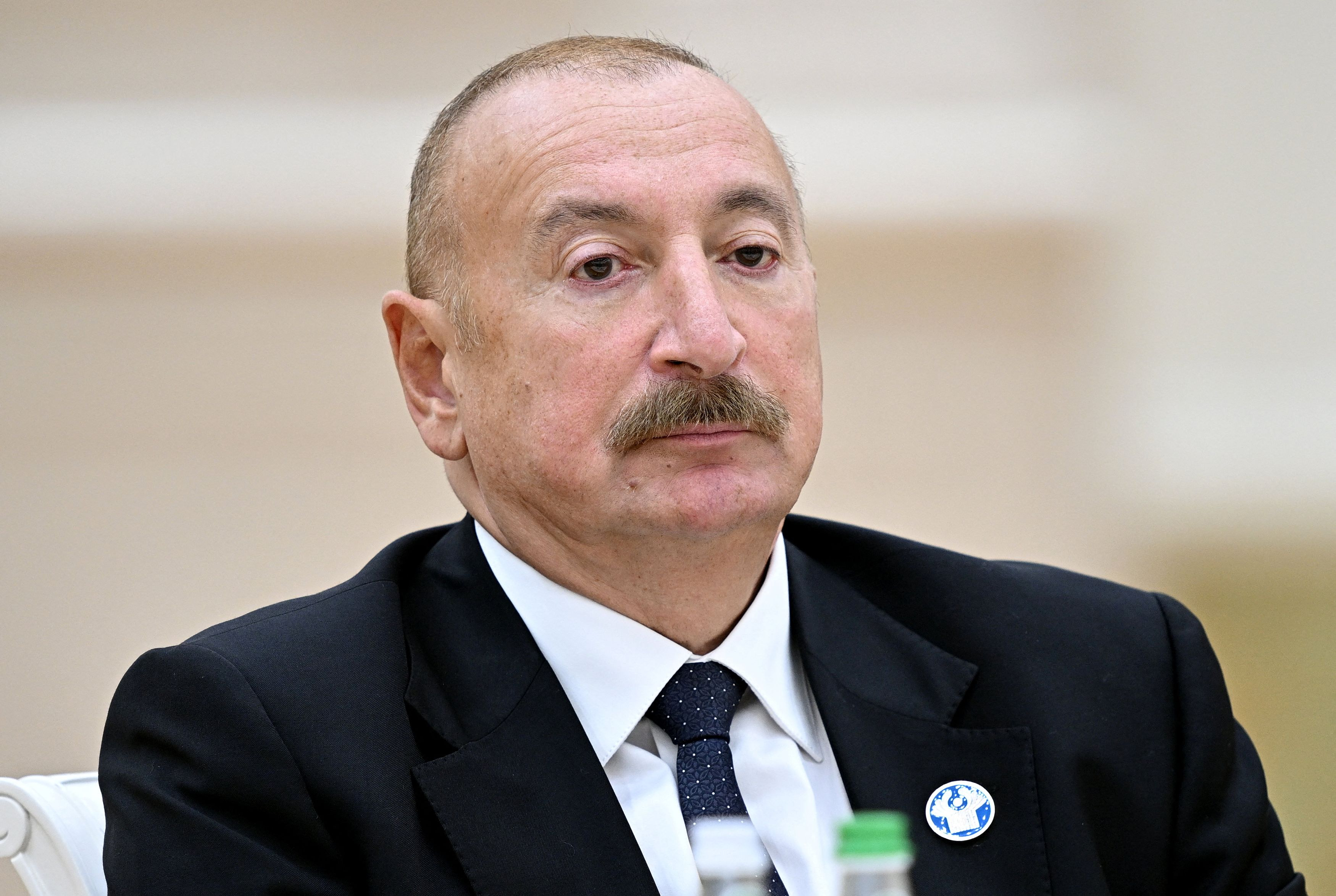
Aliyev and other Azerbaijani officials warned against interference in Baku’s affairs, without naming Turkey.
The Azerbaijani analysis notes that the intensity of the Turkish reaction was unusual, given that similar school uniform rules are in place in other countries that maintain close ties with Turkey.
According to the same assessment, the headscarf issue served more as the trigger for deeper differences to surface than as the real cause of the tension.
Aliyev’s Absence From the Ankara Summit
The dispute took on a clearer diplomatic dimension on October 30, when Azerbaijani President Ilham Aliyev did not attend the Organization of Turkic States summit in Ankara, despite a personal invitation from Recep Tayyip Erdogan. According to the Turkish president’s office, Erdogan had extended the invitation during a phone call the previous week.
Azerbaijan was represented by Foreign Minister Jeyhun Bayramov, who thanked Turkey for its hospitality and made no mention of the tensions. Azerbaijani media attributed Aliyev’s absence to previously scheduled commitments. The Azeri-Press Agency, without citing sources, said these included a ceremony and festival linked to the FIFA U-15 World Cup in Baku.
There was no official comment from Azerbaijan, while Turkey’s presidency and foreign ministry did not respond to requests for comment.
However, according to Reuters, analysts interpreted the Azerbaijani president’s absence as a sign of deteriorating relations between the two countries.
At the opening of the summit, Erdogan delivered a message of unity, saying there was no room for division or conflict within the Turkic “family,” without naming Azerbaijan.
The summit had been preceded by Baku’s decision to declare 31 Turkish nationals persona non grata over social media posts and public statements that Azerbaijani authorities considered insulting or threatening to the country’s sovereignty.
For his part, Erdogan tried to ease tensions by removing his adviser Oktay Saral, who had criticized the restrictions on the headscarf.
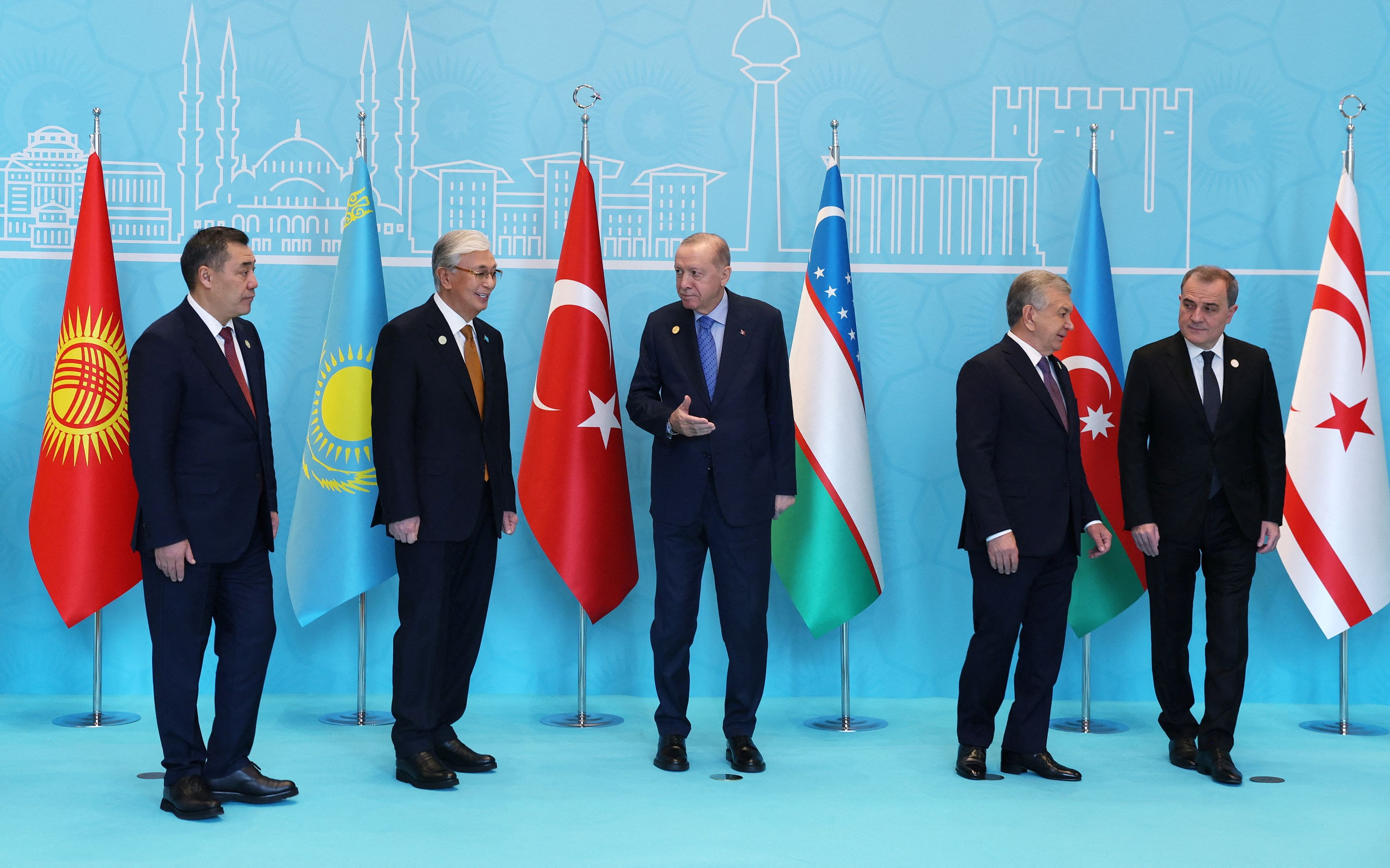
Turkish President Tayyip Erdogan, Kyrgyzstan’s President Sadyr Zhaparov, Kazakhstan’s President Kassym-Jomart Tokayev, Uzbekistan’s President Shavkat Mirziyoyev and Azerbaijan’s Foreign Minister Jeyhun Bayramov walk after a group photo session during a meeting of the Council of Leaders of the Organization of Turkic States in Ankara, Turkey, October 30, 2026. Murat Cetinmuhurdar/Turkish Presidential Press Office/Handout via REUTERS
Armenia and the Limits of Turkish Influence
Beyond Iran and Israel, Ankara-Baku relations are also being tested by their different approaches toward Armenia.
Gonul Tol, director of the Turkey program at the Washington-based Middle East Institute, said that beneath the “two states, one nation” slogan, older tensions have long existed over Azerbaijan’s sovereignty, Ankara’s influence in Baku, relations with Israel and the Turkey-Armenia rapprochement. In her view, the headscarf dispute is a symptom of a deeper rift.
Turkey is seeking to normalize relations with Armenia, but has tied progress in that process to peace efforts between Baku and Yerevan. Turkish officials have said Ankara is looking for progress there so it can take concrete steps, such as opening its borders with Armenia.
The two sides’ differing priorities highlight the limits of their strategic alignment, despite the close ties they have built in recent decades.
A Strategic Alliance Under Strain
Despite the public disputes, Turkey and Azerbaijan remain bound by close defense cooperation, energy interests and shared regional goals. Their ties deepened after Turkey backed Azerbaijan in the 2023 Nagorno-Karabakh war, and Ankara is a major buyer of Azerbaijani natural gas.
Turkish Foreign Minister Hakan Fidan has tried to play down talk of a rupture. After meeting Aliyev at a summit in Baku this month, he said disinformation about Turkey-Azerbaijan ties was being spread on social media, and that disagreements between the two sides can be handled through direct dialogue rather than public disputes online.
The key question is whether the current tension is a temporary crisis between two close allies or whether it reveals deeper differences over the balance of interests in the Caucasus and the Middle East.
The assessment that Iran’s future lies at the core of the disagreement adds a significant geopolitical dimension to the issue. However, publicly available information is not enough to establish that it is the sole or decisive cause of the tension.