 Μake us preferred on Google
Since Russia launched its full-scale invasion of Ukraine in February 2022, the European Union has been continuously providing the latter with significant aid of various forms: Financial, military, political, diplomatic. Concerns regarding Europe’s eastern land borders, Russia’s long-term geopolitical intentions and the safety of the Baltic states consistently remain at the heart of the EU’s security narrative and priorities. However, some important questions arise: What about the EU’s eastern sea borders? Are these not considered “proper” geographical borders? What about the EU’s security narrative and policies when it comes down to threats stemming from the Eastern Mediterranean region? Is Turkey any less of an aggressor than Russia? Are Greece and Cyprus (decades-long EU Member States) less worthy of attention and tangible support? The aim of the current article is not to discuss whether Europe should support Ukraine or not, while the issue is not whether the security challenges posed by Russia and Turkey, respectively, are identical or not. The fundamental dispute lies in the following question: Do the differences between the two aforementioned challenges justify the uneven political attention they receive from the EU?
In March 2022 the European Union issued-for the very first time-its “Strategic Compass for Security and Defense” in which Russia was thoroughly depicted as the primary threat for Europe’s safety and the regional security order. Josep Borrell (former High Representative for the EU’s Common Foreign and Security Policy) claimed that “The European Union is more united than ever” following Russia’s war of aggression, while expressing the Union’s collective commitment to “restore peace in Europe”. This commitment was actual and measurable: Since the beginning of the war, the EU and its Member States have provided Ukraine with more than $226 billion in the form of financial, military, humanitarian and refugee assistance. On the political level, the EU officially opened accession negotiations with Ukraine in June 2024, fervently promoting the notion that “the future of Ukraine and its citizens is firmly anchored in the EU”. Europe’s support to Ukraine therefore demonstrates that the EU can actively transform solidarity declarations into collective substantial measures. Nevertheless, Europe’s security cannot be limited inside the framework of the Russo-Ukrainian war. The actual matter is whether the EU’s collective security commitment is expressed with the same urgency to its southeastern borders, where disputes involving Turkey directly affect the security of two of its own Member States.
As the juxtaposition should be as just as possible, let us take a look back in 1974, when a then not yet Member State of the EU, namely Cyprus, was militarily attacked by another non-EU country, Turkey. If Ukraine is of utmost importance for the Union’s security architecture, since it borders four of its members (Hungary, Poland, Romania and Slovakia), then Cyprus’ strategic position in the Mediterranean also warranted attention. The island hosted overseas garrisons of the United Kingdom, which has joined the European Communities the previous year and demonstrated great military capabilities. But how did the EEC respond to the Turkish invasion of Cyprus? Definitely not with economic sanctions nor with isolation measures against the aggressor. The reaction was only limited to a political and diplomatic context: The Foreign Ministers of the European Political Cooperation states issued a communiqué in September 1974 stating that “The situation in Cyprus […] continues to be a source of grave concern to the member countries of the EEC and their associates, Cyprus, Greece and Turkey”. Turkey was mentioned solely with its “associate” status, even though it had launched a full-scale war against Cyprus just two months prior. The EEC, though, did provide food assistance to the Republic of Cyprus in the form of common wheat supply. However, the aforementioned aid was by no means accompanied by a sanctions regime equivalent to the one imposed on Russia.
In regard to recent years, one can undoubtedly observe the EU’s double standards when it comes to Russia and Turkey. Let’s talk both hybrid and conventional warfare: On September 7th, 2024, an identified Russian drone crossed Latvia’s aerospace carrying explosives. However, it was declared that the drone had targeted Ukraine, as the Latvian Defense Chief Kalniņš “has pointed out that the drone’s movements did not suggest hostile intent toward Latvia and that it was assessed to be intended for Russian attacks on Ukraine”. On 10th and 28th July 2025 two drones of Russian design stemming from Belarus crashed inside Lithuania. Nevertheless, the Lithuanian National Crisis Management Centre stated that “the data available from the investigation allows us to continue with the initial version that the drones that fell in Lithuania were launched by the aggressor Russia toward Ukraine and entered Lithuanian territory by accident”. Alongside the prior incidents, which evidently highlight that the Russian drones did not directly target neither Latvia nor Lithuania, it is worth mentioning that-according to the Dutch newspaper Trouw-“Out of approximately 60 reported sightings in 11 countries from August to November (2025), only four-in Poland, Romania and Moldova-involved confirmed Russian drones that were either shot down by NATO aircraft or identified through recovered debris”. In Poland, indeed, the Russian drone incursions in September 2025 were so severe, that even led to the invocation of NATO’s Article 4 and the active involvement of Dutch, Italian, Belgian and German forces for the interception of the drones.
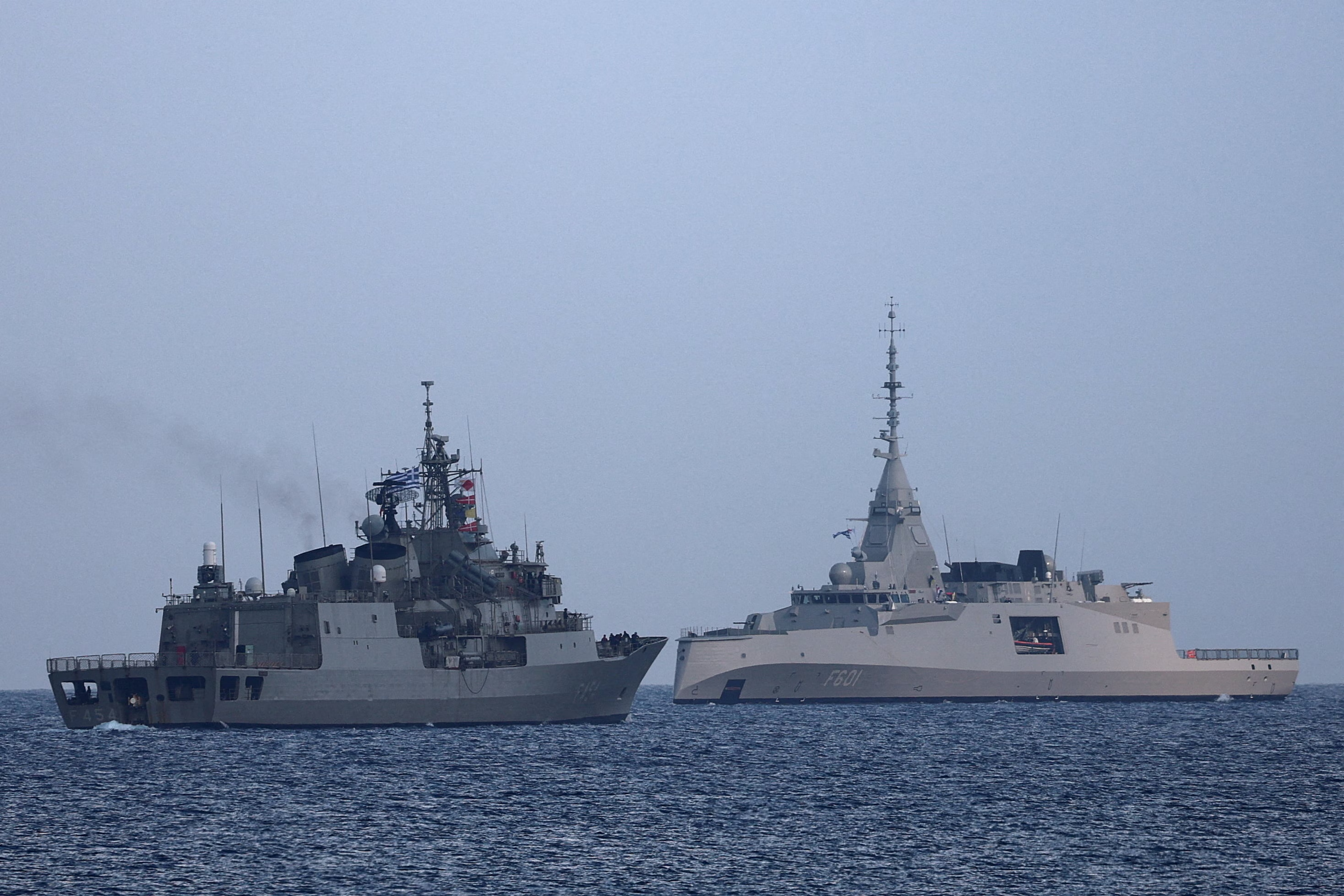
Was this collective action of European forces the case with Greece and Cyprus as well? Here is a brief examination: From August 12th until August 21st, 2024, incidents of Turkish drones and helicopters violating Greece’s airspace over southeastern Aegean were reported on a daily basis. For a time period of two months (August-October 2024) the Hellenic National Defense General Staff recorded 106 verified airspace violations by Turkish drones and aircraft. Not one, nor two, but one hundred six incidents. Whatever their intended destination, these were not merely reports of drones accidentally straying into Greek territory while targeting a third country. How did the European Union handle the situation? A European Parliament’s resolution in May 2025 condemned the ongoing Turkish violations of the sovereignty of EU Member States, including Greece and the Republic of Cyprus. Were tangible measures imposed? The answer remains negative. Concerning Cyprus, in May 2019 Turkey sent its drill ship, “Fatih”, to an area west of the island, in which the Republic of Cyprus has declared its Exclusive Economic Zone. The purpose of the Turkish vessel was double: Both to explore hydrocarbons in the area and, most importantly, to illegally assert Turkish claims over the Cypriot continental shelf. It took the EU three months to be practically involved, as in July 2019 “EU foreign ministers suspended negotiations on the Comprehensive Air Transport Agreement and agreed not to hold the EU-Turkey Association Council”. Furthermore, as the situation escalated, the Council of the EU issued, on November 8th, 2019, formal restrictive measures against Turkey. The most prominent examples included travel bans and freezing assets for two specific persons: Mehmet Ferruh Akalin and Ali Coşkun Namoğlu, officials of the Turkish Petroleum Corporation (TPAO). Evidently, the European measures only targeted individuals involved in the illegal drilling rather than the entire Turkish economy.
Concluding, the issue is not whether Ukraine should receive Europe’s support, nor whether different security crises require identical responses. The question is whether the European commitment to sovereignty and collective security is applied consistently. While the European Union seeks to advance its Common Foreign and Security Policy and has-since 2024-appointed a Commissioner for Defense and Space, yet in this year’s State of the Union, the Commission’s President, Ursula von der Leyen, did not once address Cyprus’ continuing division, however explicitly referred to both Ukraine and Gaza. Ultimately, a Union that defends sovereignty selectively risks transforming one of its founding principles, namely solidarity, into an empty promise.
Stamatia Koutsikou is a M.A student in Peace and Security Studies at the University of Hamburg.