

 Μake us preferred on Google
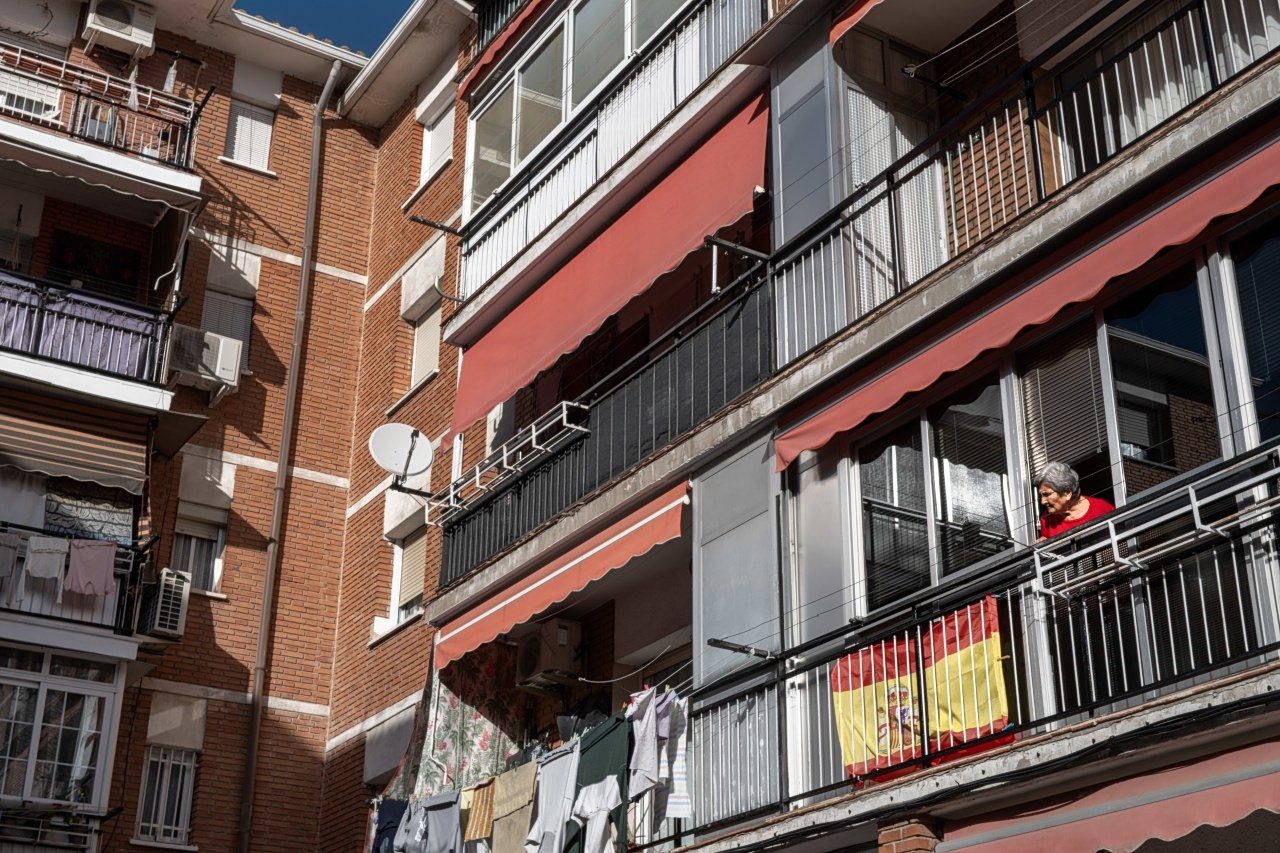
MADRID—In the spring of 2024, Sonia Moreira told her tenant of over a decade that she planned to sell her property, a top-floor, redbrick apartment in a working-class area outside the Spanish capital.
The tenant, Helizabet Delgado, refused to leave and stopped paying rent. Unemployed and facing health issues, she has benefited from housing laws designed to protect vulnerable tenants from eviction.
Moreira and her husband, meanwhile, have continued making monthly mortgage payments, straining their fragile finances. They hired an antisquatter security firm to pressure Delgado out.
“We can barely make ends meet ourselves. We’re vulnerable too,” said Moreira, a call-center operator whose husband is a welder. They have a disabled son. “I understand that there is a lack of housing. But why do we, the owners, have to deal with this and pay the cost?”
Tenant and landlady agree on one thing: Both consider themselves victims of one of the world’s most broken housing markets.
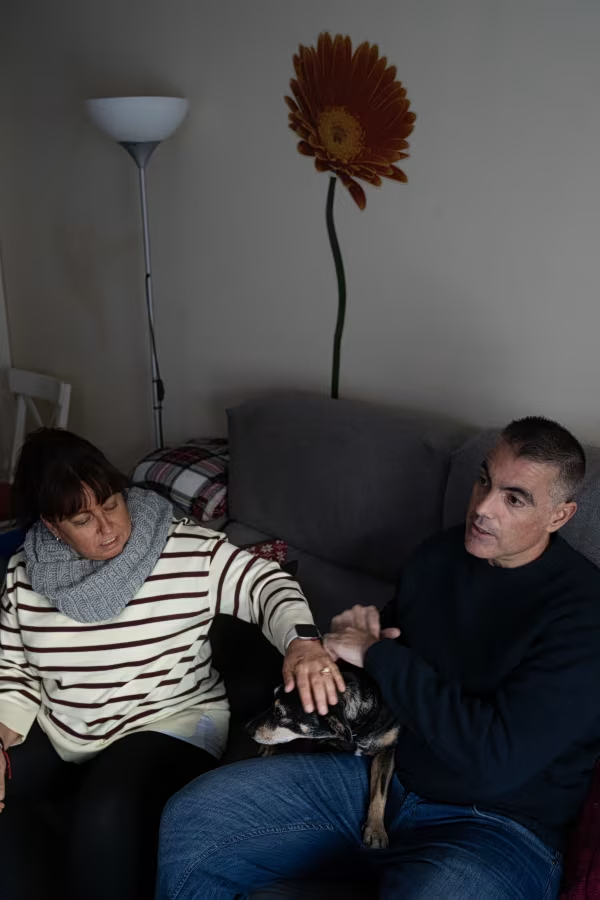
Sonia Moreira and her husband, Miguel Aragoneses. Michael Robinson Chávez for WSJ

Legal documents relating to the eviction order on a table. Michael Robinson Chávez for WSJ
Housing has become a top concern for people across Europe and the U.S., where living costs are rising fast and new construction isn’t keeping pace. Nowhere has the issue become as severe, or as politically explosive, as it has in Spain.
Property prices rose 80% in the decade through 2025, according to Spain’s National Statistics Institute. Wages grew just 30%. Spanish households now spend an average of 50% of their income on rent, a figure that climbs to 70% in Madrid and Barcelona. Similar pressures have been building in European cities from Berlin to Prague, Lisbon and Amsterdam.
This weekend, Spain’s government may become Europe’s first to fall because of housing costs. Recent mass protests over housing prompted leftist Prime Minister Pedro Sánchez to call snap elections, scheduled for Sunday.
Housing has dominated the election campaign, with Sánchez calling it “the great challenge of our time” in a televised debate with conservative People’s Party leader Alberto Núñez Feijóo, whose party is narrowly ahead in opinion polls.
Spain faces a classic supply-and-demand problem: Immigration, tourism and the shift toward smaller households have outpaced the creation of homes in urban areas.
Since the 2008 financial crisis burst the real-estate bubble, new construction has became more costly and regulated, with building permits often taking many years to obtain. Successive governments—left and right—gave priority to protecting people from losing their homes.
Sánchez doubled down earlier this month, passing measures that automatically extended leases expiring before 2028 and prolonged an eviction ban.
That did little to address the severe housing shortage. It reflects a broader European doom loop, where rising costs push governments to pass tenant-protection laws that in turn discourage construction and owners from renting out their properties.
Both Sánchez and Feijóo promised to quickly build more homes if elected, with Feijóo calling for construction deregulation. The conservative party’s likely coalition partner, the hard-right Vox party, has blamed the crisis on a surge of migrant arrivals and the government’s embrace of foreign workers: About a fifth of Spain’s 50 million people were born abroad, largely in Latin America. But it will take many years, likely more than one term, to close the housing shortfall, which Spain’s central bank last year estimated at 750,000 units.
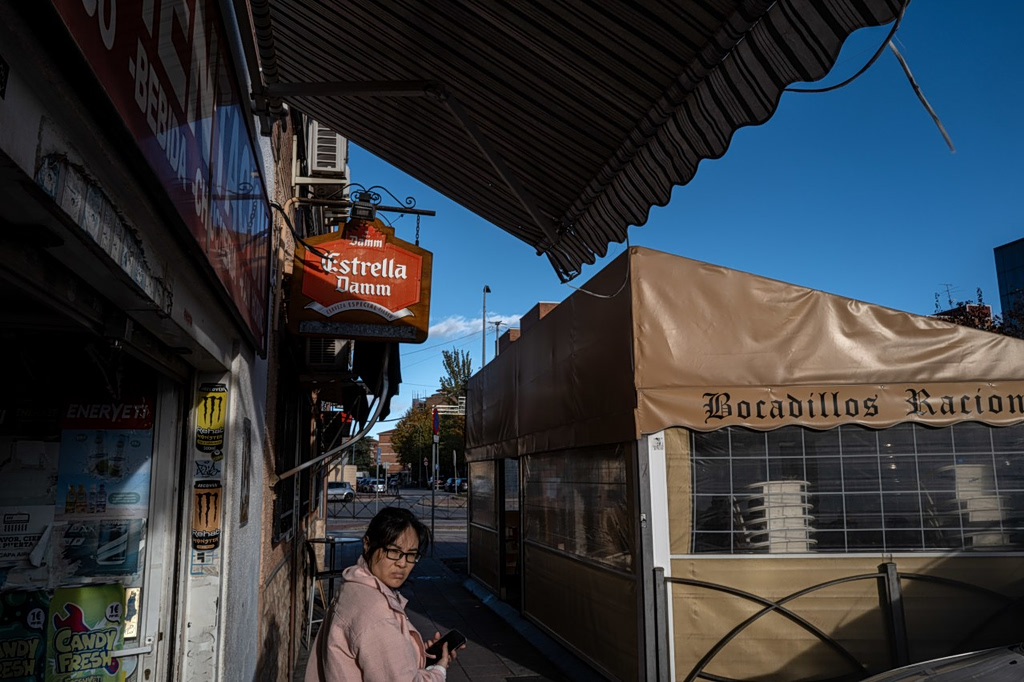
The working-class city of Torrejón de Ardoz, outside of Madrid. Spanish households in some cities spend around 70% of their income on rent. Michael Robinson Chávez for WSJ
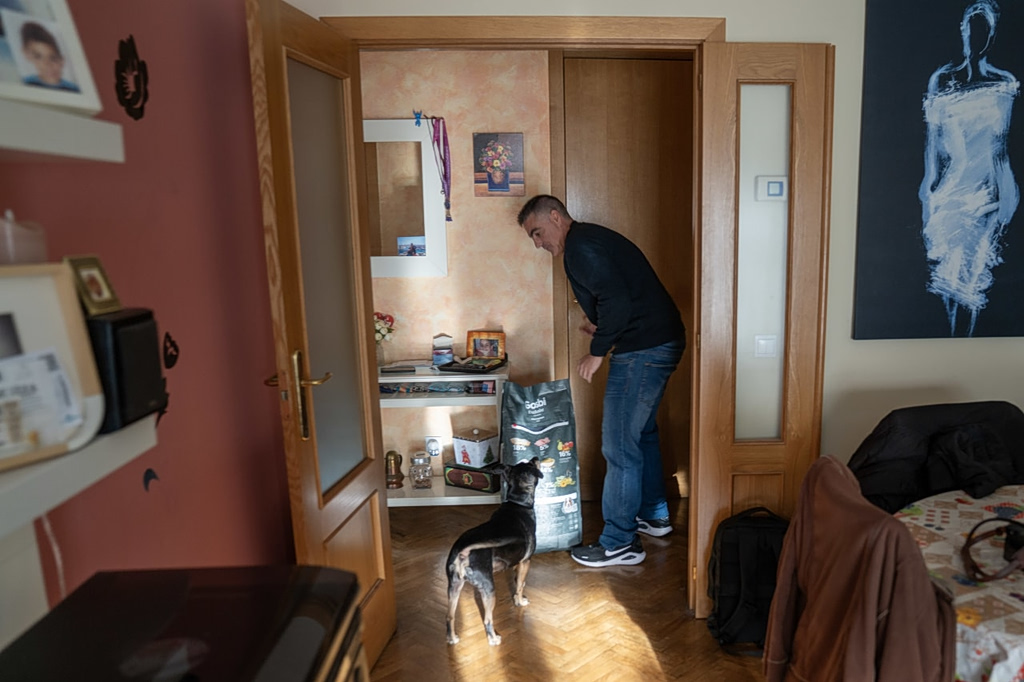
Miguel Aragoneses, a welder. He and his wife were once on friendly terms with their tenant, with whom they are now locked in an eviction fight. Michael Robinson Chávez for WSJ
Barcelona is another case in point. The city draws everyone from European digital nomads and American tourists to a swell of working-class North African immigrants—everyone except developers. The city of two million grew by 29,102 people in 2025 alone, but added just 1,434 homes, according to the Barcelona Metropolitan Housing Observatory, a research group. That is a 20-to-1 ratio of newcomers to new apartments.
As a result, most rental listings never even appear online. The last time Barcelona-based real-estate firm Forcadell listed an apartment on its website was in August. “We posted it at 9 a.m. and by 1 p.m. we had to take it down because we had already received 184 requests to visit it,” said Álex Vázquez, a company director.
Real-estate agents juggle waiting lists stretching to hundreds of applicants vying for a single apartment, often accompanied by unsolicited documents: desperate letters of introduction, copies of their tax returns and even photos from their latest family vacations.
“People used to give you specific details about what they wanted: a three-bedroom apartment overlooking Carrer de Tarragona, or a place in Gràcia with two bathrooms. Not anymore. Now they just say, ‘Please find me a two-bedroom apartment anywhere in the city of Barcelona,’” said Vázquez.
Given a choice, landlords favor highly paid foreigners over locals, while many have opted to sell rather than risk having a tenant they cannot remove.
Increasing public housing is a priority. Hemmed in by mountains and the Mediterranean shore, Barcelona is difficult to build up by nature. Developers say local laws aren’t helping either. Firms building or renovating a project of 600 square meters or more must devote a third of their floor plans to low-income “social housing.” The result is that builders aren’t constructing much housing, social or otherwise.
Barcelona’s local government has stepped in to regulate the market in other ways. In 2024, it introduced rent caps in “stressed” areas where average rent exceeds 30% of household income. About 90% of residents of the wider Catalonia region now live in “stressed” areas. Barcelona became the first major city to ban short-term rentals, a move taking effect in 2028 that should free up some 10,000 homes. Critics say the uncertainty from the changes means far more homes than that will simply never be built.
“Here is where all the most radical housing experiments are being trialed and tested to destruction,” said Mark Stücklin, the owner of the Barcelona-based research portal Spanish Property Insight. “It’s a laboratory for well-intentioned bad ideas.”
Barcelona’s left-wing mayor, Jaume Collboni, acknowledged that the changing rules have unsettled owners and developers, but saw the disruption as temporary. “The change in the ‘rules of the game’ has been very profound—very radical, if you will—and this entails a period of transition,” he said in an interview. “The objective is to move away from the use of housing as a financial asset and instead to ensure it meets the right of people to housing.”
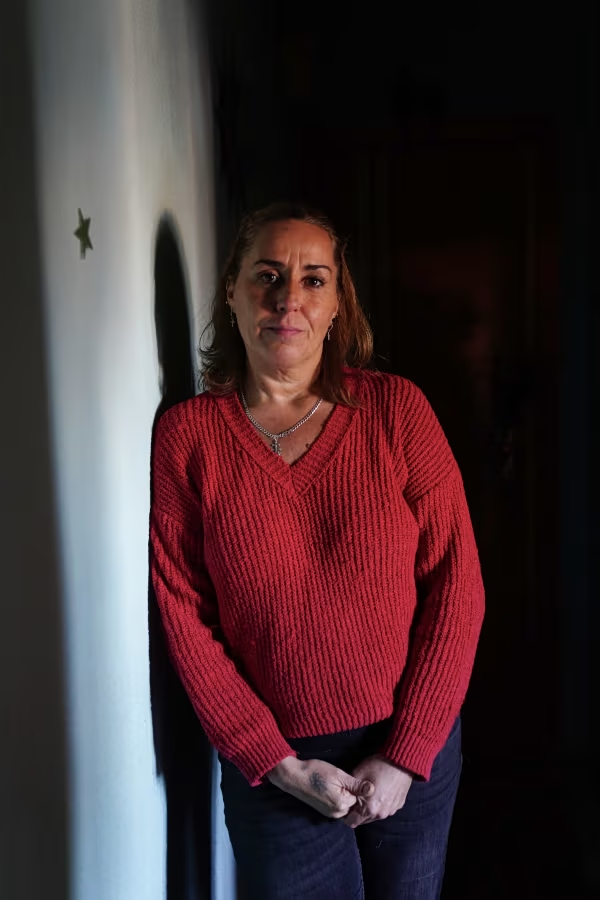
Helizabet Delgado, unemployed and facing health issues, has stopped paying rent. She says she has nowhere else to move to. Michael Robinson Chávez for WSJ
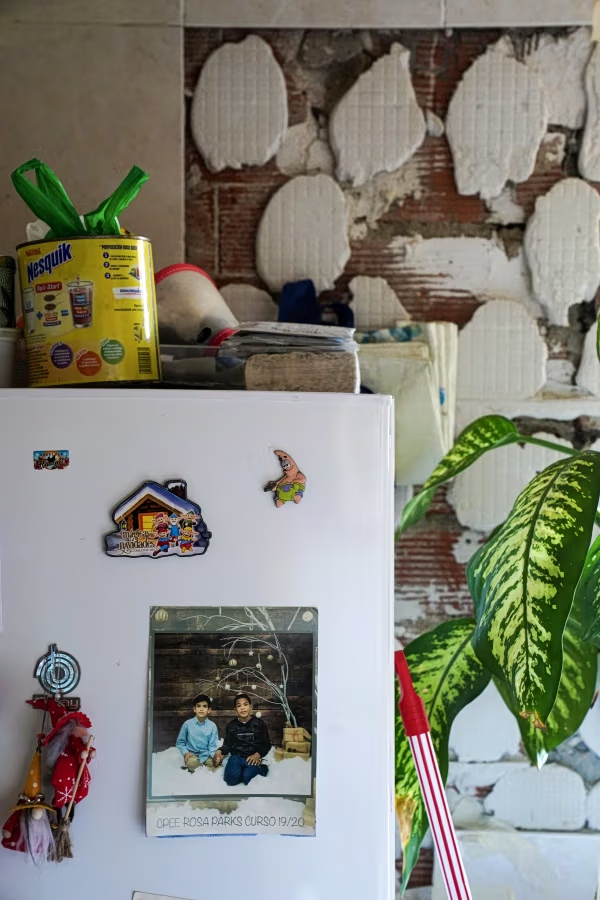
Michael Robinson Chávez for WSJ
Delgado moved into the apartment in Torrejón de Ardoz, outside Madrid, in June 2010. She was once on friendly terms with her landlords, Moreira and her husband, Miguel Aragoneses. After Delgado’s ex-boyfriend moved out, the couple agreed to lower her rent to 500 euros a month, or just under $550, according to court documents.
When they ended her lease, Delgado tried buying the property, but the price was too high and an agreement was never reached. The landlords hired a firm—Brigada Desokupa—to pressure her to leave. Employees would show up and bang at the door. Rattled and scared to leave the apartment, Delgado said she abandoned her pet-grooming business.
After more than a decade, and having spent money to fix up the rundown place, Delgado considers the apartment her own. A Spanish court in June ruled in favor of the landlords, but Delgado’s eviction was halted after the government introduced new emergency housing measures.
Delgado says it is a matter of time before she must leave. The problem is that she has nowhere else to go.
“I have paid hundreds of thousands of euros in rent over the years. And what do I have to show for it? Nothing,” said Delgado. Her only option? “Living in my car. I’ll pack up my stuff, put it in storage. That is my plan now.”
Write to Margherita Stancati at margherita.stancati@wsj.com and Drew Hinshaw at drew.hinshaw@wsj.com