 Μake us preferred on Google
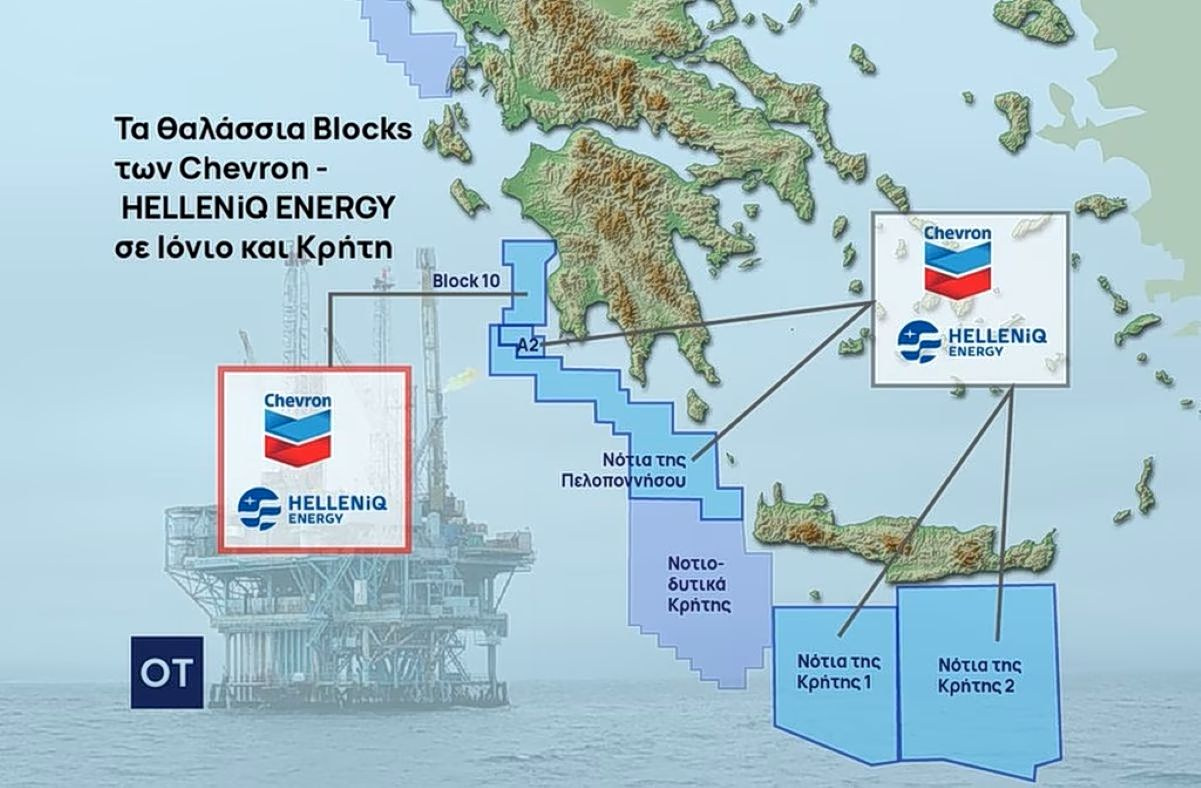
The investment plan of the US energy giant, undertaken as part of a consortium with HELLENiQ Energy, is already being implemented, with seismic surveys initially focusing on offshore areas in southern Greece. Meanwhile, the seismic survey vessel Ramform Tethys has begun collecting data in the southern Ionian Sea.
At the same time, Turkey and Libya have been holding a series of meetings aimed at strengthening bilateral relations and reaffirming their support for the illegal Turkey-Libya memorandum. This has understandably raised concerns about the future of Chevron’s surveys once they reach the areas unlawfully demarcated under the invalid and legally void agreement.
Although the French vessel involved in the Great Sea Interconnector (GSI) project is operating with Greek authorization and under a Greek NAVTEX notice within the maritime area covered by the illegal Turkey-Libya memorandum — without any Turkish response of the kind Ankara has repeatedly warned it would make — no one in Greece can guarantee that Chevron’s surveys south of Crete will indeed proceed without hindrance, as provided for under international law and the law of the sea.
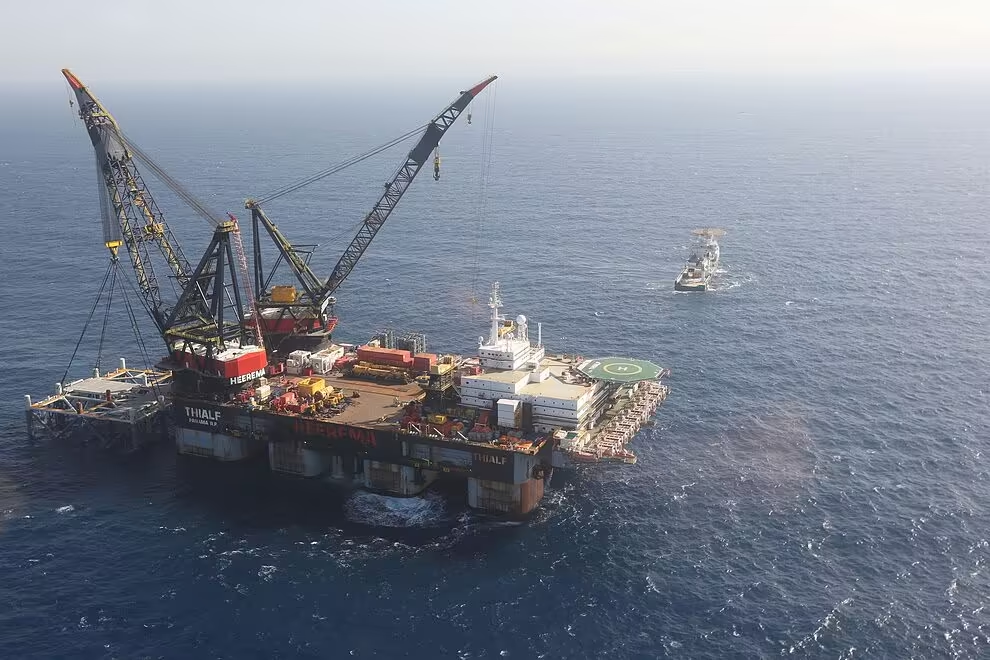
The timetable for surveys in the offshore blocks south of Crete has not yet been announced. February is considered the most likely starting point, particularly if the same vessel is deployed and, of course, provided that the relevant NAVTEX notice is issued.
‘A Milestone for Chevron’
“Chevron was awarded five offshore blocks in Greece this year. This represents another important milestone for Chevron as we continue to build momentum in the Mediterranean — a region where we already have a significant presence and where we are actively pursuing exploration opportunities to further strengthen and expand our upstream portfolio,” the US multinational energy company told Ta Nea, referring both to the surveys already underway and to those planned south of Crete.
“Chevron is delivering on its commitment to conduct seismic surveys in offshore areas of Greece. We look forward to working with our partners, HELLENiQ ENERGY and the Hellenic Republic, to assess the hydrocarbon potential of these new, unexplored areas. With global expertise in the safe development of oil and gas projects, Chevron has the resources, experience and technology to advance the development of new energy resources in this region.”
Asked how the company would respond if Turkey and Libya attempted to obstruct its exploration activities by invoking the illegal Turkey-Libya memorandum, Chevron replied by emphasizing — notably — its commitment to complying with applicable laws and regulations.
“Our priority is to ensure the safety of our workforce, while protecting the environment and local communities, in full compliance with all applicable laws and regulations,” the company said.
Asked whether it had received any indications that the two countries would act in accordance with international law, the energy giant offered no such assurances, referring further questions on the matter to the “relevant parties involved.”
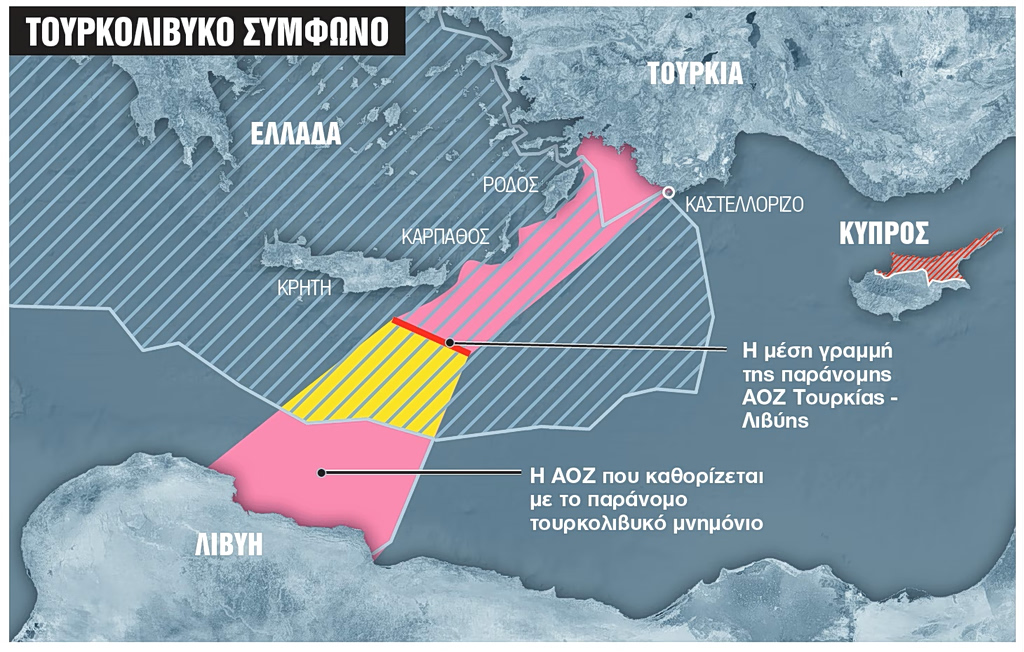
A map shows the approximate delimitation of maritime regions attempted by Turkey and Libya in 2019, with a relevant memorandum between the two states, however, deemed as illegal and baseless by Greece, other regional countries and the EU.
Speaking about the possibility of Turkish or Libyan attempts to obstruct Chevron’s surveys south of Crete, Foreign Minister George Gerapetritis had said, among other things, that he could not rule anything out, “however unlikely it may seem,” stressing that Greece was prepared for every possible scenario.
He also recalled that, when the offshore blocks awarded to Chevron were put out to tender, the Libyan side had respected the median line in accordance with the law of the sea. He further noted that, for a global energy giant such as Chevron to have undertaken the surveys, the company would self-evidently have carried out “a full legal review of the claims being advanced” before ultimately concluding the relevant agreements with the Greek and Libyan states.
It remains to be seen, however, how Turkey and Libya will act on the ground in the coming period. Tripoli and Benghazi appear recently to have aligned themselves firmly with Ankara, with all the implications that may entail.