 Μake us preferred on Google
 BERLIN—August Hanning, the former head of Germany’s foreign spy service, once described the agency he ran as “the vegetarian of intelligence services” surrounded by more powerful, less rule-bound and carnivorous peers.
Hanning’s arrest on suspicion of espionage and attempted treason this week is threatening to further defang the Federal Intelligence Service, or BND—just as it was on the cusp of finally gaining some of the spycraft capabilities deployed by its counterparts elsewhere in the West.
The timing of the affair is disastrous for Berlin, which wants to expand the BND’s powers to counter threats from Russia and elsewhere after accusing Moscow of flying an armed drone into the Leipzig airport this summer. Western security officials say the failed attack is part of a wider shadow war Moscow is increasingly waging in the open against Europe.
“In the world of intelligence, this is as bad as things get,” said Roderich Kiesewetter, a conservative lawmaker and former member of Parliament’s intelligence oversight committee. “The services need to be trusted by voters and by partners…that must now be restored as a matter of urgency.”
The scandal has raised fresh doubts about the credibility of the agency and its ability to counter threats from Russia . German lawmakers have called on the government to tighten operational security at its intelligence agencies and repair trust with allies in the wake of Hanning’s arrest.
Proposed legislation to beef up the agency’s powers, which is awaiting parliamentary approval, would give the BND the ability to hit back in case of cyberattacks, pursue information more aggressively abroad and use force to protect its assets and infrastructure at home from threats such as drones.
That would mark a turning point for an agency whose remit is much narrower than that of its U.S., French, British or Israeli counterparts. Currently, the BND can only collect information. It can’t conduct aggressive covert operations, such as cyberwarfare, sabotage, disinformation or targeted assassinations and can’t make arrests either at home or abroad. Many of these powers would remain out of its reach even after the overhaul.
The push to give the BND new powers mirrors other efforts to better prepare the country for what is seen as a growing threat from Moscow. Germany has been rapidly rearming, aiming to eventually build the largest conventional military in Europe.
Tuesday’s arrest has given fresh ammunition to those in the government’s ranks who had been skeptical of expanding the BND’s remit, according to a senior lawmaker for the governing coalition. This means the bill might have to change quite substantially before it can be approved, the person said.

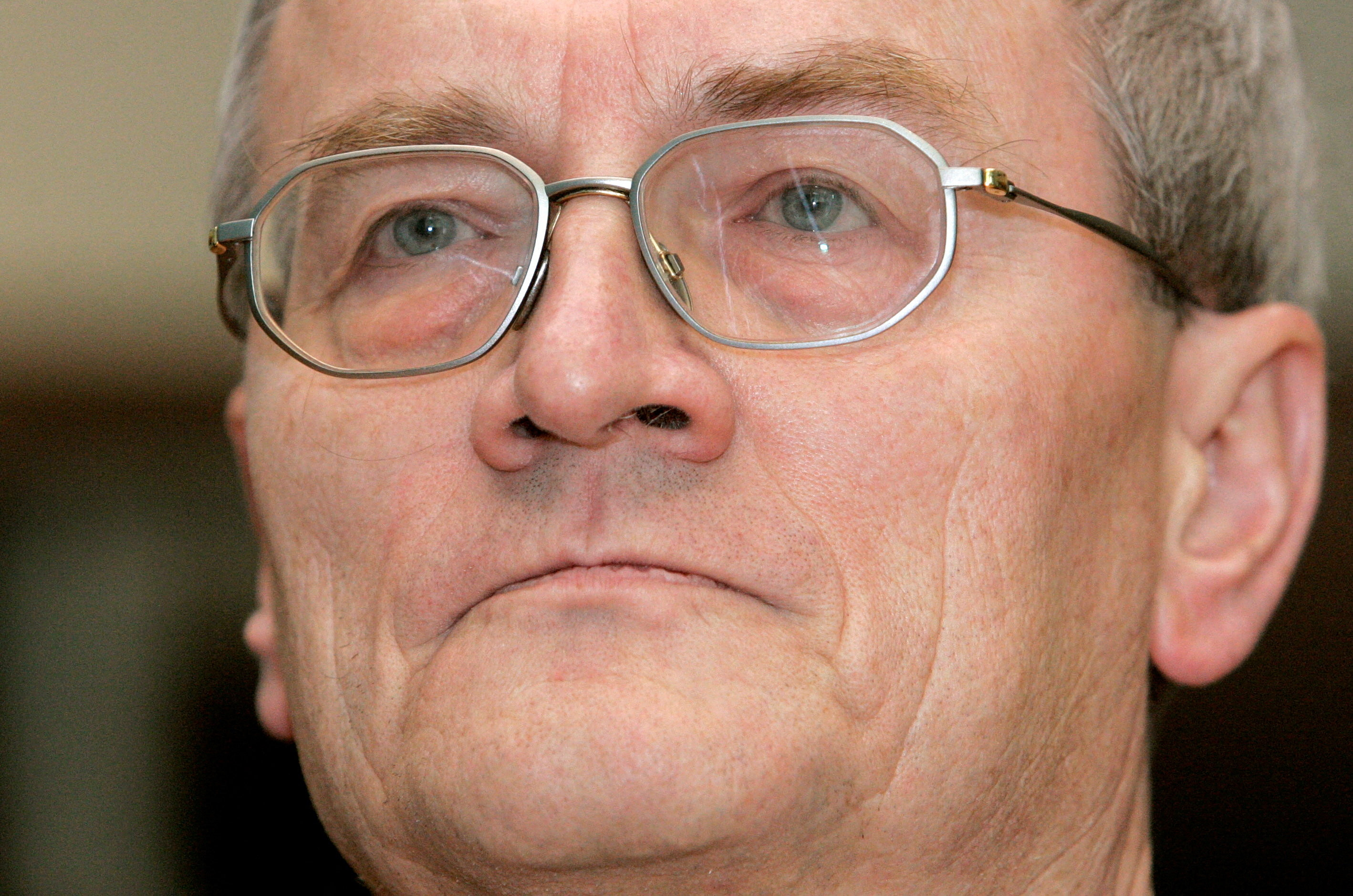
FILE PHOTO: Police officers leave the Federal Court of Justice in a vehicle following the detention of former German foreign intelligence chief August Hanning on suspicion of attempted treason and obtaining state secrets, in Karlsruhe, Germany, October 7, 2026. REUTERS/Heiko Becker/File Photo
Marc Henrichmann, chairman of the intelligence oversight committee, said lawmakers would have to “discuss what individuals entrusted with classified information should be allowed to do after their term of office ends.”
Hanning and his suspected accomplice were remanded in investigative custody by the Federal Court of Justice on Wednesday. Prosecutors said they suspected Hanning, the BND president from 1998 to 2005, used illegally acquired classified information to make money in the private sector for more than a decade after leaving public service. Hanning launched a consulting business in 2010.
Hanning’s lawyers didn’t respond to a request for comment. The BND said Tuesday it never compromised on internal security.
“We are in the crosshairs of Russia,” said Konstantin von Notz, a Green Party lawmaker who sits on the oversight committee. If former senior intelligence officers can offer their own consulting businesses without restriction, he added, “this opens a potential door for our enemies to try to penetrate.”
In 2023, the committee demanded the government tighten its revolving-door rules for former intelligence officials, forcing them to seek authorization before taking on private-sector activities and setting clear rules about what they couldn’t do and who they shouldn’t advise, according to a 2023 parliamentary document viewed by The Wall Street Journal.
Von Notz said there was relatively broad agreement among lawmakers that the BND needed new powers but that the bill should now be used to plug the security loophole laid bare by the Hanning arrest. Kiesewetter agreed, saying the proposed legislation should be flanked by binding rules governing the private sector activities of former senior civil servants.
A spokesman for the government said it was taking the accusations against Hanning and his alleged accomplice very seriously but that they shouldn’t have an impact on the proposed overhaul of the BND.
The BND had controversial beginnings under its creator Reinhard Gehlen, a former Wehrmacht major general who had served under Hitler. Gehlen, who was sponsored by the Americans, volunteered a trove of intelligence on the Soviet Union amassed under the Nazis and went on to recruit members of the SS and the Gestapo who evaded denazification. Reliance on prewar personnel also helped Gehlen’s organization build a network in the Middle East.
From a tool of the occupying allies, the organization became the BND, the official intelligence arm of the newly created Federal Republic, in the 1950s. It quickly developed a high standing among Western peers during the Cold War for its insights into the inner workings and military preparedness of Soviet Russia and its satellites in Eastern Europe.
A high point of the agency’s history was Operation Rubicon, in which the BND and CIA were able to decode the secret communications of more than 100 governments through the use of a Swiss encryption company called Crypto AG.
The end of the Cold War and the collapse of the Soviet Union marked a change of fortune for the agency, which struggled to find a new raison d’être and rebuild its capacity around new threats.
At the same time, the strictures imposed on the BND by Germany’s post-World War II constitution began to tighten under pressure from Parliament and the courts. In 2020, the constitutional court ruled that noncitizens abroad enjoyed the same fundamental rights protecting them from covert surveillance as German citizens, drastically limiting the agency’s ability to clandestinely collect signal data outside the country.
Until recently, a reluctance to hire people outside of established military and security services career paths made it hard for the agency to adapt to new threats, such as cyberattacks and terrorism, while legal and bureaucratic hurdles have slowed down its work. Martin Jäger, the current BND president, has pledged to address those issues.
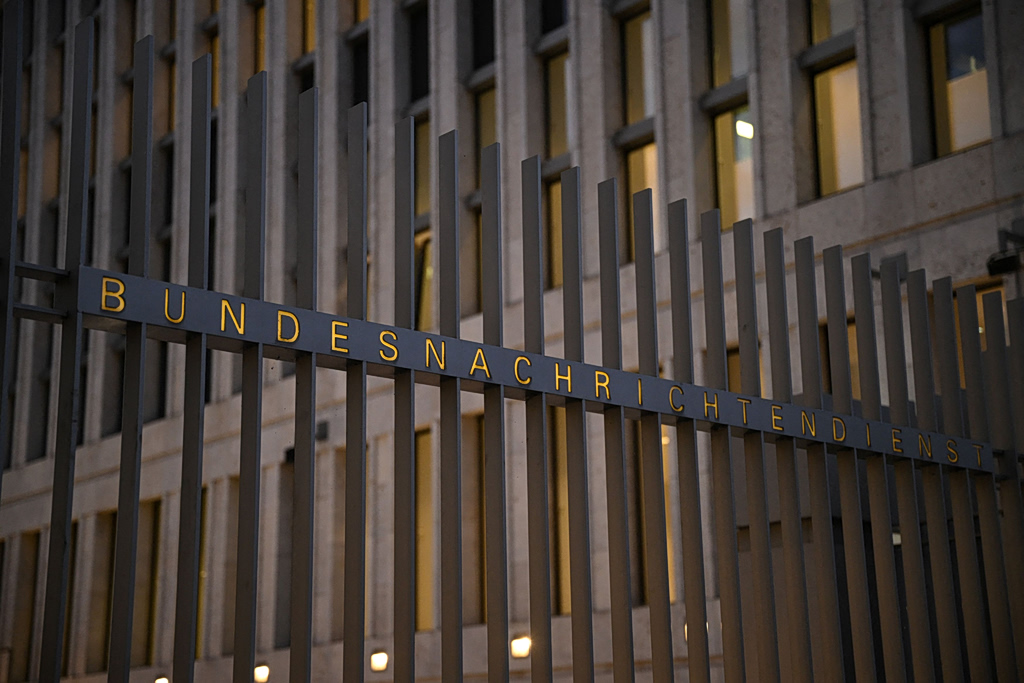
A sign on a fence outside the headquarters of the Bundesnachrichtendienst (BND), Germany’s foreign intelligence service, is pictured, after former BND chief August Hanning was arrested on Tuesday on suspicion of attempted treason and obtaining state secrets, in Berlin, Germany, October 6, 2026. REUTERS/Annegret Hilse
Among the BND’s most glaring intelligence misses was its initial failure to appreciate the extent of Russia’s hostile turn against the West under President Vladimir Putin . When the Kremlin had a Chechen activist shot dead in the center of Berlin in 2019, BND analysts initially doubted Moscow was responsible, according to a former agency official.
Three years later, the BND failed to predict Russia would invade the whole of Ukraine: When the invasion came in February 2022, Bruno Kahl, the then-BND president who was in Kyiv for meetings, had to be exfiltrated by road from Ukraine.
In the early 2000s, the BND scaled down its counterespionage efforts, leaving it more vulnerable to penetration by hostile agencies. In recent years, it suffered a succession of leaks, with consequences ranging from limited to catastrophic.
In late 2022, police arrested a senior BND officer , who had worked on signal intelligence and had access to classified information about Ukraine, on suspicion of passing information to Russia.
This followed the conviction in 2016 of a junior BND worker who was sentenced by a Munich court to eight years in prison for selling information to the U.S. and offering to spy for Russia.
“Jäger has a great deal of intelligence diplomacy to do now,” to reassure allies that he has a good handle on his agency, said Kiesewetter, the lawmaker.
Write to Bertrand Benoit at bertrand.benoit@wsj.com