 Μake us preferred on Google
 WASHINGTON—Before the U.S. went to war , Gen. Dan Caine , the chairman of the Joint Chiefs of Staff, told President Trump that an American attack could prompt Iran to close the Strait of Hormuz.
Caine said in several briefings that U.S. officials had long believed Iran would deploy mines , drones and missiles to close the world’s most vital shipping lane, according to people with knowledge of the discussions.
Trump acknowledged the risk, these people said, but moved forward with the most consequential foreign-policy decision of his two presidencies. He told his team that Tehran would likely capitulate before closing the strait—and even if Iran tried, the U.S. military could handle it.
Now, two weeks into the war, Iran’s leaders have refused to back down, and the Strait of Hormuz has emerged as Tehran’s most potent leverage point.
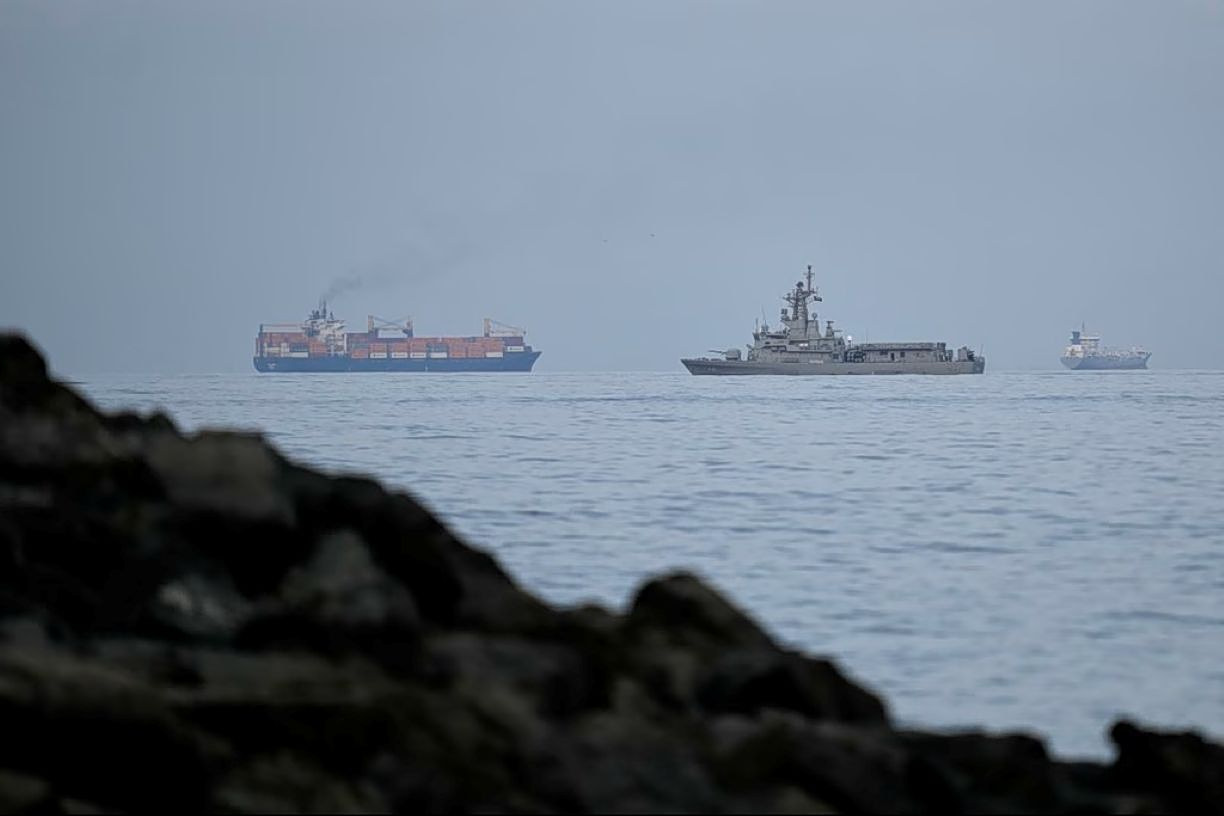
Iran has blocked tankers from the strait and struck cargo ships, triggering a surge in oil prices and an energy shock rippling around the world. U.S. forces are targeting Iran’s mine-laying ships and factories, trying to prevent the country from lining the waterway with explosives.
The joint U.S.-Israel military operation has killed Iran’s supreme leader, targeted military headquarters and damaged or destroyed more than 90 Iranian vessels.
Yet, the price has been steep. At least 13 Americans have been killed, including six in a crash Thursday of an Air Force refueling plane, making the war in Iran the deadliest military operation of Trump’s two terms. At least 140 Americans have been wounded in the conflict. Roughly 175 people, mostly children, were killed in a strike on a girls’ school in Iran, which a preliminary U.S. investigation found was likely launched by U.S. forces.
The U.S. operation is costing billions of dollars a week. More broadly, the growing risk of a widening and drawn-out war threatens the American economy, raising warnings of stagflation, a quagmire of stagnant growth and high inflation.
Behind Trump’s rationale for war was a deep confidence in the capabilities of the U.S. military to deliver a swift, decisive victory, according to administration officials and others familiar with the matter. The president’s trust in Caine was buoyed by the successful U.S. strikes on Iran’s nuclear sites last year and the January raid that captured Venezuela’s autocratic leader, Nicolás Maduro .
The White House said Trump understood the risks of launching the war, but was determined to eliminate the national security threat posed by Iran. Before the president approved the operation, he and his advisers discussed options to force the reopening of the strait and use the U.S. Navy to escort tankers through the waterway, the people said.
With the strait nearly closed, the Pentagon is now concerned that any American warships escorting tankers through the strait would be targets unless the U.S. destroys Iranian vessels and coastal defense weapons, including drones and missiles.
The possible closure of the strait was one of several scenarios Caine and other advisers outlined for Trump in the run-up to the war. Caine also expressed confidence the U.S. military could hobble Iran’s navy and missile arsenal, according to people with knowledge of the discussions, as well as further reduce its capability to build and deploy a nuclear weapon.
Caine provided the president with “a full spectrum of military options, along with precise and thoughtful consideration of the secondary effects, implications and risks associated with each option,” said Joe Holstead , Caine’s spokesman.
“The Pentagon has been planning for Iran’s desperate and reckless closure of the Strait of Hormuz for decades, and it has been part of the Trump administration’s planning well before Operation Epic Fury was ever launched,” said White House press secretary Karoline Leavitt .
The U.S. operation to wipe out Iran’s military capability “is quite literally intended to deprive them of their ability to close the Strait,” Leavitt said.
Some of Trump’s outside advisers are urging him to find an exit ramp, but the president has no plans to immediately end the war, aides and officials said, instead pushing to continue strikes on Iran’s military and proxy forces.
That contrasts with Trump’s public statements that the mission has largely been accomplished. “We’ve won,” he told a crowd in Kentucky on Wednesday.
U.S. military officials said the conflict would likely last a few more weeks, at least.
Trump announced Friday evening that the U.S. bombed military targets on Iran’s Kharg Island, intending to pressure Tehran into reopening the strait. The island is where Iran exports 90% of its crude oil, but the attack spared oil infrastructure “for reasons of decency,” he said on social media.
“However, should Iran, or anyone else, do anything to interfere with the Free and Safe Passage of Ships through the Strait of Hormuz,” Trump said, “I will immediately reconsider this decision.”
Small circle
The president’s critics say the closure of the strait and the resulting economic turmoil reflect a lack of planning and thoughtful consideration in the weeks before the war.
“They had no plan to address the crisis in the strait,” said Sen. Chris Murphy (D., Conn.), who joined a classified briefing Tuesday with administration officials about the operation. “The fact that these guys didn’t have a plan ahead of time, and a week into the war still didn’t have a plan, was pretty shocking.”
Defense Secretary Pete Hegseth said Friday that Iran’s decision to block the strait was a sign of “sheer desperation,” adding “we have been dealing with it, and don’t need to worry about it.”
Typically, war preparations include weeks or months of classified deliberations, written planning documents, the airing of dissenting views from diplomats and intelligence officials, and National Security Council meetings with cabinet members to make the most informed decision.
Only a small group was looped into the preparations for Iran—including Vice President JD Vance, Secretary of State Marco Rubio and Hegseth. That narrowed the advice, information and ideas available to the president, who had to balance the many downsides of an attack.
The small-group arrangement was by design , administration officials said. It allowed Trump to respond quickly to shifting developments and was similar to how the president handled the strikes on three Iranian nuclear sites in June. Another reason was to contain leaks, officials said.
Left unanswered were such questions as how to evacuate U.S. citizens in an escalating conflict—or ensure the next Iranian leader was friendly with Washington, U.S. officials said.
Some senior aides and U.S. diplomats who manage Middle East affairs were told little to nothing about plans for the war. They learned the bombing had started from social media and news reports.
With a majority of Americans in polls opposing the war, Trump and his advisers have been trying to make the case that the conflict won’t drag on like the so-called “forever wars” in Iraq and Afghanistan—a red line for many lawmakers and the president’s MAGA base. The president and his advisers say disruptions in the energy market will soon pass.
The White House and the Pentagon have launched an aggressive messaging campaign built around U.S. invincibility, mirroring Trump’s own conviction that American military superiority can overcome and outlast Iran’s retaliation. U.S. government accounts have posted stylized videos of strikes, some interspersed with movie or videogame footage.
The U.S. is “winning decisively, devastatingly and without mercy,” Hegseth said, an effort to reassure Americans that the conflict remains firmly under control.
At the same time, Trump’s team is privately trying to reassure the president that conservatives aren’t abandoning him. They have provided him with polling data in recent days that they say shows the war is popular with his supporters, people familiar with the matter said.
Some Trump allies who have grown skeptical of the operation have coordinated behind the scenes to schedule appearances on Fox News and other TV networks watched by the president to sound a note of caution and warn against a deeper U.S. commitment.
The president’s advisers say the military operation has unfolded as they hoped it would. The military has launched strikes on roughly 6,000 Iranian targets, heavily damaging Iran’s navy and weapons arsenals, which has weakened the regime’s ability to project power throughout the Middle East and harm Americans in the region.
‘Hornet’s nest’
Iran’s new hard-line Supreme Leader Mojtaba Khamenei—who was appointed to replace his father—has vowed to keep ships from the Strait of Hormuz. The regime remains firmly in control and is unlikely to fall soon, according to U.S. and Israeli intelligence.
Before the operation, Trump was briefed on a Central Intelligence Assessment that removing Supreme Leader Ayatollah Ali Khamenei in U.S. military operations could lead to other hard-liners taking power, according to a senior administration official.
“The Trump administration has kicked hard, but not destroyed, a hornet’s nest,” said Karim Sadjadpour, an Iran specialist at the Carnegie Endowment for International Peace in Washington.
Foreign diplomats in Tehran anticipate that Iran will aggressively police the waterway, hoping the high cost to the U.S. will persuade Trump to walk away from the war.
The president and some advisers were surprised at the breadth and scope of Iran’s retaliation, which included missiles and drones launched at regional countries from Azerbaijan to Oman, according to people familiar with the matter.
Allies in the Gulf are privately furious with the U.S., according to diplomats and others familiar with the matter. They blame the Trump administration for triggering a war that put them in the crosshairs and pierced their image of a luxurious, business-friendly locale free of the region’s chaos. Trump has been privately calling those leaders this week, according to a person familiar with the conversations.
Americans have been caught in danger, as well. The State Department didn’t urge U.S. citizens to depart countries in the region or evacuate some embassies until after the war began. By then, commercial airspace was already closed, leaving tens of thousands of Americans stranded in the Middle East and U.S. diplomats at some embassies in harm’s way.
“The State Department acted immediately and pre-emptively to protect the safety and security of diplomatic personnel and fulfill our mission to serve the American people,” State Department spokesman Tommy Pigott said.
In the U.S., volatility in gas prices and the oil market have led to the largest-ever oil release from global strategic reserves, sparking anger from oil companies seeking fewer price fluctuations.
The White House has refused to publicly rule out ground forces, prompting new pressure on Capitol Hill over the war’s costs, casualties and lack of a clear endgame.
Trump faces two difficult choices, analysts say: End hostilities and leave a wounded regime likely to rebuild its arsenal and terrorize regional allies. Or continue bombing at the risk of broader instability, more casualties and a political backlash among voters who believed Trump would end U.S. involvement in foreign wars, especially in the Middle East.
With oil prices spiking and stocks cratering, White House officials this week have rolled out a new messaging strategy: The conflict will end quickly—once the U.S. completes its military objectives. The administration hopes the message will calm markets, officials said.
Trump told reporters this week the war would end “very soon.” Just a handful of targets are left, he said. On Friday, Trump said he would end the war when he feels it “in his bones.”
U.S. officials, however, say privately there are no plans to withdraw forces— more Marines and warships are headed to the region—and some expected the fighting to last weeks or longer.
Another scenario, the officials said: Trump simply declares victory and calls it quits.