Athens, one of Europe’s cities most exposed to the effects of climate change, may soon find relief through an ambitious collaboration with Harvard University. Experts led by Bas Smets — a landscape architect and professor at Harvard, known for redesigning the public space around Notre-Dame Cathedral in Paris — have unveiled bold ideas to “cool” and rejuvenate the Greek capital.
Athens on the Frontline of the Climate Crisis
At a recent City of Athens event under the “Cooling Athens” program, Mayor Haris Doukas emphasized the urgency of action. “Athens stands on the frontline of the climate crisis,” he said. “With limited green space, we are investing in innovative solutions that lower temperatures and improve residents’ quality of life.”
Doukas highlighted projects including the ASCEND pilot cities initiative, the “Cooling Havens” scheme, and urban renewals in Elaionas, all blending greenery, water, and technology. Athens, he noted, is committed to cutting emissions by 80% by 2030 as part of the EU’s “100 Climate-Neutral Cities” network. “Our partnership with Harvard and Professor Smets paves the way for a cooler, more resilient city,” he added.
Nature as Technology
For Smets, adapting cities to climate change is “not only a technical challenge, but a cultural one.” In Athens, he argues, “light, soil, and greenery can work together to reshape the public realm and create new microclimates.” His team studies the city’s conditions from 2025 to 2100, testing four warming scenarios ranging from +2°C to +5°C.
Two Green Visions for a Cooler City
The proposals focus on nature-based solutions that activate the ground, water, and vegetation:
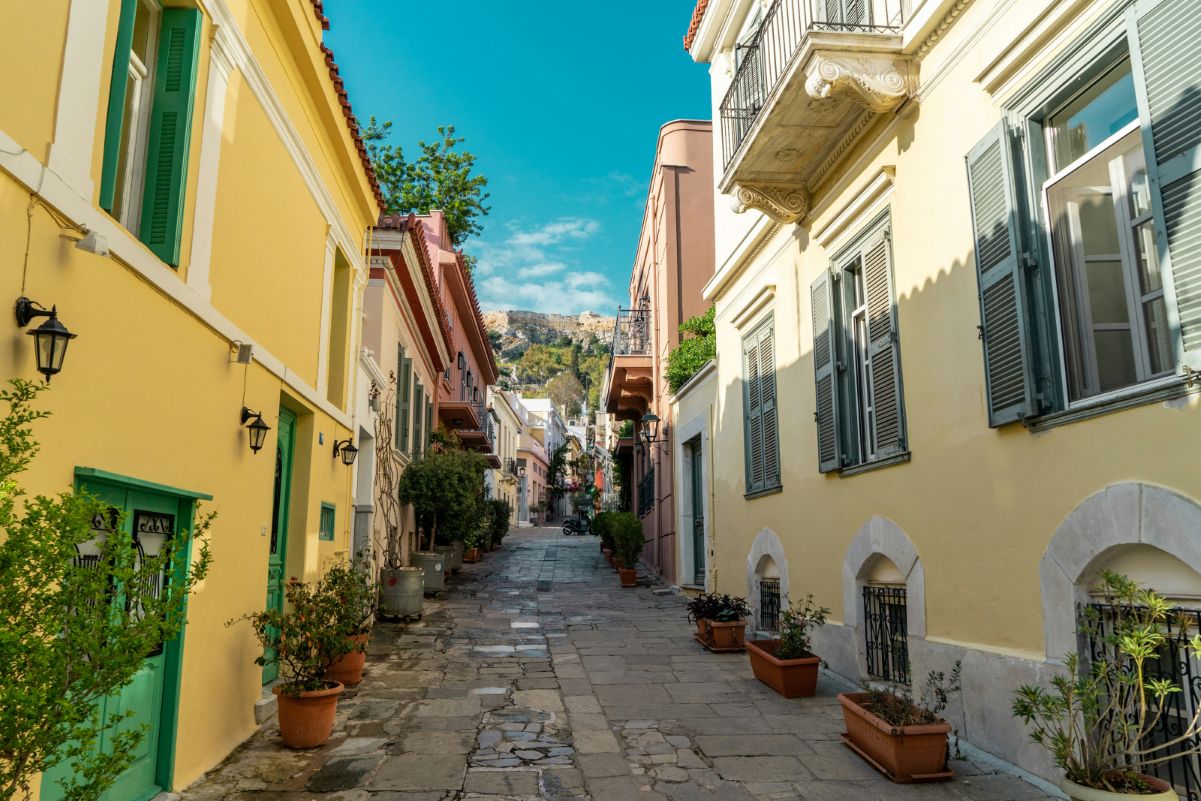
• Plaka Green Canopy: A network of climbing plants weaving through Plaka’s narrow streets to provide natural shade and cooler façades.
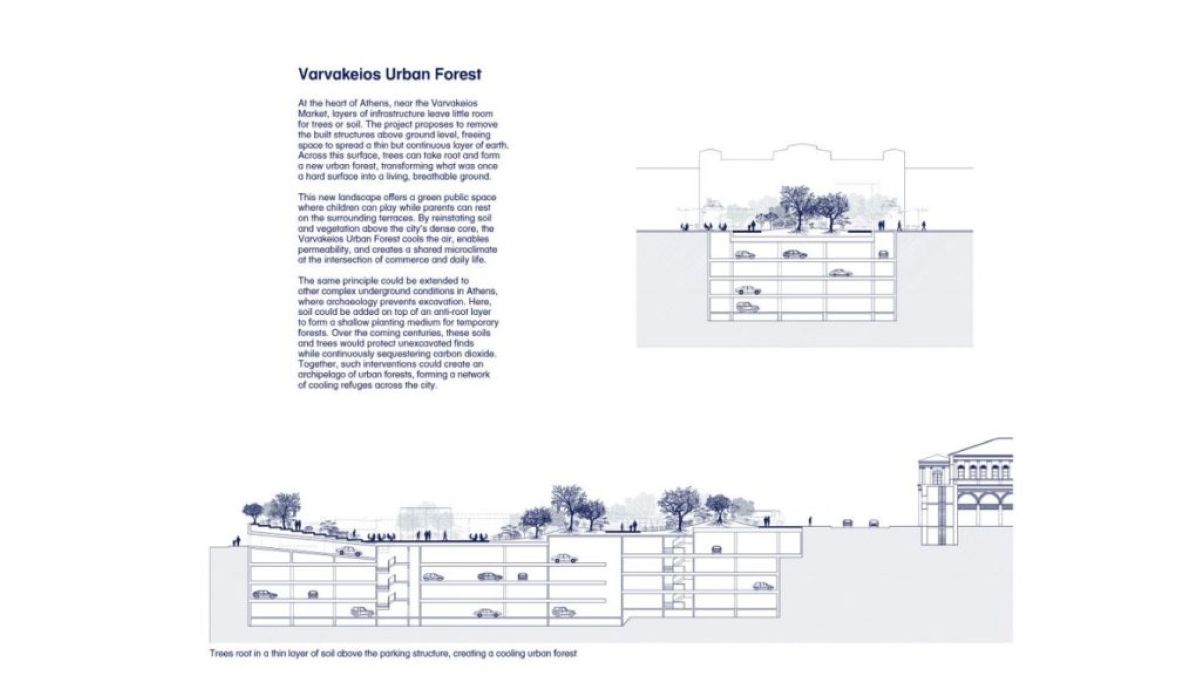
• Varvakeios Urban Forest: A new park above the existing market parking area, transforming hard surface into an “urban forest” — a lush public space for rest and play, and a vital cooling hub for central Athens.