
 Μake us preferred on Google
 Last year, the fashion industry underwent a massive rearrangement of creative direction, and with new leadership comes first introductions.
Regardless of a designer’s previous establishment, the question now is how they will fit into, or disrupt, their new style jurisdictions. And while change can be intimidating, it is also exhilarating.
In fashion, longevity requires fresh blood — someone to pick up where the last designer left off. And to maintain coherence with the brand’s identity, designers often start by examining the fashion house’s archive — a collection of past works preserved for their cultural and historical significance.
But garment preservation only became standard within the last 50 years, with brands like Dior establishing archives decades after their initial founding.
View this post on Instagram
During the early years of the fashion industry, the goal was to define style for the consumer through novelty. However, as clothing became worn out, threads loosened, and consumers sought more, brands had to continue innovating while maintaining a loyal customer base built on the attractive qualities of their foundation, so preservation became a necessity. Now archives keep fashion houses breathing.
However, the relationship between the archive and contemporary creative direction is different for each house, and this was evident in the vast array of debuts at the recent Spring/Summer 26 shows just weeks ago.
Versace: Resurrection
One of the most anticipated debuts of this past season was Dario Vitale for Versace. Vitale, who was previously a designer for Miu Miu, assumed the position of creative director at Versace following the stepdown of Donatella Versace, sister of the brand’s late founder, Gianni Versace.
Though now sitting at the helm of a new fashion house, Vitale was stepping into somewhat familiar territory. Growing up in the 1980s and 90s, his mother owned many of Gianni Versace’s designs. Naturally, the inspiration for his debut drew directly from the iconography of the legend’s late-1980s catalog.
Through men’s backless tops, slim, low-cut muscle tees, and the synthesis of baroque and pop art, wool cardigans and beaded bralettes, the Italian glamour and Miamian party culture that once defined Versace has made its way back to the runway.
View this post on Instagram
View this post on Instagram
For those who unfortunately did not have the opportunity to see Gianni’s designs walk down the runway in real time, Vitale’s collection felt like a resurrection — the dawn of a new era Gianni fans had been longing for. His Versace is a tribute to Gianni’s disruption of Italian luxury at the time, when former Vogue Editor-in-Chief Anna Wintour famously wrote, “Armani dresses the wife, Versace dresses the mistress.”
View this post on Instagram
Under Donatella, Versace felt somewhat diverted from Gianni’s vision — there was a lightness that contrasted with the Lilithian archetype that drove Gianni’s work. Donatella brought Versace into the daytime, as opposed to the night crawler that walked her brother’s runways. But under Vitale, the socialite Medusa has returned.
Balenciaga: Nostalgia
But if Versace looked to the archive for resurrection, Balenciaga approached it with introspection.
For the past 10 years, Balenciaga’s now former creative director Demna has completely reimagined the image of the Spanish fashion house, combining luxury and streetwear with a dark campiness that he has become synonymous with.
However, once Pier Paolo Piccioli assumed the role of creative director in May earlier this year after his departure from Valentino, it was clear that his Balenciaga would be different. The show was themed around the formation of the heart within the womb, signaling a rebirth of the Spanish label. But rather than a rebirth that departs, Piccioli decided to return to the roots.
View this post on Instagram
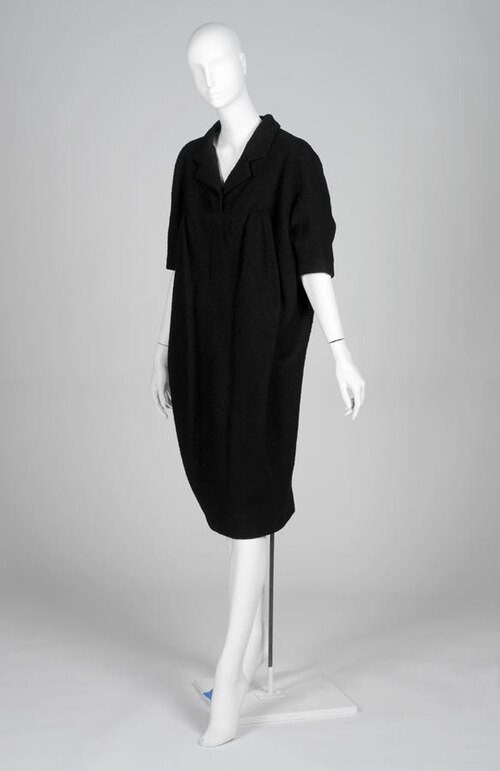
The first look was directly referential to Cristobal Balenciaga’s infamous and once-controversial “sack dress” of the 1950s, although Piccioli’s was more elongated. The looks that followed adhered to a similar, loosely fitted, and at times shapeless spirit that Balenciaga championed, appearing in the form of tunics, skirts, and other interpretations of the dress — an homage to the single garment that made Balenciaga so popular.
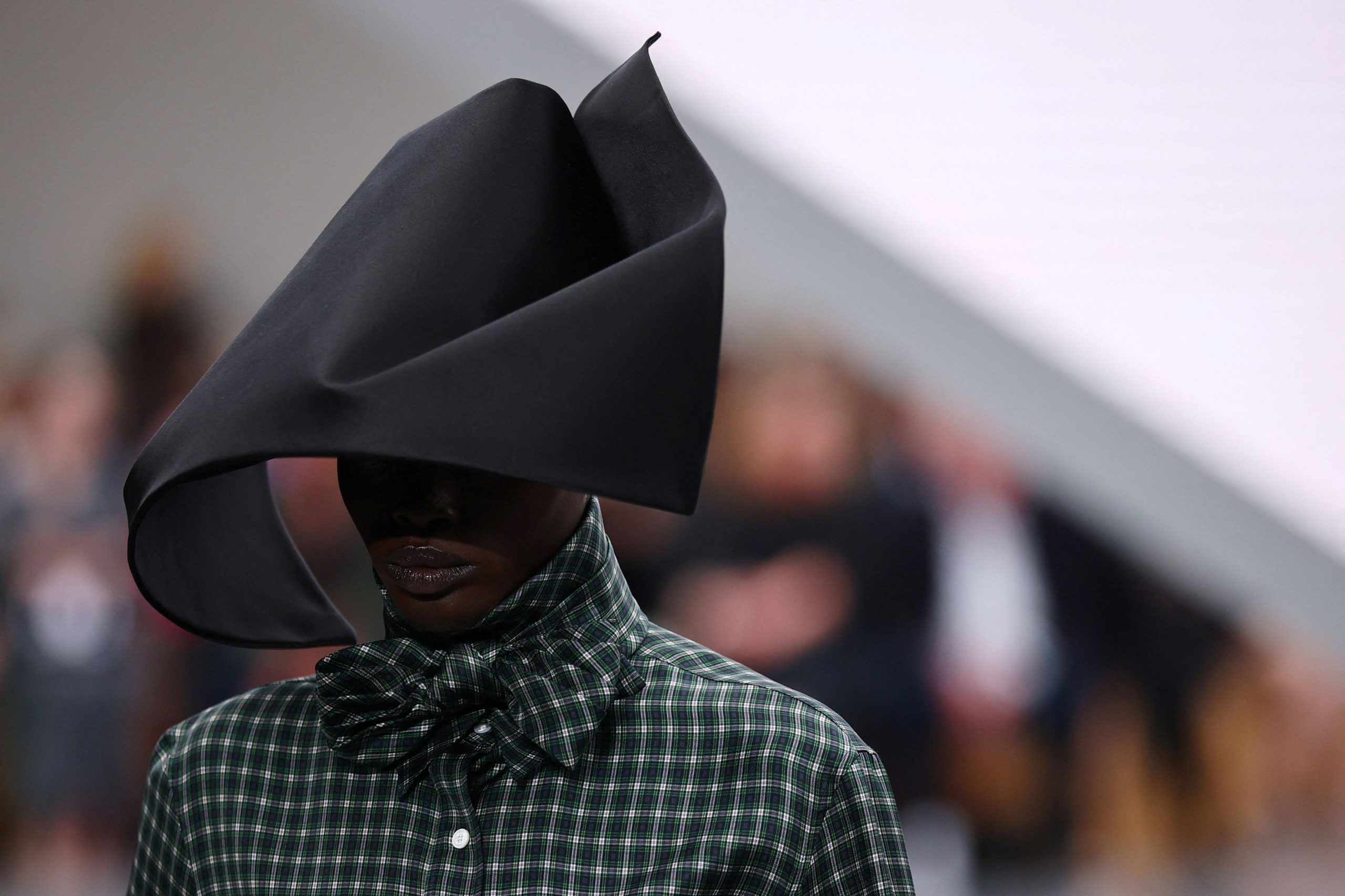
However, the Italian designer did not hesitate to pay homage to Demna as well. Both the opening and closing looks also featured the Georgian designer’s signature dramatic sunglasses, as a nod to the many lives of Balenciaga.
View this post on Instagram
For a moment, the Spanish house’s identity felt hazy. At times, Balenciaga felt more like Demna. While maintaining a signature is incredibly valuable in establishing a personal design identity, it may confuse the consumer. But with Demna now leading Gucci, his latest collection may have shown that the freedom and grime he exercised at Balenciaga may not be following him to Milan.
Nonetheless, Piccioli’s presentation in Paris reminded the audience that when your vision gets blurred and your direction feels unclear, returning home may provide answers.
Dior: Reinterpretation
Jonathan Anderson’s Dior, however, sought reinterpretation rather than revival.
Making his initial debut as director of menswear at Dior in June, Anderson made his womenswear debut at Paris Fashion Week earlier this month.
The show opened with a film screened in the middle of the room, highlighting iconic looks and silhouettes from the House of Dior on the runway and in cinema — archival moments that were likely to be referenced throughout the show.
But in a tense grand finale, the film was projected into a box underneath the suspended silver screen pyramid, signaling a new chapter that may call upon the past whenever it pleases.
“I thought of it like the shoe box everyone has in their house of old photos and memories. So I can open it, take something from it, shut it, and not look at it. Like everyone does,” he told Vogue backstage.
Anderson’s Dior is one about repurposing. Archive finds its way back to the stage through essence rather than pure replication.
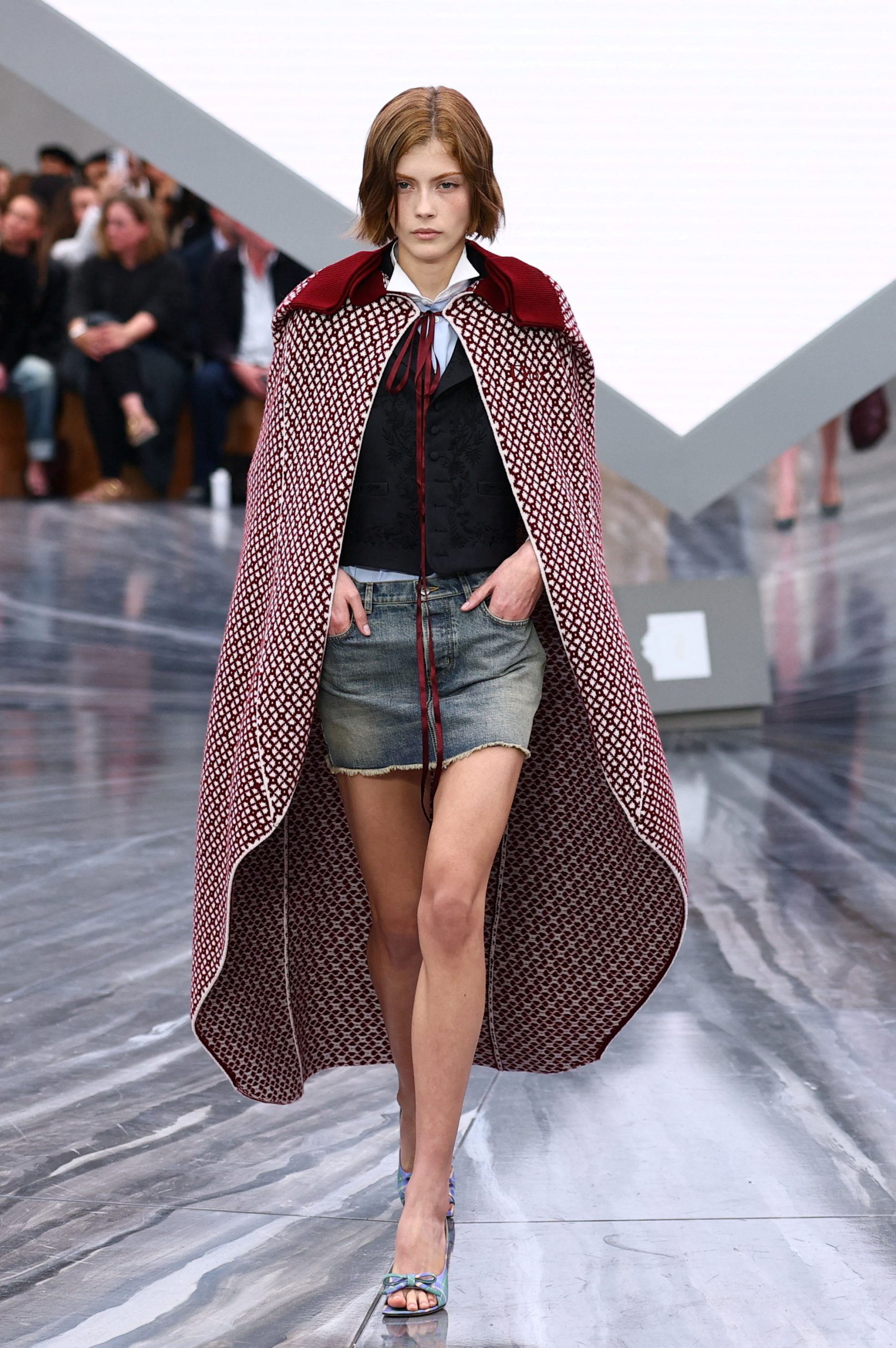
A model presents a creation by designer Jonathan Anderson as part of his Spring/Summer 2026 Women’s ready-to-wear collection show for the fashion house Christian Dior during Paris Fashion Week in Paris, France, October 1, 2025. REUTERS/Sarah Meyssonnier
Through nods to Monsieur Dior’s capes and a reimagined, less constrictive Bar jacket, rather than taking steps back, Anderson pulled references into the present. He maintained Dior’s legacy of expansion and elasticity, setting new traditions and letting go of what no longer serves the “Diorian” imagination.
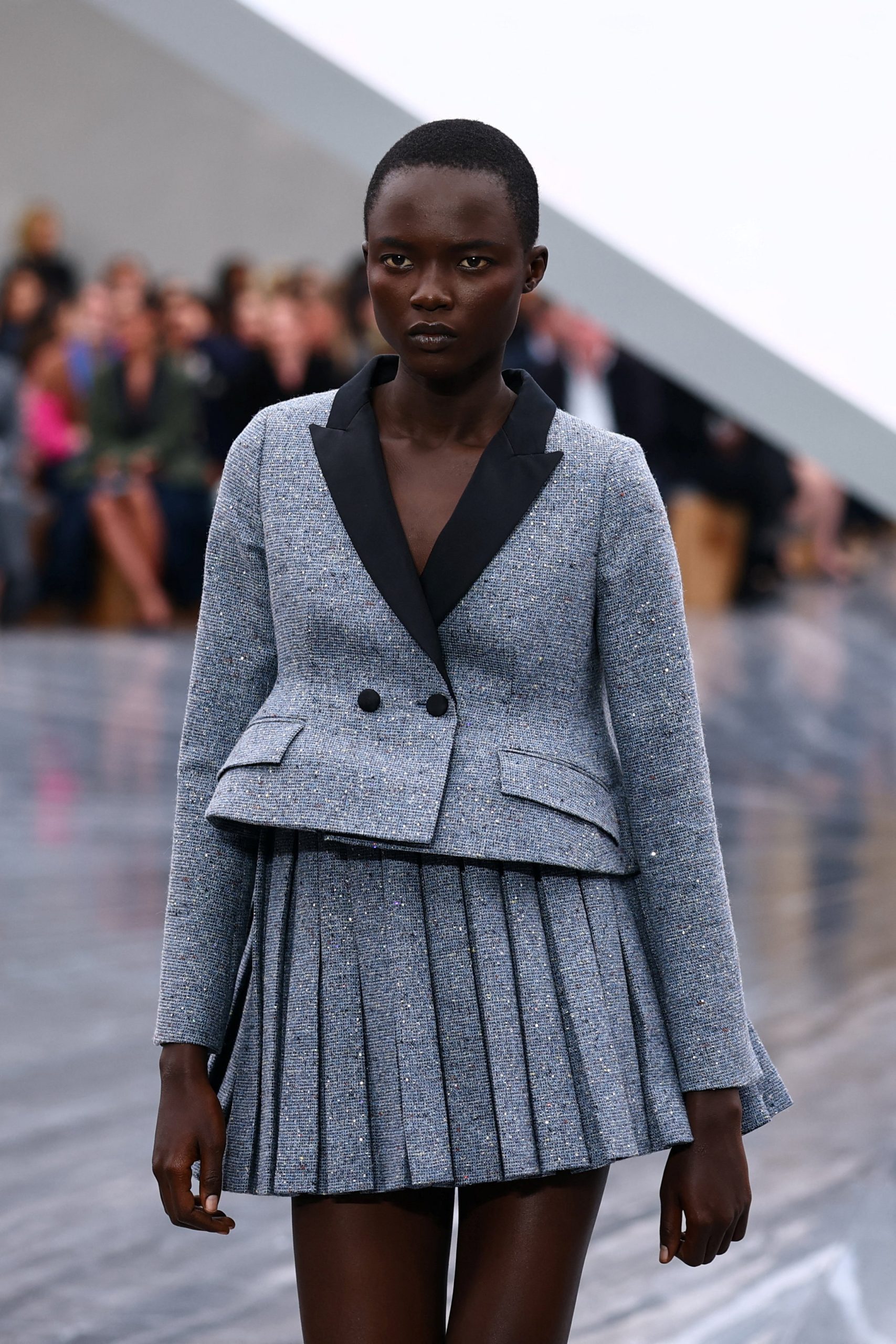
A model presents a creation by designer Jonathan Anderson as part of his Spring/Summer 2026 Women’s ready-to-wear collection show for the fashion house Christian Dior during Paris Fashion Week in Paris, France, October 1, 2025. REUTERS/Sarah Meyssonnier
Evident through uncinched waistlines, flared coats, lace dresses that flutter, and bubble skirts of various lengths, Anderson’s Dior is not defined by the constriction of the brand’s genesis.
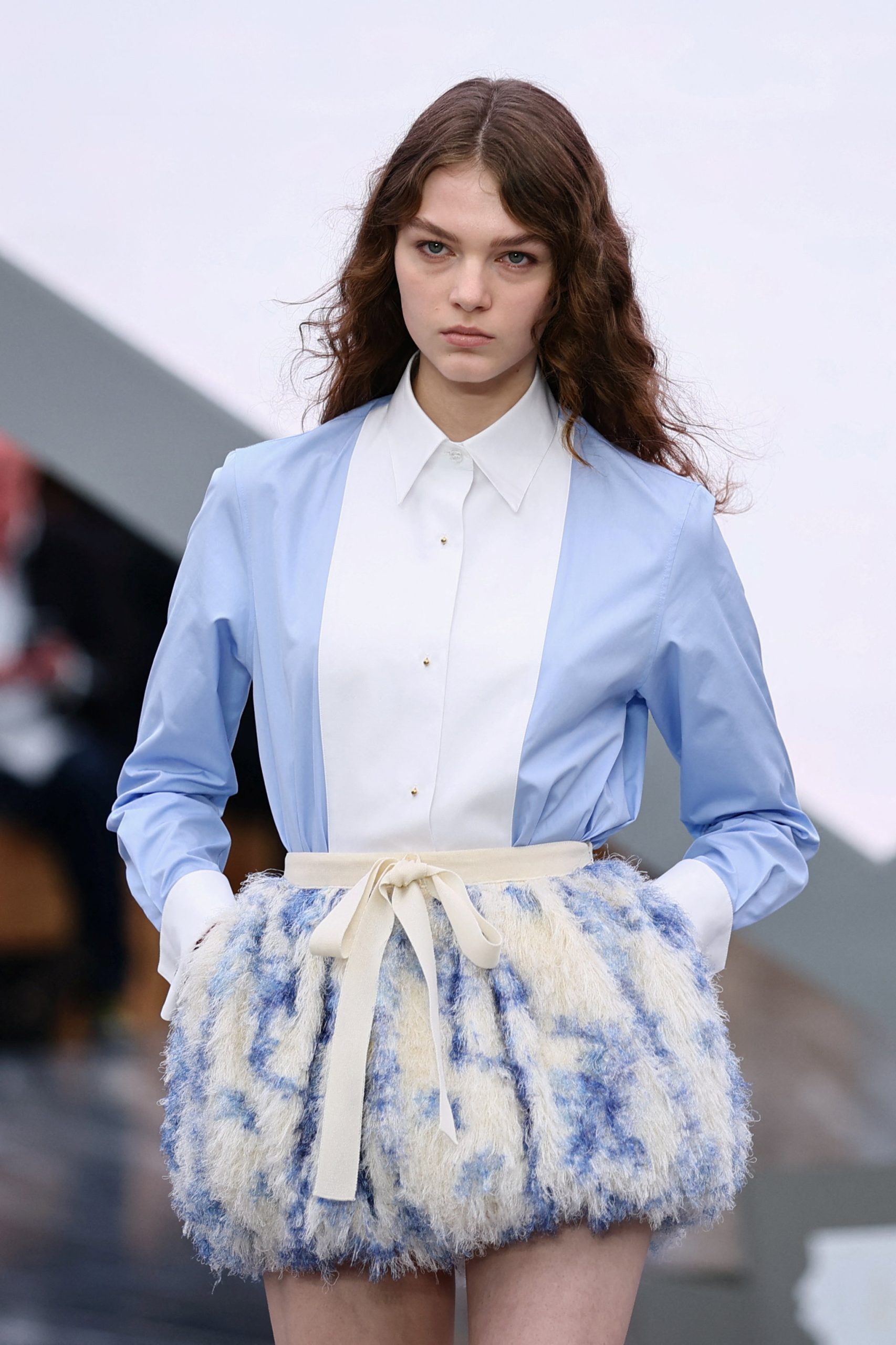
A model presents a creation by designer Jonathan Anderson as part of his Spring/Summer 2026 Women’s ready-to-wear collection show for the fashion house Christian Dior during Paris Fashion Week in Paris, France, October 1, 2025. REUTERS/Sarah Meyssonnier
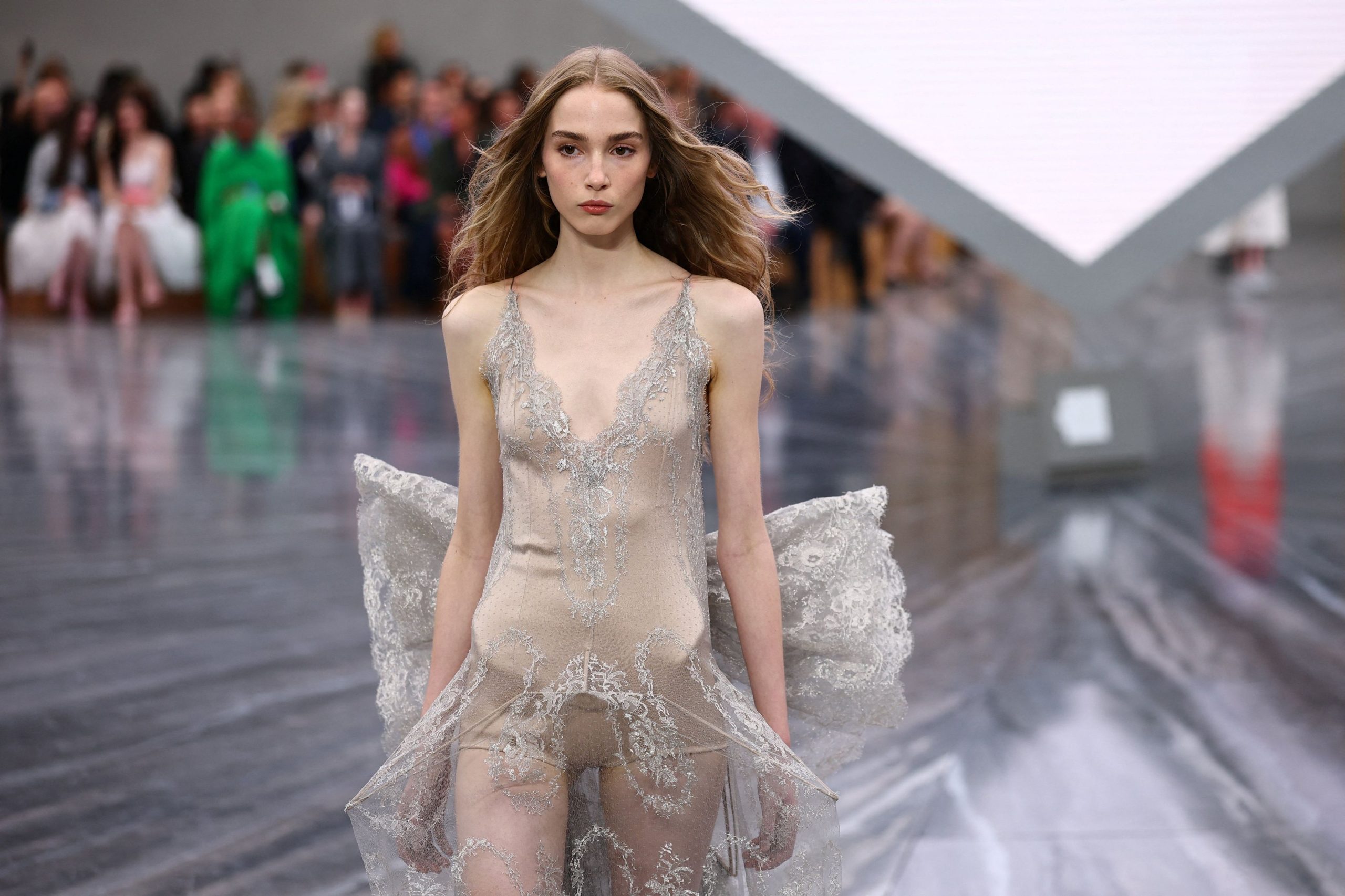
A model presents a creation by designer Jonathan Anderson as part of his Spring/Summer 2026 Women’s ready-to-wear collection show for the fashion house Christian Dior during Paris Fashion Week in Paris, France, October 1, 2025. REUTERS/Sarah Meyssonnier
“It’s going to be this conflict about leisure-meets-construction and it will be more of a ready-to-wear world,” he told i-D Magazine in early September, teasing his SS26 womenswear collection. “How do we find a contradiction of the sweatpant-meets-couture dress? What is that in today’s society?”
Gone are the days of a Dior defined by corsetry, but iconic silhouettes of the brand still live on to fit the contemporary client.
Jean Paul Gaultier: Rebellion
In a similar breath, but a little more extreme, Duran Lantink’s Jean Paul Gaultier reminded the audience that maintaining the brand’s spirit is just as, if not more, important than direct visual references.
In a political age defined by conservatism and the romanticized “good ol’ days,” it can be disheartening to see art looking to the past as well. But the Dutch designer took a bold approach to his Gaultier debut. Appearing on “The Run-Through with Vogue,” he told the podcast that for his first collection, he would be postponing his entry into the archive.
In the early 1980s, Jean Paul Gaultier began to establish himself as a fashion disruptor, helping to usher in the provocative and polarizing androgyny that broadly defined the decade. But over time, he became somewhat mainstream and celebrated for his eccentricity, eventually dressing the Queen of Pop, Madonna, for her Blonde Ambition Tour, where the iconic cone bra made its debut.
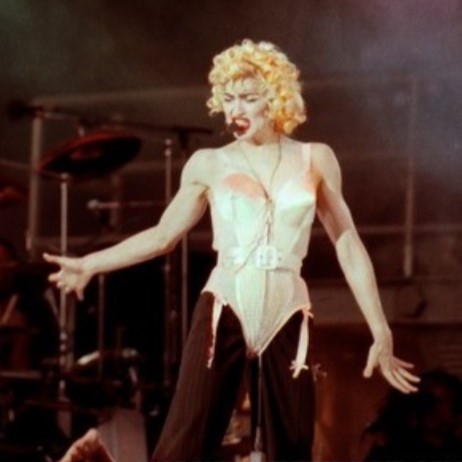
Madonna performing in the JPG cone bra on her Blonde Ambition Tour
Although this recognition was, of course, a good thing for Jean Paul Gaultier, the provocation that once earned the brand the reputation as the “enfant terrible”(literally meaning “terrible child”) became expected. It was no longer shocking.
But Lantink put an end to this pattern. As the first creative director since the brand’s namesake founder, he wanted to leave his mark.
View this post on Instagram
His signature use of shapes and structure on the body was present throughout the collection. However, what was most shocking was the hair-printed bodysuits, leaving both attendees and home-watchers stunned. Nobody knew what to make of them, and that was exactly Lantink’s goal.
View this post on Instagram
View this post on Instagram
Duran Lantink has caught a wave of intuitive provocation that broke at the end of the 20th century, leaving audiences wondering where he’ll be going from here.
While a fashion house’s archive can often be interpreted as creative constraint, the role it plays in the future of the brand is dictated by its leadership.
Archive is a tool. It allows the designer to dictate how time should be interpreted on the runway.