

 Μake us preferred on Google
When Greek Finance Minister Kyriakos Pierrakakis and his delegation traveled to Bangkok, Thailand, in recent days to attend the International Monetary Fund’s annual meetings, they faced an unexpected security dilemma: whether to fly through Frankfurt or Istanbul.
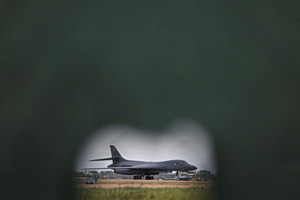
Their predicament reflects how geopolitical tensions are reshaping international travel. With Western aircraft barred from Russian airspace, flights restricted over Iran and Riyadh’s key airport closed following deadly Houthi missile attacks on Saudi infrastructure, air routes between Europe and Asia have become more limited, expensive and difficult to navigate.
Three narrow and increasingly congested corridors remain. The traditional southern route, which crossed Greece, Turkey, Israel and major Persian Gulf airports, has shifted farther south toward Egypt and the Red Sea, bypassing conflict-hit Saudi Arabia before heading toward the Indian Ocean.
A second route passes over the Black Sea, Turkey, Georgia, the Caucasus, Azerbaijan, the Caspian Sea, Turkmenistan and Uzbekistan, leading toward Chinese airports. Further south, some flights may have to cross Afghanistan’s poorly monitored airspace. A third, polar route approaches the Arctic Circle, passes Greenland and descends through Canada and the Pacific toward Japan and Southeast Asia.
The disruption highlights the broader geopolitical and economic risks posed by the potential expansion of the Middle East conflict and the prolonged war in Ukraine. A wider confrontation could trigger a major global economic shock, with consequences for energy markets, inflation, financial markets and already heavily indebted Western economies.
Houthi attacks heighten risks to energy supplies
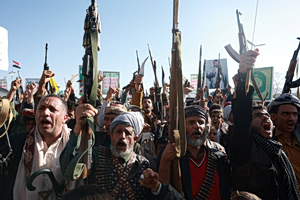
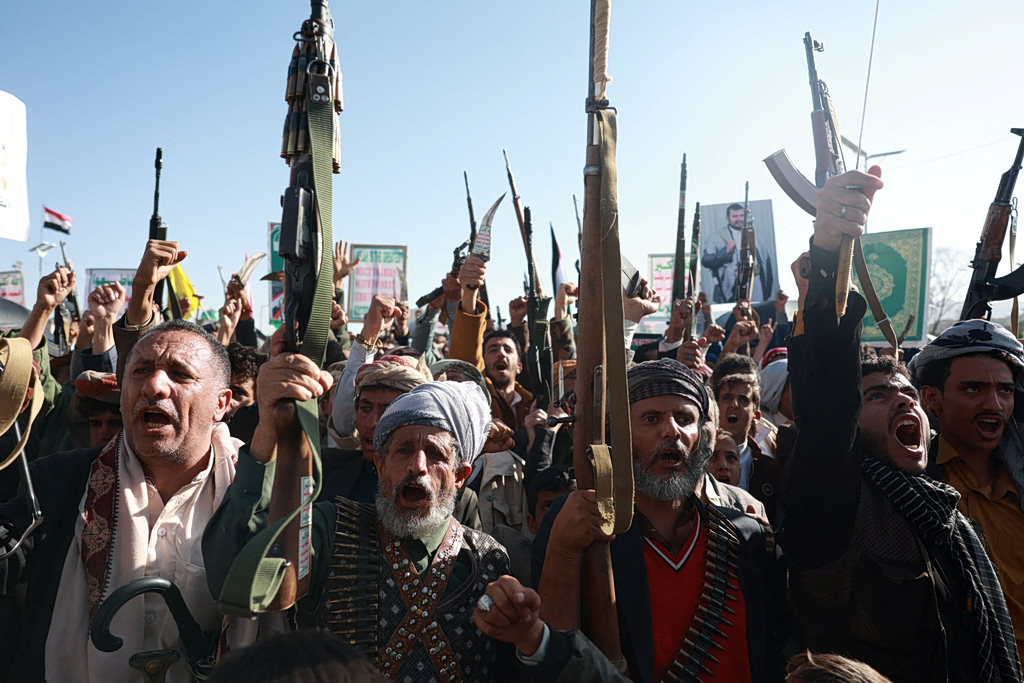
Houthi missile attacks on Riyadh’s King Khalid International Airport reportedly killed 14 civilians and injured hundreds, prompting a suspension of flights until October 18 and widespread cancellations.
The Iran-backed rebels have also threatened Saudi Aramco oil facilities, adding to uncertainty in an already disrupted global fuel market. Further damage to energy infrastructure could intensify inflationary pressures and increase volatility in bond, interest-rate and stock markets.
These risks are particularly concerning for Europe, the United States and other wealthy Western economies, where accumulated public debt has already raised concerns about a potential fiscal crisis.
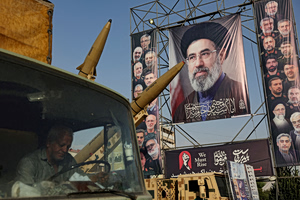
Saudi Arabia accuses Iran of waging war against it through proxies, arguing that the Houthis act on behalf of the Iranian leadership. Riyadh has warned that the confrontation could escalate into a wider regional war, with potentially far-reaching consequences for international security and global stability.
Crown Prince Mohammed bin Salman has issued a direct warning to Tehran, while the situation remains volatile.
Saudi Arabia and Israel draw closer
Following the attacks on Riyadh’s airport, Israeli Prime Minister Benjamin Netanyahu expressed support for Saudi Arabia and indicated his willingness to carry out airstrikes against the Houthis.
Saudi Arabia has not recognized Israel as a state, and relations between the two countries have been strained by the aftermath of the October 7 attacks and the destruction in Gaza. Nevertheless, they maintain informal contacts and are described as being in deep strategic alignment because they face what they consider a common existential threat from Iran.
Riyadh is also seeking to activate a defense agreement signed in Mecca last August by Saudi Arabia, Pakistan and Turkey. Egypt, which has suffered significant revenue losses because of reduced traffic through the Suez Canal amid Houthi attacks in the Red Sea, is reportedly considering joining the arrangement.
However, the participating countries have different calculations about how far they are willing to go.
Pakistan has deployed approximately 8,000 troops to Saudi Arabia to help monitor the border with Yemen, alongside aircraft, drones and air defense systems. Yet Islamabad remains cautious because of its strong ties with Iran and has shown little willingness to take part in attacks against the Houthis.
Turkey has condemned the rebel attacks as terrorist acts and expressed solidarity with Saudi Arabia, but it is not expected to send troops. Instead, Ankara is seeking to position itself as a regional mediator capable of balancing competing interests.
Turkey seeks to avoid direct involvement
Turkish President Recep Tayyip Erdoğan has repeatedly warned that further escalation could lead to a broader regional war with global consequences. Ankara is therefore expected to avoid direct military involvement, particularly as it perceives Israel as competing with Turkey for regional influence.
Another major uncertainty is the possibility of renewed U.S. military action against Iran. President Donald Trump, whose country is a guarantor of Saudi security, has threatened to resume the war against Iran after the November 4 midterm elections.
Such a move could draw Russia and China into the confrontation, creating what international analysts describe as an “October surprise”: a sudden military escalation that could turn the Middle East into a powder keg and plunge the world into unprecedented geopolitical and economic turmoil.
Yemen faces a severe humanitarian crisis
Yemen, now at the center of the confrontation, is itself experiencing a devastating humanitarian emergency. The country, once known in antiquity as Arabia Felix, or “Happy Arabia,” is suffering a major food crisis amid prolonged famine conditions.
Approximately 22 million people — around half the population — urgently need food assistance to survive. More than 2.2 million children under the age of five suffer from acute malnutrition.
Of those children, approximately 500,000 are experiencing severe acute malnutrition at its most advanced stage and risk dying without timely emergency medical treatment and nutritional assistance.
The crisis underscores the human cost of a conflict that also threatens the economic ambitions of neighboring Saudi Arabia.
War puts Saudi Arabia’s Vision 2030 at risk
Saudi Arabia’s ambitious Vision 2030 program is designed to reduce the kingdom’s dependence on oil and transform its economy and society. The initiative involves hundreds of billions of dollars in investment and a series of vast development projects along the country’s northwestern Red Sea coast.
Among them is NEOM, a futuristic development planned across an area roughly the size of Albania and intended to operate entirely on green energy.
The project includes The Line, a mirrored linear city; Oxagon, a planned floating, octagonal industrial and technology city on the Red Sea intended to become a global logistics hub; and Trojena, a mountain destination in the desert featuring an artificial lake and ski resort. Trojena was due to host the 2029 Asian Winter Games.
The conflict has already begun to undermine the program’s original ambitions. Budgets are being cut, and expectations that millions of people would settle in the new developments have been scaled back.
International investment is under threat, construction projects are facing delays, and foreign technical personnel are leaving. Transport disruptions and supply-chain shortages are adding further obstacles.
The uncertainty surrounding Vision 2030 illustrates how a regional conflict can threaten major investment plans far beyond the battlefield. The prospect that a relatively inexpensive campaign by an irregular force estimated in the article at 350,000 fighters could destabilize the Middle East and trigger a major global economic shock highlights the scale of the risks now facing the international community.