 Μake us preferred on Google
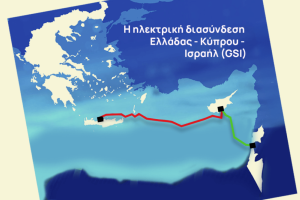
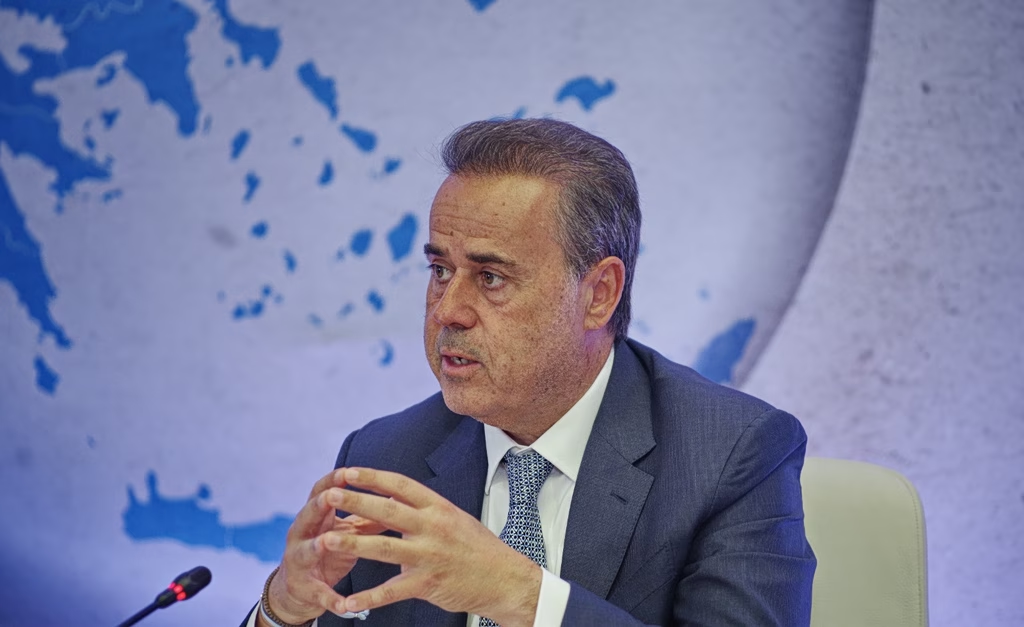
 Greek Environment and Energy Minister Stavros Papastavrou said the entry of French investment group Meridiam as the majority shareholder of the Great Sea Interconnector (GSI) company will accelerate progress on the ambitious electricity interconnection project between Greece, Cyprus and Israel.
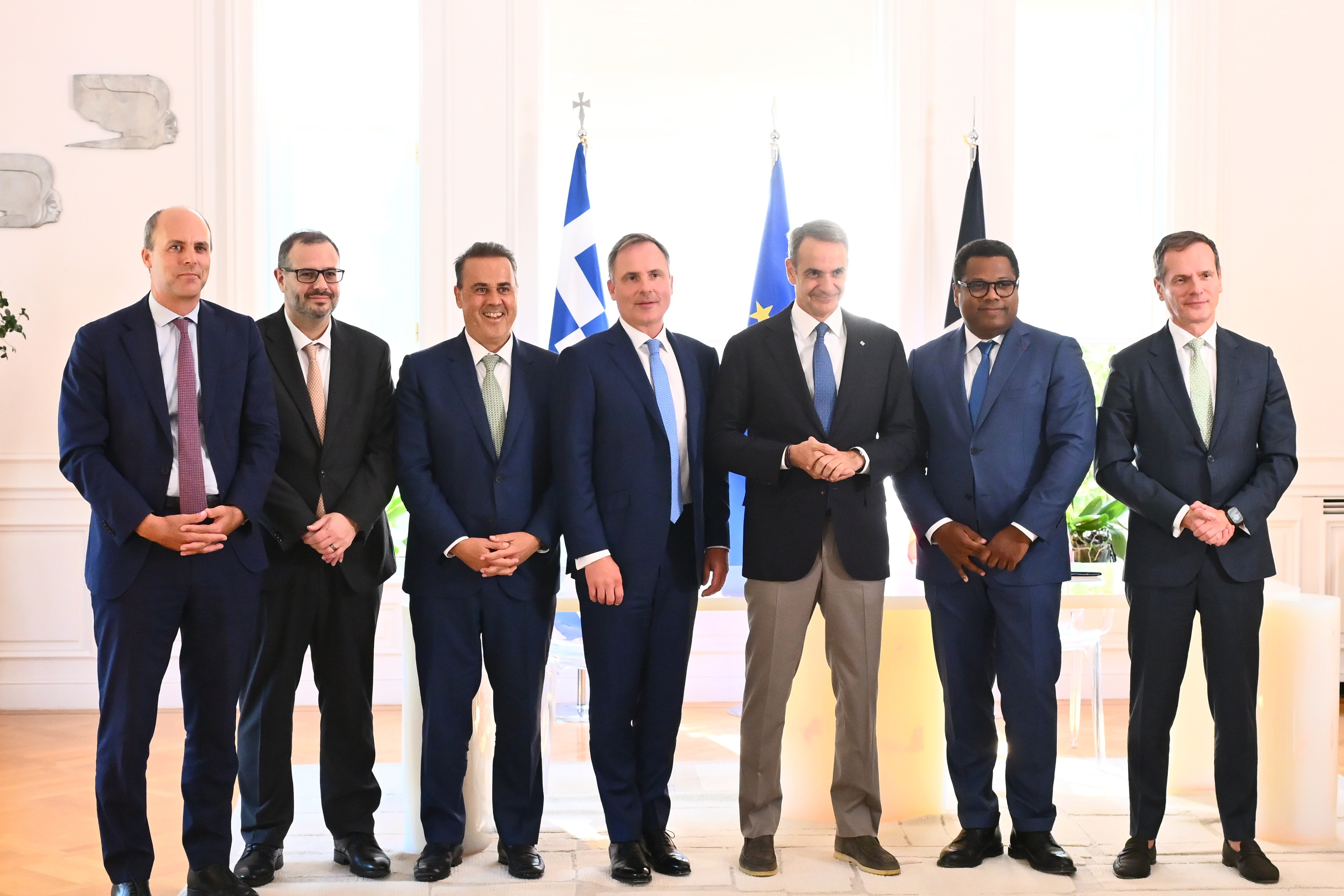
“The significant agreement creates a new and strong dynamic for accelerating and implementing the GSI,” Papastavrou said, referring to the deal signed at the Maximos Mansion in Athens in the presence of Prime Minister Kyriakos Mitsotakis.
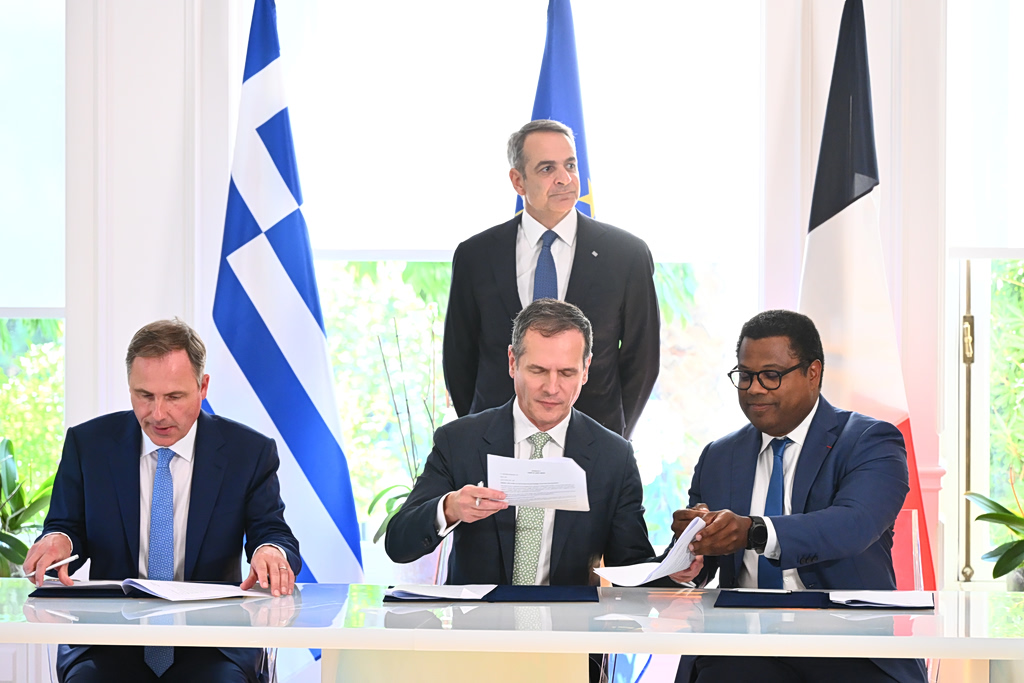
Speaking to Greek television channel OPEN, Papastavrou said the agreement brings together Greece’s Independent Power Transmission Operator (IPTO/ADMIE) and a major French investment group with experience in similar projects.
“Essentially, ADMIE is joining forces with a very large French investment group, which has carried out the underwater electricity interconnection between the United Kingdom and Germany. Therefore, it has completed a similar project, worth €2.8 billion, with comparable technical difficulty,” he said.
The minister acknowledged that the GSI is a challenging project involving technical, geopolitical and financial difficulties.
“Nobody said that all these problems would be solved magically in one day,” he said. “One thing is certain: the creation of this new strong momentum will certainly help address all these difficulties in a much better way.”
Papastavrou said the agreement broadens the number of participants involved in the project, emphasizing that the interconnection is not only a matter concerning Greece, Cyprus and Turkey, but a European issue.
He also highlighted that the deal demonstrates the close relationship between Greece and France.
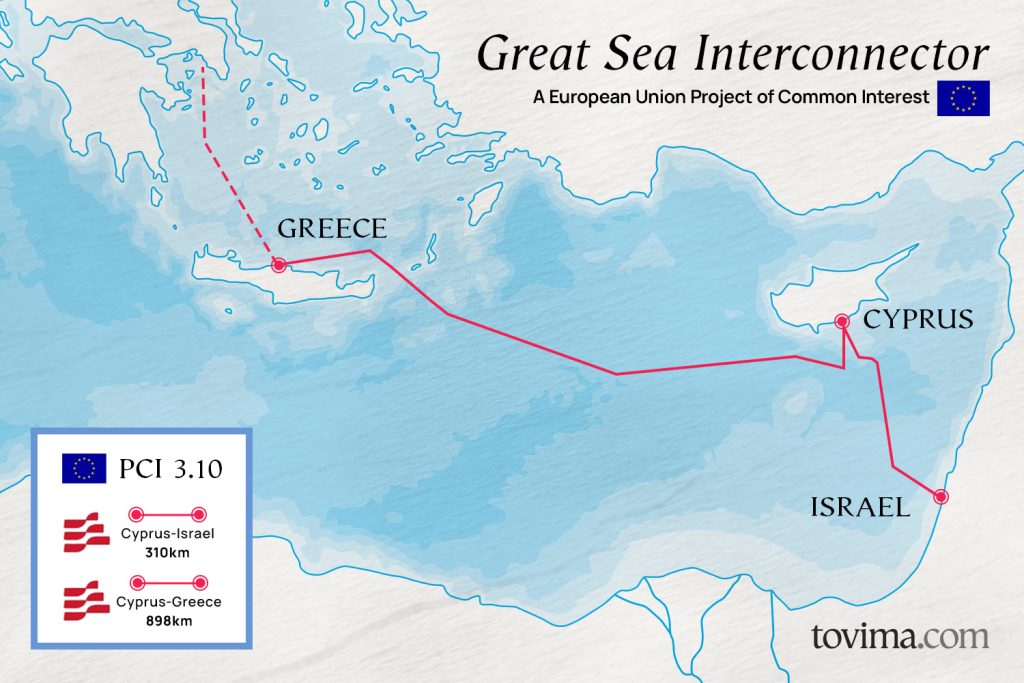
According to Papastavrou, the completion of the GSI is expected to end Cyprus’ energy isolation while strengthening energy security in the wider Eastern Mediterranean region.
He added that a cost-benefit study for the Cyprus-Israel section of the project is expected to be completed in the coming days and submitted to the regulatory authorities of both countries.
“Electricity interconnections are essential for Europe’s energy security, and especially for the Eastern Mediterranean,” Papastavrou said. “We are therefore moving forward with decisive steps so that the Greece-Cyprus-Israel electricity interconnection can be completed.”
Asked about Turkey’s position on the project, Papastavrou said Greece must continue to rely on its own capabilities while building strong alliances.
“History has shown that we will protect ourselves, and we must first and foremost rely on our own strength. However, we live in a very complex world that changes every day, and it is crucial for our country to create strong alliances,” he said.
The minister added that Greece’s exercise of its sovereign rights does not depend on the reactions of other countries, but on its own determination, always within the framework of international law and the law of the sea.
“Greece’s strategy for the Eastern Mediterranean is a strategy of creation, development and progress for all countries in the region, without exclusions, but without accepting any coercive practices or threats,” Papastavrou said. “Threats no longer have a place in the modern Eastern Mediterranean.”