 Μake us preferred on Google
 Lake Vouliagmeni is one of those places you never really get tired of, no matter how well you know it. You may have visited countless times, swum in its waters, seen it packed with people in summer or almost deserted in winter, and yet every time you look at the enormous rock rising above the water, you remember just how magical this landscape can make you feel.
Its history is every bit as striking as its appearance. The lake was formed about 2,000 years ago when the roof of a large underground cave collapsed, and its waters continue to be replenished by underground springs. It is a rare natural landscape, protected and included in the Natura 2000 network, the European Union’s network of protected natural areas. Perhaps the most remarkable thing is that all this wild beauty lies just a few miles from central Athens and only a short distance from the sea.
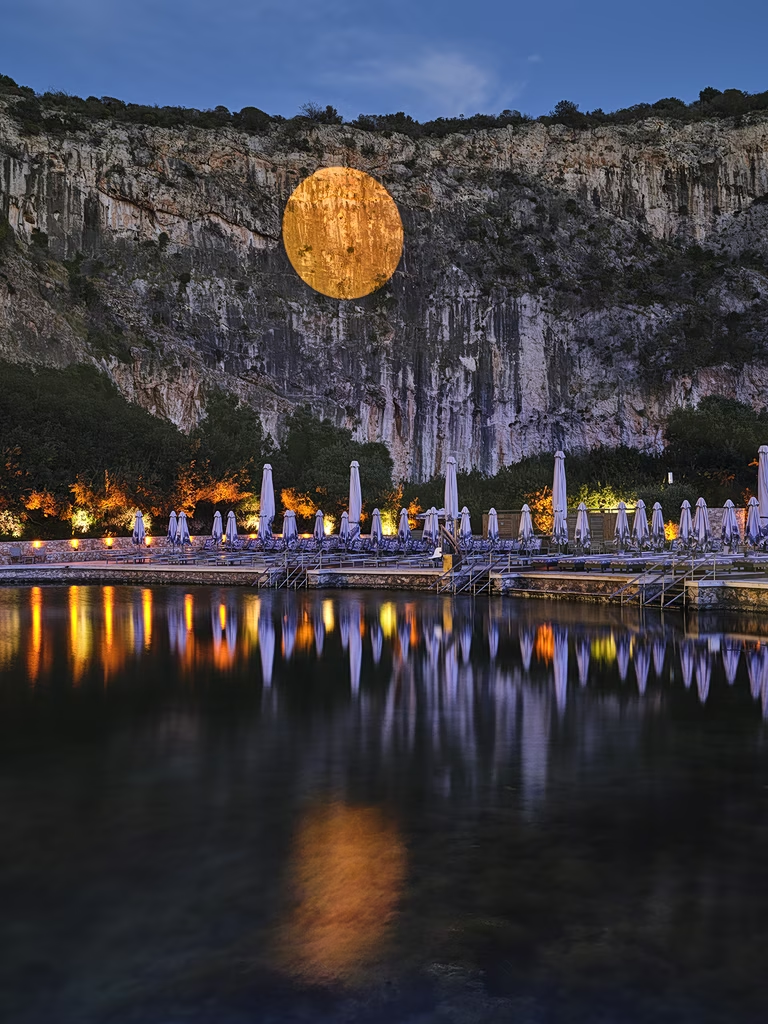
The imposing landscape of Lake Vouliagmeni, captivating no matter how many times you see it.
There is another reason we never seem to get enough of it: abraOvata, whose menu was created by John Skotidas with a deep respect for the mysterious character of the setting. We have gathered seven good reasons that keep bringing us back to its tables.
Because fall makes the lake even more beautiful
Summer is undoubtedly its most popular season, but fall seems to suit the lake even better, giving it a different kind of charm.
The light becomes softer, the rock appears even more imposing, and as darkness falls, the color of the water changes. You do not need to do anything special. You simply sit, take it all in and let time move a little more slowly.
Its atmosphere holds you there and, before you realize it, draws you into its own world. For a few hours, you feel like part of it.
Because the food does not try to outshine the setting
abraOvata feels like a natural extension of the lake, making no attempt to impose itself on its surroundings. It seems to have been created to prolong the stay of those who love the area, with flavors that avoid excess and do not get carried away with unnecessary displays of technique.
There is a sense of geometry in the way it has been conceived, a harmony that begins with the space and extends all the way to the table.
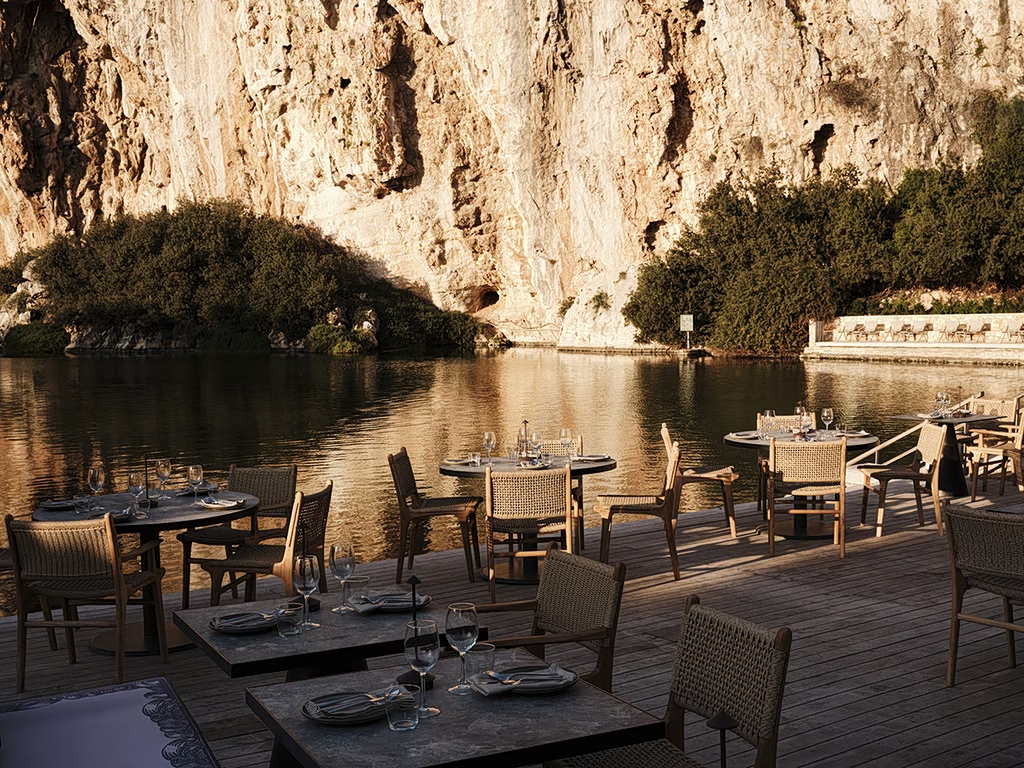
Like a natural extension of the lake, abraOvata makes visitors feel part of the landscape around them.
John Skotidas has created a menu with strong cultural references that strikes a balance between technique and pure enjoyment. It is clear that he wants to move away from the solemnity sometimes associated with fine dining and let the senses do the work: taste, surprise and satisfy.
Giannis Alibalis, the restaurant’s head chef, translates this philosophy into the kitchen’s day-to-day operation, creating dishes that involve technique and thought but remain focused on having a good time and sharing flavors and emotions around a table.
Because Skotidas’ cooking does not fit neatly within borders
John Skotidas brings into his cooking all the different cultures that have shaped his life. He grew up in Panama to a Greek father and a mother with roots in the Philippines and China, lived in Athens and later in London, where his professional career took him through important kitchens.
All those influences now meet in the way he cooks. For him, multiculturalism is not a trend or a technique but something deeply personal.
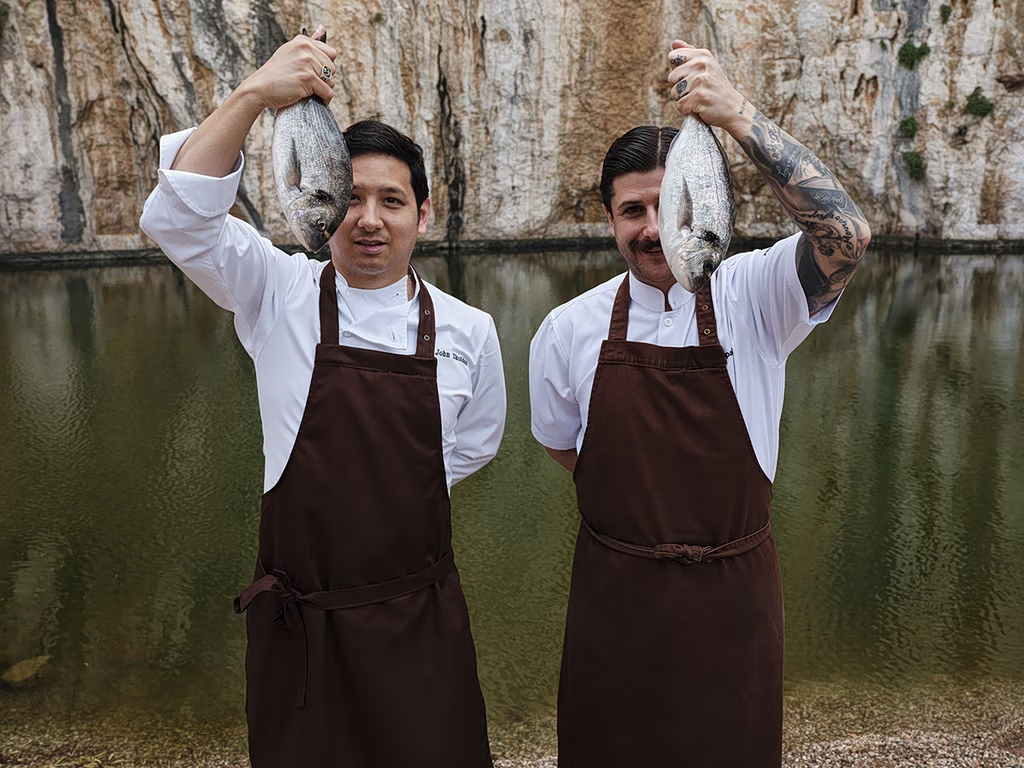
John Skotidas with the restaurant’s head chef, Giannis Alibalis.
That is precisely what makes the abraOvata menu so intriguing. Skotidas combines flavors and techniques from different culinary traditions in a way that feels natural, almost inevitable.
Greece is usually the starting point, but from there he allows himself to travel. The Athenian-style dish comes with crab and bottarga, or cured fish roe, over crispy rice. Tarama, the traditional Greek fish-roe dip, is flavored with kaffir lime, while spicy cheese dip takes on the Korean intensity of gochujang.
Smoked eggplant meets Greek yogurt and miso, while sea bass ceviche unexpectedly connects with kakavia, a traditional Greek fish soup, along with wild celery and carrot. Even the Koilada shrimp tartare takes its cues from the flavors of Thai tom yum soup.
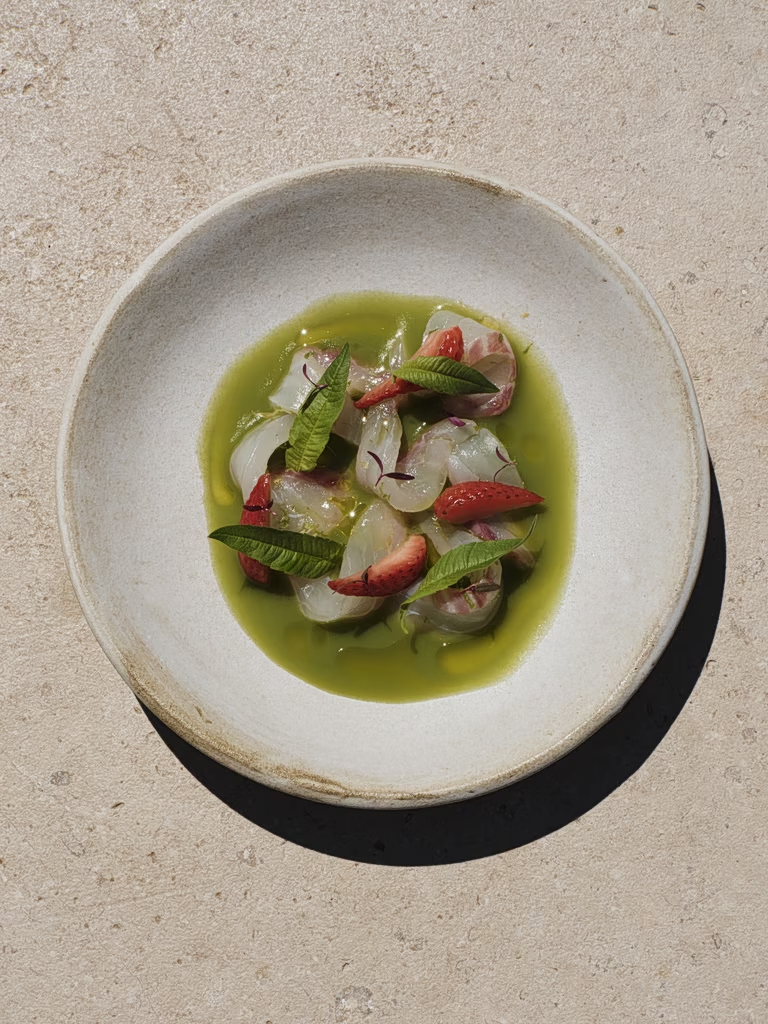
The multicultural character of the abraOvata menu grows directly out of John Skotidas’ life and experiences.
The same interplay continues as the meal progresses. Tempura sea bass is served with wild greens and a soy broth; octopus with fava gets a cherry mole; picanha meets miso; and paella arrives with bomba rice and aioli made with Peruvian aji amarillo, a yellow chili pepper.
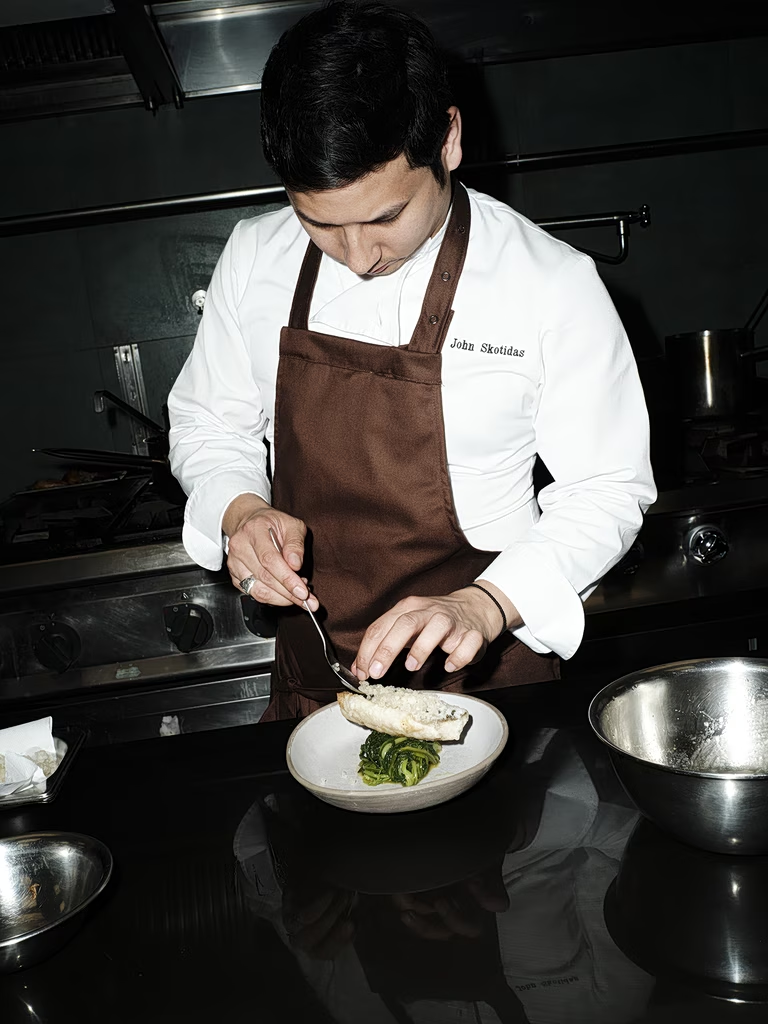
By bringing different flavors together in his own unique way, John Skotidas has created a particularly intriguing menu at abraOvata.
It would be easy to call all of this fusion. But the word feels somewhat inadequate to describe what is actually happening.
Skotidas takes flavors from different cuisines and different memories from his life and recomposes them in his own way. It is as if he is drawing a new map with every dish, one where Athens, Panama, China, the Philippines and London can be separated by no more than a single forkful.
Because the sea gets the first word
Vouliagmeni is deeply connected to the sea and to seafood, so it would be almost strange for a menu here not to give it pride of place.
At abraOvata, however, fish and seafood are not treated simply as prized ingredients. Particularly in the raw preparations, Skotidas looks each time for the ingredient that will bring out their flavor without covering it up.
Acidity, citrus, pickles, herbs and controlled heat create small contrasts that keep the palate alert.
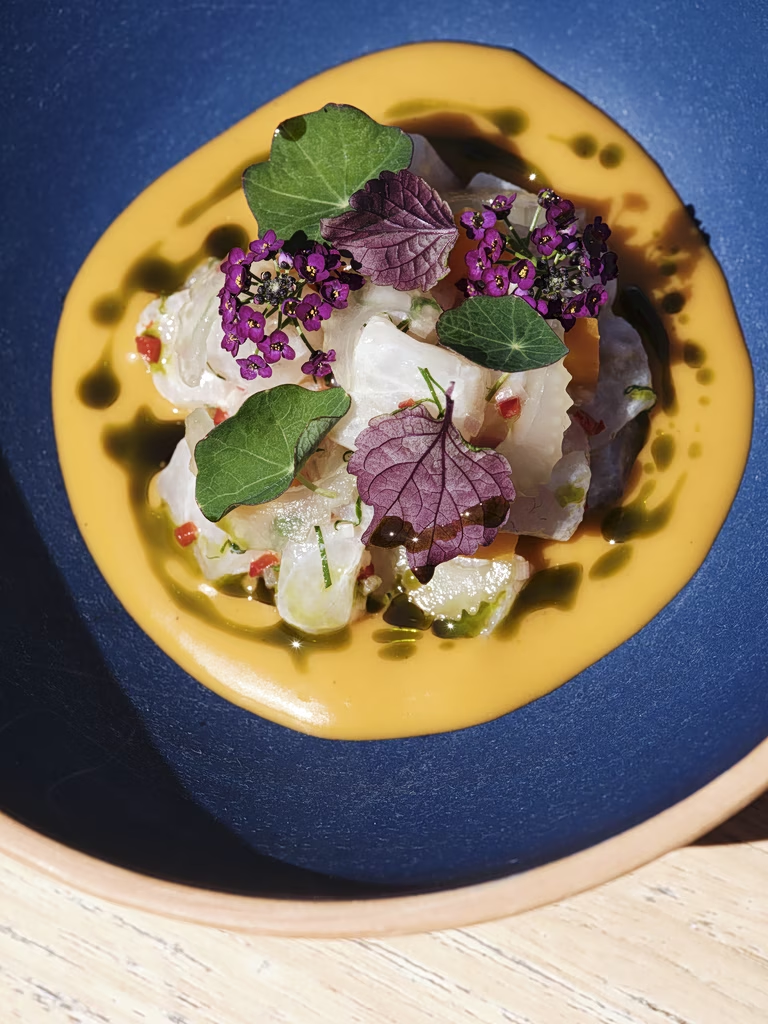
The signature sea bass ceviche with kakavia, a true masterpiece of a dish.
The tuna may be the clearest example of this approach. Olive oil, jalapeño broth and yuzu do precisely as much as they need to: the olive oil embraces the richness of the fish, the yuzu brings acidity and the jalapeño adds a green, vegetal intensity.
With the shrimp, the composition becomes more aromatic. Lemon, herbs, seasonal pickles and mastiha, a resin traditionally associated with the Greek island of Chios, play with the natural sweetness of the shrimp’s flesh, while the mastiha leaves a distinctly Greek signature at the finish.
Even more characteristic of his thinking is the sea bass ceviche with kakavia. Here, two different ways of understanding fish come together on the same plate.
On one side is ceviche, with its Latin American logic of acidity and raw fish. On the other is kakavia, perhaps the most elemental of Greek fish soups, with wild celery and carrot serving as a bridge between the two worlds.
Because paella is the perfect excuse to share
Paella is one of the dishes John Skotidas particularly enjoys, and it regularly returns to the abraOvata menu. In its seafood version, bomba rice develops a crisp layer of socarrat on the bottom and comes with aioli made with aji amarillo, the Peruvian pepper that adds its own intensity.
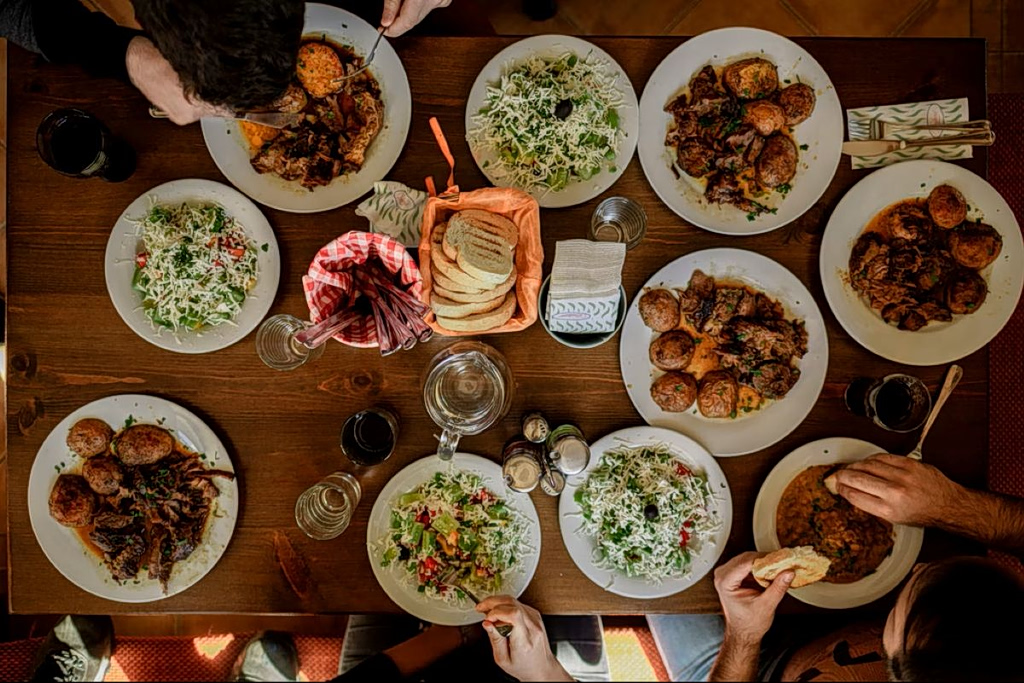
More than anything, though, we like it because it goes in the middle of the table, forks begin crossing and everyone gets to try a little of everything.
After all, sharing is always one of the best things about sitting around a table. At abraOvata, it happens completely naturally.
The paella, the picanha with miso and pepper, and the porterhouse with Padrón peppers and bone marrow are dishes we want to put in the middle of the table, taste and share.
Because you absolutely need to save room for dessert
A big dinner needs a good ending. At abraOvata, that part belongs to pastry chef Kalliopi Marou, who oversees the restaurant’s desserts and follows her own, quieter but equally creative path.
Her combinations are technically accomplished without ever losing sight of their main purpose: pleasure.
The classic French choux pastry takes on a different character in Marou’s hands, with pistachio playing a generous starring role inside and ice cream completing the interplay of temperatures and textures.
Crispy and airy, rich but not heavy, it is a dessert that makes an immediate impression.
Because, in the end, everything becomes one
Of course, what we love most about abraOvata is that, as the hours pass, everything begins to blend together.
The flavors merge with the landscape, conversation with the music, the water with the lights, and the coolness of the night with that wonderful feeling that we have absolutely no desire to get up from the table.
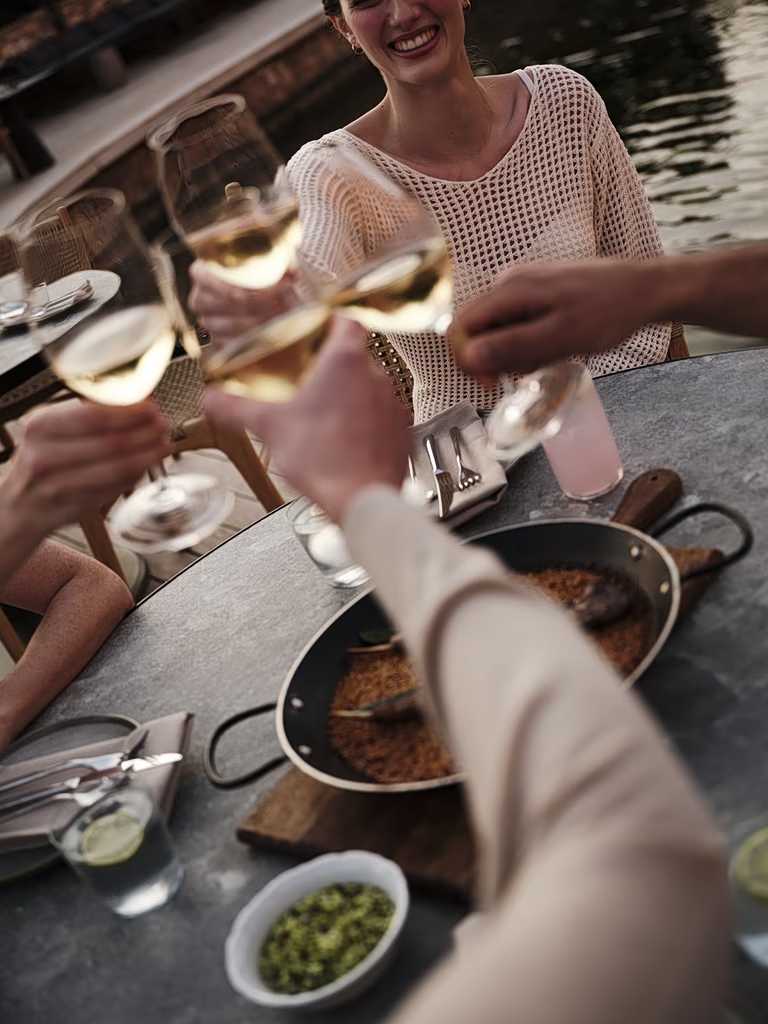
Dinner at abraOvata is a truly special experience that you do not want to end.
That is how we tend to remember good evenings: as complete experiences that we carry with us when we leave.
And if an evening at Lake Vouliagmeni can take us so beautifully out of our everyday routine, I can see no reason why we would not want to experience it again and again.