 Μake us preferred on Google
 I can still remember the tastes and smells of those Sunday tables, and I miss them. I return to the same faces and the same scenes, either by remembering them or by seeking to experience them again, driven by the same longing for intimacy that defined those gatherings.
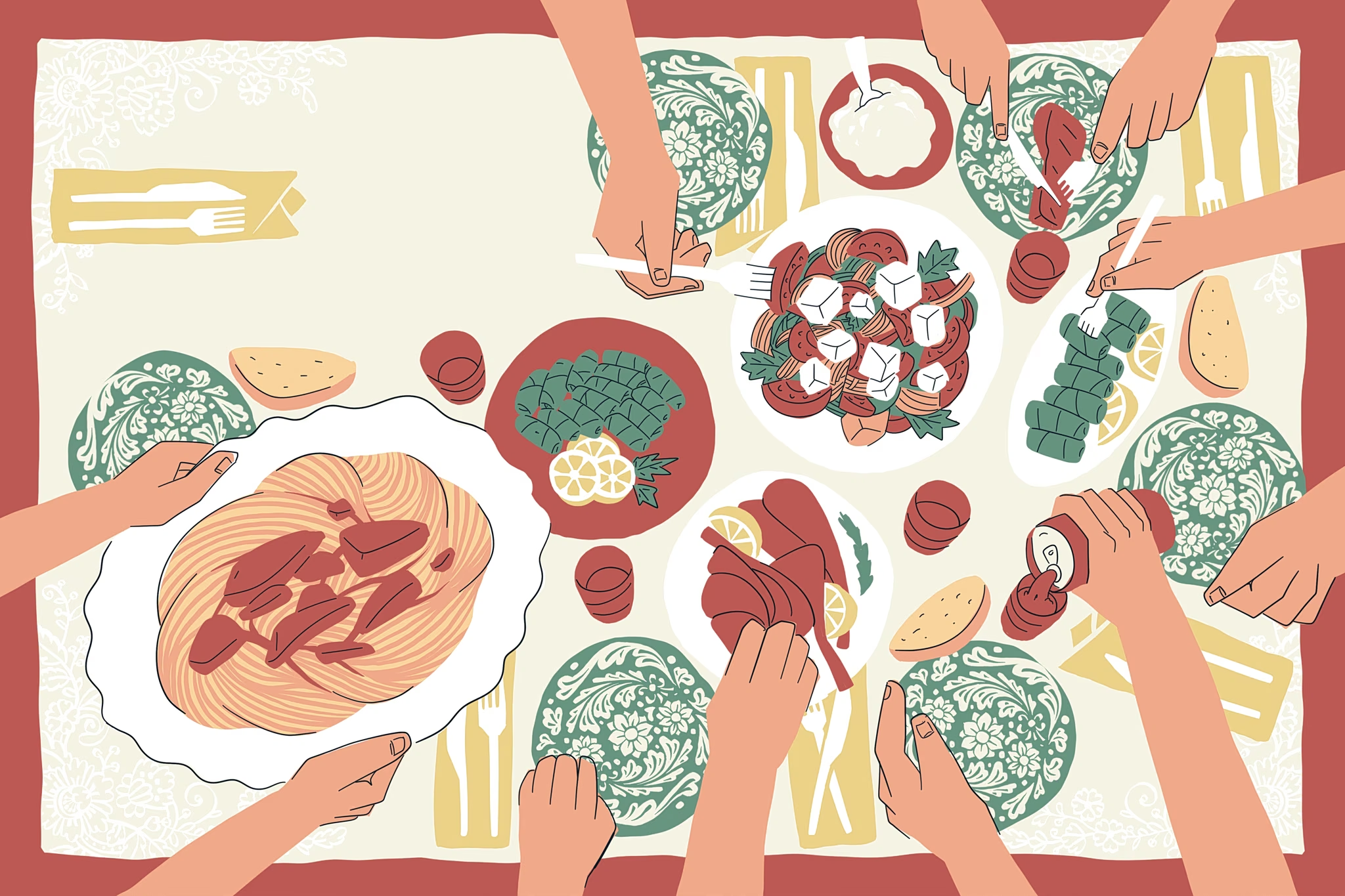
The Sunday table
One of the most powerful memories we carry is that of sharing a meal with family and friends at the end of each week. Sunday, of course, is both the end of one week and the beginning of the next. On one side is the reckoning with what has passed; on the other, the planning for what is to come.
At Sunday gatherings, you shared the food on the table, but also the joy of the grandmother who had cooked it, the emotion of a mother who was constantly proud of you, and the father’s irritation at something that bothered him—something even he could not quite identify.
Family Sundays were never perfect, but they were authentic. Sometimes you felt pressured to be there, yet something was built through that act of sharing. These shared experiences shaped—and continue to shape—our identities: who we are, who the others around us are, and who we want to become.
We grew up around these tables. And as we grew older, the tables grew smaller. Seats became empty. Loss is always heavy. But as the tables grew smaller, something inside us grew larger: the memories, accumulating one after another, that ultimately make us who we are.
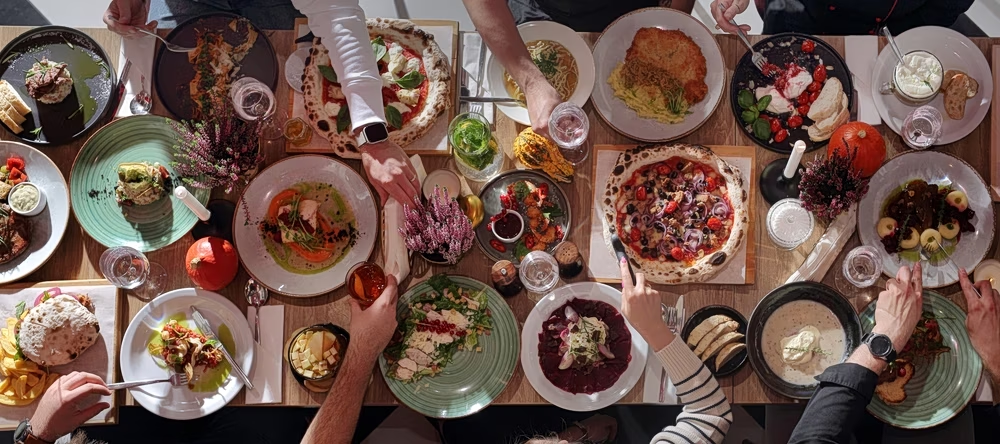
You wake up late, free from obligations and worries. The smell of food roasting in the oven reaches you in bed. Slowly, you begin thinking about getting up and joining your family at the table.
That unforgettable luxury of a slow life is what defines Sunday meals. And those are the tables we so desperately need to bring back. We return to them and become protagonists in the same old story once again, trying to recover a sense of intimacy we have lost.
The memories of childhood
They say that smell is our strongest sense. The aromas of food at Sunday gatherings remain indelibly etched in memory. Giouvetsi, a Greek baked dish of meat and orzo; katsikaki fricassee, young goat cooked with greens and an egg-and-lemon sauce; and beef braised in tomato sauce with rice were among the dishes with the most distinctive aromas.
The feeling that a dish is truly homemade—or mamadίστικο, as Greeks affectionately describe food that tastes like something their mother would make—can arrive with the very first breath.
During the week, most households had little time. There was little time for cooking and little time for eating. Quite often, we ate at different times, too. The food waited in the kitchen, and each person would come to it whenever their schedule allowed.
The oven was lit mainly on Sundays. Baking trays, roasting racks and large covered clay pots were filled with quantities of food that could hardly be eaten in a single day. Large cooking pots, pressure cookers and piles of cutlery took center stage. Sunday dishes stayed with us for the following days, too.
The Sunday table was a collective endeavor from beginning to end. I remember my mother asking me to flip the switch on the electrical panel so she could turn on the oven. It felt as though I held in my hands the power to begin the ritual.
Many households entrusted their food to the neighborhood bakery for baking. Armed with enormous trays, they would take their dishes there in the hope of achieving the perfect roast.
Almost everyone helped prepare the table in some way—peeling potatoes, answering the intercom when someone arrived, or sampling the food to see whether it was “ready.”
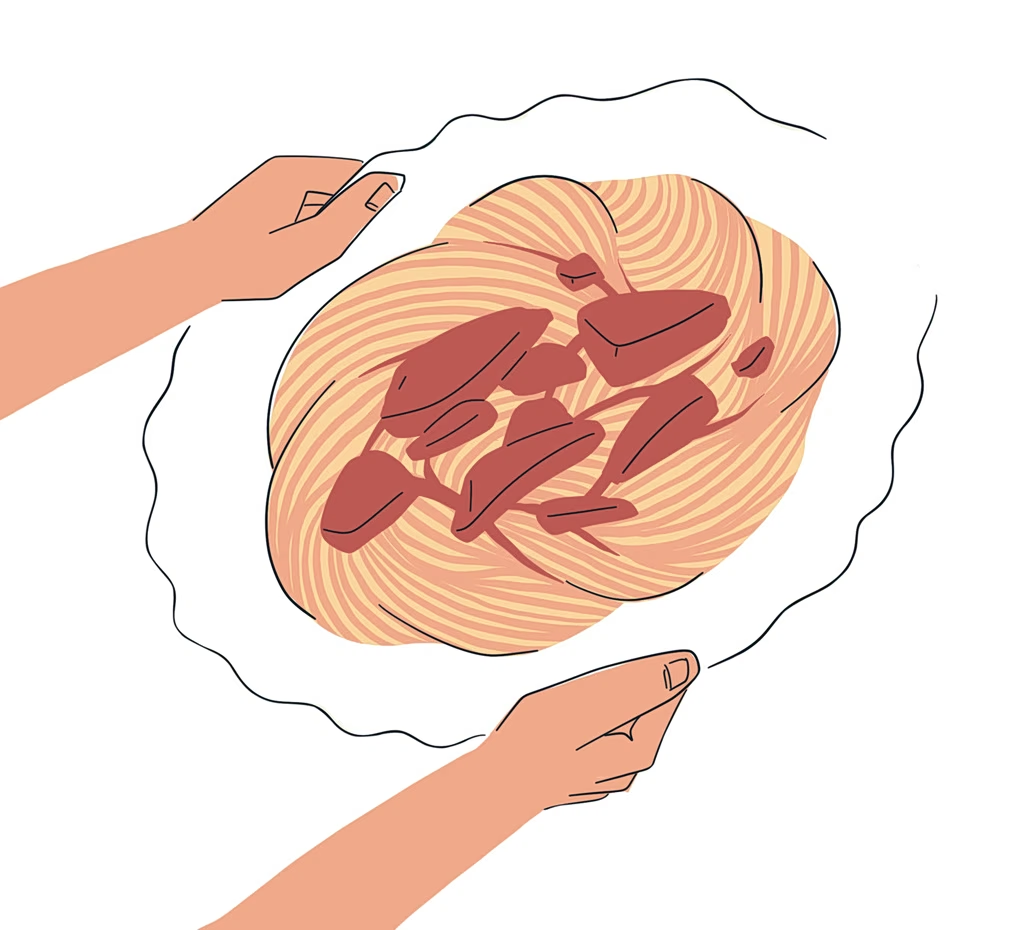
Illustration by Lavrentis Choreitis and Panagiotis Psychogios of Flipping Bird
There was plenty of bread, sesame seeds falling everywhere, and aromas flooding every room near the kitchen.
The plastic tablecloth, whose questionable aesthetic was hardly accidental, had a simple purpose: it was easy to clean. The choice was practical rather than decorative. Yet it became firmly established as part of the everyday, popular elements that made up a Sunday table.
We played musical chairs at these gatherings without ever openly calling it a game. Someone would be attached to a particular seat and refuse to give it up. Someone else would insist on sitting next to a particular person. Everyone else moved around, changing seats from one Sunday to the next and sometimes several times during the same day.
Sometimes we split into two groups: the adults’ table and the children’s table.
At some point, the craving for dessert would emerge. Jelly, custards or ice cream. When it came to ice cream, the adults would usually send the children to the neighborhood kiosk to buy it.
The responsibility of choosing dessert was always enormous—especially for a child standing in front of a freezer filled with ice cream.
Sometimes we ate first and talked afterward. At other times, we talked first, and then silence descended as we ate. Conversations around the table seemed to follow a script, with a familiar progression: general assumptions, cliché questions and answers, inconsequential opinions, uncomfortable questions, stories “from back in the day” and political arguments.
The political arguments, in particular, remain unforgettable.
Paradoxically, those conversations—with all their passion, inaccuracies and disjointedness—somehow introduced us to politics. Perhaps at the Sunday table, that could serve as a definition of politics itself: something characterized by passion, inaccuracies and discontinuity.
Illustration by Lavrentis Choreitis and Panagiotis Psychogios of Flipping Bird
Sunday gatherings never had a set duration. Sometimes they ran from early to early, and other times from early until late.
The adults would eventually settle down for an afternoon nap, while the children watched television. The TV often played quietly in the background throughout the day.
Yet the official end of the gathering came with the sound of Athlitiki Kyriaki, a long-running Greek television program dedicated to sports. Hearing its opening theme brought a knot to your stomach as you realized you would soon have to return to the daily routine of work or school.
Sunday gatherings ended the way they began: with Greek coffee.
Preparing it was treated as a small ritual in its own right. There was a belief that the more bubbles the coffee had, the more luck it would bring to the person drinking it.
Through these small details, we fulfilled our hope for better fortune. Somewhere around then, conversations would begin about the things we most wanted to come true.
And eventually came the question: “If you could, what would you really want to have?”
Sunday gatherings today
Do Sunday tables like those of the past still exist today?
In the pace of modern life, we increasingly find ourselves eating fast food in front of screens—times and circumstances that are the opposite of the coming together that once defined the Sunday gathering.
Even if we no longer have those large family meals, however, it seems that in recent years we have felt the need to recreate them.
We need a break from the noise of digital life and from a culture of constant availability.
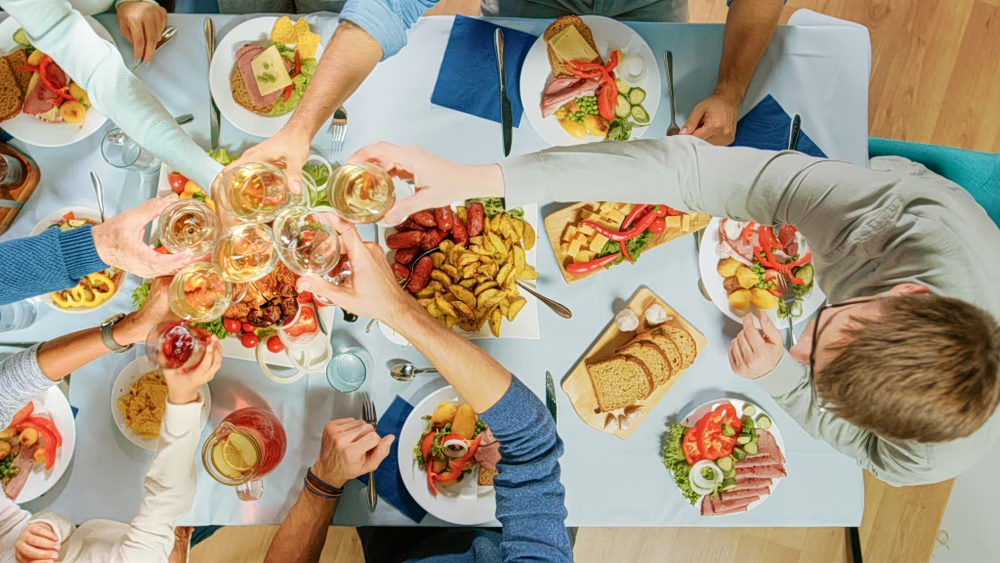
We return to the table with friends we have chosen as family.
The collective process—from gathering the ingredients to cooking and finally washing the dishes—brings us meaningfully closer. We share the work, and in doing so, the walls that people otherwise build between themselves begin to come down.
There, we find room for genuine connection in the face of the loneliness and alienation of modern individualistic life.
After all, human needs remain unchanged. We need food, warmth and, above all, one another.
The Sunday gathering resonates within us across the present, the past and the future. We find ourselves once again within the same rituals in which we grew up, creating space for our identities and emotions to develop authentically in the present.
We step away from the pressures of everyday life so that, for a little while at least, we can simply “find ourselves.”
To paraphrase the lyrics by Yiannis Argyris from the famous song performed by Popi Asteriadi, even when “this Sunday passes too,” we will always wait for another one.