 Μake us preferred on Google
 Greece, Serbia, Bulgaria and North Macedonia are seeking to deepen energy cooperation and accelerate cross-border interconnections as they work to strengthen security of supply and establish new routes linking southeast Europe with central European markets.
The issue was at the center of the second quadrilateral ministerial meeting on energy and interconnectivity in Belgrade, attended by Greek Environment and Energy Minister Stavros Papastavrou, Serbian Energy Minister Dubravka Handanović, North Macedonian Energy, Mining and Mineral Resources Minister Sanja Božinovska and Bulgarian Energy Minister Iva Petrova. Senior officials from the four countries’ natural gas and electricity transmission system operators also participated.
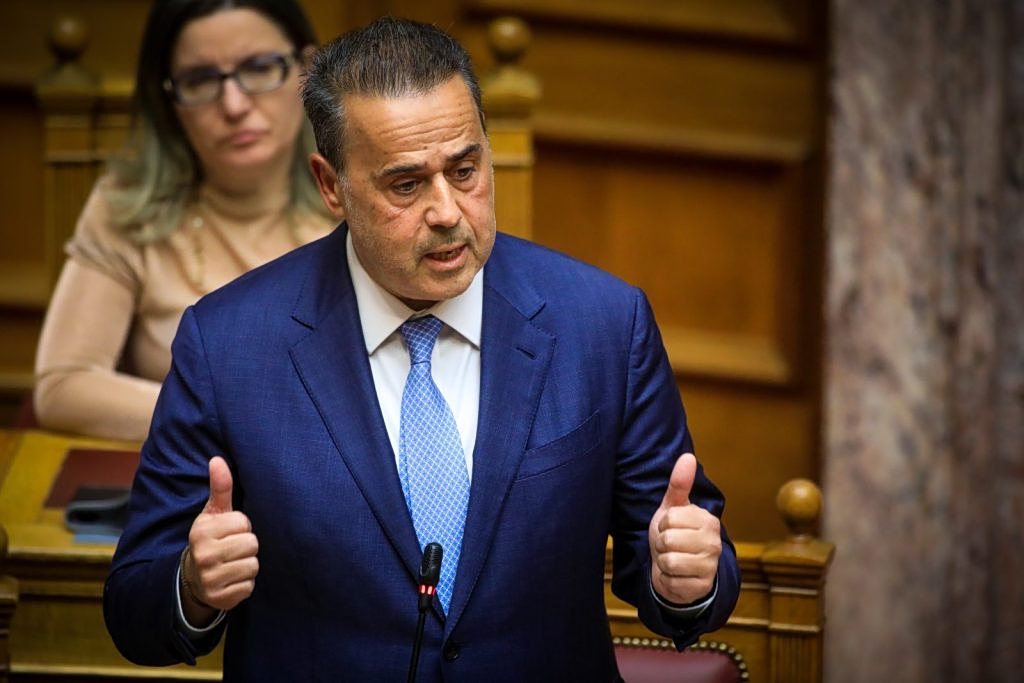
Energy Minister Stavros Papastavrou
Papastavrou said regional cooperation was essential to addressing the energy challenges facing the region, particularly the need to ensure reliable and affordable supplies.
“Everyone shares the same daily challenge, which is to have affordable and reliable energy for our citizens,” he said, stressing that both security of supply and affordability were directly linked to stronger regional cooperation and interconnection.
Particular emphasis was placed on the rapid implementation of the Vertical Gas Corridor, which begins in Greece and is designed to carry gas northward through Bulgaria and Romania and onward toward the Western Balkans and Central Europe.
The four ministers reaffirmed their support for expanding the corridor through Greece, Bulgaria, Romania, North Macedonia and Serbia, creating an additional route for supplying Central European markets with natural gas.
The expansion follows the inclusion of Serbia and North Macedonia in the Vertical Corridor framework, a step intended to extend the network into the Western Balkans and create additional routes for gas entering Europe through Greek infrastructure.
The strategy also fits Greece’s broader ambition to establish itself as an energy gateway for Southeastern and Central Europe. LNG terminals and pipeline infrastructure in northern Greece provide entry points for diversified gas supplies, while the corridor is intended to facilitate their movement north through the Balkans.
The initiative has gained further importance as the European Union moves to phase out Russian natural gas imports. The Vertical Corridor is being developed as part of a wider effort to diversify supply routes and reduce dependence on a limited number of suppliers.
Oil, Power Interconnections
The Belgrade discussions also covered oil and electricity interconnections, with Papastavrou pointing to a series of projects already under way. He said the four countries would continue meeting every six months to assess progress.
Greece and Bulgaria also support the integration of Serbia and North Macedonia into the wider European energy system, including through stronger electricity-market links.
The push for greater electricity interconnection reflects a broader European effort to create a more integrated energy market, with stronger cross-border networks seen as essential to improving energy security, reducing price disparities and allowing electricity to move more efficiently between countries.
The European Union has increasingly focused on regional energy infrastructure as part of its strategy to strengthen energy security, while Greece has been positioning its LNG terminals, electricity links and pipeline network as components of a broader regional energy hub.
The next quadrilateral ministerial meeting will be held in six months in Sofia, bringing together the energy ministers of Greece, Serbia, Bulgaria and North Macedonia.