 Μake us preferred on Google
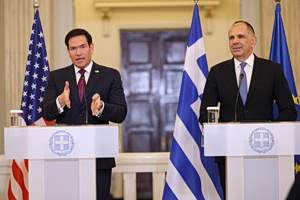
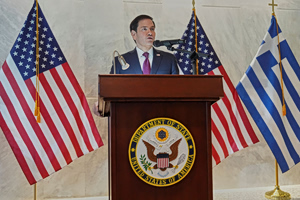
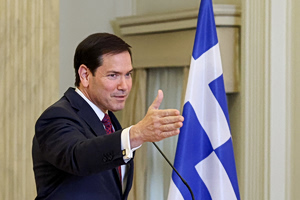
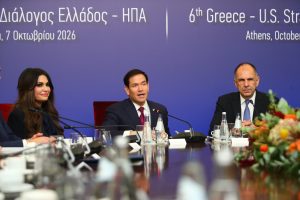
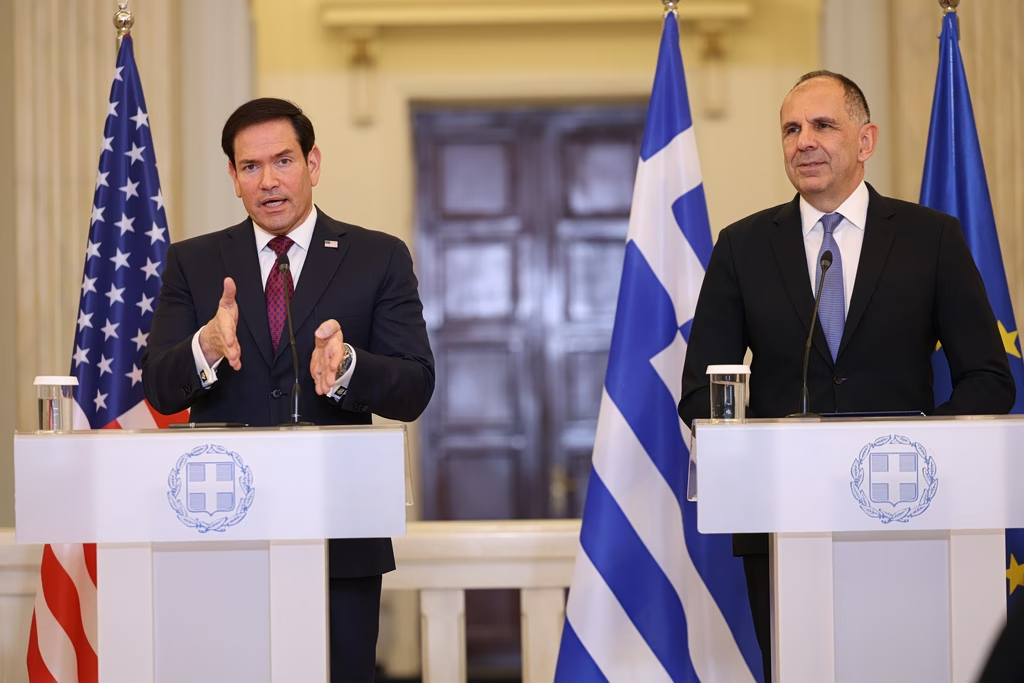
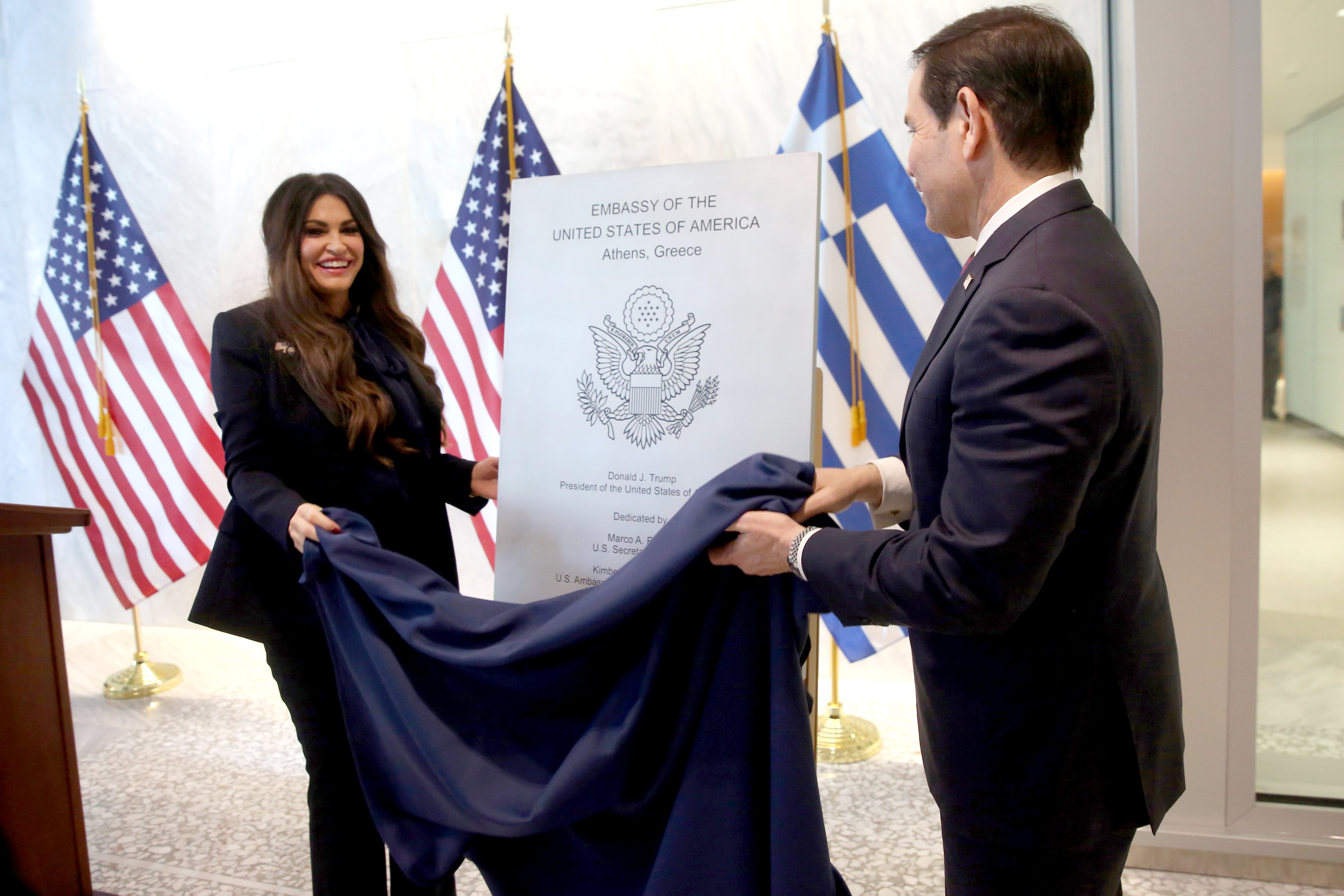
 Marco Rubio’s first visit to Greece as US secretary of state set off a heated debate in Parliament on Wednesday, held while he was meeting officials at the Foreign Ministry across the street. Opposition lawmakers from the center left to the Communist Party challenged the government’s handling of relations with Washington, while the governing New Democracy party responded that their criticism amounted to anti-Americanism that benefits Turkey.
Much of the opposition’s criticism centered on US Ambassador Kimberly Guilfoyle. According to a Wall Street Journal report published last month, she told Greek and US officials at a dinner in Athens in March that Washington could bring down any government it wanted, including Greece’s. Her lawyer disputed the account, and the Greek government has denied that any pressure was exerted on the country. SYRIZA leader Rena Dourou described the remarks as evidence of a “neocolonial doctrine” and accused the government of failing to condemn them. She questioned whether that reluctance stems from the government’s effort to present Greece as a “predictable ally” and its insistence that relations with Washington have never been better. She also accused it of keeping Parliament, the parties and the public in the dark. Dimitris Mantzos of the center-left PASOK party called on Foreign Minister George Gerapetritis to make clear to Rubio that Greece is a sovereign state that does not accept foreign interference.
Mantzos said the visit must be evaluated in light of its implications for Greek-Turkish relations and the southeastern Mediterranean. He asked both governments to define what the strategic alliance means to each of them, warning that Athens and Washington should not be presumed to share the same positions. In PASOK’s view, a strategic alliance requires a shared understanding of critical issues rather than arms purchases and defense ties alone, while military cooperation must be subject to accountability and full transparency. Mantzos also objected to the government’s refusal to rule out further Greek naval involvement in the Gulf. He questioned how that position is consistent with respect for international law, noting that the European Union has declined to take part in the war. He further accused the government of failing to use Greece’s presidency of the UN Security Council to uphold international law.
Relations with Turkey were another point of contention. Mantzos rejected the characterization of Greek-Turkish disputes as “sensitive issues,” a phrase he attributed to Rubio, and called for a clear stance against Turkish provocations and in defense of Greece’s sovereign rights.
Dourou described the government’s foreign policy as subservient to Washington and driven by private interests, arguing that it has become an arena for companies vying for American favor. She cited the Vertical Corridor, as a case in point. She questioned whether the project has a future and accused the government of following US objectives despite what she described as objections in Eastern Europe and Brussels.
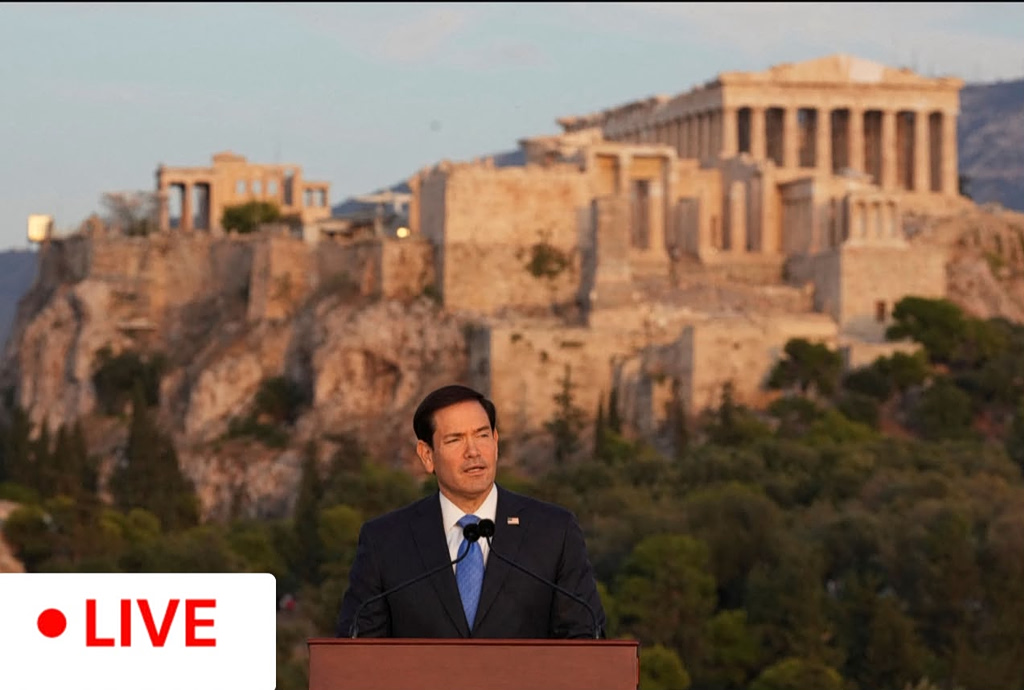
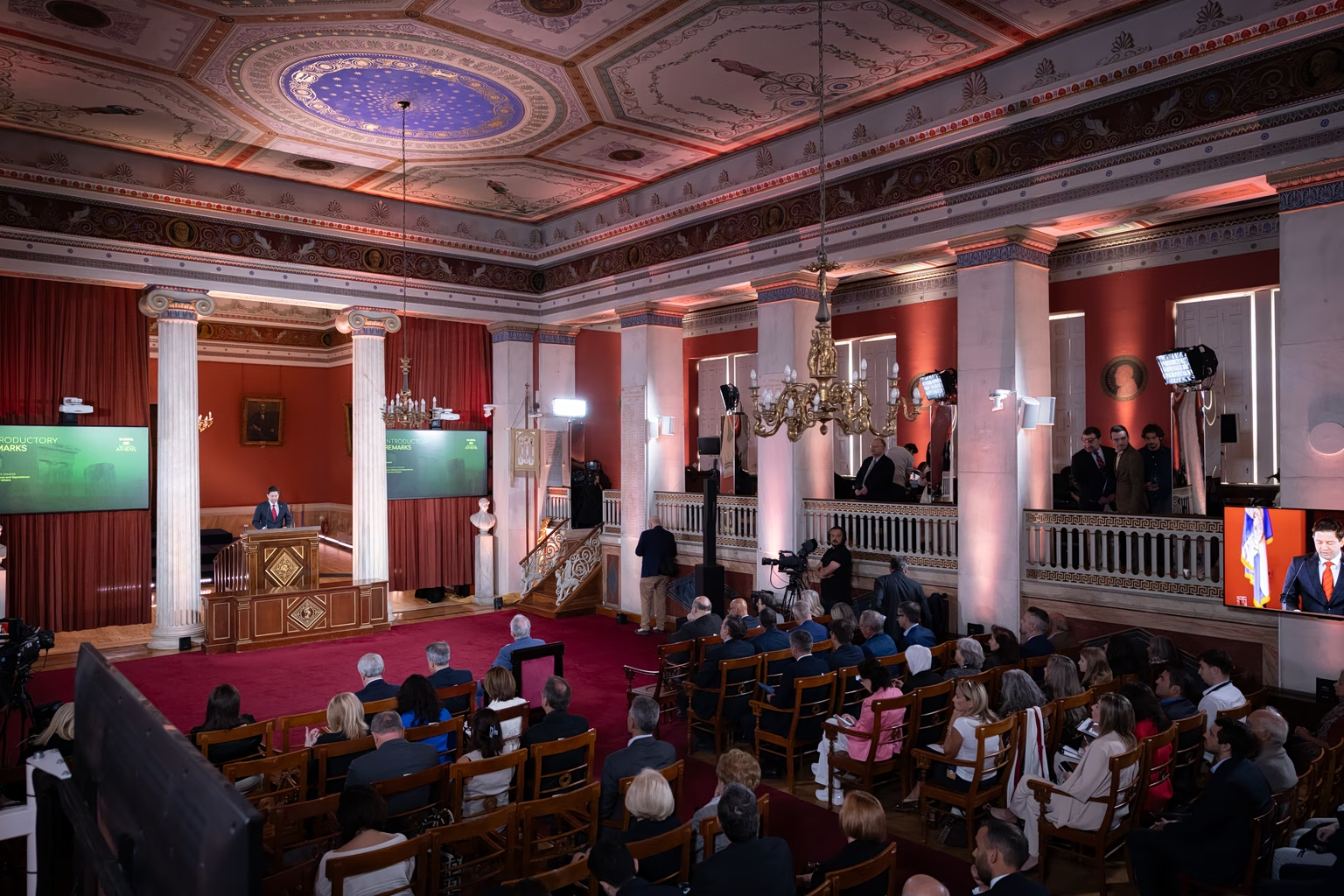
Rubio’s planned appearance on Pnyx Hill, where the citizens’ assembly of ancient Athens met, also drew criticism. Dourou accused him of using the Acropolis and the Pnyx as a backdrop for the far-right politics she said he promotes in the United States and Europe, and noted that his public appearance with an ash cross on his forehead had not been forgotten. Pafilis compared the event to a visit by former President Bill Clinton after the war in Yugoslavia.
Pafilis called the visit a dangerous development at a critical time and condemned US policy toward the Palestinians, Cuba and Venezuela. He disputed the government’s appeals to international law, citing the US embargo on Cuba and President Donald Trump’s statements about Iran’s oil. Greece’s participation in US military planning, including through the naval base at Souda Bay on Crete and other American installations, is incompatible with its image as a country of peace and security, he argued. He also questioned the purpose of cooperation between the Greek armed forces and the Florida National Guard.
Dimitris Kairidis, New Democracy’s parliamentary spokesman, dismissed the opposition’s arguments as “truly anti-American ranting.” Subservience should be condemned, he said, but so should “crude, simplistic anti-Americanism,” which does not serve the national interest and pleases Greece’s adversaries, Turkey above all. He made an ironic reference to the Soviet Union’s position on Cyprus and reminded SYRIZA that its former leader, Alexis Tsipras, said in 2017 that Trump might seem “diabolical” but was acting for the good, and in 2016 called Israeli Prime Minister Benjamin Netanyahu a friend.
With information from TO BHMA