 Μake us preferred on Google
 Greece’s leading tourism industry association has unveiled a new strategic agenda aimed at strengthening the country’s tourism sector through sustainable development, greater competitiveness and closer cooperation between businesses and public authorities.
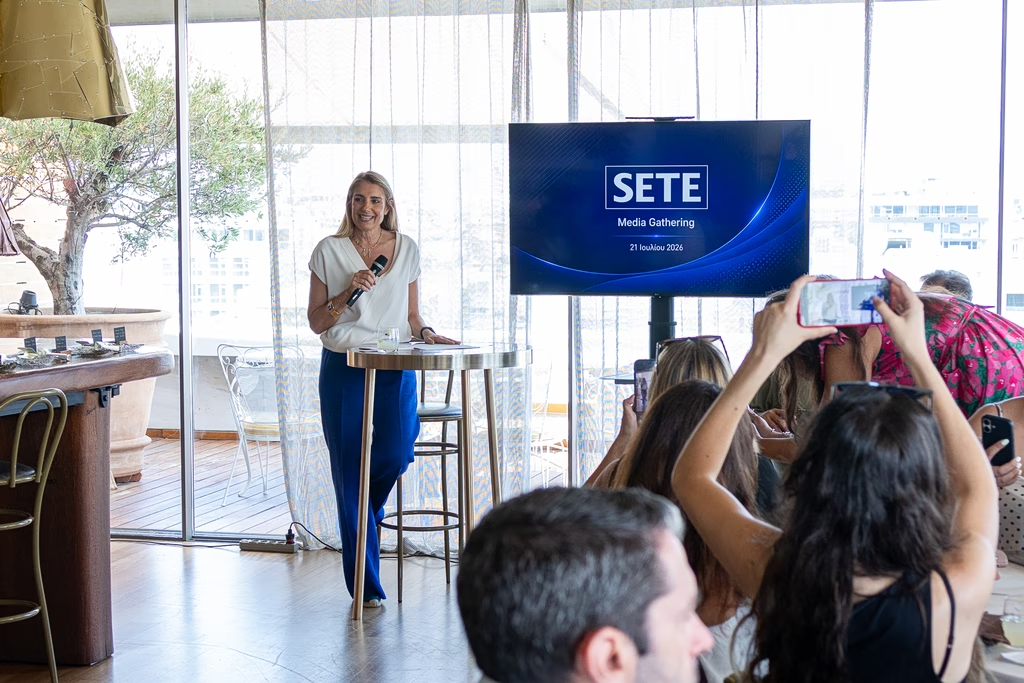
The new direction was presented by Agapi Sbokou, who has become the first woman to lead the Greek Tourism Confederation (SETE), marking a historic milestone for the country’s largest tourism business organization.
Speaking at a press conference, Sbokou said this year’s tourism season is progressing positively despite geopolitical uncertainty and an unstable international environment. However, she stressed that Greece’s long-term objective should move beyond increasing visitor numbers toward building a more resilient, higher-quality tourism model that delivers lasting benefits to local communities and the national economy.
Six strategic priorities
The new administration outlined six key areas that will shape its agenda.
Destination management and infrastructure
The first priority focuses on improving the management and development of tourism destinations through better public infrastructure, upgraded public spaces, modern spatial planning and stronger public-private cooperation.
The association also called for a clear regulatory framework for short-term rentals to strengthen trust between tourism businesses and local communities.
Addressing workforce challenges
Labor shortages remain one of the sector’s biggest concerns. The new leadership identified staffing shortages, seasonal employment, worker housing and skills development as critical issues affecting the industry’s competitiveness.
It advocates expanded training and reskilling programs, along with stronger links between education and labor market needs.
Stable investment environment
SETE also renewed its call for a stable tax and investment framework, arguing that long-term competitiveness depends on legal certainty, predictable regulations and improved access to financing, particularly for small and medium-sized businesses.
Sustainability at the core
Sustainability is another central pillar of the strategy, with the association describing it as an essential business requirement rather than a marketing tool.
According to SETE, initiatives such as the METRON Sustainable Tourism program can help businesses and destinations adopt common sustainability standards and best practices.
Technology without losing the human touch
The association also highlighted the growing importance of technology and artificial intelligence in destination management and improving productivity.
At the same time, Sbokou emphasized that authentic hospitality remains Greece’s greatest competitive advantage.
“No algorithm can replace empathy and the genuine relationship with visitors,” she said.
Strengthening the Greece brand
The new leadership said Greece’s tourism brand should continue to be built around authenticity, culture, gastronomy, nature and the diversity of its destinations, rather than relying solely on promotional campaigns.
Support for new tourism planning
The association also expressed support for Greece’s new tourism spatial planning framework, while calling for practical regulations that reflect the different characteristics of each destination, protect already licensed investments and provide legal certainty.
In addition, SETE highlighted its recently signed cooperation framework with the Ministry of Tourism, which includes joint initiatives to promote mountain tourism, Greek gastronomy, tourism education, domestic tourism and destination management organizations.
Under Sbokou’s leadership, the organization said it aims to focus not only on tourism growth figures but also on creating the conditions needed for Greece’s tourism industry to remain competitive in an increasingly demanding global market.