 Μake us preferred on Google
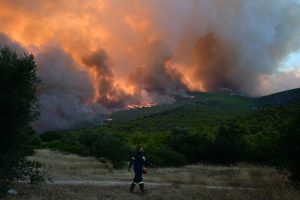
 The risk of underground fires keeping hotspots active for weeks or even months remains a concern as firefighters continue battling wildfires in Western Attica, according to Efthymis Lekkas, president of Greece’s Earthquake Planning and Protection Organization (OASP) and professor of Dynamic Tectonic, Applied Geology and Natural Disaster Management at the National and Kapodistrian University of Athens.
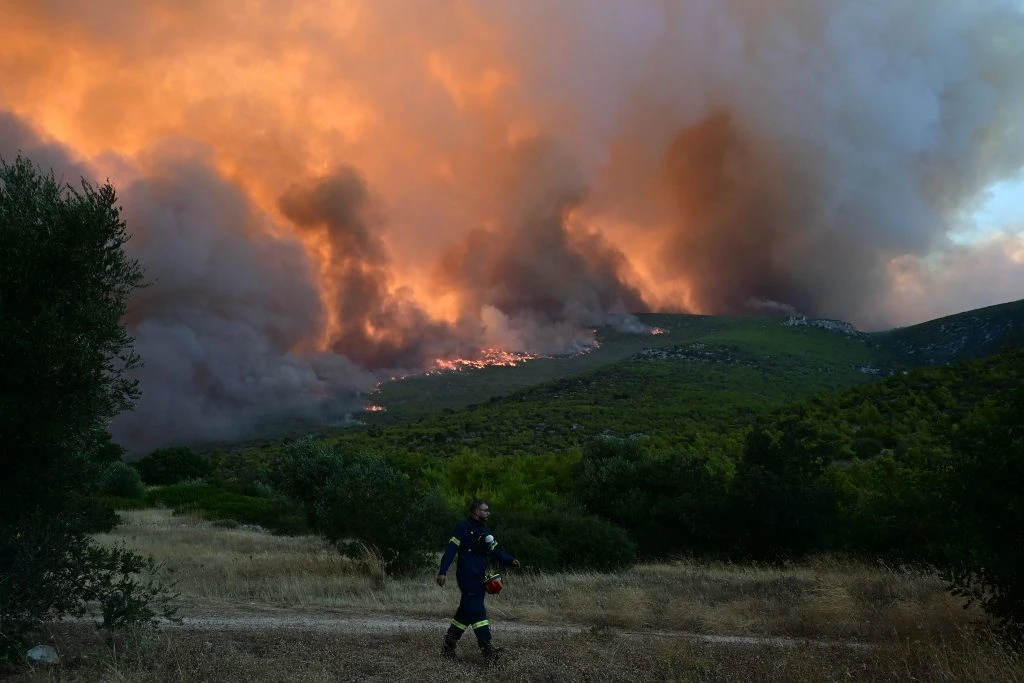
Speaking to ERT News, Lekkas highlighted the difficult atmospheric conditions affecting firefighting efforts, noting that a temperature inversion has developed in the area, trapping a large cloud of smoke and water vapor over the fire front.
“These phenomena make the work of aerial and ground forces more difficult due to the particular conditions developing in the area’s microclimate,” he said.
Improving conditions expected
Lekkas said conditions in the lower atmosphere were expected to gradually improve after midday, potentially helping disperse the cloud that has formed above the wildfire.
“We believe conditions will be better in a few hours. However, these are valuable hours that could be used for firefighting operations,” he said.
Regarding available resources, Lekkas said that a wildfire of such magnitude cannot be expected to have complete operational coverage at all times. However, based on the information available to him, the country’s firefighting mechanism currently has more ground and aerial resources than ever before.
He added that Greece is at a very good level of preparedness and equipment compared with other European countries.
Containing the fire remains the first priority
Lekkas explained that the immediate operational goal for firefighters is to establish a containment perimeter around the wildfire, preventing it from spreading further into unaffected areas.
“The immediate goal is to contain a wildfire so that it does not spread further. This is the primary and initial objective,” he said.
He clarified that containment does not mean the fire has been completely extinguished. Instead, it means active hotspots are restricted within a controlled area and no longer have immediate access to new fuel.
After containment is achieved, firefighters focus on extinguishing the remaining hotspots inside the burned areas.
The hidden threat beneath the surface
Lekkas also warned about underground combustion, a phenomenon observed in major wildfires in Greece in the past, including the 2007 fires in Ilia, Mount Parnitha and Chios.
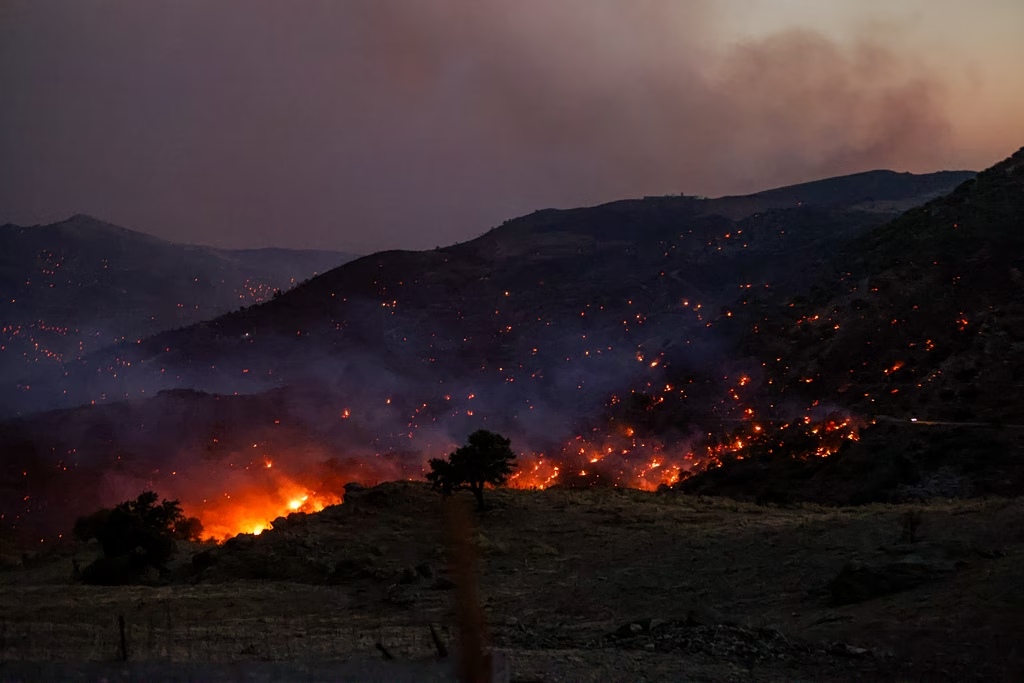
As he explained, even when a surface fire appears to have been extinguished, burning can continue underground, particularly within the root systems of trees.
“The fire can remain active for days inside the burned area. There are cases where tree trunks and root systems continue burning underground. This combustion can last for weeks or even months,” he said.
High temperatures that remain in the soil can maintain hot spots for extended periods and, under certain conditions, lead to new flare-ups.
Why firefighters remain after the flames subside
Lekkas said underground combustion represents a continuous threat that can be managed through systematic monitoring and water application.
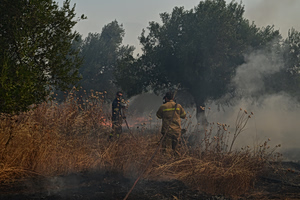
For this reason, firefighting forces remain in affected areas even after the main fire front has stopped advancing, monitoring hot spots and responding to possible reignitions.
“When we extinguish a wildfire and it stops advancing, firefighting forces do not leave. They remain in the area for days in order to address phenomena that could lead to its renewed spread,” he said.
Lekkas expressed hope that the firefighting operation would be completed soon, while stressing that the wildfire season is still ongoing and that August requires constant vigilance.