 Μake us preferred on Google
 Greece is accounting for about one in four locally acquired West Nile virus infections reported in Europe this summer, with 61 cases recorded through Aug. 5.
Italy remains in first place with 139 cases, while Spain has reported 17, North Macedonia 13, Romania six, France four and Germany one.
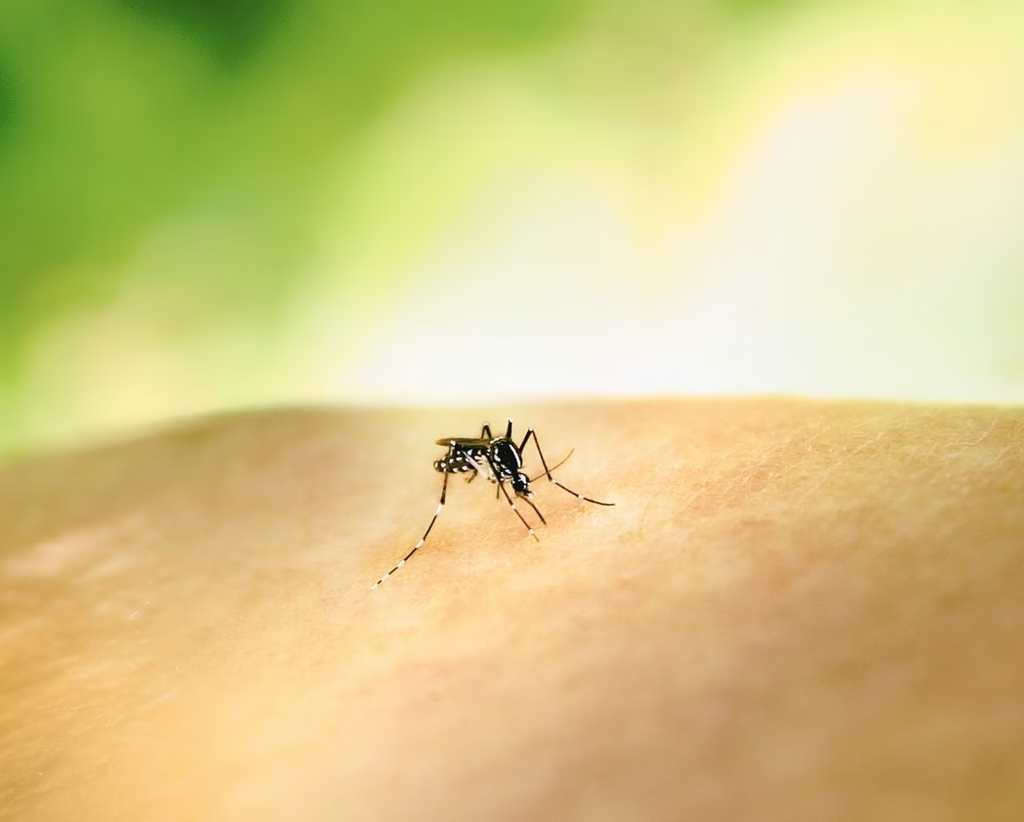
The figures come as Greece enters the main period of West Nile virus transmission, with health authorities warning that weather conditions remain favorable for mosquito-borne transmission and that additional cases are likely in the coming weeks. Greece has recorded West Nile virus infections almost every year since 2010, making its seasonal return a recurring public health concern.
Attica prefecture, which hosts the Athens-Piraeus agglomeration, has emerged as the main focus of this year’s activity. The first 2026 case, involving a person over 60 who developed meningoencephalitis, was reported in the northern Athens suburb of Agia Paraskevi in early July. A further case in Glyfada, in southern Athens, prompted preventive mosquito-control spraying in the area.
The spread is not limited to the greater Athens area. Last year, infections were reported across numerous parts of the east Mediterranean country, while the coastal Perama industrial district west of Piraeus was designated a high-risk area even before a local human case was recorded. In northeastern Greece, the municipality of Nestos generated concerns over huge mosquito populations due to stagnant waters, wetlands, rice fields and irrigation canals.
The number of diagnosed cases, however, is believed to represent only a fraction of actual infections. About 80% of people infected with West Nile virus develop no symptoms, while about 20% experience mild illness. Fewer than 1% develop serious neurological disease such as encephalitis or meningitis. A previous epidemiological study estimated that for every severe neurological case, about 140 people may have mild or asymptomatic infections.