
 Μake us preferred on Google
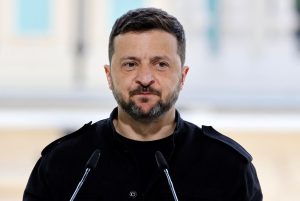
 Russian President Vladimir Putin rejected the possibility of a direct meeting with Ukrainian President Volodymyr Zelensky, despite the latter’s formal request, arguing that the priority at this stage is not a summit but the achievement of “lasting peace agreements.”
The statements were made on the sidelines of the St. Petersburg International Economic Forum, following Putin’s address, and signal a fresh hardening of Russia’s stance toward any prospect of high-level political talks.
Earlier, it had become known that Putin had been briefed on the contents of Zelensky’s open letter and, according to close aides who spoke to the media, was personally reviewing it. Kremlin spokesperson Dmitry Peskov suggested that a response might come during Putin’s speech at the Forum.
Putin skips the letter for now
For the time being, the Russian president made no reference to the matter. Vladimir Putin launched a sharp attack against “European elites,” accusing them of fueling instability and contributing to new flashpoints of tension at the international level.
Putin argued that EU policy suffers from a lack of strategic vision and is damaging both Europe’s economic standing and global security. He claimed that developments in energy markets and the escalation of crises in various parts of the world, with the Middle East as a prime example, are tied to choices made by European leadership.
“The aggressive rhetoric and policies of the European bureaucracy are leading to a further weakening of Europe’s position in the global economy, while at the same time undermining regional and international security,” he said.
Putin also addressed frozen Russian assets in the West, calling it “theft” that has, in his words, shaken confidence in the dollar and the euro as international reserve currencies.
On the economic side of his speech, Putin emphasized that the BRICS nations now play a leading role in global growth. According to the figures he cited, BRICS countries account for 49% of global GDP growth over the past five years, compared to 18% for G7 nations.
He also noted that roughly 65% of Russian export transactions are now conducted in rubles, presenting this as evidence of the national currency’s growing use in foreign trade.
Turning to the trajectory of the Russian economy, he estimated that inflation is continuing to ease and will settle at around 5.2% in 2025, though he warned that the fiscal deficit may widen over the course of the year.
What Zelensky said in his letter
In his letter, the Ukrainian president directly called on Putin for an immediate meeting aimed at ending the war, proposing neutral countries such as Switzerland, Turkey, or Arab states as possible venues, while ruling out both Moscow and Kyiv.
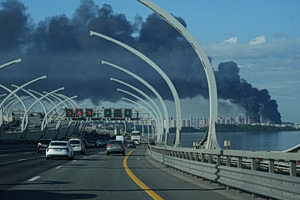
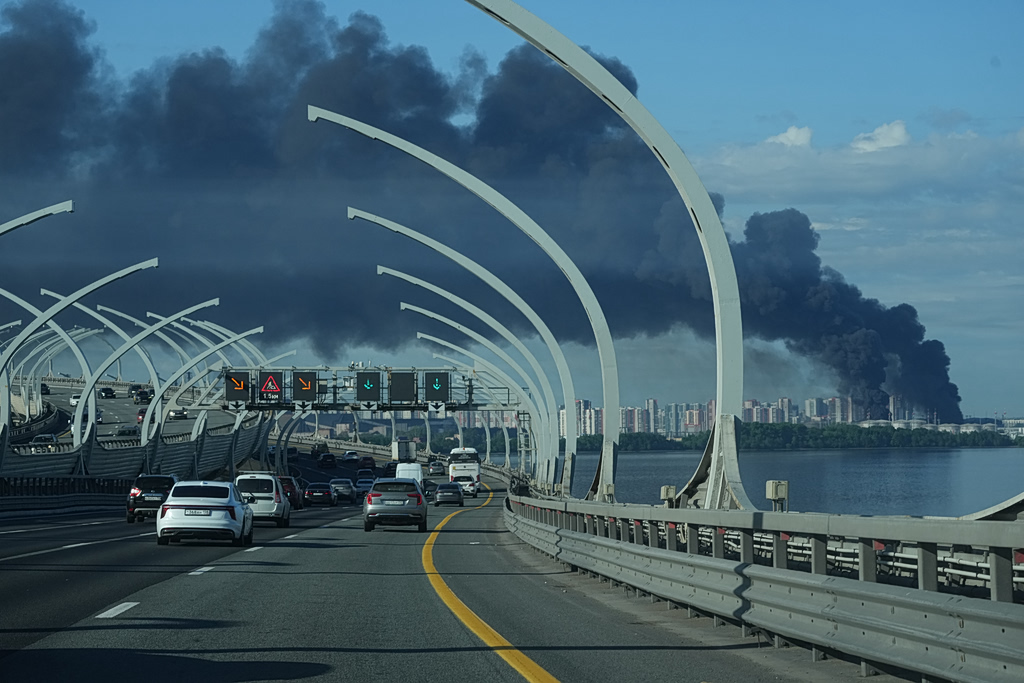
Zelensky argued that the continuation of the conflict has already brought operations deep into Russian territory, pointing to recent long-range drone strikes, including one that coincided with the opening of the Forum in St. Petersburg. He also referenced significant Russian casualties and growing social pressure inside Russia due to economic and energy hardships.
He set out preconditions for starting talks, including a ceasefire, a prisoner exchange, and the return of displaced civilians, with international guarantors such as the United States and the European Union.
Two passages from the letter have drawn particular media attention. In the first, Zelensky writes: “We see that the United States is fully focused on the Iran issue, and it would be a mistake to simply wait until the war in Europe returns to the center of their attention. Ukraine proposes ending this war through direct dialogue between us and you. I propose that we meet.”
In the second, he warns that if Russia chooses to continue the war, Ukraine will fight on for its own survival. He also contends that Putin is now in a more vulnerable position domestically, and implies that refusing to pursue a diplomatic solution could further weaken his standing.
While none of this is new coming from Zelensky, what is new is that these points appear together in a single letter, presented in a coherent and structured way, just hours after Putin had made relatively conciliatory public remarks.
Putin’s opening move
It should be noted that just hours before the letter was made public, Putin had told a press conference in St. Petersburg that Russia remains “open to a peace agreement,” while stressing that mutual compromises from Kyiv would be required.
He stated that Russian forces are continuing to advance and that Ukraine faces serious shortages in both manpower and weaponry. He also spoke of territorial gains for Moscow, claiming that Russian forces now fully control Luhansk, large portions of Donetsk, and a significant part of Zaporizhzhia.
On the war’s trajectory, he said Russia has sufficient resources to achieve its military objectives and did not rule out further escalation on the ground as part of operational planning.
On the diplomatic front, Putin once again proposed former German Chancellor Gerhard Schroeder as a potential mediator, describing him as a “trustworthy politician.”
The EU weighs in
Against this backdrop, the European Union also entered the public debate through Anita Hipper, the European Commission’s spokesperson for foreign policy. According to Hipper: “We welcome President Zelensky’s call for direct negotiations and the call for a ceasefire. Looking at the facts, what we see is that Ukraine wants peace and Europe wants peace.” She described the letter as “yet another call on Russia to end its illegal war of aggression.” She noted that the Ukrainian side continues to demonstrate its willingness for substantive negotiations and an unconditional ceasefire, a proposal Ukraine has accepted for some time now.
The Commission spokesperson also argued that the reality on the battlefield contradicts Russia’s original objectives. “Putin expected to take Kyiv in just three days. We are now heading into the fifth year of illegal Russian aggression. If you look at what Russia has achieved, it is not a great deal,” she said, adding that “the reality on the ground stands in stark contrast to what Putin claims.”
When asked about reports that the E3 countries, the United Kingdom, Germany, and France, are working on a plan for talks with Putin, the spokesperson declined to comment on specific scenarios. “On our side, we support peace in all its forms. We are not going to take a position right now on who should play the role of mediator. We are focused on our own position, our requests, and our priorities,” she said, referring also to recent statements by the EU’s High Representative at the informal meeting held in Cyprus.