
 Μake us preferred on Google
 The Iran War has now entered its 50th day.
1. How did the war with Iran begin?
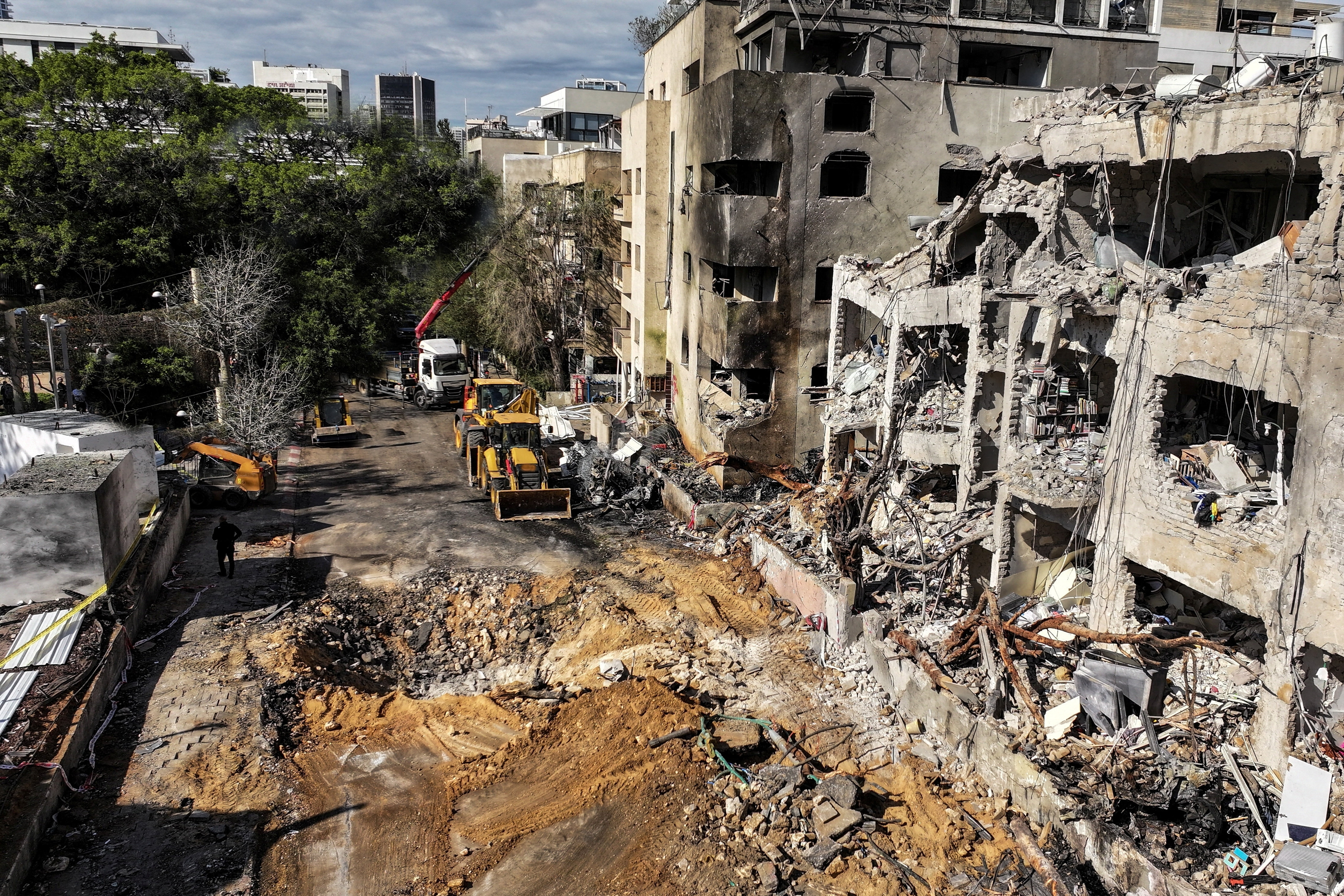
On February 28, the United States and Israel launched airstrikes against Iran, targeting military and government installations as well as several Iranian officials, including Supreme Leader Ali Khamenei. The American operation was named “Epic Fury” and the Israeli one “Roaring Lion.”
2. What was the stated justification for the start of the war?
In the first days, the United States claimed the strikes constituted a necessary, preemptive act of self-defense, with stated goals of preventing Iran’s nuclear threat, protecting US allies in the region, namely Israel and the Arab states, supporting the Iranian people and internal resistance to the regime, and ensuring freedom of navigation through the Strait of Hormuz.
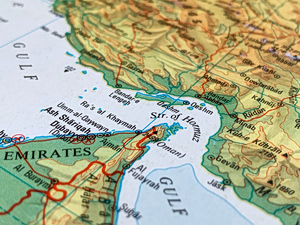
A map showing the Strait of Hormuz
There was no specific triggering incident, and American officials initially gave contradictory statements. According to the New York Times, the timing was tied to Israeli Prime Minister Benjamin Netanyahu convincing President Trump that a unique opportunity existed to eliminate the regime’s top leadership in a single strike and potentially bring about a change of government, something that did not happen.
3. How did Iran respond to the US and Israeli strikes?
Iran responded immediately with a large-scale operation called “True Promise IV,” launching missiles and drones at Gulf states and Israel. In early March, it proceeded to close the Strait of Hormuz to “non-friendly states.”
4. Which countries did Iran target?
Iran struck primarily military bases and energy infrastructure in Qatar, the United Arab Emirates, Bahrain, Kuwait, Saudi Arabia, and Oman, on the grounds that those countries cooperate with the United States and host American military bases. The UAE suffered the greatest number of attacks, Oman the fewest. Iran also carried out hundreds of strikes against Israel, hitting major cities such as Tel Aviv and Haifa, air bases, strategic installations, and command centers.
5. How did the Gulf states respond to Iran’s attacks?
The Gulf states responded defensively, seeking to preserve their national sovereignty while avoiding an all-out war that would be devastating to their economies and energy infrastructure. Although they condemned Iran’s attacks and defended themselves, they stopped short of launching counter-offensives.
6. Why did the United Arab Emirates withdraw from OPEC?
On May 1, the UAE withdrew from OPEC after approximately 60 years, for a range of reasons, some of which are directly connected to this war. Its relations with Iran, also an OPEC member, had ruptured, given that the UAE sustained the most attacks and felt the organization had not done enough to support it. The UAE also wanted to raise its production capacity above the limits OPEC sets for its members and to pursue an independent energy policy, increasingly aligned with the West and Israel.
7. Why did Lebanon become involved in this war?
Lebanon became involved because Hezbollah launched attacks against Israel on March 2 in support of Iran, even though the Lebanese government did not wish to participate in the conflict. A ceasefire brokered by the United States has been in place since April 16, though significant violations have occurred on both sides. Israel has repeatedly stated that it regards Lebanon as a separate front from the conflict in Iran and demands the disarmament of Hezbollah, while Iran treats Lebanon as part of its negotiating position.
8. Why did the Iranian regime not collapse after the Supreme Leader and many senior officials were killed?
The Iranian regime had been preparing for this war for years, drawing lessons from previous confrontations including the 12-day war of June 2025. It had organized a decentralized command structure with specific assigned responsibilities and contingency protocols in the event its leadership was decapitated. Following the deaths of Ali Khamenei and many other senior officials, that plan was immediately activated, ensuring the continuity of the regime.
9. Who is currently running Iran?
Mojtaba Khamenei, the son of Ali Khamenei, who was killed on the first day of the campaign, was designated as the new Supreme Leader on March 8. He has not made any public appearances, and there are reports that he was seriously wounded. Day-to-day governance is handled by a collective leadership made up of the Revolutionary Guards, who are now believed to hold effective control; the political leadership, including President Masoud Pezeshkian and Foreign Minister Abbas Araghchi; and other figures such as parliamentary speaker Mohammad Baqer Qalibaf.
10. What is the Strait of Hormuz?
It is the only maritime passage connecting the Gulf of Oman and the Arabian Sea to the Persian Gulf. The strait is bounded to the north by Iran and to the south by Oman and the UAE. It is approximately 50 kilometers wide at its entrance and exit points and roughly 33 kilometers at its narrowest point.
11. Why is the Strait of Hormuz so strategically important?
Because it is the most strategically critical maritime passage in the world for global energy. Before the war, it carried 20% of the world’s daily consumption of oil and liquefied natural gas (LNG), as well as approximately one third of global fertilizer trade. It is also a key transit route for food, pharmaceutical, and technology imports into Middle Eastern countries.
12. What is the current situation at the Strait of Hormuz?
The strait remains effectively closed to commercial shipping. At the start of the war, Iran used missiles and drones to seize control of the Strait, allowing selective passage only to “friendly” vessels through corridors it designated. On April 8, when the ceasefire began, the United States imposed a naval blockade of the Strait in order to create economic suffocation for Iran. In practice, Iran controls the interior of the Strait while the United States, from the Gulf of Oman, controls passage in and out, resulting in a complete collapse of commercial traffic in the area.
13. How did navigation through the Strait of Hormuz work before the war?
The Strait falls within the territorial waters of Iran and Oman. Prior to the 2026 war, navigation proceeded freely under international maritime law, within designated shipping lanes. Under normal conditions, approximately 3,000 vessels passed through monthly, of which 50% to 60% carried oil and liquefied natural gas.
14. What does Iran claim regarding the Strait of Hormuz?
Iran declares that it holds full control of the Strait and is asserting demands that its authority over it be formally recognized. The closure of the Strait has driven up prices globally and constitutes Iran’s most powerful geopolitical leverage. Tehran has already established a government agency to screen vessels seeking passage, and there are reports that it is selectively imposing transit fees.
15. Have the United States’ war objectives changed?
After a period of contradictory statements, the US now consistently states its objectives as: stopping Iran’s nuclear program and securing the surrender of its enriched uranium; bringing its ballistic missile program under control; and restoring freedom of navigation through the Strait of Hormuz. Regime change and the liberation of the Iranian people have been removed from the agenda. The primary concern at this point is reopening the Strait.
16. Is there a ceasefire between the US and Iran?
On April 8, after five weeks of hostilities and with Pakistan serving as mediator, Trump announced a ceasefire with Iran, a halt to military operations. to create space for negotiations. This ceasefire has been extended to the present, despite several tense incidents and isolated exchanges of fire.
17. What is “Project Freedom,” announced by Trump on May 4?
“Project Freedom” was announced as a “humanitarian” US operation to free the thousands of sailors stranded and blocked in the Strait of Hormuz. The US presented it as a non-aggressive move, but Iran treated it as hostile and launched attacks in response. At the request of Pakistan and other countries, the United States declared the following day that the operation was being placed on “pause” to allow diplomatic negotiations with Iran to continue.
18. Where are the latest negotiations between the US and Iran focused?
The United States has presented a one-page, 14-point proposal for a Memorandum of Understanding and is awaiting Iran’s response. The proposed agreement calls for an immediate ceasefire and the opening of the Strait by both sides for 30 days in order to allow more detailed final negotiations to proceed. It also references a moratorium on Iran’s nuclear program and the surrender of its enriched uranium. In return, the US would lift economic sanctions and release frozen Iranian assets. Trump is expressing optimism while simultaneously threatening stronger military strikes. Iranian state media are reporting points that are described as unacceptable, though some Iranian officials acknowledge that the US has moved from its original positions.
19. What role does China play in this conflict?
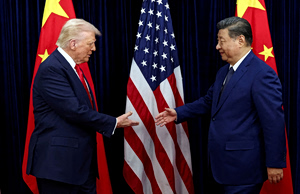
China maintains close political, economic, and military ties with Iran and is the primary buyer of Iranian oil. Behind the scenes, it has been supporting Iran economically, militarily, and diplomatically throughout the war. It is playing a significant mediating role in efforts to reopen the Strait, given that the commercial blockade is significantly hitting its own economy and exports. Trump’s scheduled visit to Beijing on May 14 and 15 strengthens the negotiating leverage of Xi Jinping, in light of the influence he wields over Tehran.
20. What are the impacts of the war on the Gulf states?
Iran’s attacks have severely damaged the Gulf economies and their energy infrastructure. The regional economy is estimated to contract by 2.2% in 2026, and the region’s image as a safe destination for tourism and investment has been badly damaged. In the first 20 days of the war alone, tens of thousands of flights were canceled and tourism losses exceeded $20 billion.
21. What are the impacts of the war on Israel?
Israel has seen significant disruption to citizen safety and daily life. Approximately 250,000 Israelis have been displaced due to the war. Economic growth has slowed and tourism has collapsed, though the economy remains resilient in part due to domestic natural gas production.
22. What are the impacts of the war on Iran?
Based on the limited information available, Iran is experiencing a severe economic crisis. Inflation has spiked, unemployment has risen, and daily life for citizens is extremely difficult. According to Iranian authorities, 3,500 people have been killed and 25,000 wounded. The war has led to increased authoritarianism by the regime.
23. What are the impacts of the war on Lebanon?
The conflict has cost 2,600 lives, displaced 1.2 million people, and destroyed 40,000 homes. Israel has occupied a significant portion of southern Lebanon. The ceasefire is being observed by neither side, and the Lebanese government lacks the power to rein in Hezbollah in order to reach a meaningful agreement with Israel.
24. What are the impacts of the war on the United States?
Despite Trump’s initial statements that the US, as an energy exporter, would not be affected by the conflict, the American economy has taken a significant hit. Gasoline prices rose by 50%, reaching $4 per gallon, the psychological threshold for Americans — and inflation climbed to 3.3% from 2.4%. The Pentagon has confirmed between 13 and 15 American military deaths and between 365 and 538 wounded.
25. How has Trump’s approval rating been affected?
According to a recent joint poll by the Washington Post, ABC News, and Ipsos, Trump’s disapproval rating reached 62%, the highest point of his current term. Approximately 6 in 10 Americans (60% to 66%) disapprove of his handling of the Iran situation. Among Republican voters, however, 79% consider the military strike against Iran to have been the right decision, 46% believe the war has been a success, and another 46% say it is too early to judge, while 40% feel it has had a negative impact on their personal finances.
26. How has the Republican Party been affected?
Trump’s decision to go to war with Iran has divided the party, with many isolationist supporters fiercely opposed, arguing that he has betrayed the “America First” doctrine and broken his promise to end endless wars. According to analysts, the war in Iran and its economic impact on American households will create a major problem for the Republican Party in the upcoming midterm elections in November.
27. What are the impacts on the global economy?
The global economic impacts are enormous, driven primarily by the energy crisis that has been created. The IMF is warning of a slowdown in global growth, projecting 3% rather than 3.4% for 2026, and warning of a risk of global recession if the blockade of the Strait of Hormuz continues.
28. If the war ended completely tomorrow morning and all issues were resolved, would energy costs drop immediately?
No. Oil and natural gas prices on international markets might fall immediately, but that would not translate into an equivalent reduction for consumers. Energy infrastructure has sustained extensive damage, many countries have purchased reserves at high prices, and shipping routes and insurance premiums would need to be reorganized. Fuel prices would decline gradually, while electricity bills would take longer to come down.