 Μake us preferred on Google
 WASHINGTON—The Supreme Court on Tuesday struck down President Trump’s attempt to curtail birthright citizenship, a rejection of his most aggressive crackdown on illegal immigration.
The decision rebuffs Trump’s bid to upend the deep-rooted understanding that virtually everyone born on American soil is automatically a U.S. citizen. That understanding, Chief Justice John Roberts wrote, was enshrined in the Constitution in 1868.
“Citizenship, then and now, was the right to have rights—to freely participate in our political community,” Roberts wrote. “The Framers of the Fourteenth Amendment extended that promise to every free-born person in this land. We keep that promise today.”
Six justices—three conservatives and three liberals—ruled against Trump, though only five did so on constitutional grounds. The court’s three most conservative justices dissented.
The case challenged an executive order that Trump issued on the first day of his second term. It declared that future children born in the U.S. wouldn’t be considered citizens if their parents were living in the country illegally or were visiting the country on temporary visas.
The executive order never took effect. It was quickly blocked by multiple lower courts because it appeared to conflict with the 14th Amendment, which states that “all persons born or naturalized in the United States, and subject to the jurisdiction thereof, are citizens of the United States.”
The executive order also seemed to contravene an 1898 Supreme Court decision that confirmed that U.S.-born children of immigrant parents are entitled to American citizenship.
The Trump administration appealed the lower-court rulings, contending that the 14th Amendment’s citizenship provision had been misunderstood for more than a century. The administration argued that the drafters of the amendment were focused on guaranteeing citizenship for the children of former slaves—and that the amendment was never intended to extend citizenship to the children of people who weren’t living in the country legally. The president also said that narrowing birthright citizenship was necessary to prevent “birth tourism”—the practice of immigrants coming to the U.S. to give birth here and obtain citizenship for their child.
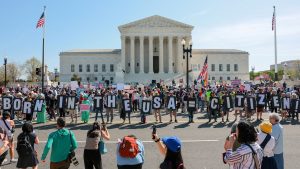
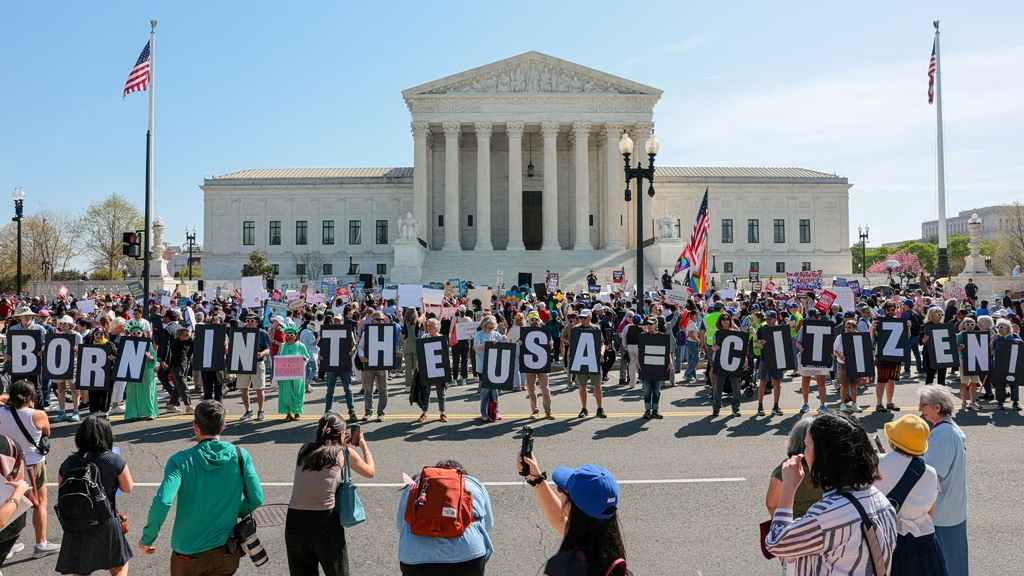
Trump took a personal interest in the issue. During his 2024 campaign, curtailing birthright citizenship was a key element of his immigration platform. When the high court heard arguments in April, Trump took the unprecedented step of showing up for the hearing, making him the first sitting president ever to attend a Supreme Court argument.
The decision is the third time this year that the Supreme Court has blocked one of Trump’s signature initiatives. In February, the court struck down the president’s global tariff program, prompting Trump to denounce the justices who ruled against him as unintelligent and disloyal. And on Monday, the court stopped him from firing a member of the Federal Reserve’s board of governors.