
 Μake us preferred on Google
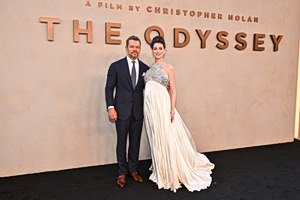
 Christopher Nolan’s The Odyssey is breaking IMAX box-office records, with Universal’s cinematic gamble backed by one of Hollywood’s most acclaimed filmmakers and an all-star cast bringing Homer’s epic to the biggest of screens. But the story does not end there.
Against the $250 million cinematic giant, Ash Koosha and his AI company, Fountain O, are fielding an alternative digital version.
Odysseus: The Fall is his second feature-length effort, following Dreams of Violets, the first AI film about the Iranian resistance, which premiered at the Tribeca Festival and cost just $2,000 to make. This time, however, the filmmaker is confidently taking up the challenge.
“We genuinely hope Christopher Nolan’s The Odyssey is a huge box-office success,” he told The Hollywood Reporter. “In a way, we believe our version of Odysseus’ journey could add to that success by bringing people into theaters who might not otherwise have gone, simply out of curiosity to compare the height of human creativity with a collaboration between a human and AI.”
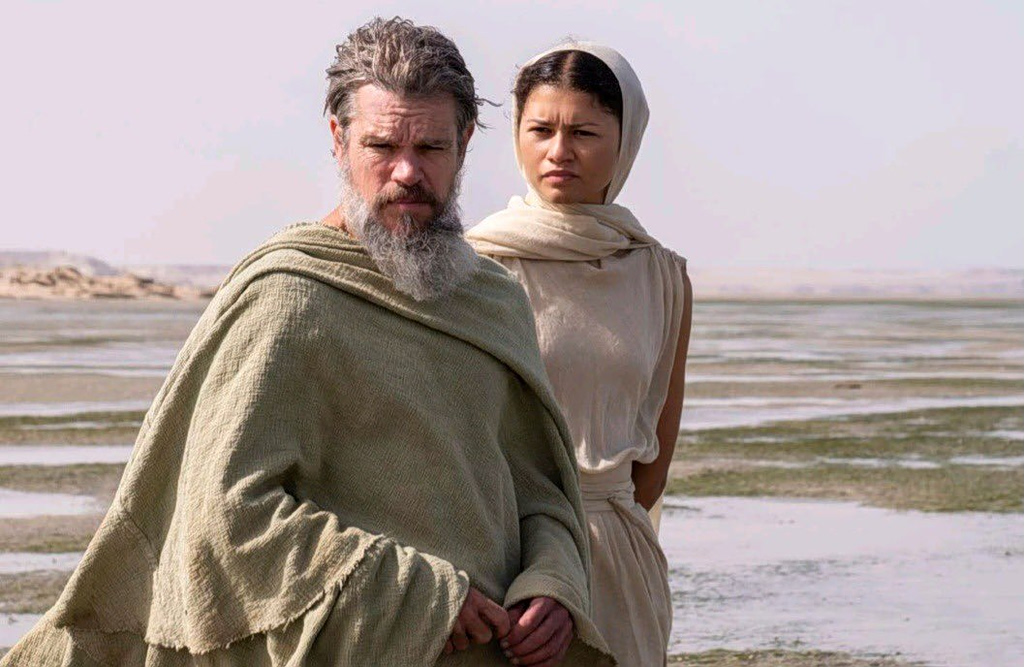
Koosha’s second feature film, Odysseus: The Fall, does not follow the conventional path of Hollywood visual effects.
According to Fountain O’s synopsis, the plot centers on “the fractured memory of a drowning man during his final moments. It is a journey that is, in fact, a trial. Remove the word ‘cunning,’ and what remains is a man confronting what he actually did in order to return home. And the story ends where the songs never go: not with a hero’s welcome, but with forgiveness from the one person who knows exactly who he is.”
In the production, physical actors, sets and cameras were replaced entirely by digital AI models.
“In a way, we believe our version of Odysseus’ journey could add to Nolan’s success.”
Human creativity, by contrast, remained the ultimate guide, with Koosha responsible for the screenplay, the artistic direction of the images and the direction of the characters’ voices.
In his director’s note, he makes clear that the new tools do not threaten anything except distance — the distance between a person with a story and the means required to tell it.
“It is certain that more films will be made this way, just as it once became certain that everyone would be able to record video with the camera in their pocket,” Koosha said.
“What must survive this change is the only thing that has always mattered: the story and the reason you are telling it. No tool has ever made a film worth watching. Every film was made by someone who had something timely to say. And that will not change, whatever they are holding in their hands when they say it.”
An Odyssey Made in China
Tom Rogers — a veteran media executive, founder of CNBC and executive chairman of Fountain O — and the director intend to use the film as a showcase for their own AI video-production software.
As Rogers explains, beyond democratizing film production, their goal was “to provide a point of comparison, during the same period, with a film made by one of the world’s most distinguished directors.”
“In that way, film lovers may be curious to see both films based on the same classic story, in order to better understand the extent to which AI can already contribute to the art of cinema, while also increasing the volume of quality films available to audiences.”
To achieve this, the production relied on cutting-edge AI creativity technologies.
As producer and post-production supervisor Pouya Koosha explained, the team turned to the Chinese artificial intelligence software Kling to render the scenes after OpenAI’s equivalent, Sora, stopped working.
The use of Chinese AI tools is a growing trend in the industry as a means of drastically reducing costs.
As the creators explain, beyond “democratizing film production,” their aim is to offer a basis for comparison.
“In that way, film lovers may be curious to see both films based on the same classic story, in order to better understand the extent to which AI can already contribute to the art of filmmaking, while also increasing the volume of quality films available to audiences.”
“We cannot praise the Kling AI model highly enough. We used it to render the images in every scene,” Pouya Koosha said.
“Through experimentation on each film, we are discovering that we are creating new tools and techniques that allow us to overcome challenges, using our production to bridge an ultimate challenge. We are answering the question of how an AI film can be created at the same level as a traditional blockbuster.”
An entire digital toolkit was deployed to complete the project.
Google’s Nano Banana software was used for the main graphics and core frames, the Claude AI platform was used to process the text, while Google Gemini was employed for the initial research.
At the same time, Fountain O applied its own proprietary technology for the movement of its digital actors, frame accuracy and the modeling of its universe.
World modeling refers to AI’s ability to understand and construct the three-dimensional geometry and physical laws of an environment — for example, how light falls, where walls are located and what the setting surrounding the characters looks like — so that the film’s digital world has depth and coherence.
From Iran to the Digital Future
The Koosha brothers, who were born in Iran and left the country in 2009, have a background in technology. They also founded Claigrid, a company specializing in cloud-based AI personalization, with Tom Rogers serving as executive chairman.
Despite the artistic success of Dreams of Violets at Tribeca, no traditional streaming platform or distribution company has so far acquired its rights for commercial release.
For that reason, Fountain O has chosen the path of independent distribution.
Both Odysseus: The Fall and the company’s first film will be available to stream directly through Fountain O’s website, with a rental price of $9.99 per viewing, inviting audiences to judge a battle between man and machine, with Homer as the vehicle.
Source: In.gr