 Μake us preferred on Google
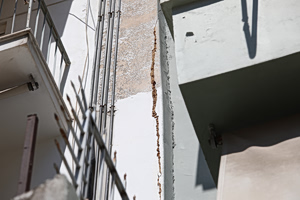
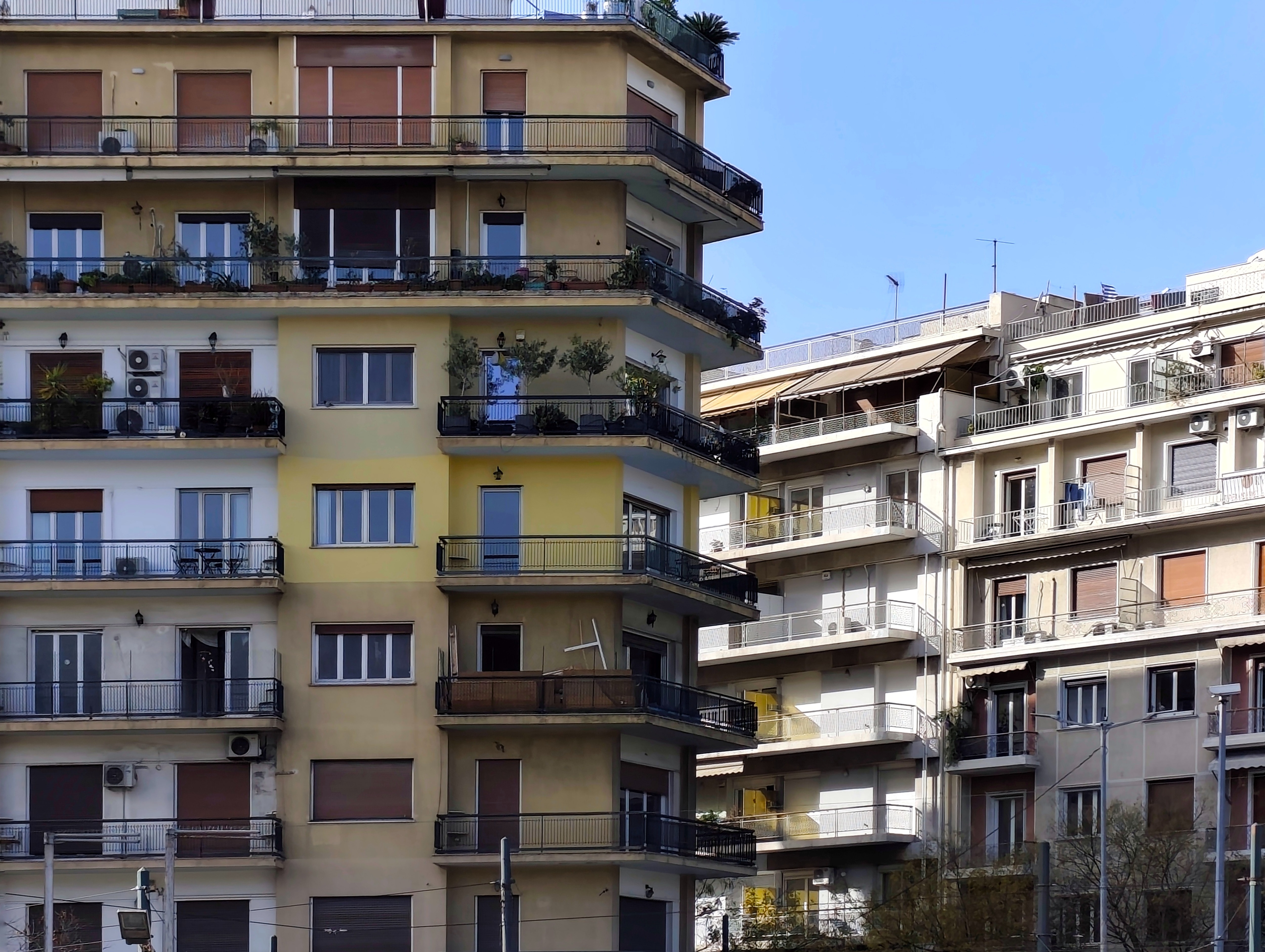
Dozens of abandoned and dilapidated buildings in the heart of Athens pose serious risks to the safety of passersby and public health, left to deteriorate over time. At the same time, the neglect and potential demolition of older buildings have raised concerns about the erosion of the city’s character and the loss of its distinctive architectural and historical heritage. Many of the properties date back to the 1920s, 1930s and 1950s.
The Municipality of Athens has completed an inventory of 77 old and dangerous buildings and is setting procedures in motion for their immediate demolition. The list includes five properties designated as protected buildings. In these cases, a special decision is required from the seven-member Special Committee for Dangerously Dilapidated Buildings, which must weigh the risk of collapse against the need to protect architectural heritage.
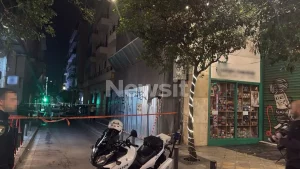
The municipality aims to prevent a repeat of an incident on November 12, when part of the roof and an interior wall collapsed at a protected building on Kolokotroni Street. The incident led to the temporary closure of the road. Fortunately, no one was injured.
Most of the buildings are located in central Athens neighborhoods with a strong architectural imprint from earlier decades, including Kolonos, Metaxourgeio, Votanikos, Kato Patisia and Sepolia. Others are in Exarchia, Plaka, Thissio and Kerameikos, areas where older structures, some of considerable architectural and historical value, still survive.
With the exception of one property owned by the Municipality of Athens, all the buildings are privately owned. In many cases, however, their owners have shown little interest in maintaining or restoring them. Some of the original owners died without leaving heirs, while in other cases ownership has been divided among numerous heirs, each holding a small share. As a result, no one takes the initiative to put the properties to use or save them.
Nine buildings have already been demolished in recent months, while demolition procedures have been initiated for another nine, with work expected to begin immediately. The first property scheduled for demolition is on Kavafi Street in Kato Patisia. Others are located on Alamanas Street in Akadimia Platonos, as well as in Kolonos, Votanikos, Metaxourgeio, Gazi and Ampelokipoi.
“Public safety comes first”
“Citizens’ safety cannot wait for the next collapse,” Athens Mayor Haris Doukas told To Vima.
He said that over the past 35 years, a total of 6,800 files on dangerous buildings have accumulated in Athens. More than 70 of these properties have been officially classified as dangerously dilapidated and at risk of collapse.
“We are already moving ahead with demolitions using municipal funds and preparing the next interventions. The cost, however, is enormous. For 10 buildings, it can reach €2 million,” he said.
According to Doukas, municipalities are responsible for inspecting buildings and addressing safety risks, while property owners are obliged to maintain their properties.
“The state must ensure a clear legislative framework, faster procedures and substantial funding. Responsibilities without resources mean problems that persist indefinitely,” he stressed.
Doukas also called for a comprehensive plan linking public safety, the preservation of protected buildings and housing policy.
“At a time when thousands of our fellow citizens are struggling to pay their rent, around 40,000 properties remain vacant. With state support and incentives for owners, buildings that can be restored should be brought back into use, with some made available for social and affordable housing. Athens needs homes for its people. And neighborhoods where everyone can live safely and with dignity,” he said.
“There are several ways to approach this issue,” said Panagiotis Karydis, professor emeritus at the National Technical University of Athens.
One option is to restore and make use of the buildings so that they can help meet housing needs. Another is to demolish them to free up space, particularly in densely built central Athens, for green spaces and recreational areas or open areas that could serve as emergency gathering points in the event of a natural disaster, such as an earthquake or fire.
However, he explained, the second option is not always self-evident or practical. In cases involving small plots, the available space may not be sufficient to create a meaningful public area. In any case, whether a building is preserved or demolished, it is essential to consider how the space will be used to best serve the needs of the city.
According to archaeologist Eirini Gratsia, coordinator of Monumenta, the first and most important step is to record the buildings and assess their state of preservation in order to establish which ones are dangerous. The next step is to investigate their ownership status and contact the owners, a process that often proves difficult because, in several cases, they cannot even be located.
Cooperation among the relevant heritage protection authorities, the municipality and property owners is also crucial, with the primary aim of saving the buildings.
“We must start from the premise that we are trying to save them,” Gratsia stressed. She noted that even valuable two- or three-story buildings that have fallen into poor condition can be protected and restored.
“The homes of ordinary people”
The issue undoubtedly has an economic dimension. Here, Gratsia said, the state must step in and provide owners with financial support to save their buildings. Demolition, however, should not be the first option.
There are valuable structures that must be preserved, while a further question concerns what will happen to the other buildings that may be classified as dangerous in the future.
“Yes, we have these buildings now, but more will come. What will happen then? Will we demolish them?” she asked, emphasizing that even modest, working-class homes are an integral part of the city’s history.
As a characteristic example, she cited the buildings at 101, 103 and 105 Alamanas Street in Akadimia Platonos, where a group of structures can be seen that could be preserved. Although living in them may present difficulties, there are ways to make use of the properties, such as constructing a new building at the rear of the plot while retaining the original structure.
“These are neighborhoods with more modest buildings. We cannot erase them,” she said, reminding that Athens is not limited to Vasilissis Sofias Avenue or Patission Avenue. The city has other neighborhoods, each with its own architectural and historical identity, where solutions involving the expansion and redevelopment of properties could be implemented, provided the original buildings are preserved and, with them, the character of each area.