 Μake us preferred on Google
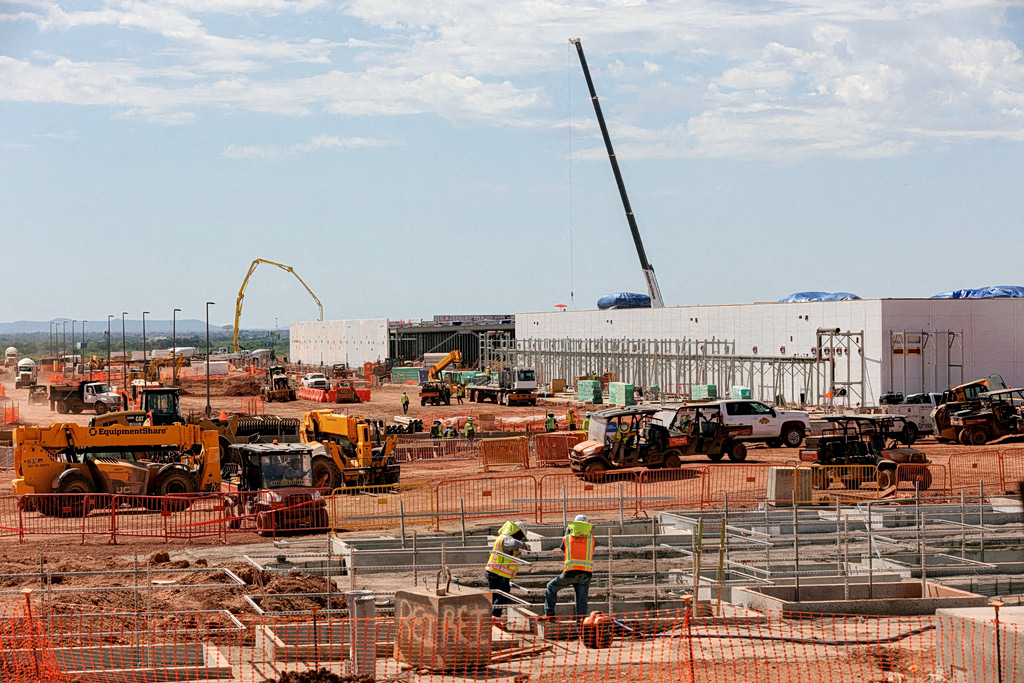
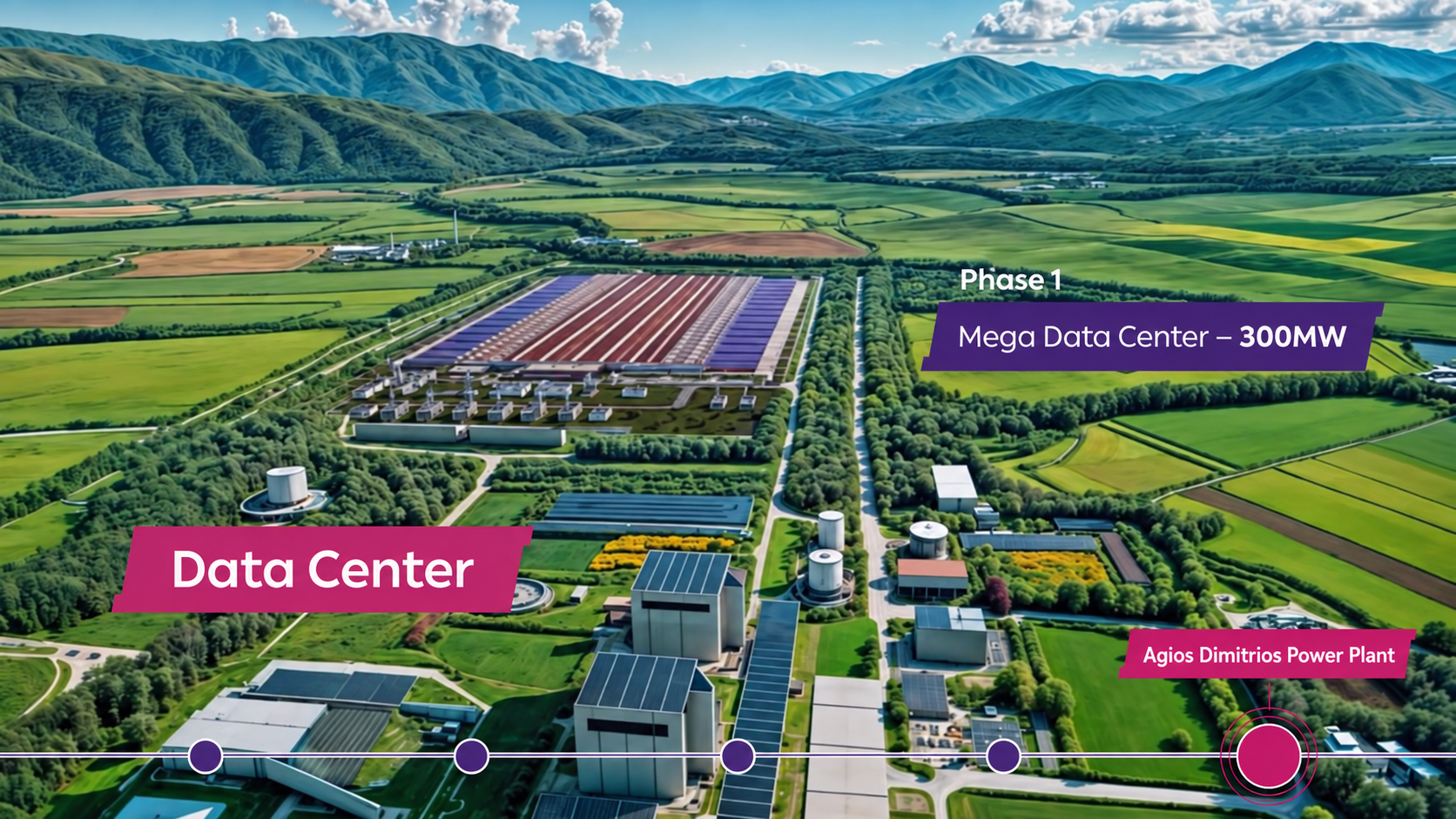
A planned 300-megawatt data center at the former Agios Dimitrios coal-fired power plant in Kozani will consist of four buildings housing 20 data halls, with cooling systems drawing water from the nearby Polyfytos reservoir, according to a 737-page environmental impact assessment (EIA).
The study provides a detailed breakdown of the proposed facility, which Greek utility Public Power Corporation (PPC) is developing in cooperation with Amazon. It sets out the project’s layout, electricity and water requirements, and plans to reuse infrastructure from the former power station.
The data center would occupy approximately 45 hectares (111 acres), with four identical buildings, each 11 meters (36 feet) tall. Each building would contain five data halls with a computing capacity of 12 MW each, bringing the total computing capacity to 240 MW. Cooling equipment, electrical losses and other supporting systems would raise maximum electricity demand to approximately 300 MW.
The buildings and outdoor equipment would cover 111,640 square meters, while the total building floor area would be 77,360 square meters. The buildings would have aluminum composite panel facades, with landscaping around the perimeter. The complex would be built within the existing industrial site, using some of the infrastructure left behind by the coal-fired power station.
Electricity Supply
The data center, according to plans, will connect to the existing 400-kilovolt substation at Agios Dimitrios, operated by Greece’s Independent Power Transmission Operator (IPTO- ADMIE). Two new underground 400-kilovolt cable lines would connect the facility to the substation, while two transformers would distribute electricity through its internal medium-voltage network.
The substation previously handled more than 1,550 MW of electricity generated by the coal-fired plant. According to the environmental assessment, the data center would use transmission capacity that is no longer needed for the former power station. The study estimates that the facility’s maximum electricity demand would be equivalent to about 3% of Greece’s annual peak demand and 4% to 5% of annual net electricity demand.
It also examines renewable energy capacity in the surrounding region, where approximately 2.9 gigawatts of wind and solar power are already operating. Projects representing another 3.4 GW have received binding grid connection offers. The data center’s projected demand would be equivalent to roughly 5% of that combined capacity. On that basis, the study concludes that the facility is unlikely to place disproportionate pressure on the national electricity grid or cause congestion on regional transmission lines.
Water Consumption and Cooling
The study sets out plans for a hybrid cooling system combining air cooling with water-based cooling. Air cooling, according to the EIA, would handle between 10% and 40% of the cooling load without consuming water, while water-based cooling would account for 60% to 90%, using water when temperatures exceed 25 degrees Celsius (77 degrees Fahrenheit).
At full operating capacity, annual water consumption is estimated at approximately 203,000 cubic meters. The environmental assessment estimates that the proposed system would use around 133,000 cubic meters less water annually than the alternative cooling configuration considered. Water would come from the Polyfytos reservoir through existing infrastructure at the former power station.
The plans also include a provision for recovering heat generated by the servers at a later stage of the project. The study estimates that approximately 822,600 megawatt-hours of thermal energy could be recovered each year and potentially supplied to district heating networks serving homes, schools and health care facilities. Other possible uses include greenhouses and swimming pools.
Construction Schedule and Investment
PPC Chief Executive Georgios Stassis told analysts last Monday that the company expected to receive the terms for connecting the facility to the national electricity transmission system from IPTO soon. He also confirmed that an agreement with Amazon for the initial 300 MW development was expected to be finalized in the first quarter of 2027.
Under the proposed schedule, equipment orders would be placed in spring 2027, construction would begin in the summer and the facility would be completed toward the end of 2028. The EIA estimates a construction period of approximately 24 months.
PPC’s investment in the energy infrastructure and construction of the first phase is estimated at around 1 billion euros, with Amazon expected to invest a similar amount in IT infrastructure.
Possible Expansion to 1 GW
The project also includes plans for a second phase that would increase capacity to 1 gigawatt. Amazon holds an exclusive option on the expansion until the end of May 2027.
If the company exercises that option, development of the second phase could begin in fall 2027, with connection to the electricity grid targeted for 2031. If Amazon decides not to proceed, PPC could seek another investor for the 1 GW development.
Source: OT.gr