 Μake us preferred on Google
 Lavrio has history, beauty, and a character all its own. Just a short drive from Athens, this port town in southeastern Attica makes for the perfect quick getaway—one that, as we discovered, is guaranteed to be delicious.
Lavrio is a place you read in layers. Beneath the modern harbor, the houses, and the silent smokestacks lies a city shaped by what lies underground. It grew wealthy from its mines, suffered, and rebuilt itself over its own traces. Although mining activity in the wider Lavreotiki region dates back to prehistoric times, modern Lavrio was essentially reborn in the 19th century, when the newly established Greek state recognized its industrial potential.
From 1864 onward, with the founding of major mining companies, the area quickly transformed into an industrial hub. Factories, a railway, a port, housing, and thousands of workers gave Lavrio the form of a working-class city. But growth brought conflict: the so-called “Lavreotika” (a series of financial scandals and disputes over mining rights), speculation, strikes, and the bloody miners’ uprising of 1896. Lavrio became not only a place of labor, but also of social struggle.
In the 20th century, it experienced prosperity, crisis, waves of refugees, war, and the shadow of Makronisos—a nearby island used as a political exile camp during Greece’s Civil War. Later came deindustrialization. And yet, Lavrio did not fade. Instead, it transformed its old factories into sites of memory, culture, and new uses. This is not simply a story of progress or decline—it is a place constantly evolving without losing its identity.
We set out to reconnect with it on an ordinary weekday, when many shops were closed. Still, those that welcomed us did so warmly, and in their owners’ eyes we saw a determination to keep supporting the town—to remain there, ready to greet every passerby.
To Limani
Where fishing boats sway lazily on the water and the evenings carry the scent of the sea, To Limani (“The Port”) feels like a natural extension of the landscape. Set right by the marina—so much so that you might momentarily think you’re on an island—the space is bright, clean, and marked by modern simplicity. Locals and visitors share its tables, and fortunately, it’s open all week.
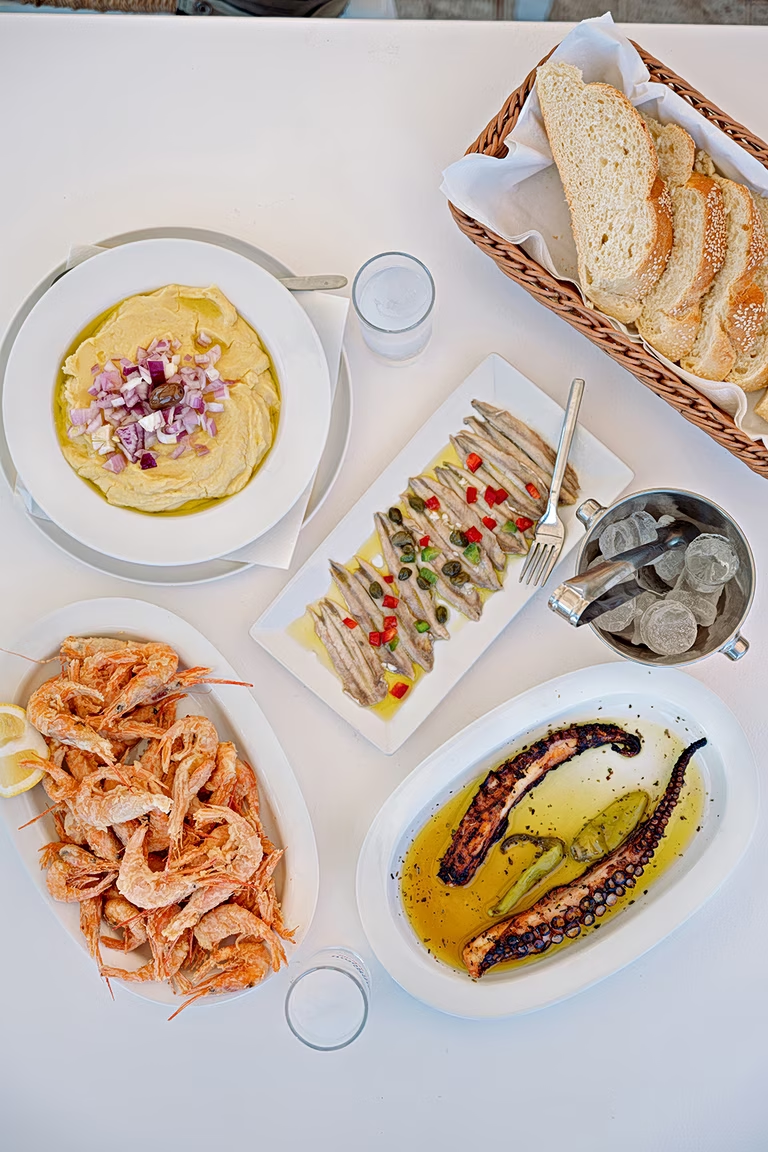
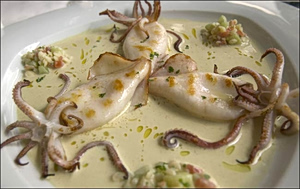
Sea food served in To Limani. Photo: Giorgos Kapranos
Behind this steady presence is Ervis. He first worked here as an employee, and later became a partner when the owner, Apostolos Hasapis, invited him to join. It’s clear how much he cares about the place. After twelve years, he knows the craft inside out.
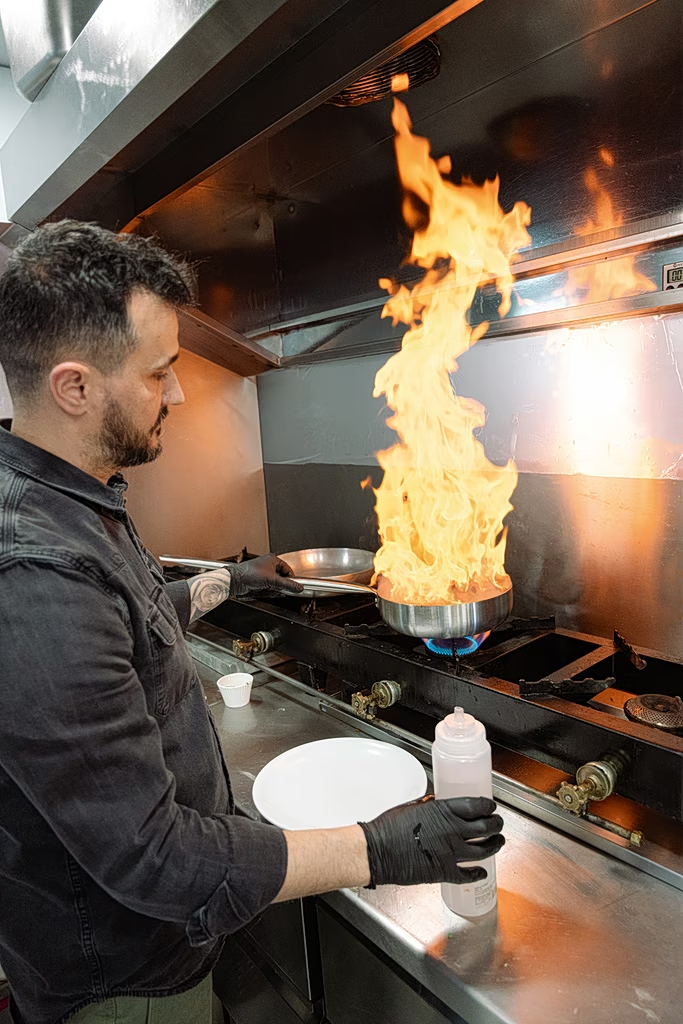
To Limani cooks and serves simple but delicious seafood dishes. Photo: Giorgos Kapranos
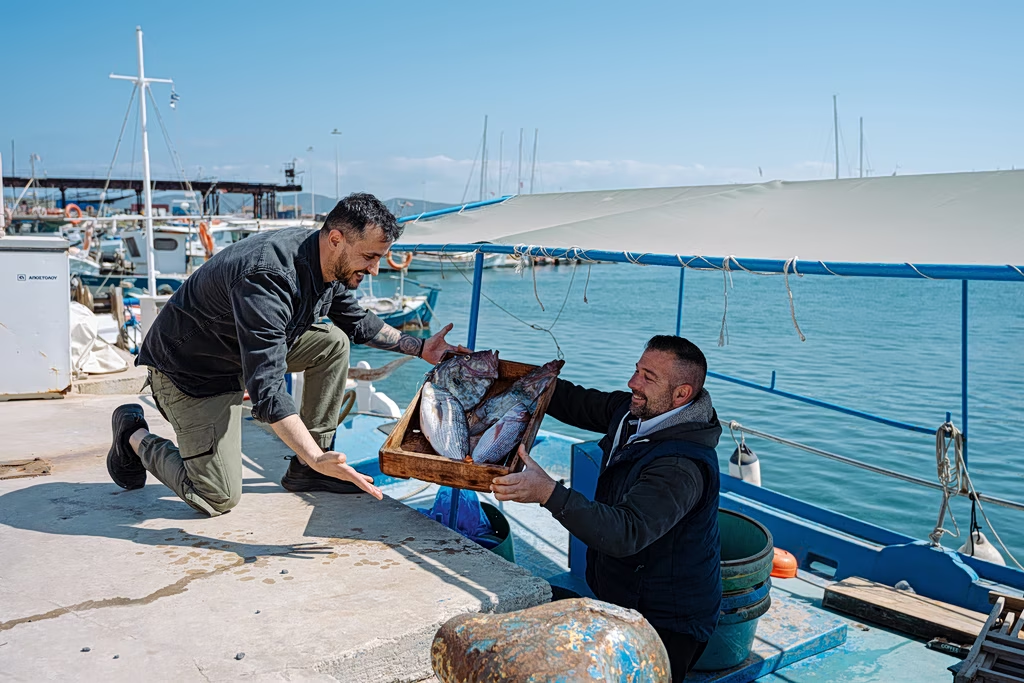
The kitchen’s philosophy is simple: whatever the sea offers, as long as it’s fresh. Fish arrive daily from the harbor, often directly from the boats of fishermen who have become part of the restaurant’s story—like Thodoris Katrakos and Thanasis Savvagios. These are not just professional relationships, but bonds of trust. That’s why the menu changes almost daily. There is no fixed list—what’s caught is what’s cooked.
When the sea is quiet, fire and pot take over: carefully selected meats from local suppliers, grilled or slow-cooked with the same care. Still, seafood remains at the heart. Breaded shrimp that have become a signature dish, seafood risotto that keeps returning to tables, mussels steamed with garlic and wine—balanced so delicately that you pause just to savor them. Alongside them, handmade pies and marinated fish prepared by hand, including small red mullet that are hard to find elsewhere.
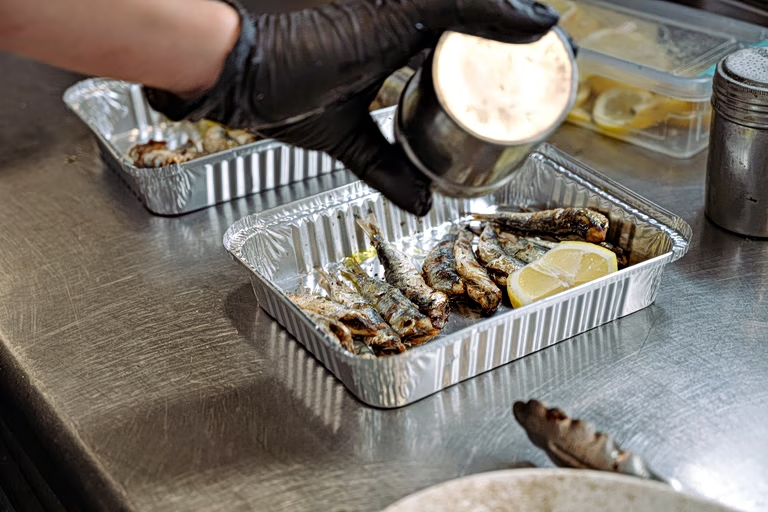
Photo: Giorgos Kapranos
What stood out most was their attention to detail and quality. No deep fryers—only pans, so the oil can be changed constantly and every dish meets their standards. Everything we tasted was exceptional. So was the experience of joining them on a fishing boat to collect the day’s catch from Thodoris—truly unique.
Before we left, Ervis told us: “For me, customers are like guests in my home, and my staff is my family. That’s the philosophy my wife, Nana Arzoumanidou, and I believe in—and it’s how we move forward.” We couldn’t agree more. We’ll be back.
At Nitis Pastry Shop
No visit to Lavrio is complete without stopping here. The soul of the shop is Stavros Nitis, a fourth-generation pastry chef whose enthusiasm is as contagious as his sweets.
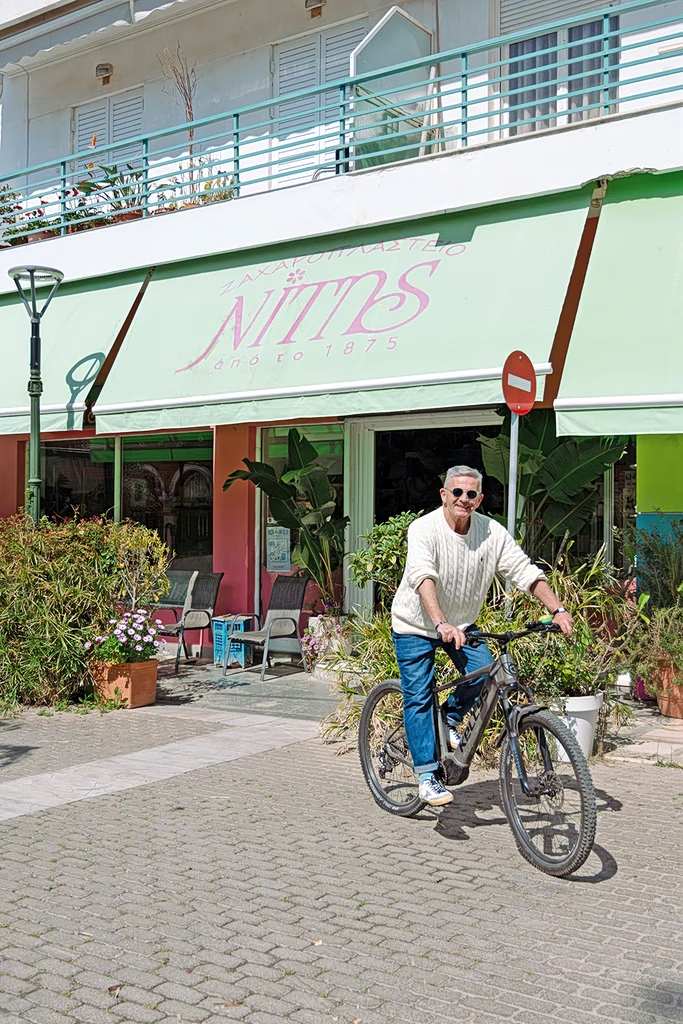
Photo: Giorgos Kapranos
We sat with him in a dining room lined with photographs from around the world—places his famous ergolavoi (traditional Greek almond sweets) have traveled to. From Europe to Nepal, these delicate, chewy almond confections have won hearts everywhere.
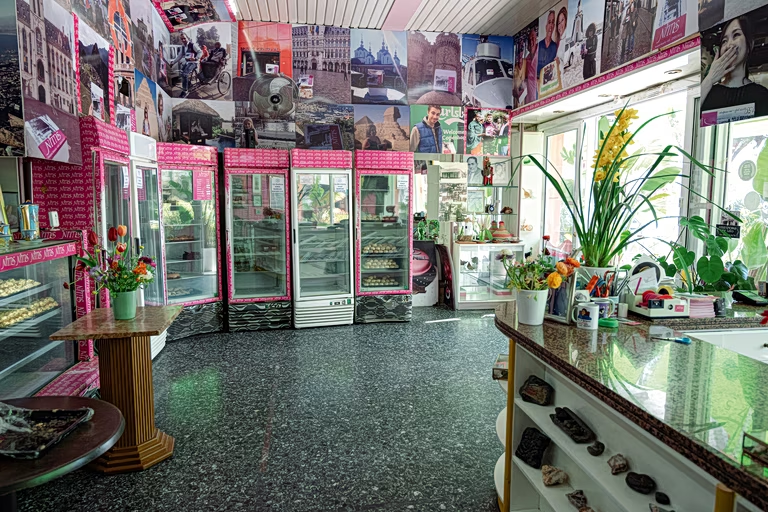
The interior of Niti pastry shop, decorated from floor to ceiling with photos of its famous dessert ‘ergolavoi’ that have travelled all over the world.
Stavros served us coffee in his signature Versace cup, alongside freshly made ergolavoi, introducing them as if they were beloved relatives. The recipe? Exactly the same for 148 years—offering rich flavor, a perfectly chewy texture, and an irresistible aroma.
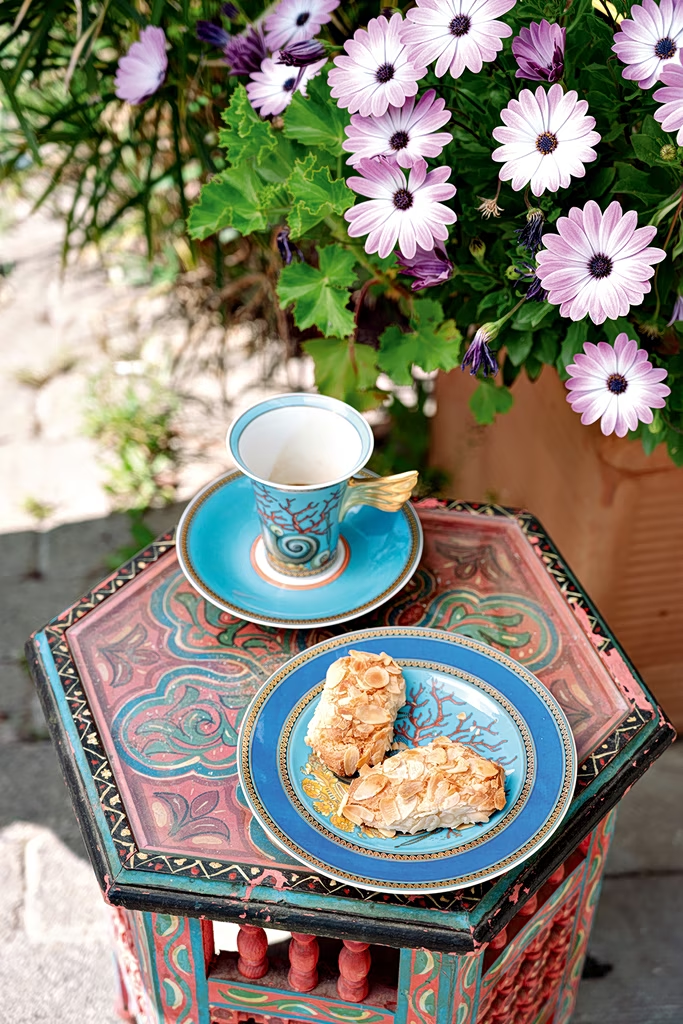
The delicious ‘ergolavoi’ with the perfect pairing: an aromatic espresso. Photo: Giorgos Kapranos
In the workshop, his trusted collaborator Giannis Bofilios was busy making chocolate truffles at speed. Stories flowed endlessly—about the shop, about Lavrio—and it was hard to leave.
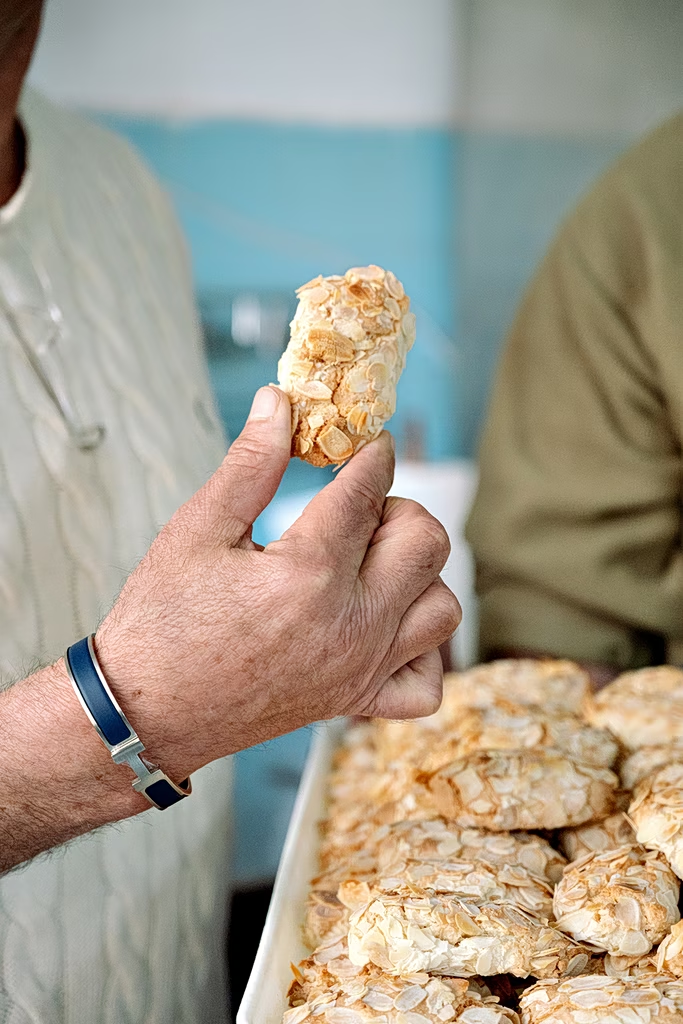
Since its founding 148 years ago, the ‘ergolavoi’ in Niti are made with the same, traditional recipe. Photo: Giorgos Kapranos
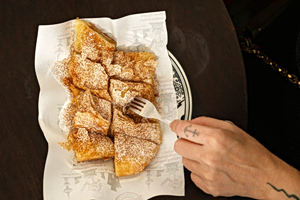
Beyond the ergolavoi, we explored the rest of the display. His “Copenhagen” cake is just as beloved, a nod to an era when European-influenced urban desserts began to replace traditional milk-based sweets like rice pudding. Also outstanding are his serano, classic almond pastries, and a wide array of treats.
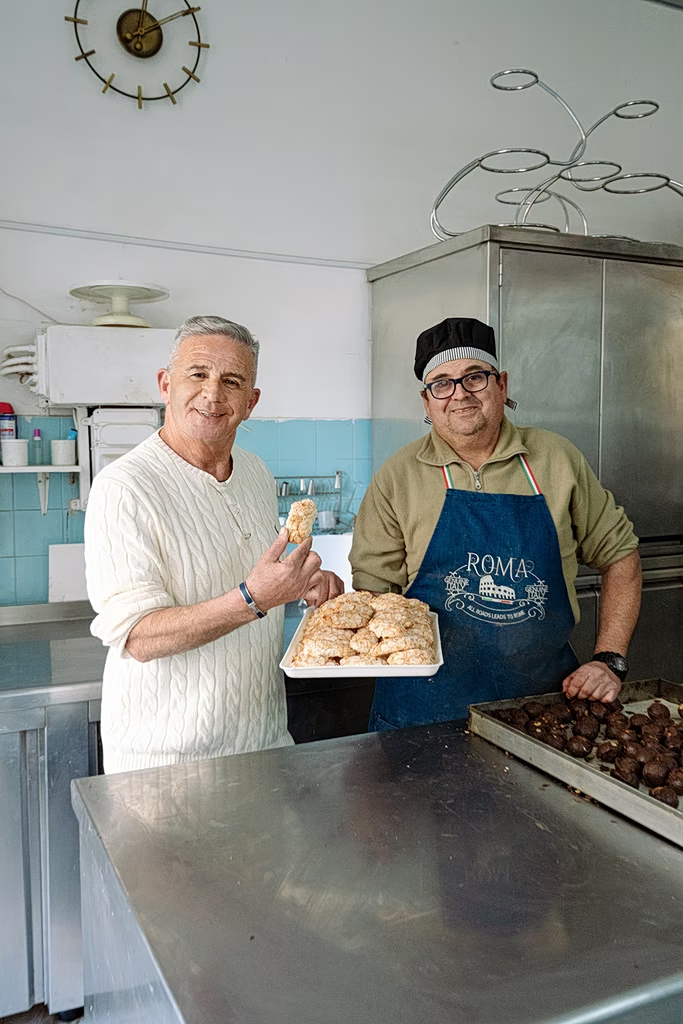
Stavros Nitis with his longtime collaborator in the workshop, Giannis Bofilios. Photo: Giorgos Kapranos.
Pezodromos (Mitás the Pontic)
Some know it as “Pezodromos” (“Pedestrian Street”), others simply say, “Let’s go to Mitás the Pontic.” Dimitris Anastasiadis’ family arrived here from Kazakhstan in 1986, part of the repatriation of ethnic Greeks from the Caucasus following political and economic instability.
Dimitris has worked in hospitality since he was 13—school in the morning, taverna at night. When he decided to open his own place, his grandmother and mother stood by his side. The result is a taverna built with care and love—something you can sense even before stepping inside.
The same warmth carries through to the food: homemade dishes, some inspired by his family’s original homeland, others traditional Greek, both cooked and grilled to order.
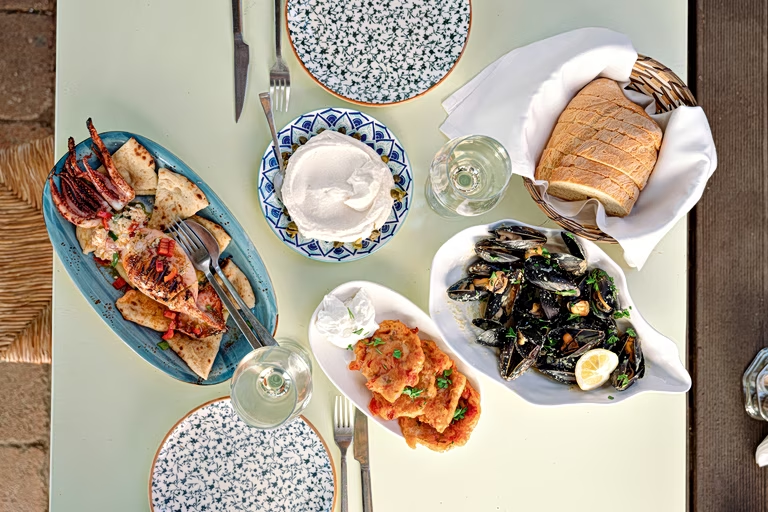
Homecooked dishes in the taverna Ston Pezodromo. Photo: Giorgos Kapranos
It’s one of the few places open on weekdays, and when we visited, it was packed—especially with younger people enjoying both the food and the atmosphere.
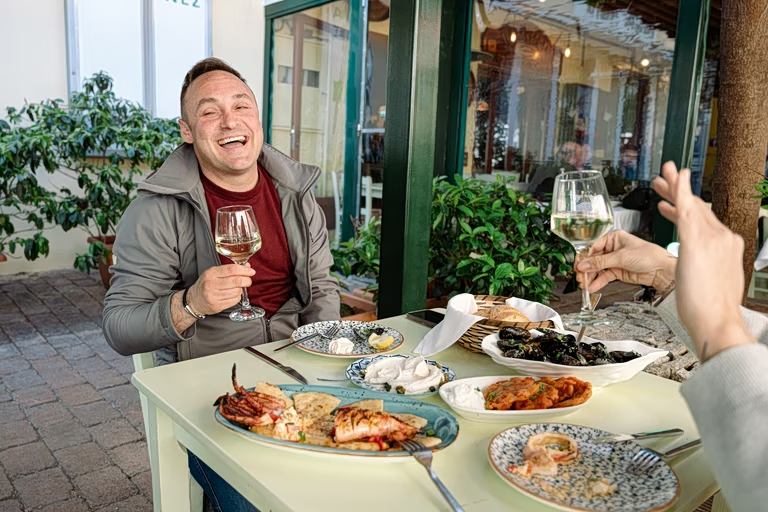
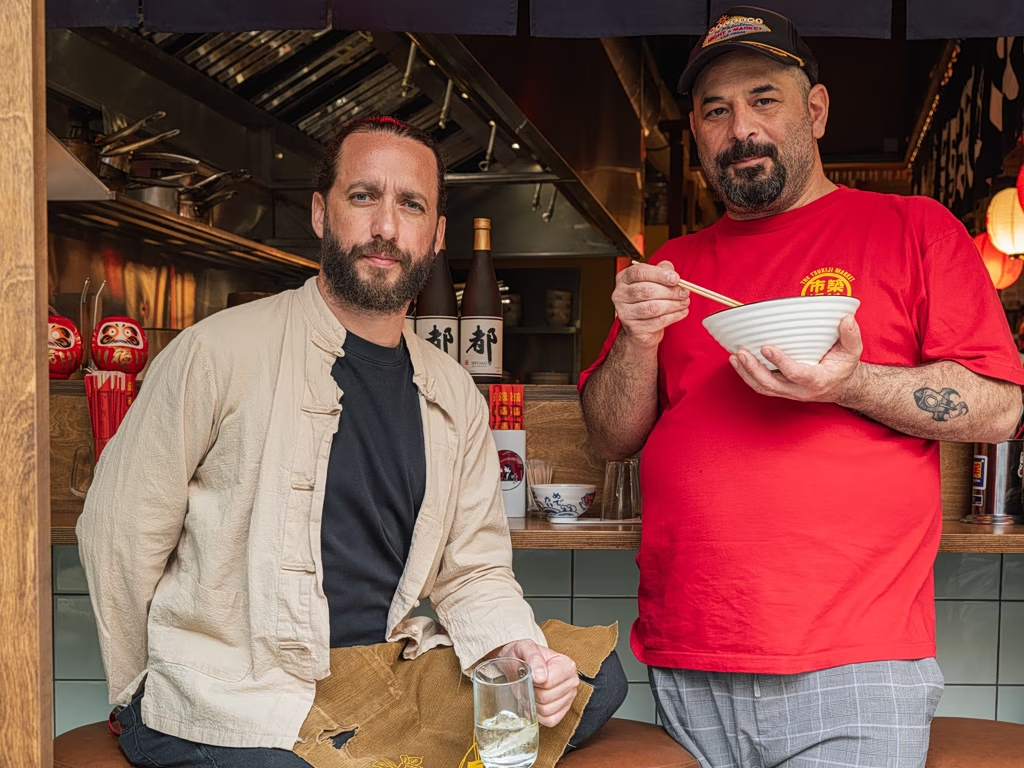
Founder Dimitris Anastasiadis sat at our table and spoke to us about the taverna’s philosophy. Photo: Giorgos Kapranos
“I make sure we have the best ingredients,” Dimitris told us. “We offer both seafood and meat, and everything is made in-house. I follow the same philosophy at my other restaurant, To Steki tou Mita, where we have an even bigger kitchen.”
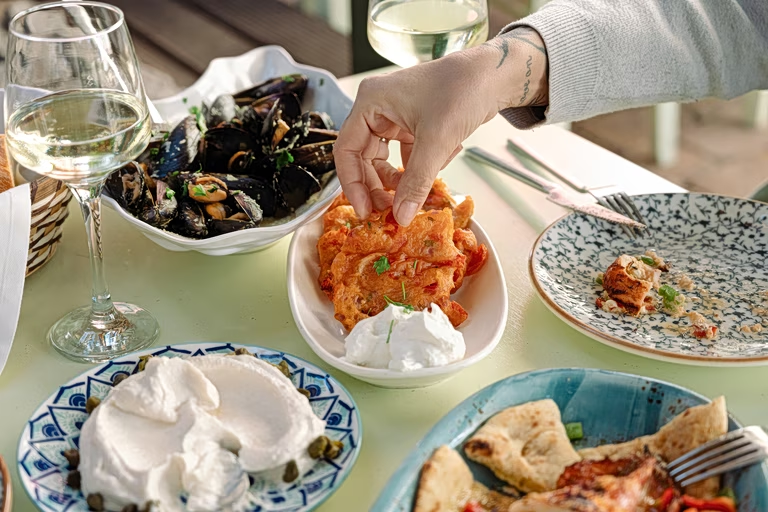
Photo: Giorgos Kapranos
Beyond the honest flavors and generous portions, what impressed us most was the speed and warmth of service. Whether it’s because it’s family-run or not, everyone serving us was open-hearted and cheerful.
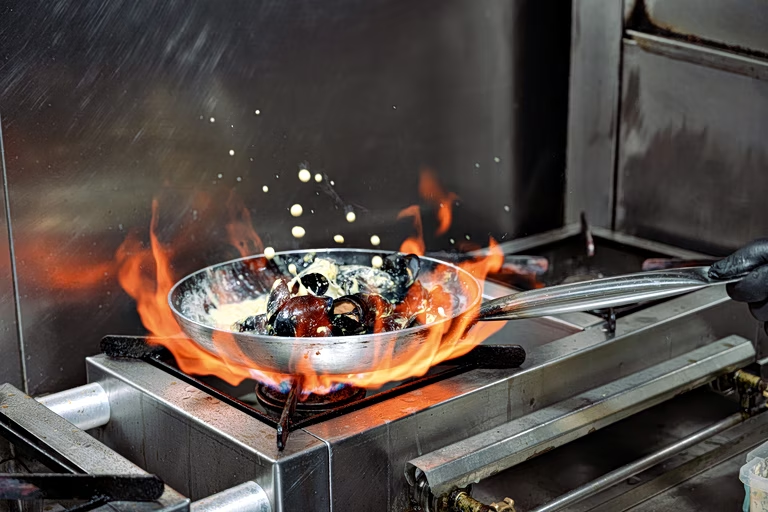
The steamed mussels being cooked at Ston Pezodromo. Photo: Giorgos Kapranos
On the menu: perfectly grilled octopus, stuffed vine leaves (dolmadakia), steamed mussels, carefully cooked shrimp, calamari, fresh-cut fries, homemade dips—everything you could want, especially during Greece’s Holy Week, the lead-up to Easter, when seafood and simple dishes traditionally take center stage.
At Chocolat Pastry Shop
Twenty years ago, Giorgos Perantonakis set out to create a small temple of chocolate in Lavrio—and he succeeded.
He first opened his shop away from the center, later moving to a more accessible location on Iroon Polytechniou Street. Giorgos, whose family also worked in hospitality, is widely loved in Lavrio—and it’s easy to see why.
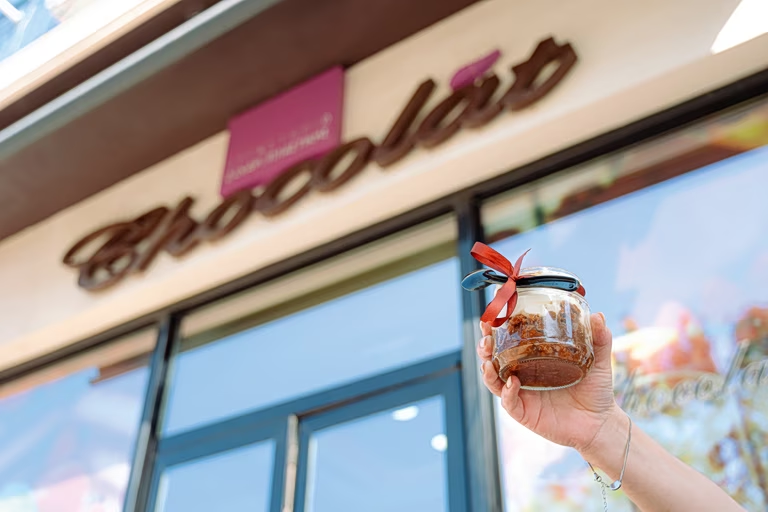
Photo: Giorgos Kapranos
Step inside, and it becomes clear that his success isn’t just about personality. He’s tireless in the workshop. Even though he has trained two assistants, most creations still pass through his hands.
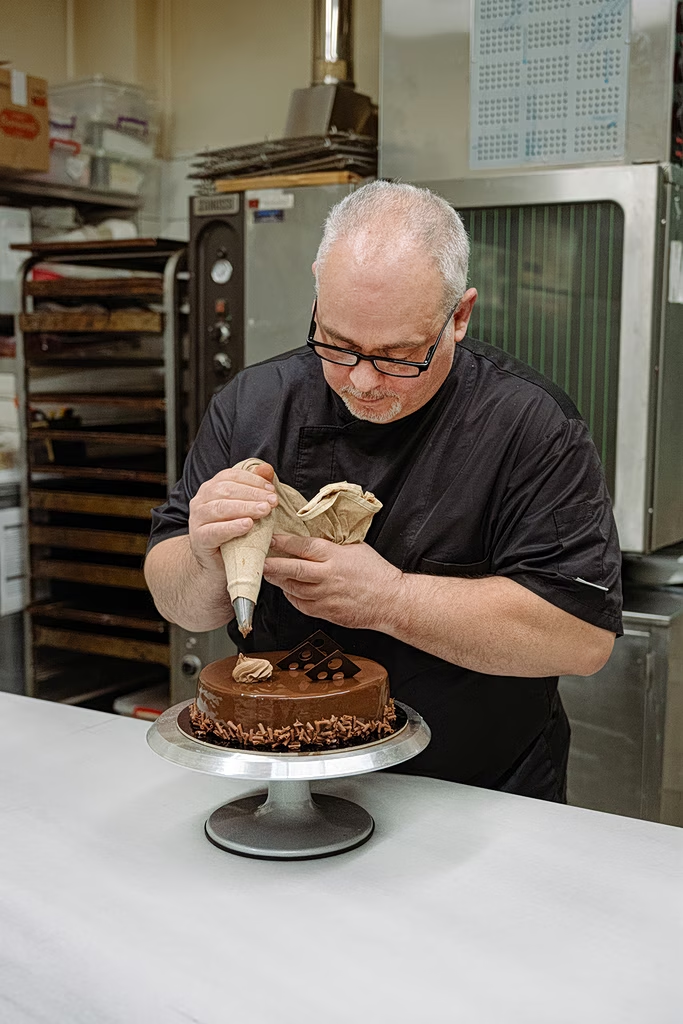
Giorgos Perantonakis: lover of chocolate, excellent patissiere and owner of Chocolat in Lavrio. Photo: Giorgos Kapranos
His sweets range from traditional to modern, all made with top-quality ingredients. Exceptional chocolates, Belgian truffles in flavors like dark chocolate, espresso, and Cointreau, and syrup-soaked pastries whose aroma fills the neighborhood.
Among the favorites: the family-style chocolate pie—so good many would rather not share—and an individual walnut cake in a jar, served with cream, inspired by a classic pudding from the city of Volos.
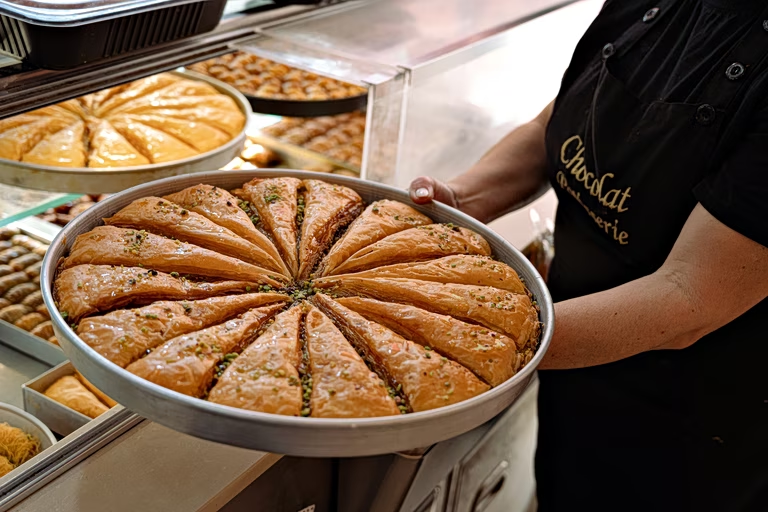
Photo: Giorgos Kapranos
During Holy Week, visitors will find traditional tsoureki (a sweet Easter bread) and intricately crafted chocolate eggs. But don’t miss the display case: the classic pastries and tarts are truly works of art.
After all, Giorgos is a generous spirit. No one leaves disappointed.