 Μake us preferred on Google
Brussels is banning Russian gas from the European Union while allowing it to cross EU territory into Serbia, an EU accession candidate. The distinction is written into European law. The EU contributed €49.6 million to Serbia’s gas interconnector with Bulgaria; the European Investment Bank lent another €25 million. Completed in December 2023, the pipeline opened access to non-Russian supplies. Yet in February 2026, Russia still provided more than 80% of Serbia’s gas. Europe financed an alternative. Moscow retained the dependence.
Regulation 2026/261 phases out Russian gas imports into the Union, with restrictions on existing long-term pipeline contracts taking effect on 30 September 2027, or 1 November where storage requirements justify an extension. It does not prohibit Russian gas transiting Bulgaria to Serbia under monitored customs procedures. Brussels is closing its market to Russian gas while preserving its passage to prospective members.
Ankara benefits from the same exposure. TurkStream carries Russian gas through Turkey into southeastern Europe; Azerbaijani gas crosses Turkish territory through TANAP before continuing through TAP into Greece, Albania and Italy. Azerbaijani gas reduces dependence on Moscow, not on Turkish transit. Ankara needs no contractual breach or explicit threat to benefit from the absence of credible alternatives.
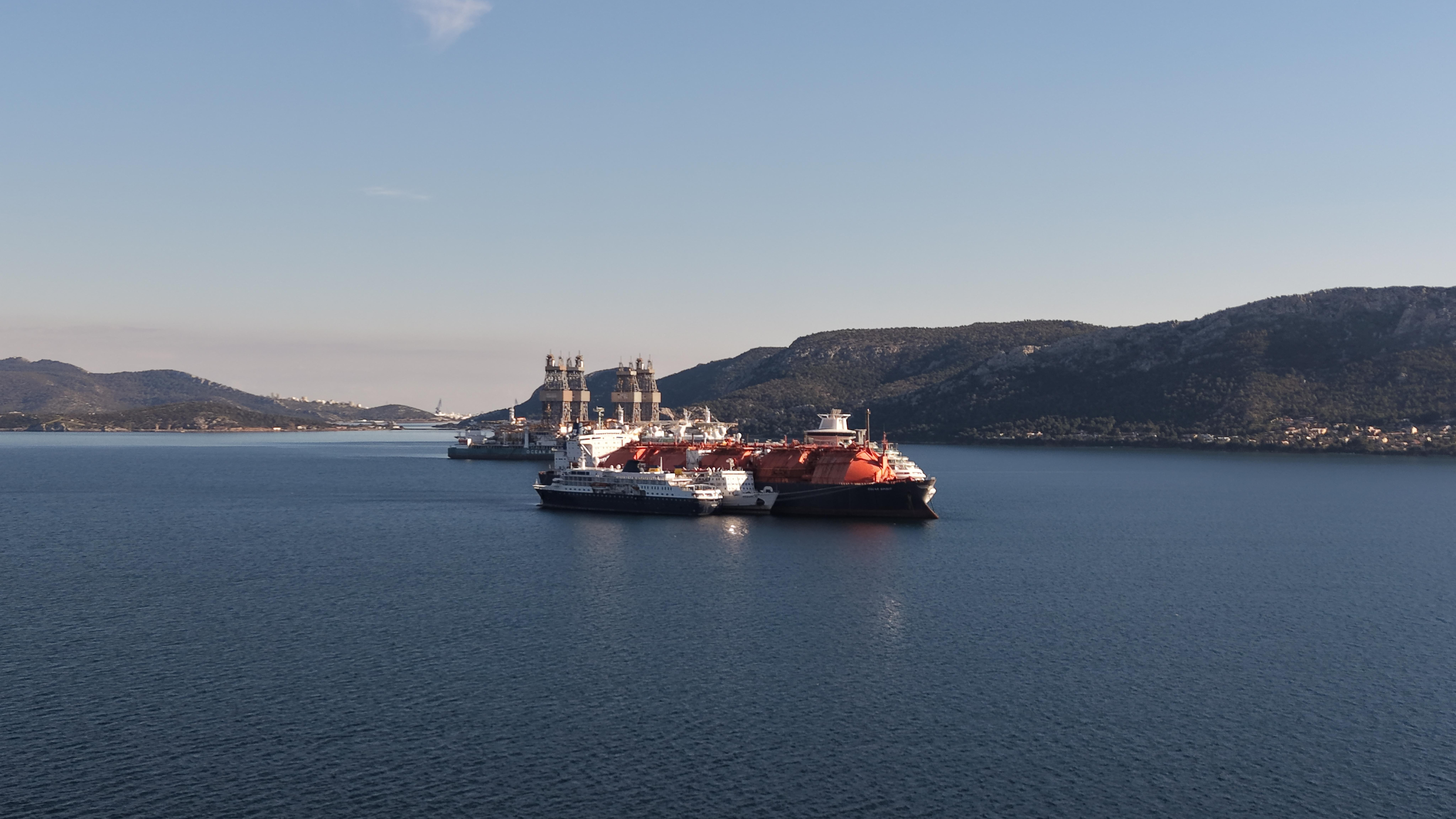
Greece has the infrastructure to reduce that dependence. LNG enters through Revithoussa and Alexandroupolis; the Greece–Bulgaria interconnector and Bulgaria’s connection to Serbia provide northbound access. The Vertical Corridor combines existing pipelines, capacity upgrades and cross-border agreements. Serbian and North Macedonian transmission operators joined the initiative on 4 September; the four countries’ energy ministers advanced interconnection plans on 6 October. These developments expand the alternatives. Their strategic value is determined by whether contracted supply, reserved capacity and enforceable commitments keep essential energy moving when a supplier or route fails.
The Mediterranean provides further depth. LNG offers flexibility but remains exposed to global supply and prices. EastMed, if built, would carry Israeli and Cypriot gas directly to Greece, with the Vertical Corridor distributing it northward. The Great Sea Interconnector would connect Cyprus to the European electricity grid. Neither project provides operational capacity today. Alongside renewables, storage and existing interconnections, they would expand Europe’s alternatives. Their value depends on securing access, operation and recovery against disruption.
Athens must turn physical access into a European security obligation. Reliable northbound supply would weaken Russian leverage, reduce dependence on Turkish transit and provide EU members with additional routes during disruption. Greece would secure long-term demand, transmission revenues, investment and a central role in southeastern Europe’s energy security. Brussels would gain greater freedom to enforce its policies beyond the borders where its legislation applies.
The Energy Community, a treaty-based framework extending EU energy rules to neighbouring countries, already requires crisis planning and regional cooperation. The Union’s gas-solidarity regime provides last-resort assistance for protected consumers, including households and essential services, but does not automatically confer equivalent cross-border entitlements on non-members. In February 2025, the Energy Community Secretariat called for deeper integration into those mechanisms.
Germany, Italy and Switzerland established the legal precedent. Their trilateral gas-solidarity agreement, signed in March 2024 and effective since May 2026, provides for assistance during severe shortages. Switzerland participates without EU membership. Binding emergency commitments can therefore extend beyond the Union without altering accession requirements.
Brussels is already narrowing the regulatory divide. On 2 November, Energy Community regulators endorsed extending EU gas-network rules on capacity allocation and interoperability to borders with member states, ahead of a proposed decision on 23 November. These measures facilitate cross-border trade. They do not procure emergency supplies, reserve capacity or allocate the financial consequences of disruption.
Operational integration is the missing commitment: diversified supplies, alternative routes and reserved capacity must function as one crisis-ready system. Greece should lead a pre-accession energy-solidarity compact with the Commission, neighbouring member states and qualifying Western Balkan governments. Commercial suppliers would contract gas and reserve transmission capacity across complete delivery routes. Governments would establish emergency thresholds, assistance volumes, compensation and priority for protected consumers. Simultaneous shortages would trigger agreed allocation rules. Operators would execute those obligations under established authority, without reopening diplomatic negotiations during a crisis.
Electricity requires corresponding arrangements for cross-border balancing, emergency exchanges and system restoration. The region’s generation mix, import dependence and network constraints differ substantially between countries. Gas supply alone cannot secure industrial continuity or grid stability.
The imbalance extends to electricity-market regulation. The EU’s Carbon Border Adjustment Mechanism entered its definitive regime in January 2026, imposing carbon-compliance obligations on imported electricity while market integration remains incomplete. Renewable producers face practical difficulties proving actual emissions. Carbon discipline must remain intact, but compliant producers need workable access to the European market. Brussels has extended regulatory obligations faster than reciprocal energy-security commitments. Both must advance together.
Brussels has already financed infrastructure. It must now purchase the readiness that makes it strategically useful: dependable capacity, critical upgrades, emergency exercises and restoration capability. Competitive procurement, transparent tariffs and verified performance must govern expenditure. Funding must secure services available under agreed conditions, including compensation for maintaining standby capacity. Uneconomic projects acquire no strategic value merely through government designation.
Participation must be conditional. Governments seeking European emergency guarantees must provide transparent infrastructure ownership, independent regulation, verified gas origin, enforceable market rules and safeguards against sanctions evasion. Democratic standards, judicial independence and accession requirements remain non-negotiable. Energy assistance must reward reform, not subsidise dependence. For Serbia, eligibility requires measurable diversification. European financing must reduce Russian exposure, not merely add unused capacity. Once the conditions are met, assistance becomes enforceable.
Greek consumers entitled to solidarity protection remain safeguarded under EU law. The compact guarantees compensation for emergency deliveries and EU funding for regional standby capacity. Binding contracts establish volumes, costs and operational authority before disruption. Europe cannot assign Greece a continental security function while leaving Athens to bear its cost.
A Greek-led compact would make verifiable diversification the condition for enforceable, reciprocal energy solidarity before accession, without relaxing membership standards. Europe must assume obligations beyond its borders to eliminate the dependencies that compromise its security within them.
Shay Gal is Founder & Principal of Line of State, an international strategic practice for strategic affairs, government relations and public power.