
 Μake us preferred on Google
The 2026 U.S. midterm elections brought a series of historic firsts, reshaping political representation across the country. Voters elected the first Black woman governor in U.S. history, the first Muslim senator and the first openly gay man to serve in the Senate, among other milestones.
Most of the breakthroughs came from Democratic candidates, although Republicans also made history, including with the election of Florida’s first Black governor.
Many candidates chose not to make their race, gender, religion or sexual orientation the focus of their campaigns. Organizations advocating for voting rights and equal representation nevertheless welcomed the results as evidence of a changing political landscape.
Keisha Lance Bottoms becomes first Black woman governor
In Georgia, Democrat Keisha Lance Bottoms defeated Republican Rick Jackson to become the first Black woman elected governor of a U.S. state.
The former mayor of Atlanta also became the first nonwhite governor in Georgia’s history. All 83 of her predecessors had been white men.
Her victory marks a significant change in a state that had not elected a Democratic governor in more than two decades.
In Florida, Republican Byron Donalds became the state’s first Black governor, succeeding Ron DeSantis. His election also made him the first Black Republican elected governor of a U.S. state.
Together with the reelection of Maryland Gov. Wes Moore, the country’s only sitting Black governor before the midterms, the results mark a new chapter in Black representation in state leadership
View this post on Instagram
Moore, who also serves as president of the National Governors Association, described the number of Black gubernatorial candidates as a “unique moment.” He said, however, that the goal should be for candidates from different communities to become a normal part of political life rather than an occasional cause for celebration.
Deb Haaland becomes first Indigenous woman governor
Democrat Deb Haaland won the gubernatorial election in New Mexico, becoming the first Indigenous woman elected governor of a U.S. state.
A member of the Laguna Pueblo community, Haaland had already made history in 2018 when she became one of the first two Indigenous women elected to Congress.
She later served as Interior secretary under President Joe Biden, becoming the first Native American to lead a Cabinet department.
During her campaign, Haaland faced Republican Gregg Hull, a former mayor. Asked about the historical significance of her candidacy, she said: “Someone has to be the first. I just don’t want to be the last, right?”
She also emphasized the importance of political representation for Indigenous communities, saying: “It really matters. It’s not just a slogan.”
Peggy Flanagan makes history in the Senate
Democrat Peggy Flanagan, Minnesota’s lieutenant governor and a member of the White Earth Band of Ojibwe, defeated Republican Michele Tafoya to become the first Indigenous woman elected to the U.S. Senate.
Flanagan’s victory marks another milestone for Indigenous representation at the federal level.
In Alaska, Democrat Mary Peltola, a member of the Yup’ik community, had also been seeking a historic Senate victory. She became the first Alaska Native elected to the House of Representatives in 2022 before running for the seat held by Republican Dan Sullivan.
View this post on Instagram
Abdul El-Sayed becomes first Muslim senator
In Michigan, 42-year-old Democrat Abdul El-Sayed defeated Republican Mike Rogers, becoming the first Muslim elected to the U.S. Senate.
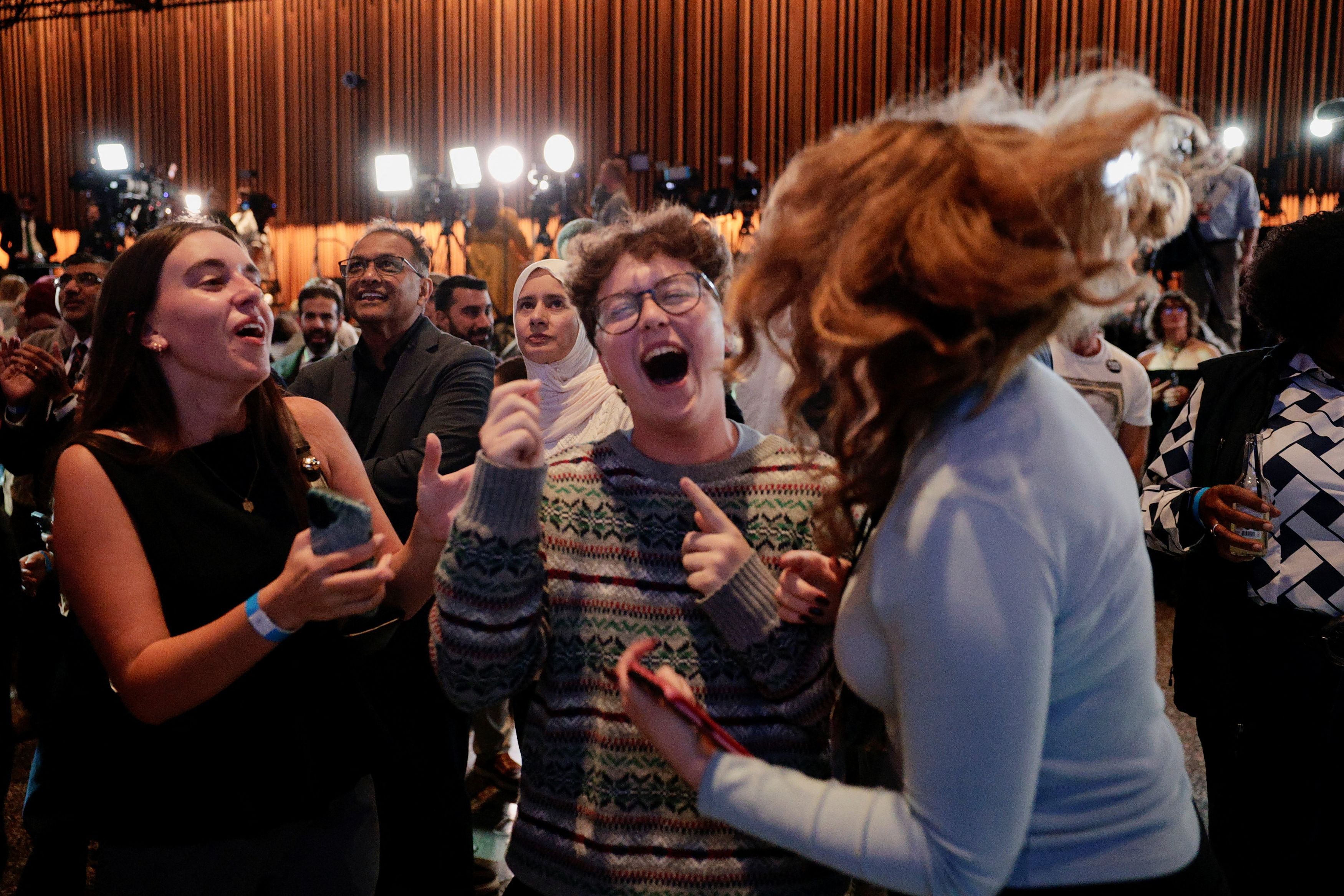
A Michigan-born epidemiologist, El-Sayed celebrated his victory in Detroit, telling supporters: “Michigan, we did it! I am deeply proud and moved to stand here as your new senator. We proved that unity, care for society and people’s needs are stronger than any political machine.”
El-Sayed also turned to Vice President JD Vance, who had personally attacked him during the campaign. Referring to Vance’s constitutional role in presiding over the Senate and administering oaths to incoming senators, he said: “JD, habibi, you’re going to swear me in in January.” Habibi is an Arabic term of endearment meaning “my dear” or “my beloved.”
He also responded to criticism from President Donald Trump, who had mocked his name during the campaign.
Abdul El-Sayed:
To AIPAC, who spent $42 million against us: Thank you for giving me the opportunity to beat you twice. https://t.co/LTXSgWbXRU
— Clash Report (@clashreport) November 4, 2026
Chris Pappas becomes first openly gay man elected to Senate
In New Hampshire, Democrat Chris Pappas defeated former Republican Sen. John Sununu to win the state’s open Senate seat.
Pappas, who is of Greek descent and has represented New Hampshire in the House of Representatives since 2019, became the first openly gay man elected to the U.S. Senate.
The 46-year-old chose not to make his sexual orientation a central issue during his campaign, saying: “I’m not running to make history.”
He also expressed satisfaction that his sexuality had not become a major topic of discussion among voters. Pappas celebrated his victory alongside his husband.
Texas Turned Blue
Democrats also broke through in Texas, where James Talarico won a Senate seat, becoming the state’s first elected Democratic senator since 1988.
The 37-year-old former teacher defeated Republican Ken Paxton, despite a campaign spending more than $200 million by billionaire Elon Musk and his political network to support Paxton. Talarico had accused Musk of trying to “buy his own senator.”
President Donald Trump also traveled to Texas four times to campaign for Paxton, although he had previously described the Republican candidate as “a little controversial” and a “headache.”
Talarico: “We just took back Texas. We just proved that all the money in the world is no match for the people of Texas.” https://t.co/illXLjBfD1
— Aaron Rupar (@atrupar) November 4, 2026
“We defeated Goliath,” Talarico told supporters in Austin after his victory. He had built his campaign around a message of unity, combining references to his Christian faith and the Bible with an emphasis on affordability and the cost of living.
Paxton’s campaign had also faced criticism over a series of scandals, including a failed impeachment attempt over corruption allegations in 2023. Some moderate Republicans had questioned his candidacy.
Democrat Gina Hinojosa also won the Texas gubernatorial race, defeating incumbent Republican Greg Abbott. She will become the state’s first Latina governor and its first woman governor since 1995.
The two victories mark the first time in decades that Democrats have won statewide elections in Texas.
Women make gains across state and federal offices
The 2026 midterms also set a record for women’s participation in races for state and federal office.
According to the Center for American Women and Politics at Rutgers University, Democrats increased the number of women running for governor to 19, surpassing the previous level recorded in 2022. Seven Republican women also ran for gubernatorial office.
Minnesota elected Democrat Amy Klobuchar as its first female governor. Tennessee also elected its first woman governor, with Republican Sen. Marsha Blackburn defeating Democrat Jerri Green, a member of the Memphis City Council.
View this post on Instagram
In Vermont, Amanda Janoo, who is half Malaysian, and in Oklahoma, former state legislator Cyndi Munson, who is of Korean descent, had sought to become the first Asian American women elected governor as Democrats. The first Asian American woman to become a U.S. governor was Republican Nikki Haley, the former governor of South Carolina, who is of Indian descent.
Nearly 300 women ran for seats in the Senate and House of Representatives, including incumbents seeking reelection.
In Illinois, Democrat Juliana Stratton, the state’s lieutenant governor, defeated Republican Don Tracy and will succeed retiring Democratic Sen. Dick Durbin.
Together with Sen. Tammy Duckworth, who is of Thai descent, Stratton’s election means Illinois will be the first state represented in the Senate by two women who are both members of racial minorities.
Melat Kiros becomes first Gen Z woman elected to Congress
Democratic socialist Melat Kiros, a 29-year-old Ethiopian lawyer, won Colorado’s 1st Congressional District, becoming the first Gen Z woman elected to Congress. The Associated Press called the race on Tuesday night.
Kiros secured the seat in the reliably Democratic district, which includes most of Denver, months after defeating 15-term incumbent Diana DeGette in the Democratic primary.
Kiros’ criticism of Israel and its war in Gaza became a point of controversy during the campaign. Independent candidate Shimon Blau accused her of using antisemitic rhetoric, an allegation she rejected, saying her criticism was directed at the Israeli state rather than Jewish people.
Her election marks a generational milestone in a Congress where Gen Z representation remains limited. Florida Democrat Maxwell Frost, elected in 2022, is currently the only sitting member under 30.