 Μake us preferred on Google
In April, the Hungarian prime minister Viktor Orbán lost power at last. His Italian counterpart and “Christian sister” Giorgia Meloni misjudged a major referendum just before. Last month, two rightwingers flunked presidential elections: Flavio Bolsonaro in Brazil, Aleksandar Vučić in Serbia. Nigel Farage’s Reform UK, which polled 31 per cent in 2025, some feat in a fragmented electorate, has since bled ten percentage points.
Whatever the Latin is for “fairly bad year” — annus horribilis is too strong — populism is living through one. The defeat of US Republicans on Tuesday is its culmination. Not one house of Congress, but both, fell to the Democrats in midterm elections.
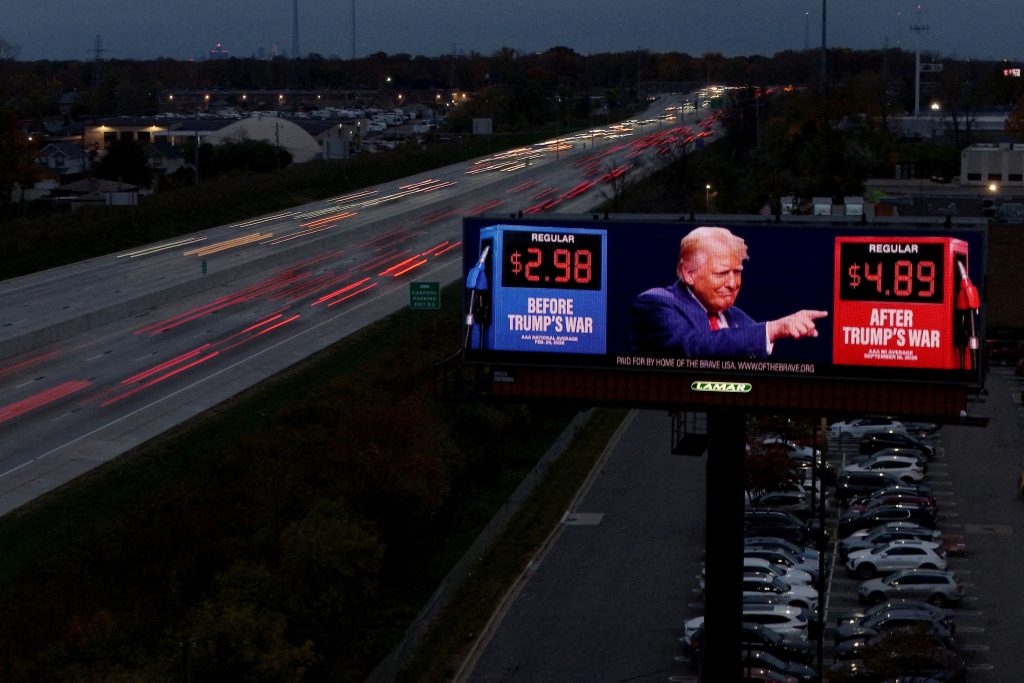
How did it come to this? In the end, Donald Trump, like lots of populists, forgot the economic bit of populism. Besides a liking for tariffs and a ceasefire in the war against Obamacare, it is hard to distinguish him from a laissez-faire Republican of yesteryear. When consumers were broadly content, this was a minor point. When inflation rose, it became an electoral liability.
Inflation is said to be fatal for incumbents. But Lula survived in Brazil. The UK Prime Minister Andy Burnham has gained in the polls. In 2026, the politicians that inflation really punishes are those who seem callous. Over the past year, as consumers wailed, Trump and his kin made over $1bn in pre-tax profits, in part from the digital currencies sector. Almost half of Republicans, never mind independents, went into the midterms citing White House “corruption, self-dealing and conflicts of interest” as a concern. Things that voters didn’t mind when inflation was low — that were laughed off as part of Maga’s raffish charm — now unhinge them.
Trump’s foreign friends run into the same problem. Farage is under investigation over an undeclared gift of £5mn, which is a living wage even in London. Flavio? A money laundering probe. Orbán? Allegations of crony capitalism. The left isn’t innocent but politicians of the right have such a blind spot for this stuff, for the resentment it causes in hard times, that terming them “populist” seems excessive flattery.
Even aside from the self-dealing, or suspicions thereof, there is the matter of economic policy. Maga faces two ways on this. It is a movement of “real people” but also bitcoin spivs, of paternalist government but also tech libertarianism, of the deindustrialised Midwest but also the low-tax sunbelt. Something, at some point, was going to make the internal contradictions untenable. Consumer inflation was it. That some of the price surge stems from Trump’s own war in Iran just adds to the poetry of the historical moment.
It doesn’t help that populists so often choose silver-spoon leaders. Trump, like Flavio, is a fortunate son. Farage, like Boris Johnson, went to private school in a country where only about 6 per cent of people do that. If these men were economic leftists — “traitors to our class”, in Zhou Enlai’s supposed words — their privilege would be no issue. In fact, if inflation were 1.8 per cent, it would be no issue. But the privilege and the deregulating instincts and the rising consumer prices and the alleged self-enrichment? It makes them almost too easy to frame as out-of-touch. Notice that two of the most successful populists, Meloni and India’s Narendra Modi, really came from the masses they romanticise.
American populism can survive the midterms but in different form: less decadent and libertarian, less billionaire-smitten. Under whose leadership, though? Steve Bannon is an economic populist — an AI sceptic — but almost a decade has passed since he was a White House insider. JD Vance seems to understand that Republicans must recover the working-class spirit of 2016. The question is whether that most online of conservatives will ever master interaction with three-dimensional mammals. Trump’s genius is to do and say extreme things without weirding people out. When his subordinates attempt it, you fear for the future of the movement.
Perhaps time would have ground Trump down, regardless of his policies. The populists who are polling best, such as the French and German ones, are those who have never governed. The rest have what a British cop might call “previous”. Flavio is tied to his old man’s regime. Farage, though he has never held ministerial office, co-authored Brexit, the UK’s governing meta-idea since 2016. Trump is on his second term, and ninth decade. A president’s last midterms aren’t meant to go well. It is just that, with more economic intervention, or just less feathering of the Trump nest, the result might have been mere defeat rather than total humiliation. He started a class war against elites a decade ago and never lived up to it.
The midterm results should not cheer liberals too much, and not just because Trump will command the world’s mightiest armed forces for another 26 months. If it is true that economic grievances are what defeated him, then lots of other important issues didn’t. The swing voters’ reaction to him seems to go as follows. Attempted election subversion? Bad. Kremlin-abetting? Not OK. Higher prices at the gas pump? Now that is where we draw the line.
If people prioritise their household finances, that is right and natural. At some point, though, for constitutional democracy to survive, voters have to care about the rules of the game too. That it was economics rather than ethics that brought low this most transactional of men is fitting, and perhaps, in a sense, his last win.
Link To FT.com: https://www.ft.com/content/637bfe05-69f9-4650-b043-731c1ebb4be6
Copyright The Financial Times Limited 2026
© 2026 The Financial Times Ltd. All rights reserved. Please do not copy and paste FT articles and redistribute by email or post to the web.