 Μake us preferred on Google
Last September in Thessaloniki, the media spotlight at the Thessaloniki International Fair was, as expected, on the economic measures Kyriakos Mitsotakis would announce. Meanwhile, a meeting took place that went largely unnoticed.
Infrastructure and Transport Minister Christos Dimas met Artem Rybchenko, Ukraine’s Deputy Minister for Communities, Territories and Infrastructure Development. According to ΤΟ ΒΗΜΑ, they discussed an issue vital both to Kyiv and to global food security: exporting Ukrainian grain to international markets. The meeting built on an earlier one between the Greek minister and his Ukrainian counterpart, Serhiy Derkach, last June.
Greece’s contribution to Ukrainian grain exports had already been studied and proposed in 2023, but it did not go ahead. Some may see it as very ambitious at first glance, but if properly prepared, it has a serious chance of success.
It is also linked to the role Greece wants to play in key trans-European transport networks and corridors connecting Northern and Eastern Europe with the Aegean and the Mediterranean. Greece hopes to use mainly the location of the port of Alexandroupolis, as well as Thessaloniki, combined with the strength of Greek shipping.
It should also not be forgotten that Greece hopes to play its part in Ukraine’s reconstruction after the war. It therefore needs to play its geopolitical and geoeconomic cards on connectivity well, and early.
The Importance Of Trans-European Networks
In recent years, and especially since Russia’s invasion of Ukraine in 2022, the European Union has placed great emphasis on connecting the continent through North-South and West-East transport corridors. The regulation on the Trans-European Transport Network (TEN-T) was recently revised, in 2024, to take the new circumstances into account, adjusting both the routes of the corridors and their names.
Because of its location, Greece is part of two corridors: the Western Balkans–Eastern Mediterranean Corridor (WBEM) and, more importantly, the Baltic Sea–Black Sea–Aegean Sea Corridor (BBA).
The BBA includes 13 countries in total. Eleven are EU member states: Finland, Estonia, Latvia, Lithuania, Poland, Slovakia, Hungary, Romania, Bulgaria, Greece and Cyprus. Ukraine and Moldova, although not yet EU members, are also linked to this corridor, which starts in Helsinki and ends in Nicosia.
In the long term, building the BBA also positions Greece and its ports as a natural bridge to the now much-promoted India–Middle East–Europe Economic Corridor (IMEC).
Greek Plans And Ukrainian Needs
The European Commission, and in particular its Directorate-General for Mobility and Transport (DG MOVE) under Commissioner Apostolos Tzitzikostas, is aware of the Greek pilot plan for Ukrainian grain exports. The plan involves designing a two-way “multimodal” freight route between Greece and Ukraine, with the port of Alexandroupolis as its central link.
The border city’s name may be associated with its role in shipping military equipment to Ukraine, its importance to the Americans and NATO, or the creation of the Vertical Gas Corridor. But the government wants to expand its activities into freight as well.
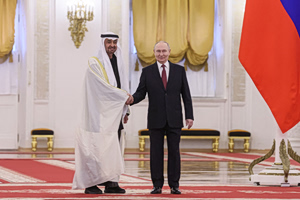
These moves rest on an understanding between the Greek prime minister and Ukrainian President Volodymyr Zelensky dating back to September 2025. It is based on creating an Alexandroupolis–Odesa “axis” that would make use of the BBA.
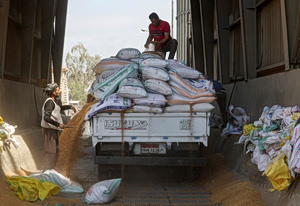
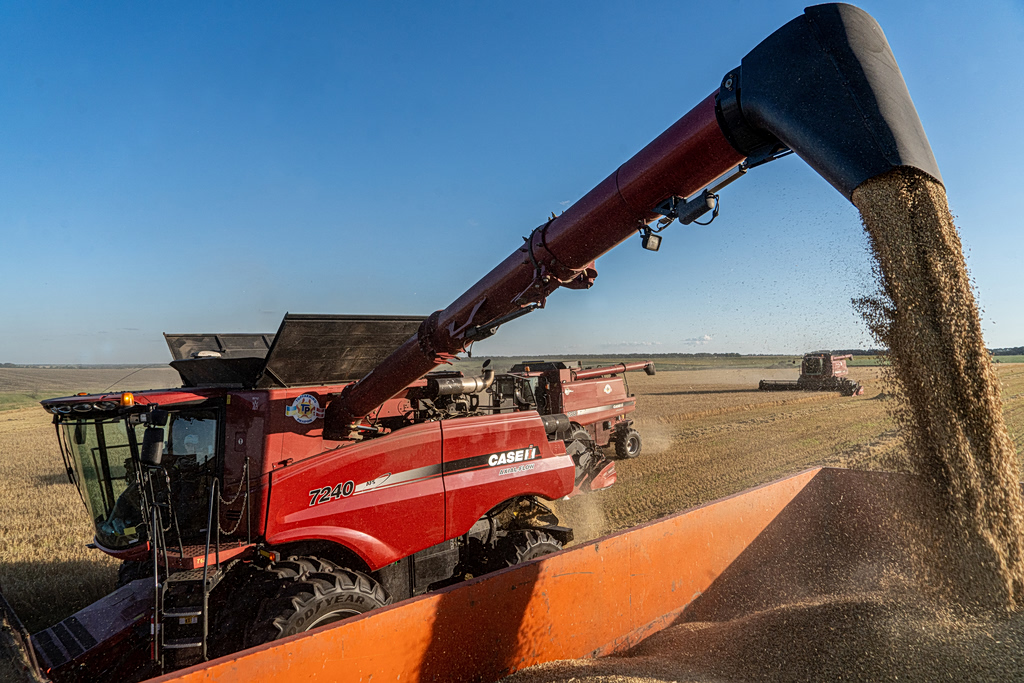
Russia’s constant and systematic strikes on Ukraine’s Black Sea ports, along with a sharp drop in the water level of the Danube due to drought, have drastically limited Ukraine’s options for exporting large quantities of grain. This also affects corn, especially from mid-November onward, and these crops are a major part of Ukraine’s economic output.
As a result, Ukraine has been looking for alternative routes, and a link to Alexandroupolis, and to a lesser extent Thessaloniki, could offer a vital freight artery.
However, officials in both countries told ΤΟ ΒΗΜΑ that the link must work in both directions to be profitable. Ukraine wants to export its grain. But with its power grid under pressure from Russian missile attacks, it also needs diesel, specifically winterized diesel for extreme cold, as well as other goods such as electrical equipment and building materials. Trade flows like these can keep freight moving both ways and make the route profitable for everyone.
Technical Details And Complex Challenges
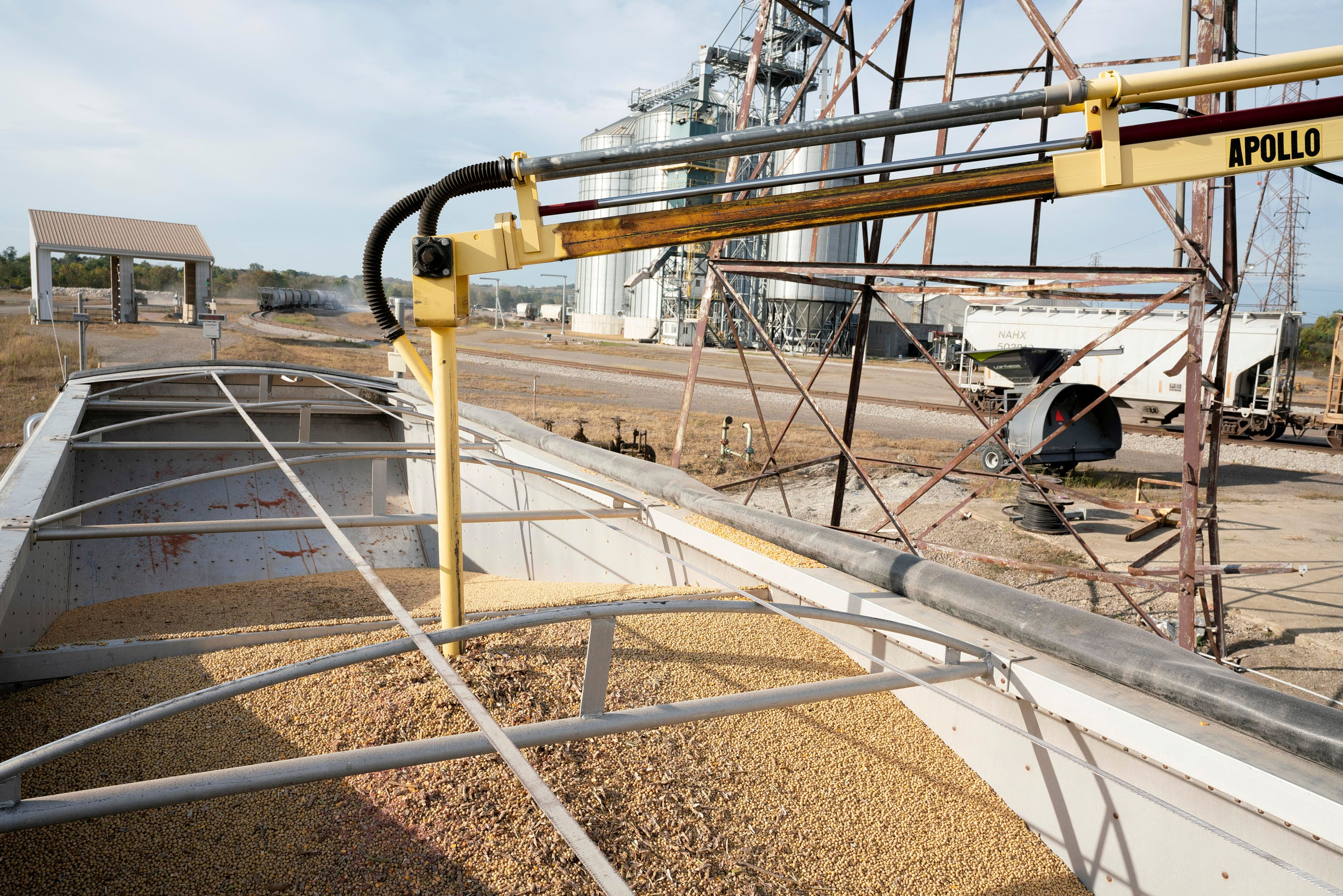
According to information obtained by ΤΟ ΒΗΜΑ, a pilot shipment of grain and other goods is feasible by rail, thanks to Hellenic Train and GFR Hellas. GFR Hellas is a branch of Romania’s GFR, the largest private rail company in Central and Southern Europe.
However, according to officials, rail capacity needs to increase to two or three trains a day from south to north for the route to be economically viable, and Greek businesses need to get involved.
Another key issue, especially for the rail link, is the planned closure of the Ruse–Giurgiu bridge over the Danube from April to December 2027. The bridge is on the Bulgaria–Romania section of the planned route.
As for the road section, which is more expensive, the existing legal framework allows Greek and Ukrainian carriers to make bilateral trips without a transit permit. However, domestic legs, such as from Alexandroupolis to another point within Greece, can only be carried out by Greek companies.