 Μake us preferred on Google
How often does a US president call the leaders of more than 30 countries on the other side of the world directly from Air Force One? Not often, obviously. But when it comes to Donald Trump, such a move should also be seen as a show of power.
The US president made the call right after his meeting in Shenzhen with Chinese President Xi Jinping and Russian President Vladimir Putin. It went to the leaders of the Coalition of the Willing, who were meeting in Berlin to discuss Ukraine. According to reliable information obtained by ΤΟ ΒΗΜΑ, the call centered on Trump’s belief that his “friend” in the Kremlin “wants this war to end” because he is tired of it. The war has now been going on for almost five years. Many questions remain, however, and the answers are even harder.
The leak of what Trump said about the Russian president’s intention, or wish, to end the war made the rounds in the media. As ΤΟ ΒΗΜΑ has learned, in the same call the White House occupant highlighted the role German Chancellor Friedrich Merz could play in arranging a meeting with Putin.
“Maybe Friedrich could call to set up a meeting, working with Steve (Witkoff) and Jared (Kushner),” he reportedly said. Witkoff and Kushner are said to have built a very good relationship with the Russian president.
According to authoritative sources, Trump also pointed out that the Europeans have spent, and keep spending, huge amounts on Ukraine, telling them “this can wear you out.” He also reportedly said that Putin “likes the security guarantees we are offering.”
The Puzzle Of Security Guarantees
The meeting of Coalition of the Willing leaders in Berlin, hosted by Friedrich Merz, was part of a search, led mainly by the Europeans, for ways to give Kyiv the security guarantees it needs. It was also meant to set up a European channel of communication with Vladimir Putin. The recent three-way talks in Abu Dhabi between the US, Russia and Ukraine had essentially left the Europeans in the room next door.
Now, however, the view that contact with Putin cannot be put off indefinitely has begun to take hold among many in Europe. According to EU sources, even European Commission President Ursula von der Leyen has started to consider it.
This is despite Moscow’s tough opening positions. In a non-paper it submitted at the Abu Dhabi meeting, Russia called for an end to NATO enlargement and the withdrawal of permanent NATO forces from Eastern Europe.
According to the same reliable information from Berlin, French President Emmanuel Macron reportedly said that even the scenario of Ukraine fully joining NATO must now be seriously considered, and Giorgia Meloni agreed that the idea should be examined. “Today, this scenario is being raised even for us Europeans,” he reportedly said.
Volodymyr Zelensky recently said that US mediators had floated to Russia a possible trade: Ukraine would cede the Donbas to Moscow in exchange for joining NATO. However, on Friday Russian Deputy Foreign Minister Sergei Ryabkov ruled out Ukraine’s NATO membership as part of any settlement.
Mitsotakis’s Proposal And Reconstruction
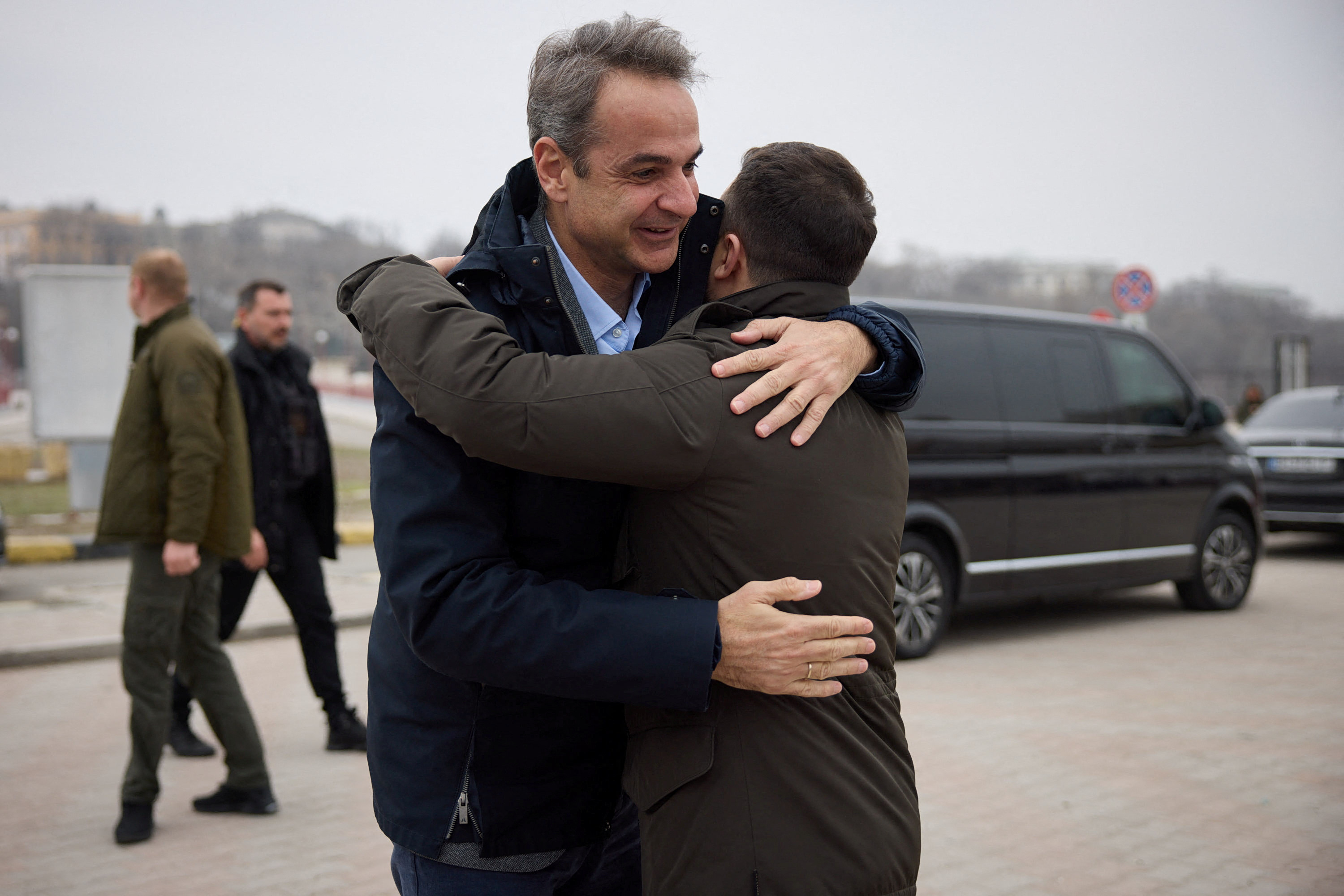
At the same time, Greek Prime Minister Kyriakos Mitsotakis put on the table the possibility of using Article 42.7, the European Union’s mutual assistance clause. According to experienced diplomats, however, this would need serious preparation, given the operational gaps in how the article would be applied.
Mitsotakis also stressed the need first for a ceasefire and a moratorium on strikes against energy infrastructure and merchant ships in the Black Sea. In doing so, he repeated his earlier proposal for a naval ceasefire.
Athens, meanwhile, sees opportunities in the reconstruction that will be needed after a ceasefire and the end of the war. Talks on this were held during Zelensky’s visit to Athens in September 2025, with a focus on energy and infrastructure.
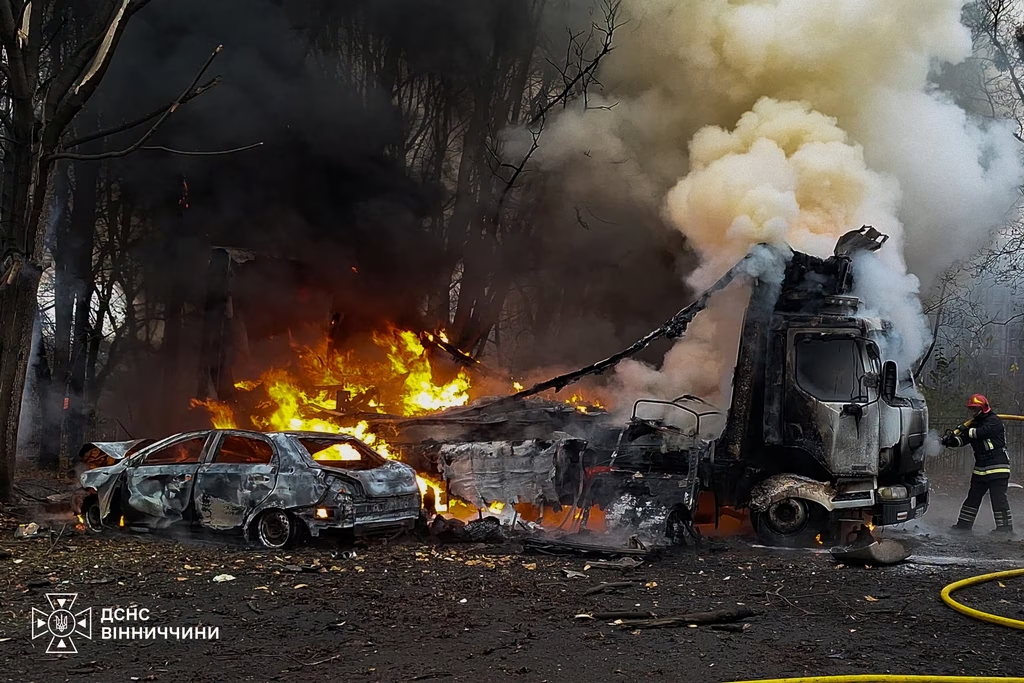
Until that day comes, Greek companies have reached agreements with Ukrainian counterparts to send them free technical equipment, mainly for the immediate repair of damage to energy networks:
- GEK TERNA: according to the Interfax news agency, GEK TERNA agreed to provide Ukrainian energy company Ukrnafta with free equipment for its natural gas infrastructure. The equipment includes gas compression and pressure regulation units and related systems, boosting Ukrnafta’s backup capacity in case of damage or outages caused by attacks on energy facilities.
- PPC: Greece’s Public Power Corporation sent similar equipment months ago to protect power grids and systems. Its donation is part of a wider program in which more than 120 European electricity and energy companies are providing free transformers, circuit breakers, disconnectors, power supplies and other equipment.
- DESFA: the gas grid operator has also provided aid, with four generators and auxiliary equipment.
Greek business groups are also positioning themselves strategically, investing in renewable energy projects or buying companies in Romania. In this way, they aim to take part in Ukraine’s reconstruction once it begins.
Next Steps
After the talks in Abu Dhabi, Vladimir Medinsky, head of the Russian negotiating team, said: “We want a comprehensive European security system that will function as a new Yalta or a new Potsdam.”
“The ‘Russian approach’ to European security architecture seeks a mutually agreed system of collective security, or a new balance-of-power arrangement, in which Russia would enjoy special rights over the security choices of its neighboring states,” Panagiotis Tsakonas, a professor of international relations at the University of Athens, told ΤΟ ΒΗΜΑ. “In this context,” he added, “Ukraine is not treated solely as a standalone conflict.”
Russia’s demands, however, raise serious questions for America’s European allies. Can they open the chapter of reshaping European security architecture before the war ends? Will they talk directly to Putin, and if so, how?
The answers remain unknown, but they are needed if the Europeans are to be in the geopolitical kitchen and not on the menu.