 Μake us preferred on Google
 Authorities in Greece’s Attica region have seized a total of 6.2 metric tons of meat products deemed unfit for sale following a large-scale food safety operation that expanded into a traceability investigation involving 20 food businesses.
The operation began with an inspection of a meat production and processing facility in the western Athens suburb of Ilion. Inspectors from the Attica Regional Authority found that the company previously registered at the site had ceased operations and that another business was operating from the same premises without the required approval to process, produce, and distribute meat products.
Inspectors also found that the business was not included on the list of approved facilities maintained by Greece’s Unified Food Control Agency (EFET), the country’s food safety authority.
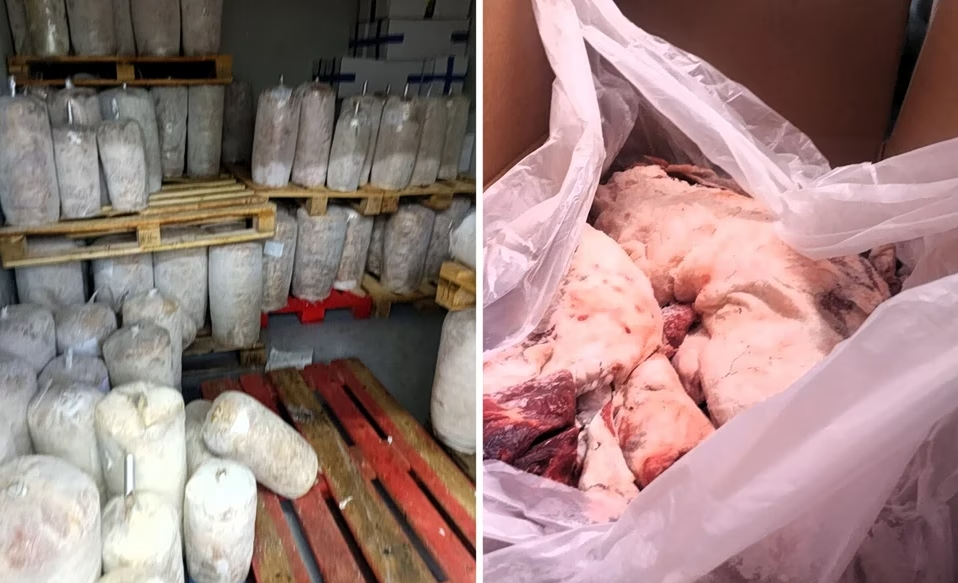
During the inspection, authorities seized 6,047 kilograms of meat products stored in refrigeration units after determining that they were unfit for sale because they either lacked the required legal labeling or carried invalid identification codes.
Products Traced to 20 Businesses
Officials immediately launched a traceability investigation, which found that the products had been distributed to 20 food businesses across the Attica region.
The findings prompted coordinated inspections by regional authorities across six regional units, alongside EFET. Those follow-up inspections resulted in the seizure of an additional 151 kilograms of meat products, bringing the total amount confiscated to 6.2 metric tons.
Authorities said the legally required confiscation procedures have been finalized and that three-member committees have been established to examine the imposition of administrative penalties.
Governor Pledges Zero Tolerance
Attica Regional Governor Nikos Hardalias said the operation demonstrated the region’s commitment to protecting public health through rigorous inspections.
He said he has instructed inspection authorities to show “absolutely no tolerance” toward businesses that jeopardize food safety and consumers, adding that systematic inspections and enforcement are essential to maintaining legal compliance and consumer confidence.
Hardalias also said the case highlighted the importance of product traceability, noting that a targeted inspection uncovered a broader distribution chain and triggered a coordinated response throughout the supply network.
More Than 24,000 Inspections Conducted
The Attica Regional Authority said its inspection teams have carried out 24,136 inspections over the reporting period, imposed fines totaling hundreds of thousands of euros, and seized hundreds of tons of products deemed unfit or dangerous.
Authorities said inspections will continue throughout the supply chain—from production and storage to distribution and retail—with the aim of protecting public health, ensuring fair market competition, and strengthening consumer confidence.