
 Μake us preferred on Google
 October 1 is International Coffee Day, a chance to celebrate the drink that has become a daily ritual for millions of people — and a particularly enduring part of Greek culture.
In Greece, coffee can mean many things: a traditional Greek coffee brewed in a small pot, a frothy frappé shaken with ice, a freddo espresso served cold with a straw, or one of the increasingly elaborate drinks found in specialty coffee shops.
Everyone has their own preference and ritual. That, perhaps, is what makes coffee worth celebrating.
I did not drink coffee until I was 34. I disliked its taste and, after a bad experience with a French-style coffee during my first year at university, I switched to hot or iced tea. At the time, carrying a freddo coffee everywhere was not yet the ubiquitous habit it is today.
My tastes eventually changed after I tried a freddo from the cafe beneath my office. The barista recommended a light, sweet variety, and I gradually began drinking coffee every day. Today, I considers a cold coffee bought from a cafe an essential part of her morning routine.
From Ethiopian origins to the Ottoman Empire
According to the traditional story, coffee was discovered in Ethiopia in the ninth century after a shepherd noticed that his goats became unusually energetic after eating the berries of a previously overlooked tree.
The secret of the beans gradually spread throughout the Arab world before reaching Constantinople and the Ottoman Empire, which at the time included what is now Greece.
Coffee eventually made its way across the Atlantic as well. The plant did not exist in the Americas until Dutch colonizers introduced it in the early 18th century in an effort to challenge the Arab monopoly on coffee production. Its cultivation subsequently spread, production increased dramatically and entire economies grew around the crop.
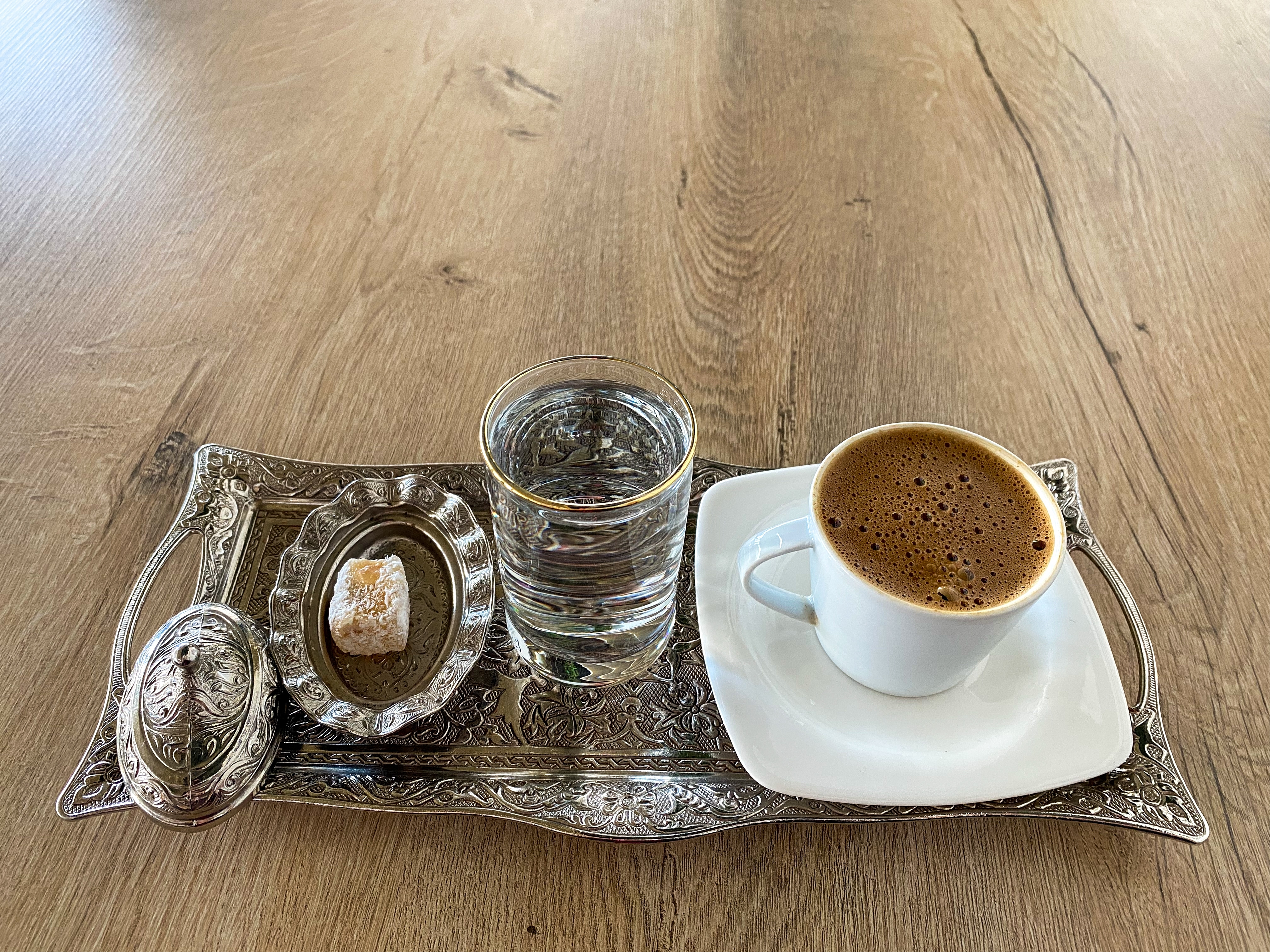
In Greece, the first widely established style was the unfiltered coffee known as “Turkish coffee,” brewed in a small pot over hot embers. From the mid-18th century onward, coffee became increasingly common across the country.
After the establishment of the modern Greek state, coffeehouses began appearing and coffee became more than a drink. They became places for socializing, conversation and even negotiations.
The coffee was prepared according to individual taste — strong or mild, black or sweetened. Historic coffee shops in Athens attracted members of the urban elite, writers, merchants, doctors and businesspeople.
In mountain villages and remote islands, meanwhile, coffee prepared at home became an essential part of everyday life. Over time, the coffee once called Turkish became known in Greece as Greek coffee. The name changed, but the basic preparation remained largely the same.
The French influence
By the late 19th and early 20th centuries, Greece’s growing middle and upper classes were increasingly exposed to Western European customs through travel and expanding business ties.
French-style filter coffee became particularly popular. Initially prepared using manual equipment, it required patience, technique and precision and was served in larger cups.
It was initially associated with wealthy households and upscale pastry shops rather than traditional coffeehouses. In Athens, affluent residents enjoyed it at establishments such as Zonar’s and at social gatherings in private homes.
The arrival of electric filter coffee makers eventually made the drink much more accessible. It spread into cafes, homes and offices and became deeply embedded in middle-class Greek culture.
For decades, electric coffee makers were among the most popular wedding gifts in Greece. Even today, many people leave home for work carrying a thermos filled with filter coffee, often flavored with hazelnut.
The rise of instant coffee and frappé
Another major change came with instant coffee.
In 1957, according to the Greek urban legend, Dimitris Vakondios was working long hours at the Thessaloniki International Fair and could not find hot water to make a conventional cup of coffee. He instead mixed instant coffee with cold water and plenty of ice, creating the frothy drink that became known as frappé.
The drink went on to shape Greek coffee habits for decades.
Instant coffee itself required its own technique, with the right balance of coffee and water and vigorous mixing to create a thick foam. Frappé, meanwhile, became associated with a particular way of enjoying summer — served in a tall glass with a straw and often accompanied by milk.
For a period, frappé was even served with Baileys. More importantly, it became an unmistakable part of Greek everyday life, whether during a summer outing or an afternoon spent relaxing on a balcony.
Its simplicity also helped preserve its popularity. Unlike espresso-based drinks, it could be made at home without a coffee machine, capsules or a milk frother.
Espresso arrives — and Greece makes it its own
Although espresso had reached Greece as early as the 1950s, it initially remained largely associated with wealthier Athenians who frequented fashionable cafes around Syntagma and Kolonaki.
The strong Italian coffee was prepared in a machine and served in a small cup. Italians traditionally drank espresso quickly and standing up, while Greeks developed their own way of consuming it.
Espresso took off more widely in Greece in the 1990s. Major coffee-importing companies began training cafe owners and baristas in proper espresso preparation, helping introduce the drink to a broader audience.
Then came the freddo.
The freddo emerged around 1991 as a more refined version of the frappé: an iced espresso served with a straw and ice, sometimes topped with a thick layer of cold milk foam. It could be enjoyed throughout the day, in hot or cold weather, at a table or on the go.
The drink became a distinctly Greek adaptation of espresso. Today, freddo espresso and freddo cappuccino are among the defining features of Greece’s coffee culture, and visitors can find the drinks throughout the country.
From coffee habit to coffee culture
Since the 2000s, coffee in Greece has developed beyond a simple daily habit into a broader culture.
The so-called third wave of coffee brought specialty coffee shops, single-origin beans from around the world and greater attention to roasting and preparation. Coffee capsules subsequently made espresso more accessible in homes.
The latest developments have focused increasingly on sustainability, microlots, natural processing techniques and even fermentation.
Cold brew — chilled filtered coffee sold in bottles — has also begun gaining ground in the Greek market. Social media trends have produced increasingly creative combinations, including lattes with matcha, chocolate and pistachio spread.
This summer even saw the arrival of espresso coffee spritz, adding another variation to an already enormous range of coffee drinks.
From a small pot over embers to a shaker, from a steaming cup to a plastic takeaway glass with a straw, coffee has continually adapted to changing tastes and lifestyles.
And perhaps that is the enduring appeal: everyone can drink it exactly the way they like.