 Μake us preferred on Google
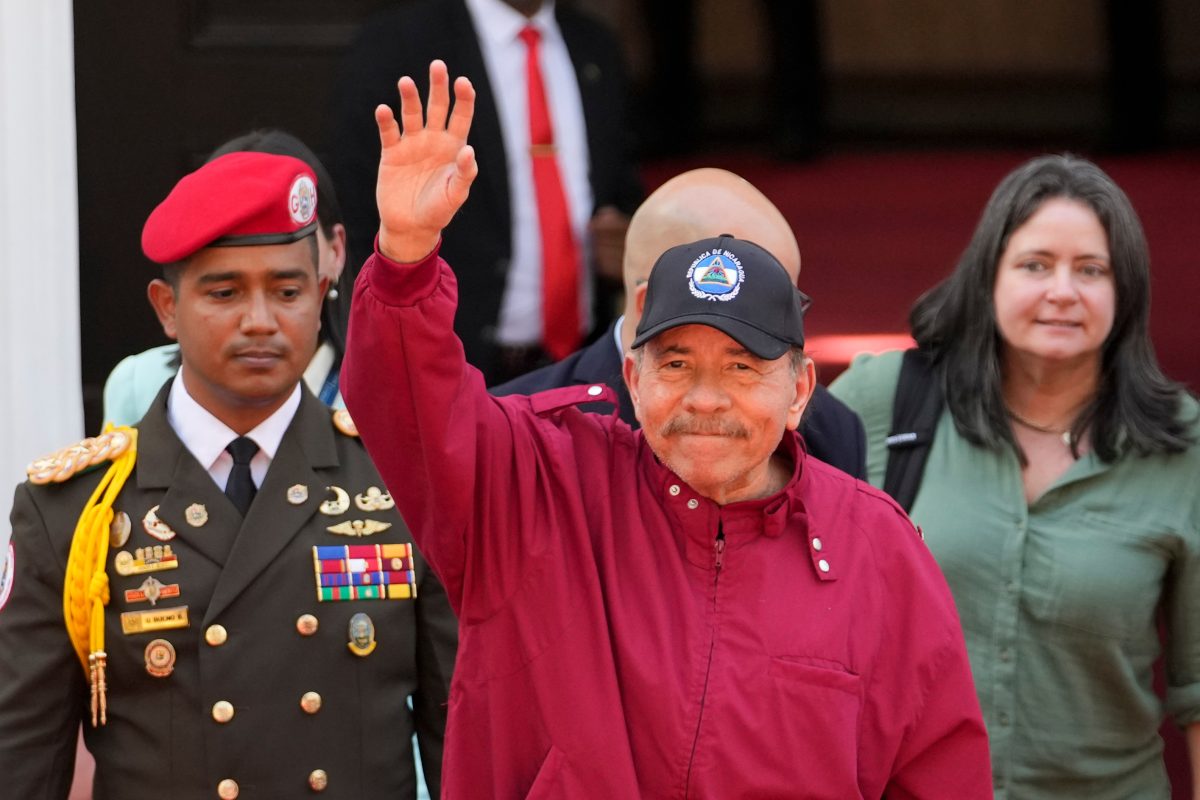
 A week has passed since the President of Nicaragua, Daniel Ortega, announced the abolition of elections, citing national reasons that dictate the exclusion of the opposition from the process. The decision is seen as a turning point in relation to the prior authoritarian life of the 80-year-old leader, who has been accused of manipulating the electoral results in the last two election cycles of 2016 and 2021.
This peak of authoritarianism comes after the political neutralization of the opposition, many members of which found themselves in prison or in exile following the anti-government protests of 2018, during which 355 people lost their lives. Several prominent former Sandinistas lost their citizenship and were forced into exile due to their open opposition to the Ortega regime, which now equally includes his wife, Rosario Murillo, in the presidential lineup.
Such a case is Gioconda Belli, born in Managua, Nicaragua. A poet, novelist, and essayist, Belli participated at a young age in the Sandinista revolutionary movement that overthrew the dictator Anastasio Somoza in 1979, putting an end to the multi-year Somoza family dictatorship (1936-79). Due to her critical stance towards the Ortega government, her citizenship was stripped and her property was confiscated in 2023. She won the Reina Sofía Prize for Ibero-American Poetry in 2023 and received Spanish citizenship in 2024. Her books “The Inhabited Woman” and “The Butterfly Workshop” are available in Greek by Sychroni Epochi and Nefeli publishing houses, translated by Claire Stathatou and Theofilos Bachtsevanis respectively.
Why has President Ortega chosen this specific juncture to implement a definitive ban on democratic elections?
It was especially surprising that he would choose the 47the anniversary of the revolution that deposed a 43 year dynastic dictatorship to announce the perpetuation of another family dictatorship. We are witnessing the final legal burial of democracy in Nicaragua. Daniel Ortega first said, very clearly, that there would be no more elections through which anyone could take power from them. His officials then realized the international impact of those words and tried to soften them. Now Gustavo Porras, the president of the National Assembly, says there will be elections—not in 2027, but in 2028- but elections designed by the dictatorship, with seven-year ‘renewable’ presidential periods and with any genuine opponent constitutionally excluded.
Is this structural shift widely interpreted as the formal transformation of an authoritarian regime into a dynastic family dictatorship?
The dictatorship is moving from manipulating elections to writing the impossibility of political change into the Constitution.
Is there any realistic prospect for democratic mobilization within the current societal framework? Furthermore, concerns are rising that Nicaragua may become the next focus of US intervention, with all the geopolitical consequences this entails.
Under the present regime, popular mobilization is forbidden and democratic organization are persecuted. More than 5000 NGO´s and most civic society organizations have had their legal status cancelled.
Your work represents an intersection of the feminist movement and political activism. What state of intellectual and artistic creation does the current situation in Nicaragua compel you into? Do you feel the need to record denial and silencing, or does this struggle turn you toward narratives of victory and female empowerment?
While in exile I wrote a novel published in 2024. It’s a fictional story of two women, mother and daughter. The mother was a guerrilla in the Nicaraguan revolution and the daughter lives through the time when the revolution gives way to another dictatorship. It questions the validity of dreams and the sacrifices that are made to accomplish them. I felt the need to tell the experience of a project that fails and yet the importance of hope and resilience to understand that the fact that great ideas and efforts to change society might end in failure, doesn’t mean one must stop believing that change is necessary and a worthwhile effort.