 Μake us preferred on Google
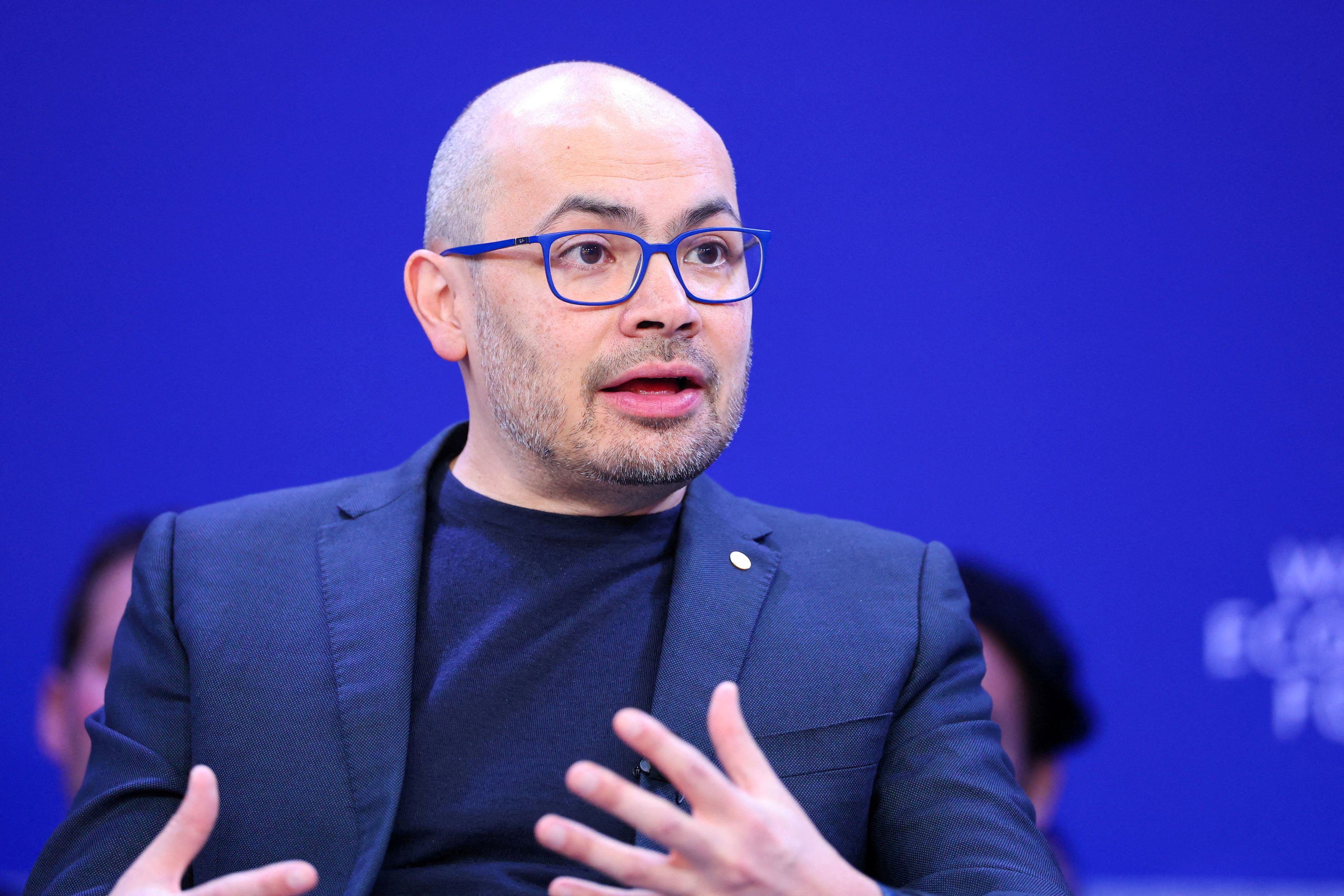
 Alphabet, Google’s parent company, has appointed Google DeepMind co-founder Demis Hassabis to a new strategic leadership role as the company intensifies its focus on the development of artificial general intelligence (AGI).
According to an announcement by Alphabet and Google CEO Sundar Pichai, Hassabis will become Chair of Google DeepMind and Chief Scientist of Alphabet, while continuing to lead Isomorphic Labs, a company using artificial intelligence to develop new medicines.
The day-to-day management of Google DeepMind will be taken over by Koray Kavukcuoglu, the company’s current Chief Technology Officer and Chief AI Architect, who will become Senior Vice President of Google DeepMind.
Pichai said Google has made significant progress across its artificial intelligence ecosystem, from infrastructure and computing systems to AI models and applications. He noted that the company’s Gemini models are seeing growing demand from businesses and developers, while the Gemini application has surpassed 950 million monthly users.
He added that Google must accelerate AI development further while maintaining its leadership in research and advanced AI models.
Hassabis to focus on AGI strategy
Pichai said Hassabis’ new role will allow him to dedicate his full attention to shaping the future of artificial general intelligence and scientific research, describing the mission as highly important for both Alphabet and humanity.
In a message to Google DeepMind employees, Hassabis described the current period as a “pivotal moment in human history,” saying he has spent his entire professional life working toward the development of AGI.
“I have dedicated my whole life to AGI and now I feel, as many of you do, that it is close,” Hassabis said, adding that the next steps must ensure the technology is developed and used for the benefit of humanity.
Hassabis explained that he decided to step away from the company’s daily administrative responsibilities in order to focus on the broader AGI strategy and the scientific applications of artificial intelligence. He said he will continue working closely with Pichai and Google DeepMind’s leadership, while also dedicating more time to Isomorphic Labs.
He highlighted healthcare as one of the most important areas where AI can have an impact.
“I have always believed that the most important application of artificial intelligence is improving human health. It is time for AI to prove its value to the world, contributing even to tackling diseases such as cancer,” Hassabis said.
A major figure in artificial intelligence
Hassabis, a Greek-Cypriot technology leader and co-founder of Google DeepMind, has played a central role in several major AI breakthroughs, including AlphaGo, the first program to defeat a world champion in the board game Go, and AlphaFold, which solved one of the most significant scientific challenges of recent decades by predicting the three-dimensional structure of proteins.
For his work on AlphaFold, Hassabis received the 2024 Nobel Prize in Chemistry.
He also leads Isomorphic Labs, which aims to transform drug discovery through artificial intelligence. His stated long-term goal is to better understand the fundamental nature of reality.
Google reshapes AI leadership
As part of the restructuring, Pichai also announced that Jeff Dean, one of Google’s most prominent engineers, will leave the company after 27 years to establish an independent nonprofit organization with Sanjay Ghemawat focused on accelerating research in machine learning, science, and engineering.
Google will participate as a founding investor and strategic partner in the new initiative.
The leadership changes reflect Alphabet’s effort to strengthen the development of advanced AI systems at a time when competition to achieve AGI has become a central priority for the world’s largest technology companies.
AGI refers to AI systems capable of learning, adapting, and performing a wide range of intellectual tasks comparable to human abilities, unlike current AI systems that are typically designed for specific functions.
Major technology companies, including Google, OpenAI, Microsoft, and Meta, are investing billions of dollars in the development of such technologies, viewing AGI as a potential next major technological transformation.