 Μake us preferred on Google
Venezuelan opposition leader María Corina Machado returned home Sunday after nearly 11 months in exile, putting new pressure on the U.S.-backed interim government and potentially complicating the Trump administration’s efforts to manage a gradual political transition.
“I am here. With you,” Machado posted on X on Sunday morning. In a video posted by her party, Machado was welcomed by a crowd of supporters at the Sanctuary of the Divine Shepherdess in the city of Barquisimeto in central Venezuela.
Estoy aquí. Con ustedes
— María Corina Machado (@MariaCorinaYA) October 25, 2026
Her arrival comes as President Trump has increasingly embraced interim President Delcy Rodríguez as a partner in securing lucrative oil deals and courting billions of dollars in investment.
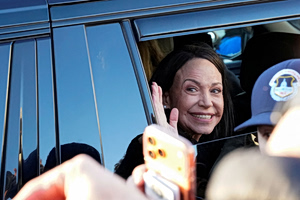
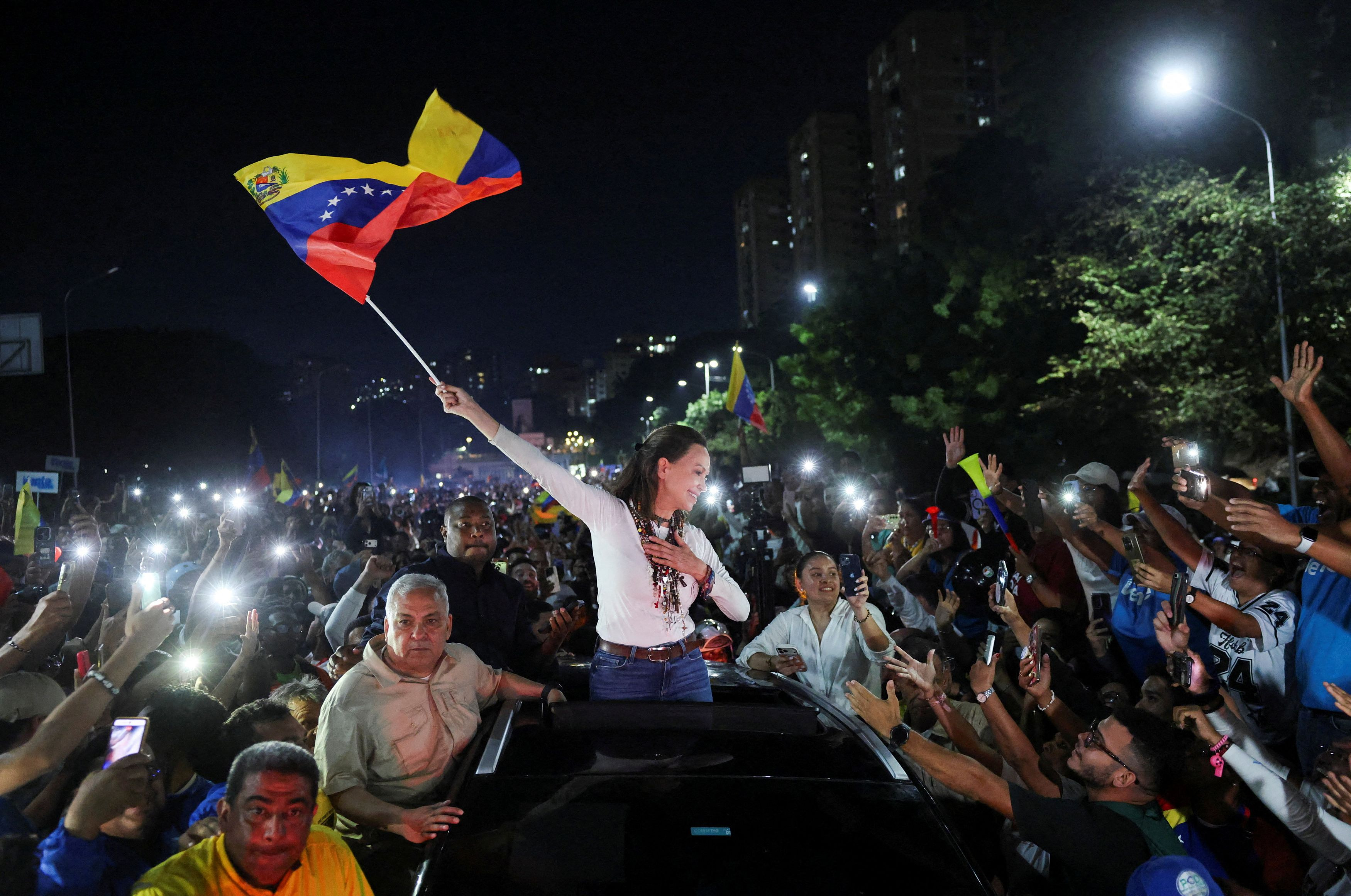
As she neared Caracas on her triumphant journey home Sunday night, tens of thousands of Venezuelans shouting “Maria!” and “Libertad!” crowded the highway. Cars and trucks tooted their horns as her vehicle moved at a snail’s pace through the multitudes with Machado waving from the roof. “Our freedom has arrived,” said one woman joyfully to a television reporter outside the capital city.
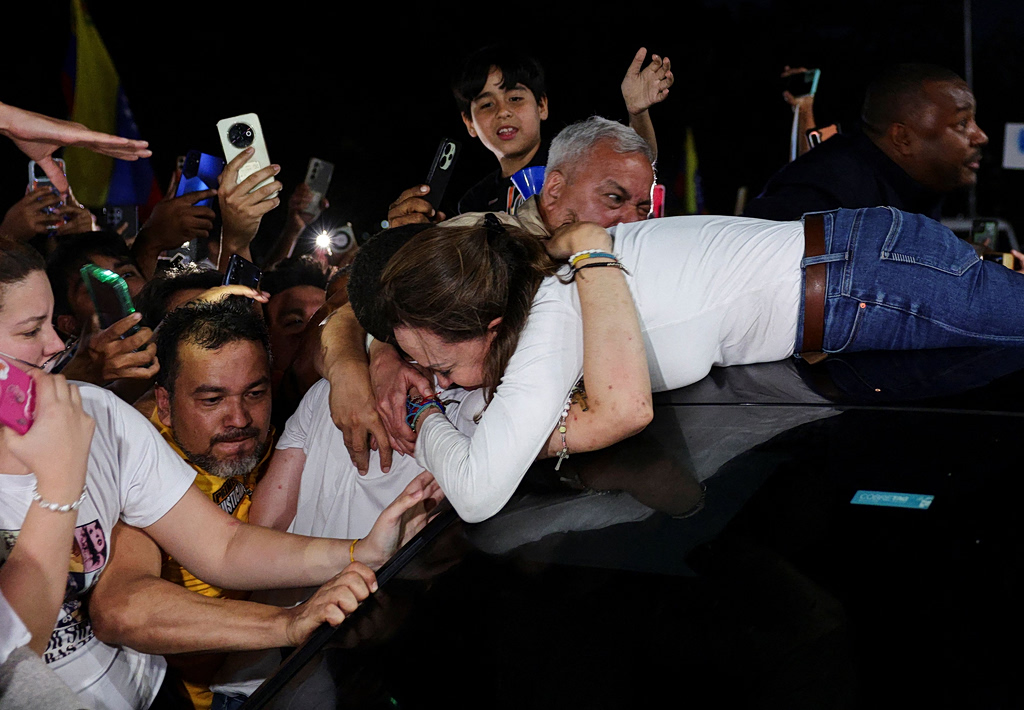
Venezuelan opposition leader Maria Corina Machado greets supporters after travelling from Barquisimeto, where she made her first public appearance following her return to the country after nearly a year abroad, in Caracas, Venezuela, October 25, 2026. REUTERS/Gaby Oraa
Machado, who in December secretly escaped by boat under the cover of darkness to receive the Nobel Peace Prize, left Panama on Thursday, said a person familiar with her plans. After crossing Colombia, she entered Venezuela this weekend and appeared at the shrine in Barquisimeto around midday Sunday. An ecstatic crowd of supporters surrounded her and shouted her name.
On her journey, Machado was accompanied by a private security team of Americans and had assistance from Colombia’s conservative government, the person said. Rodríguez was told by the U.S. not to interfere with Machado’s return, the person said.
¡Viva Venezuela!
🇻🇪 https://t.co/Pi8xjko74g
— María Corina Machado (@MariaCorinaYA) October 25, 2026
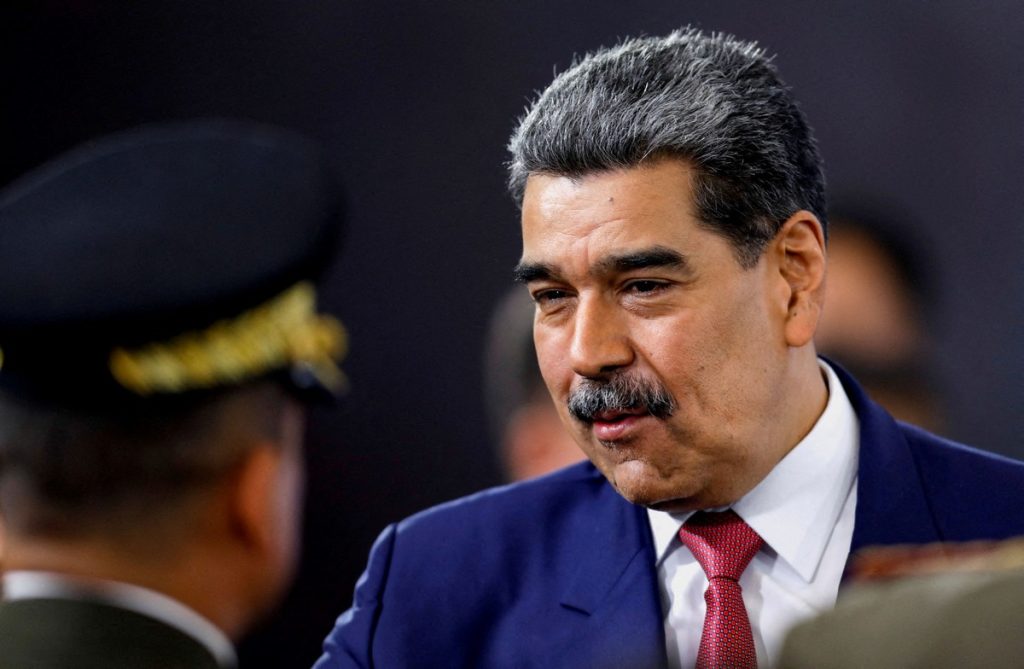
Before fleeing Venezuela last year, Machado had been in hiding since a 2024 presidential election in which she had been barred from running but which her party nonetheless handily won, according to international observers. The U.S. and other governments said that Rodríguez’s predecessor, Nicolás Maduro, had stolen the vote from Machado’s handpicked candidate, Edmundo González, to remain in power.
Machado’s successful return follows at least seven failed attempts to return through Curaçao and Panama, some of which were thwarted amid opposition by American authorities. U.S. officials have backed transition talks involving another opposition leader, Dinorah Figuera, that concluded a third round last week with agreements to review judicial and legal reforms but no timetable for a presidential election. Machado, a 59-year-old industrial engineer turned politician, has said she was shut out of those negotiations.
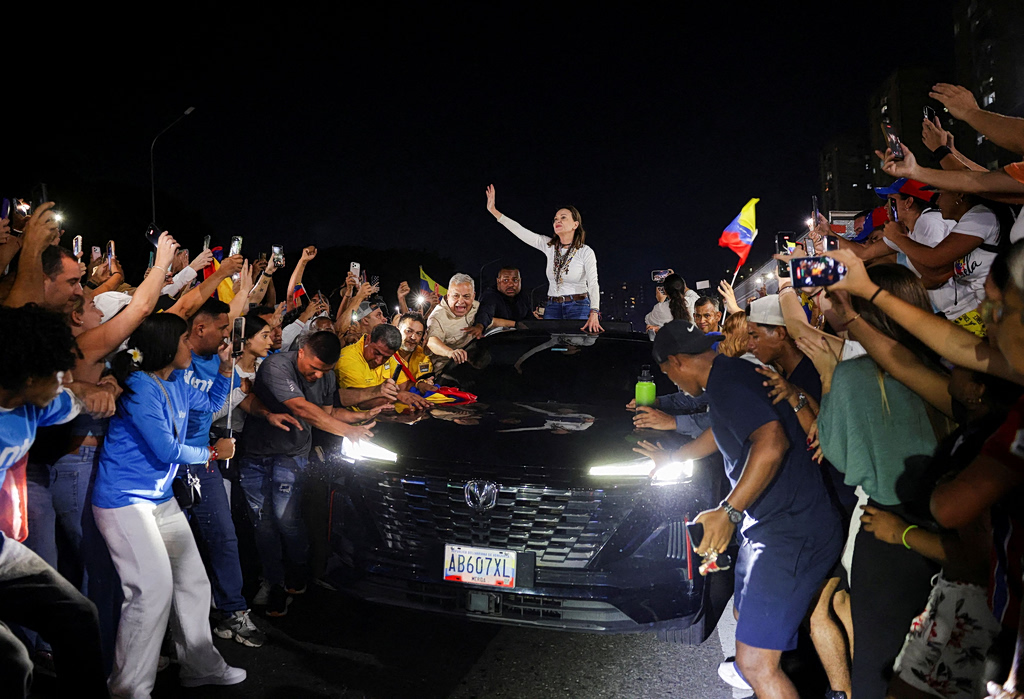
Venezuelan opposition leader Maria Corina Machado greets supporters after travelling from Barquisimeto, where she made her first public appearance following her return to the country after nearly a year abroad, in Caracas, Venezuela, October 25, 2026. REUTERS/Gaby Oraa TPX IMAGES OF THE DAY
Florida Republican lawmakers have backed Machado’s return amid concerns that Trump’s support for Rodríguez and the sidelining of Machado were alienating Venezuelan and Cuban voters ahead of the midterms.
The White House didn’t immediately respond to a request for comment.
Trump told reporters outside the White House that he didn’t know Machado returned. He called her a “very nice woman.”
“She gave me her Nobel Prize, so what else can I say?” he said. “I hope she’s safe.” He had earlier Sunday told Fox News: “We have total control of Venezuela.”
EN VENEZUELA!
JUNTOS!
POR LA LIBERTAD! https://t.co/PeCRruhXSd— María Corina Machado (@MariaCorinaYA) October 25, 2026
Secretary of State Marco Rubio credited the U.S.-backed reconciliation talks with creating the conditions for Machado’s safe return, saying in a statement on Sunday that negotiations offered Venezuela the best chance in decades “to peacefully achieve not just a free and fair election but an enduring democracy.”
Rubio had previously said that Machado had the right to return to her country when she wanted. But since U.S. forces captured Maduro in a Jan. 3 raid, he and other U.S. officials repeatedly asked her to wait. When she attempted to return in the aftermath of earthquakes that devastated northern Venezuela in June, U.S. opposition derailed her trip midair.
Finalmente, Caracas, estoy aquí!! 🇻🇪 https://t.co/VZ7GUkjWe3
— María Corina Machado (@MariaCorinaYA) October 26, 2026
In an interview with The Wall Street Journal in August in Panama, Machado said that she “cannot lead the process from abroad.” She said she envisioned crisscrossing Venezuela’s 23 states, rebooting a grassroots network to press for the transition to democracy from the Maduro allies currently in charge.
“I see myself traveling all across the country, all the way to the tiny communities—sitting down, listening to mothers, to workers, to farmers, to businessmen, to drivers, to students, to teachers, to doctors, everybody,” she said.
Some Trump officials working on Venezuela have been concerned that her presence will spark a confrontation with Rodríguez and destabilize the fragile arrangement that has allowed the U.S. to secure sweeping oil deals and expand American investment. It could also derail the gradual reconciliation process between the government and the opposition that U.S. officials say has gained momentum and will eventually lead to elections.
“There’s no plan B for transition framework,” said a U.S. person involved in the talks. While Machado has been offered ways to participate in the talks, she has refused unless she can play a leading role, Figuera said in an interview in Caracas on Thursday.
¡Cerramos con Caracas y su energía!
Gracias, Venezuela. 🇻🇪 https://t.co/cRPXEtSGCp
— María Corina Machado (@MariaCorinaYA) October 26, 2026
While her team thanked Trump and Rubio for their “continued leadership and support,” it wasn’t immediately clear to what extent Trump officials had approved her plans or whether she had secured guarantees for her safety. Her return was coordinated with help from Colombian and Panamanian authorities, according to two people familiar with the situation.
Machado’s allies made it clear they expect her return to be “a major step toward a democratic transition and free, fair, and verifiable presidential elections in the near future,” said David Smolansky, her senior foreign-policy adviser.
“Our sovereign voice returns with her to lead and guide this process!” wrote González, Machado’s close ally, who is in exile in Spain.
¡Este día lo vamos a recordar siempre!
Juntos alcanzaremos la Libertad. 🇻🇪 https://t.co/WTpT1LChYl
— María Corina Machado (@MariaCorinaYA) October 26, 2026
Recent polls show that two out of three Venezuelans disapprove of Rodríguez’s leadership, as citizens grapple with 400% inflation and nationwide power shortages. A recent AtlasIntel/Bloomberg poll also found that Trump’s popularity hit a new low of 28%, down from 53% in February. Public opinion surveys have also shown high levels of skepticism about political negotiations that the U.S. is backing.
Write to Vera Bergengruen at vera.bergengruen@wsj.com and José de Córdoba at jose.decordoba@wsj.com