
 Μake us preferred on Google
 What’s in a forearm? Turns out, a lot.
Grip strength is increasingly being viewed as an important biomarker of our overall strength and fitness.
While not used as widely as body-mass index, or BMI, as a screening tool for health, doctors and researchers say awareness of its value is growing. That’s happening as research shows that grip strength is associated with future health risks and even longevity.
At the University of Michigan Medical School, many clinics test patients’ grip strength, says Mark Peterson , a professor of physical medicine and rehabilitation.
“We do it with our older populations but I have also gotten it pulled into clinics in our neurological population,” he says.
Some doctors think grip strength should be used more routinely in wellness appointments. “I have really tried to encourage geriatricians to think about incorporating grip strength, it seems to trump almost every single measure including cardiovascular fitness training,” Peterson says.
Even in children, studies have found grip strength to be associated with cardiometabolic health.
What is grip strength?
Technically, it’s a measure of the force produced by your forearm and hand muscles. But doctors say it’s a good proxy for overall strength in both your upper and lower body.
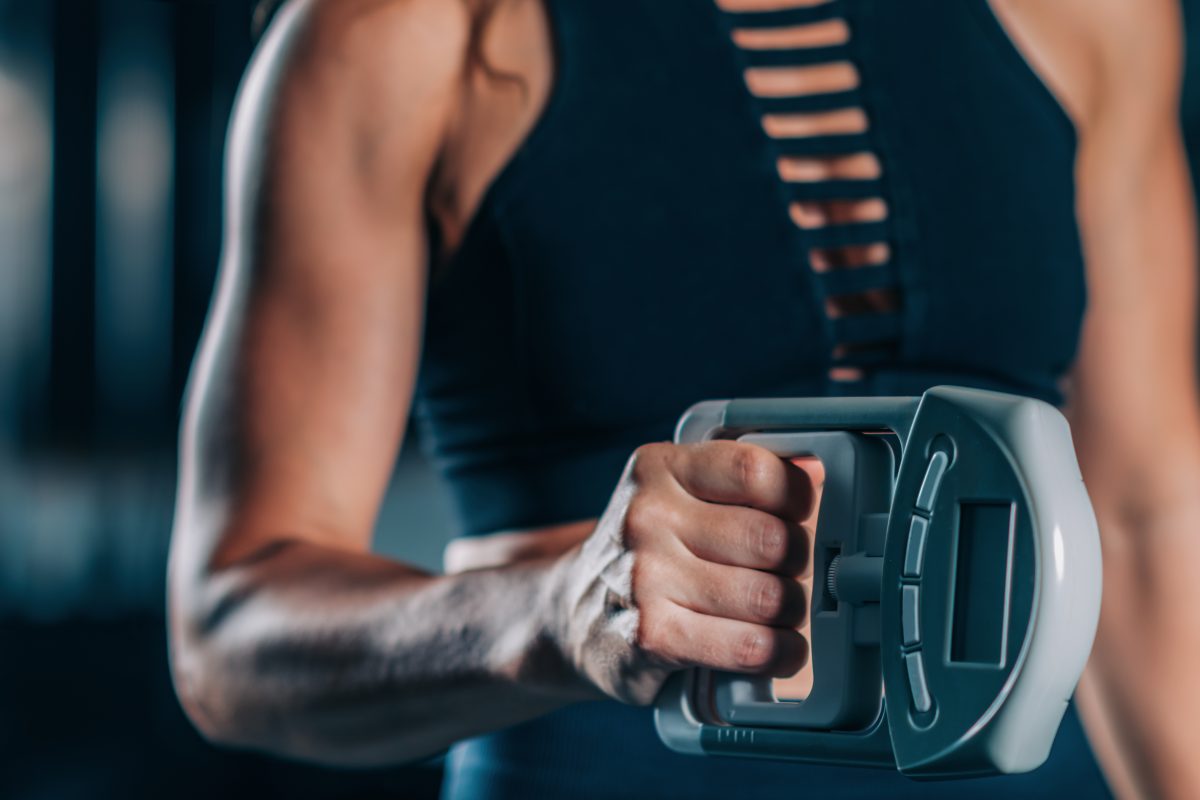
Grip strength is measured using a portable device called a handgrip dynamometer, says Ryan McGrath , an associate professor of exercise science at North Dakota State University. You squeeze the device as hard as you can for a few seconds and a needle gauge measures your strength in kilograms.
Doctors typically do the test two or three times in each hand and record the highest reading. The test takes just a few minutes and the devices are relatively inexpensive. They can even be bought on the commercial market for less than $100, though clinical-grade instruments run several hundred dollars.
“It’s simple to administer,” says McGrath.
Why it’s important
The median grip strength for a 50-year-old man is about 48 kilograms or 100 pounds, while a woman’s is about 29 kilograms or 64 pounds, studies show.
But grip strength can vary considerably depending on someone’s age, sex and body size.
Grip strength isn’t useful to see who’s strong, but rather who’s weak and at risk for frailty and other health risks, says Peterson.
“Why it’s useful isn’t because we care anything about muscles in the forearm,” says Peterson. “It’s highly associated with all muscle strength or weakness. If somebody is very weak in their grip, they are at very high risk for whole body frailty and weakness.”
Grip strength is a better predictor of cardiovascular disease than even blood pressure, he says.
A weak grip is also associated with a higher risk of heart disease, Type 2 diabetes, osteoporosis, stroke and dementia. “It’s like another vital sign for us,” says Dr. Michael Fredericson , professor and co-director of the Center for Longevity and founding director of the Lifestyle Medicine Program at Stanford Medicine. “It does give us an idea of somebody’s functional capacity.”
Age-related strength declines
As we age, we naturally lose muscle mass, starting in our 50s and 60s, notes Dr. Linda Fried , director of the Robert Butler Columbia Aging Center at Columbia University’s Mailman School of Public Health. Sarcopenia is the progressive loss of muscle mass, strength and function. Grip strength can help assess if someone is at risk for that.
Grip strength can also help predict who may develop frailty, which is a large risk for falling down and having difficulties with everyday activities. “Poor grip strength indicates that you’re at risk of losing function, you’re at risk of falling, you’re at risk of becoming frail and losing mobility,” says Fried. “And it can be a marker of just general conditioning that is associated with a lot of diseases.”
As you get older it’s important to have a buffer. So if you’re injured or have to go to the hospital and lose strength, you don’t fall to the level of developing sarcopenia, says Fredericson.
“Then things go downhill pretty quickly,” he says. “You need to build up your functional capacity so you’ve got some reserve there.”
Can you improve grip strength and does it matter?
Improving your grip strength doesn’t mean you’re improving your overall health, doctors say. Rather than focusing on grip strength alone, you should prioritize overall strength and fitness training.
People with greater grip strength have a lower biological age, which is how old your body appears on a cellular level, according to a study Peterson published three years ago.
But increasing grip strength in isolation won’t increase your longevity, notes Fredericson.
He doesn’t think grip strength should replace BMI as a screening tool. Rather, it provides an additional piece of important information.
That said, exercises that target grip strength specifically aren’t useless. Your hand and forearm strength can be important to everyday functions, like opening a jar or turning a key in a difficult lock. “So strengthening your arms matters and your hands matter,” says Fried.
Still, squeezing a tennis ball repeatedly isn’t going to improve your overall strength, says McGrath.
So ditch the ball for some dumb bells and squats and get to work.