
 Μake us preferred on Google
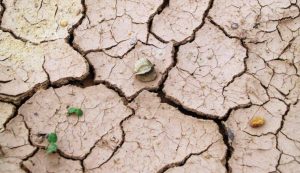
 The Greek government and the Athens Water Supply and Sewerage Company (EYDAP) are stepping on the gas in their efforts to tackle the mounting threat of drought. With 50% of the country’s water reserves already lost, officials are warning that Attica—home to nearly half of Greece’s population—is on the edge of a water emergency.
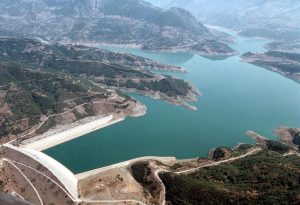
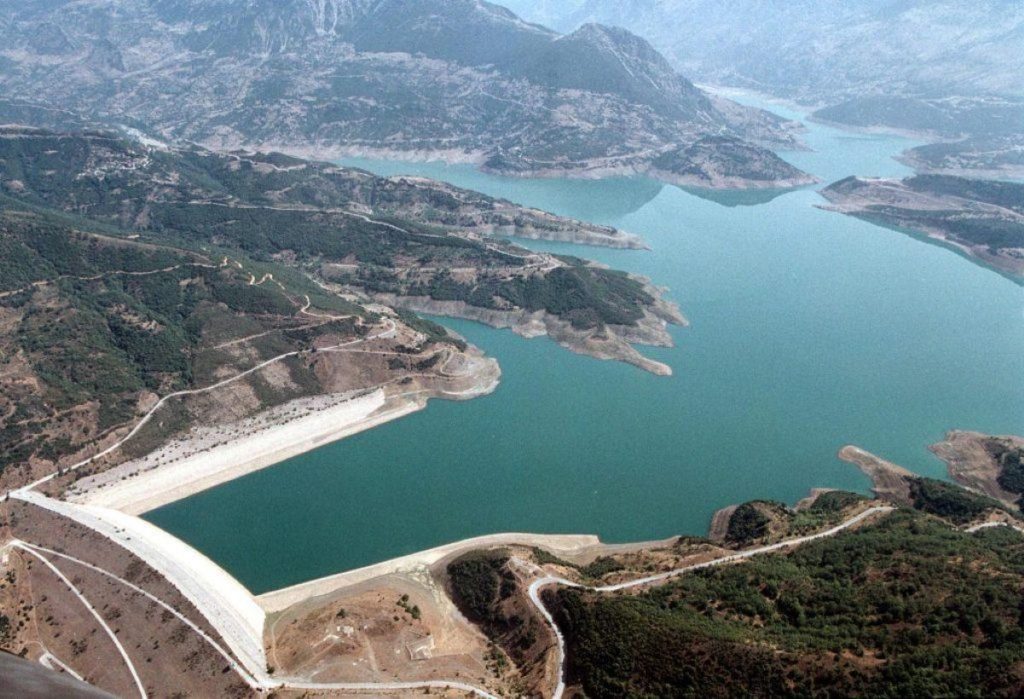
At the heart of the response lies a massive €535 million project, nicknamed “Evritos”, designed to secure the capital’s water supply by partially diverting the Krikeliótis and Karpenisiótis rivers toward the Evinos reservoir. The tender invitation for this major infrastructure work is expected to be issued in summer 2026 through a closed bidding process, modeled after the approach used for large-scale projects in Thessaly. That means only the country’s major construction players will be invited to the table.
If all goes as planned, construction will take around two and a half years, with completion slated for the first half of 2029. The project’s name, Evritos—derived from the ancient Greek words eu (well) and rheo (flow)—symbolizes its purpose: to restore balance to Greece’s water system. But officials are also keeping a Plan B in reserve: if delays occur, desalination plants will be activated to fill the gap.
This project is part of EYDAP’s broader €2.5 billion master plan for Attica, aimed at ensuring the capital’s water security for decades to come.
Higher Water Bills on the Horizon
To finance part of this ambitious effort, Greek households should expect something less welcome: water price increases. The Regulatory Authority for Waste, Energy and Water (RAAEY) is currently reviewing the data to establish a new cost-recovery framework, meaning tariffs will soon be adjusted according to a principle of “economic reciprocity.”
While the precise increases are still being finalized, insiders say hikes are almost inevitable.
However, EYDAP’s CEO Haris Sachinis sought to reassure the public during an event marking the company’s 100th anniversary, stating:
“Water in Athens is the cheapest in Europe—and it will remain the cheapest.”
A Multi-Phase Plan to Protect Attica and Beyond
Greek Minister for Environment and Energy Stavros Papastavrou emphasized that the government has already designed and costed a comprehensive short-, medium-, and long-term plan to safeguard not only Attica and Boeotia, but also Thessaloniki and Halkidiki.
“Attica and Thessaloniki together account for more than half of the country’s drinking water consumption,” he said. “They are therefore at the heart of our national water resilience plan.”
Four Immediate Interventions to Keep Athens from Running Dry
Before the Evrytos project is completed, four urgent measures are already underway to ensure 149 million cubic meters (m³) of water annually for Attica. These include:
- Operation of the Mavrosouvala wells, providing 32 million m³ per year, with water directed into the Yliki canal.
- A 70% reduction in the environmental outflow from the Evinos reservoir, saving another 22 million m³ annually—a measure that has already been completed.
- Reactivation of the “Oungroi” wells in southeastern Yliki, with a capacity of 50 million m³ per year, scheduled for completion by March 2026.
- Phase A of the Boeotian Kifisos project, involving 17 wells and 3 pumping stations, which will tap 45 million m³ annually from underground reserves. That project is expected to conclude by March 2027, providing both drinking water and irrigation supply.
Together, these short-term interventions form the bridge to Evrytos, which will take over as the long-term solution.
Evritos: The Project to Secure Athens’ Next 30 Years
The partial diversion of the Krikeliótis and Karpenisiótis rivers into the Evinos reservoir will create an annual capacity of 200 million cubic meters of water, even under adverse weather conditions.
“This project guarantees water security for the Athens basin for at least the next 30 years—though, of course, that depends on climate conditions,”
explained Haris Sachinis, EYDAP’s managing director.
The design includes a dual hydraulic connection linking the two rivers with the Evinos reservoir through two consecutive tunnels, totaling 20 kilometers in length.
“We have two rivers with strong natural flow. Instead of allowing excess rainfall to flood the gorges and surrounding areas, that surplus will now be channeled into the Evinos reservoir,”
said Sachinis.
Because the system uses gravity flow, the operating cost will be virtually zero. Environmental impact, meanwhile, is expected to remain minimal thanks to measures such as continuous ecological water release, fish migration corridors, and protection of the “Panta Vrechi” gorge, a unique natural site in Evrytania known for its perpetual waterfall-like spray.
Sachinis also revealed that the water secured through Evrytos could later be used to supply nearby islands via the External Water Supply System (EYS) through Elefsina, using ships.
“Our canal already passes above Elefsina by gravity,” he explained. “If maritime transport proves cheaper than desalination, this route could be used to send water to the islands.”
Plan B: Desalination Projects as Backup
Alongside Evrytos, Greece is preparing two intermediate-scale water projects as backup in case of delays:
- A water-lifting pipeline to connect the External Water Supply System to potential desalination facilities.
- A land-based desalination network to serve coastal areas.
EYDAP is already conducting technical, economic, and environmental assessments for three desalination plants that could treat seawater or brackish water, ensuring readiness should Evrytos not be completed within the next four years.
“We are working closely with the Ministry of Environment and Energy to avoid activating Plan B because desalination is not a cheap solution,”
Sachinis stressed.
“But we must be prepared for every scenario. We will not allow Attica to run out of water.”
Desalination comes with high investment and energy costs. According to Sachinis:
“Each cubic meter of daily production costs about €1,000 in capital investment. To produce 45 million cubic meters annually—equivalent to the Boeotian Kifisos yield—the investment alone would reach roughly €125 million. And each cubic meter of desalinated water requires around 3 kilowatt-hours of energy.”
If implemented, the plan envisions expandable desalination units in:
- Thiva (Thespies region) – capacity 87.5 million m³/year, budget €315 million
- Nea Peramos – capacity 40 million m³/year, budget €110 million
- Lavrio – capacity 20 million m³/year, budget €55 million
A third-tier contingency—floating desalination units (Plan C)—has also been studied, though EYDAP does not favor it, as floating plants can cost up to twice as much as land-based ones.
EYDAP’s €2.5 Billion Investment Plan for the Next Decade
Beyond water supply works, EYDAP plans to invest €2.5 billion over the next ten years to modernize its infrastructure and services. The Investment Plan includes:
- €729 million for water supply projects,
- €1.6 billion for wastewater and sewage systems, and
- €193 million for energy efficiency and digital upgrades.
Out of these, €293 million will be dedicated specifically to combating water scarcity through network modernization.
EYDAP is also advancing €399 million worth of projects aimed at reducing leaks in both the external water supply system and its urban network—lowering current losses from 15% to 11% by 2028. These include water recovery systems and new leak detection technologies.
Expanding EYDAP and EYATH Across Greece
A major institutional reform is also on the way. The government plans to establish two strong regional water authorities—EYDAP for southern Greece and EYATH (Thessaloniki Water Supply and Sewerage Company) for the north.
This reform will involve the mandatory absorption of 47 smaller municipal water and sewerage providers:
- EYDAP will absorb 34 local utilities across Boeotia, Phocis, and Euboea,
- EYATH will take in 13 utilities from Halkidiki.
“We’re launching a major reform,” said Minister Papastavrou. “We’re expanding EYDAP and EYATH’s jurisdictions to include irrigation management in their regions. This is the first big step toward streamlining a fragmented system of 750 local providers.”
The reform aims to create economies of scale, standardized service quality, and more efficient management of Greece’s critical water infrastructure.
151 Island Projects Underway
Greece’s island regions—often hardest hit by drought—are also part of the plan. Beyond the possibility of receiving water from the Evinos project through EYDAP’s Elefsina canal, 151 separate projects worth over €320 million are already in progress across more than 40 islands.
These works include both water supply and sewage upgrades, ranging from the major Chrysiida project in Corfu to new water supply systems in Heraklion, Crete, and from desalination facilities on Kastellorizo to two new plants on Amorgos.
A Race Against Time
With climate change intensifying and reservoirs at critical lows, Greece is racing to secure its water future. The Evrytos project may still be years away from completion, but its scale—and its urgency—signal a clear shift in the country’s priorities.
For Athens, a city whose fountains and history were once shaped by the genius of ancient aqueducts, the challenge now is no longer how to control water—but how to keep it flowing at all.