 Μake us preferred on Google
 Taking into account the September opinion polls conducted in the wake of the Thessaloniki International Fair (TIF), the conclusion couldn’t be more straightforward.
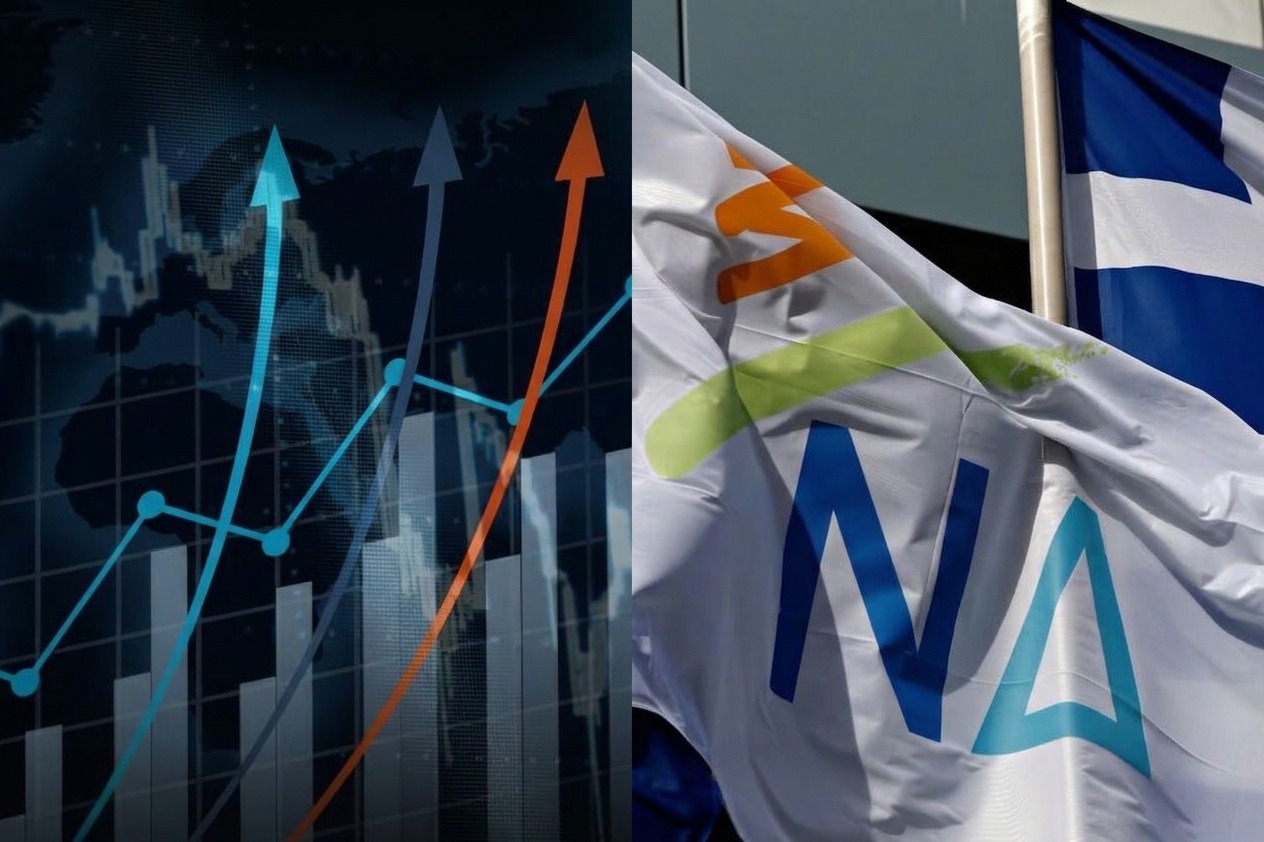
The government has just two opponents on the road to the elections:
Rising prices.
And itself.
Global Price Increases
The rising cost of living is fueling popular discontent and household hardship, but it’s not an exclusively Greek phenomenon. It is testing far stronger economies in Germany, France and elsewhere.
Of course, that offers nothing by way of consolation. Why should kyria Maria in Pangrati care what Frau Ilse pays for her groceries in Magdeburg?
Yet the problem is a shared one. Which is what makes it so difficult. It cannot be tackled by any single government in isolation, no matter how good it may be at its job.
Even more so when the energy costs driving the surge in living expenses hinge on factors beyond our societies’ control, such as the wars in Ukraine and the Gulf.
Turmoil Within
The second threat to the government comes from within, and that is entirely its own affair.
Certainly, a seven-, soon to be eight-year stretch in power is both long and wearing. It takes its toll.
But that’s no reason for the government to compound the problem with arrogant behavior and unrestrained squabbling. Even if it feels its rivals are displaying an unseemly aggression, the counterargument can’t be framed in the same tone.
There can be no doubt the elections are drawing near. Just as there’s no denying that elections are never conducted in the silence of a morgue or with the decorum of a seminary.
Yet they can—and should—proceed within a framework of elementary political decency and civility.
The Approaching Electoral Battle
Though it won’t be simple. The government enjoys strong electoral prospects, and its opponents’ weakness does not inspire the noblest of sentiments. Those parties are fighting for their survival, each in its own little world, and there will always be a tinge of desperation when political survival is on the line.
Not that that absolves the government of its own responsibilities to the public discourse.
Of course, it may believe a polarized climate helps rally its ranks, as it always does for the main political camp. But there’s a right way and a wrong way, even with polarization.
It’s not an undignified catfight.
As for the rest, there’s not a whole lot to say. Even writing “the battle for second place” between Tsipras and PASOK feels like a bad joke.
In politics, nobody competes to come in… second!
Meanwhile, the contest among the smaller parties for a seat in Parliament has been reduced to the subatomic clashes between Mrs. Konstantopoulou and the other ambitious ladies.
Even the local shaman would struggle to divine their significance.