
 Μake us preferred on Google
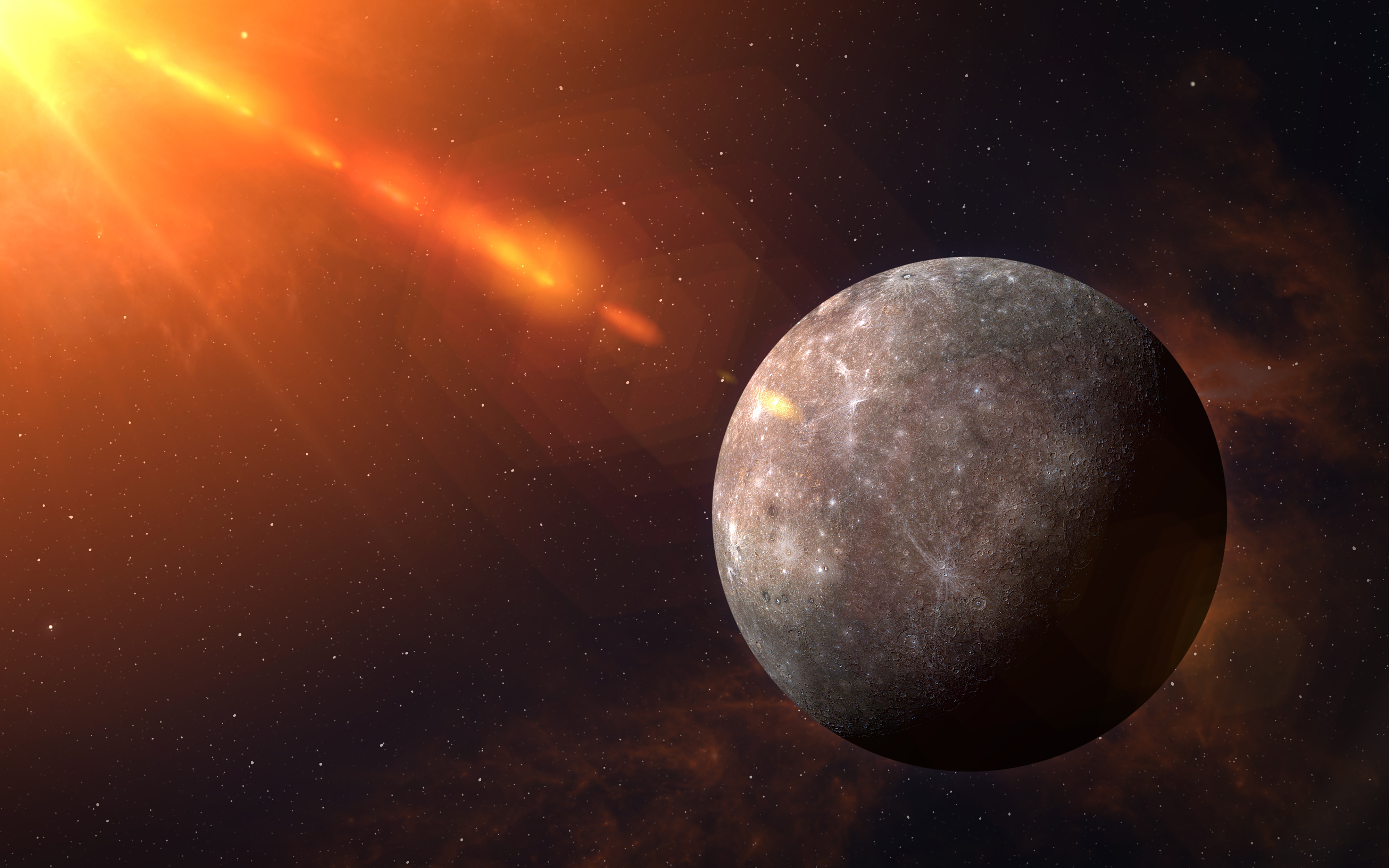
 New research indicates that Mercury, the solar system’s smallest planet, might be contracting more dramatically than previously understood — similar to how a grape shrivels into a raisin when exposed to heat.
A team from the German Aerospace Center’s Institute of Space Research announced this week that Mercury’s shrinkage could be 30% larger than earlier calculations suggested, potentially amounting to a diameter loss of up to 14 miles (23 kilometers). For a planet only about 3,000 miles (4,900 kilometers) wide, that’s a substantial change.
According to the researchers, whose work was published in Geophysical Research Letters, Mercury’s rugged terrain—constantly reshaped by material ejected from impact craters—may have obscured just how much the planet has actually shrunk.
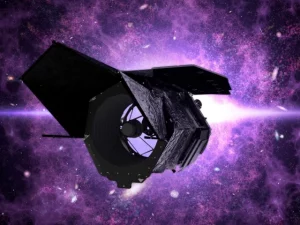
The announcement arrives just a week after two spacecraft, one European and one Japanese, released their cruising module and began their final approach toward Mercury. This mission, called BepiColombo, is expected to reach Mercury’s orbit in November, after which the linked spacecraft will separate to conduct a more detailed survey.
Gaku Nishiyama, the study’s lead author and a participant in the BepiColombo mission, said the spacecraft’s laser instrument should help confirm exactly how much Mercury has shrunk due to its cooling interior.
Nishiyama noted that the true extent of shrinkage might exceed what his team calculated using data from NASA’s Messenger spacecraft, which studied Mercury in the 2010s. Aside from Messenger, only one other spacecraft—NASA’s Mariner 10 in the 1970s—has ever visited the planet.
Mercury, the smallest and closest planet to the sun, has been shrinking continuously since it formed 4.5 billion years ago. Its unusually large iron core cools and contracts over time, along with the mantle and crust, causing the surface to compress and wrinkle as the planet adjusts to its shrinking size.
To reach their conclusions, Nishiyama’s team compared existing maps that show fault lines and other signs of surface contraction with newer maps detailing surface roughness. They found that the roughest areas of Mercury’s surface showed fewer visible wrinkles from shrinkage—suggesting these wrinkles may simply be buried under debris from meteor impacts rather than absent altogether.
By factoring in these hidden regions, the team was able to offer an updated picture of how much Mercury has actually contracted, which could also help scientists better understand other shrinking planetary bodies, said Nishiyama, who is affiliated with Hokkaido University in Japan.
“We are quite excited,” Nishiyama said, adding that the findings feel like a step closer to understanding “the reality of Mercury’s evolution.”