 Μake us preferred on Google
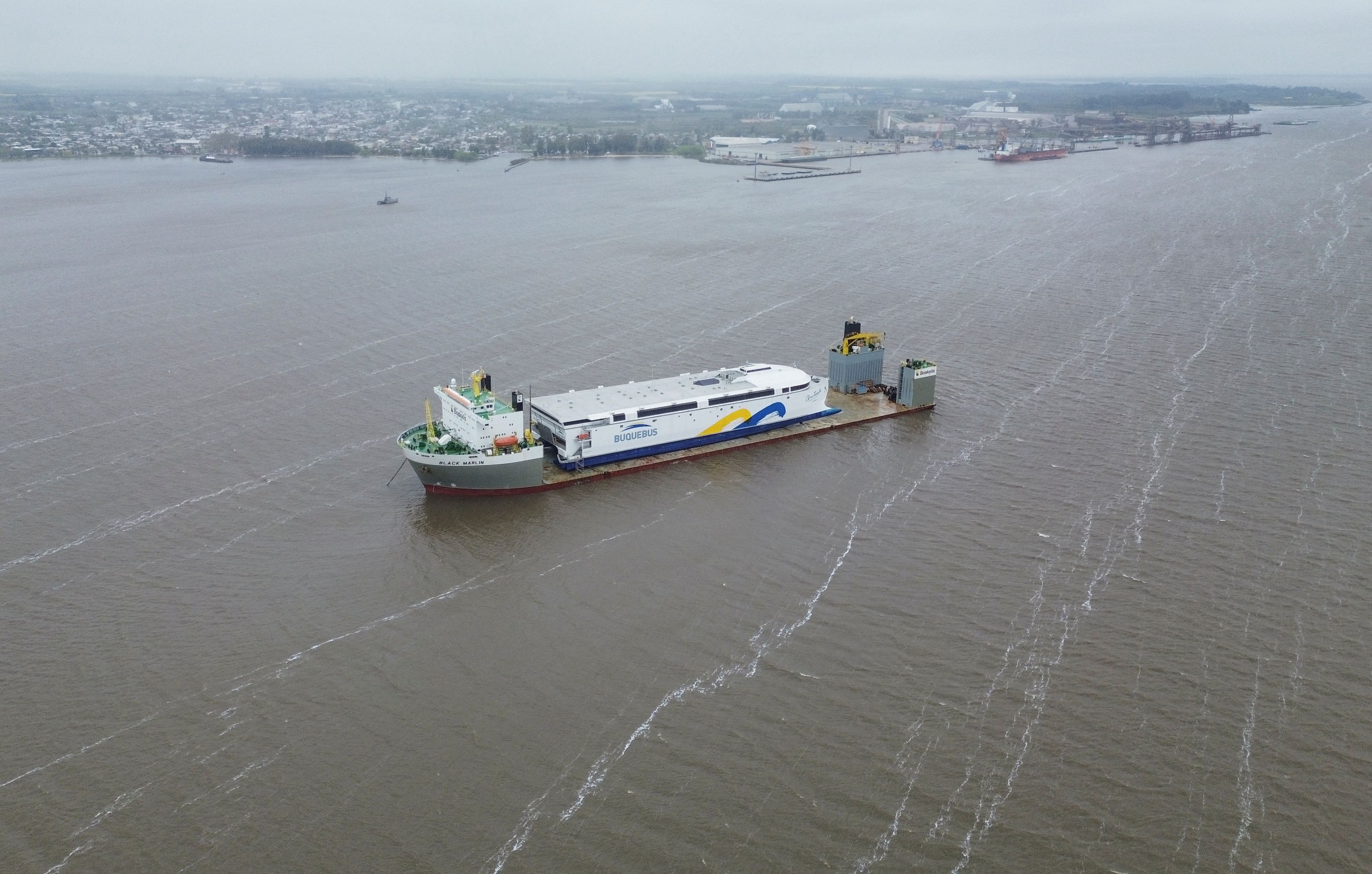
 The world’s largest electric ship, known as Hull 096, has finally reached its new home in South America after a journey of thousands of miles from Tasmania. Built by Australian shipbuilder Incat in Hobart for Uruguayan ferry operator Buquebus, the 426-foot (130-meter) vessel arrived in Uruguay on Friday, September 11, transported aboard the heavy-lift ship MV Black Marlin.
The ferry was welcomed in the city of Nueva Palmira before being floated off the transport vessel over the weekend. It will next be towed to Colonia del Sacramento, where it will go through commissioning and testing ahead of entering service. Incat officials described the arrival as a special milestone in a LinkedIn video, noting it marked the moment the ship touched South American waters for the first time.
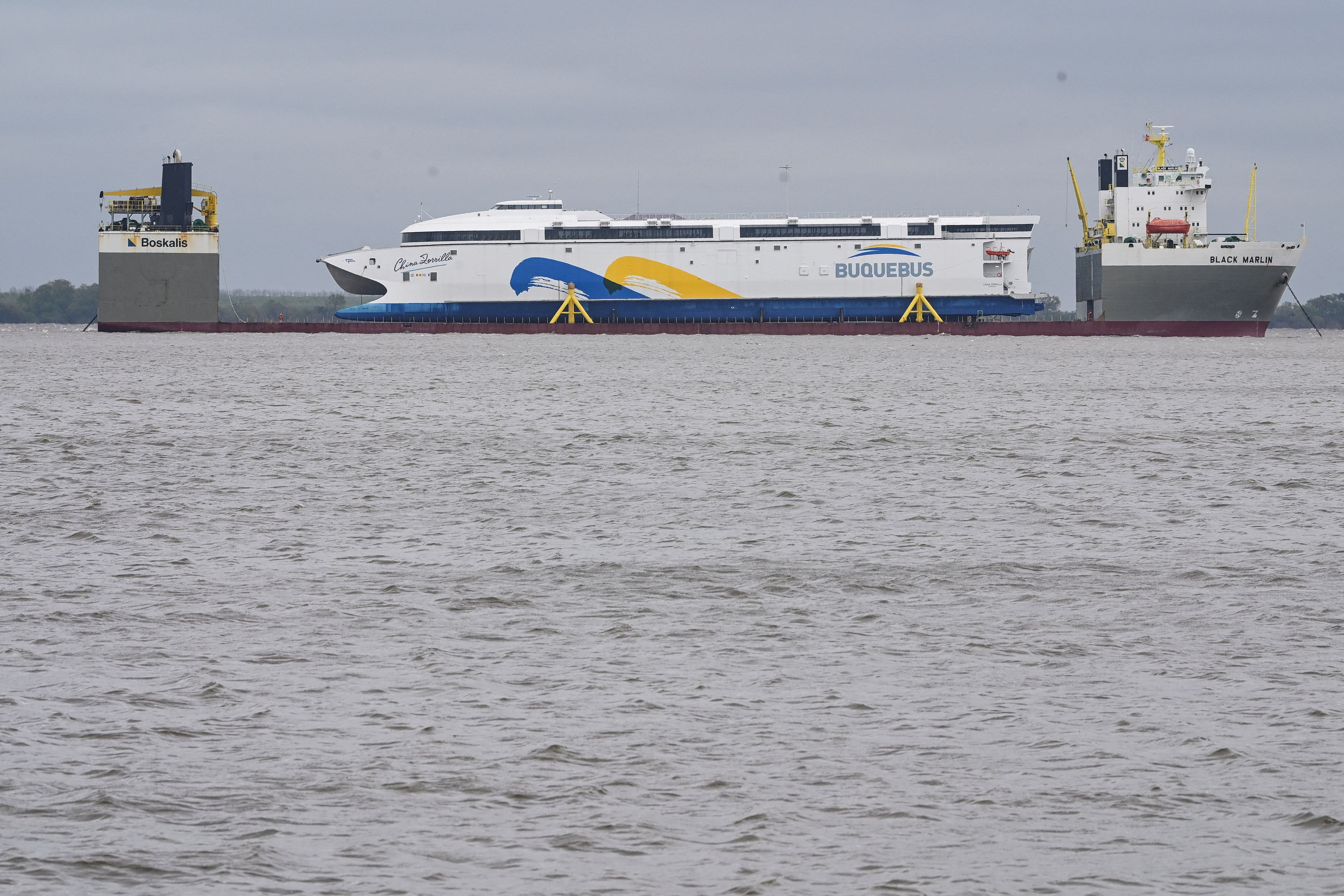
A view shows the China Zorrilla, billed as the world’s largest electric ferry, before its float-off ceremony in Nueva Palmira, Uruguay, September 12, 2026. REUTERS/Martin Varela Umpierrez
A massive battery system
The ferry runs on more than 5,000 batteries with a total capacity of 40 megawatt-hours, giving it roughly 90 minutes of operating time, about four times the capacity of any maritime vessel built before it. It will operate under the name China Zorrilla, honoring the late Uruguayan film and theater actress who died in 2014. The ship is equipped with eight electric waterjets, and its propulsion, handling, and control systems were already tested during earlier harbor trials in Tasmania.
Built from aluminum to keep weight down and improve the efficiency of its battery-electric propulsion system, the vessel can carry up to 2,100 passengers and 225 vehicles at once. Incat noted that after traveling thousands of kilometers from Hobart, the world’s largest battery-electric ship is now finally afloat in Uruguay.
Buquebus originally commissioned the ferry back in 2019, but production was paused during the COVID-19 pandemic, during which the design was switched from diesel to fully electric propulsion. The ship was launched into Tasmania’s River Derwent in May 2025 before undergoing a series of testing and commissioning steps.
A new cross-border route
Once in service, China Zorrilla will run across the Rio de la Plata between Colonia del Sacramento, Uruguay, and Buenos Aires, Argentina, a 30-nautical-mile route taking about an hour each way. The ferry is expected to make three crossings a day, each comfortably within its roughly 90-minute battery range.
Incat Chairman Robert Clifford thanked everyone involved in the project, saying thousands of people contributed to bringing the vessel to life and should be proud of what they accomplished.
Hull 096 departed Tasmania in early August after being loaded onto the MV Black Marlin on Hobart’s River Derwent. The transport ship then carried it past the northern tip of New Zealand, across the Pacific, and around Cape Horn before arriving in Uruguay.
Buquebus will now complete final commissioning before putting China Zorrilla into passenger service. Meanwhile, Incat is already building three more electric ferries for Danish operator Molslinjen, which are expected to become Europe’s largest electric ferries once completed.
Source: Interesting Engineering