 Μake us preferred on Google
 On Wednesday afternoon, news of Giorgos Mazonakis’ death swept through Greece and the Greek diaspora with remarkable speed. Television and radio stations interrupted their regular programing. By nightfall social media was flooded with expressions of saddness from fans, and images of Mazonakis singing, laughing in an interview, and of course, of his unique looks and charasmatic moments. He was 54 but still seemed like he was just getting warmed up.

Reports say Mazonakis suffered myocardial ischemia, a reduction of blood flow to the heart muscle, and then cardiac arrest at a private medical practice in Kolonaki. He was later pronounced dead at Elpis Hospital. An autopsy completed Friday did not establish what caused the ischemia. Toxicology and histology results, expected in about a month, may, or may not, provide the answer.
As we have seen so many times in the past, the death of a public figure can create a sort of intimacy among strangers. Greeks who had never met Mazonakis felt they had known him for years, perhaps because his songs became intrinsically connected to their private milestones: the parties, the weddings, the breakups, the endless car rides and of course the early morning hours after a long night out.

Mazonakis of Our Hearts
Mazonakis was born in Nikaia, Piraeus, in 1972, and had family roots in Sitia, Crete. He began singing professionally while still young and was discovered in Patras in 1992. His first album, “Mesanychta kai Kati”, was released the next year.
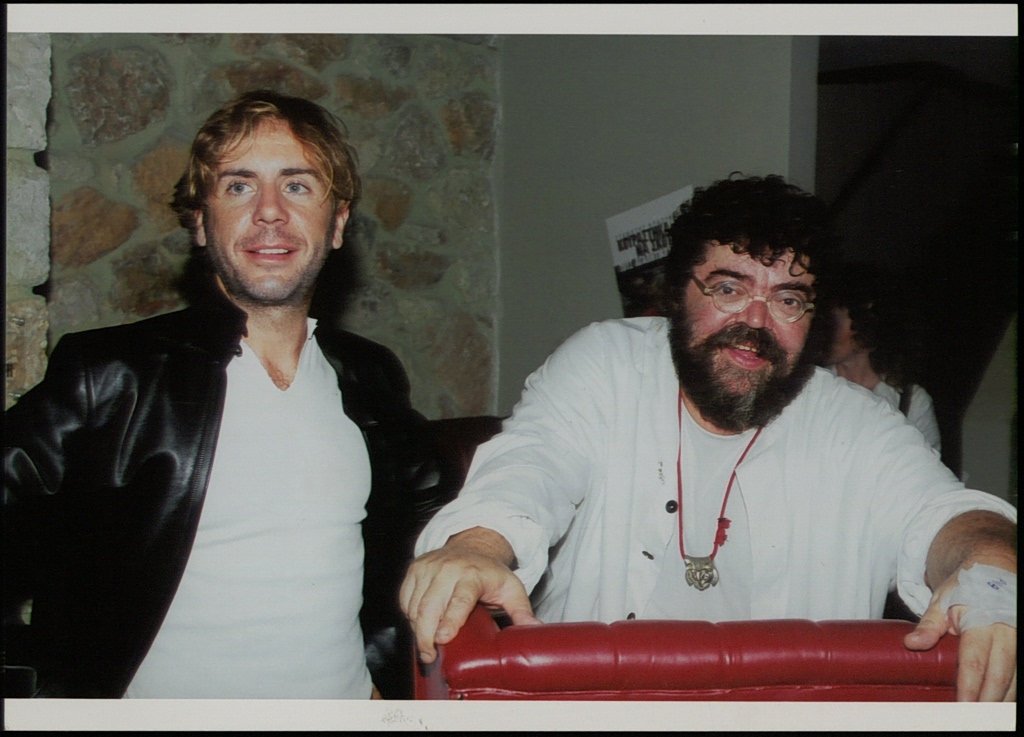
Then came the songs that made him one of Greece’s most recognizable performers: “Treis to Proi,” “Aniko se Mena,” “Mi mou Zitas,” “Mou Leipeis,” “Ores Mikres”, “To Gucci Forema”, and “Paidi tis Nychtas.” He had the emotional directness of a Greek folk singer with the instincts of a pop star.
He was also visually distinct from many of his peers. He engaged with fashion in a more playful way, moved easily between nightclub glamour and “darker” musical influences, and made no effort to fit into conventional constructs of Greek masculinity. In a genre traditionally associated with more conventional expressions of male toughness, Mazonakis was extravagant, tender, funny and generally difficult to categorise.
His role as a coach on The Voice of Greece widened his appeal and audience even further. Younger viewers who had not grown up with his early albums encountered a performer who was sharp, eccentric and generous with contestants. He became a household name for new generations, including children and teenagers who knew him first from television and then from the songs their parents had played for years.
The Investigation
 The circumstances of his death have made the loss more unsettling. Media reports say Mazonakis went to a Kolonaki practice for a plasmapheresis treatment. Two doctors connected with the practice have been arrested and appeared before a prosecutor. The doctors jointly face felony charges of endangerment resulting in death while the singer’s family is considering to seek an upgrade of the charges to homicide.

Investigators are still examing all possible scenarios and have not concluded whether any medical procedure contributed to Mazonakis death.

Meanwhile, the Athens Medical Association says that the Kolonaki practice was licensed as an internal-medicine practice, not as a facility authorised to perform plasmapheresis. The association is also reported to have found two plasmapheresis machines during its inspection.
The police are also examining what happened between Mazonakis’ arrival at the practice and the call to emergency services. Camera footage reportedly placed him arriving shortly after 1 p.m., rather than after 4 p.m., as was initially stated in one account. Authorities are examining this three-hour gap, as well as whether or not the plasmapheresis equipment found at the practice was in use during this time, and data in the machine’s memory.

Public anger has intensified amid reports that the clinic attempted to erase traces of Mazonakis’ presence there, and that someone had made an internet search for ways to revive a patient during the time period in question. Further reports show a video of one of Greece’s most beloved performers being wheeled out of the clinic to an awaiting ambulance, and that no one from the clinic accompanied him to hospital. The official investigation is continuing, but public judgment has already been swift.
The Business of Rejuvenation
The case has raised questions that go beyond one clinic. It has drawn attention to an expanding market in rejuvenation, longevity and physical optimization, in which procedures once associated with serious illnesses can be recast as a form of anti-aging and renewal.
It is not yet known how much Mazonakis knew about the risks of the treatment he went for that day, or if he was aware that the facility was not licensed for such procedures.

But his death has brought into view a culture that is no longer aimed mainly at women through creams, diets and cosmetic surgery. It now targets men, too, with promises of better hormones, metabolism, muscle, hair, sexual vitality and a younger “biological age.”
Beyond botox, this market now focuses heavily on hormones and blood, and often involves a supplement regimen designed around the language of precision and personalized medicine. However, the line between evidence-based care and risky experimentation is muddled.
Bryan Johnson, the American entrepreneur behind Project Blueprint, is the best-known symbol of the trend. He has spent millions on testing, supplements, strict dietary protocols and experimental anti-ageing interventions, including plasma exchange, in pursuit of a longer life. In July, he shocked the industry when he disclosed that he had been diagnosed with autoimmune gastritis, an illness where the immune system attacks the stomach lining. It was a reminder that even the world’s most measured body remains subject to illness and aging.

Hollywood has helped make this world familiar. Celebrities promote IV drips, fasting, hormone treatments, cryotherapy and longevity programs as extensions of grooming and self-care. The Ozempic era and the infamous “thigh gap” has only widened the appetite for a more managed, more perfect body.
Plasmapheresis, however, is not another cosmetic treatment. Therapeutic plasma exchange is a complex medical procedure in which plasma is removed from the blood and replaced with another fluid. It has recognised uses for serious conditions, including thrombotic thrombocytopenic purpura, Guillain-Barré syndrome, severe myasthenia gravis and some autoimmune and blood disorders.
It is not an evidence-based detox treatment for healthy people. Even in appropriate clinical settings, doctors warn that it can cause low blood pressure, bleeding, infection, allergic reactions, clotting problems and electrolyte disturbances. This is why it should be carried out by trained teams in hospitals or specialist facilities. Professor Giorgos Vasilopoulos, president of the Hellenic Society of Hematology, told To Vima that claims it removes unspecified “toxins” are not supported by scientific studies.

The investigation may establish how Mazonakis died and the toxicology results may reveal whether the treatment he was set to receive played a role. Less certain is whether it will force Greece to finally confront a problem that repeatedly surfaces in media’s headlines: clinics and wellness businesses offering invasive, experimental or inadequately regulated treatments to people who may not fully understand or appreciate the risks.