 Μake us preferred on Google
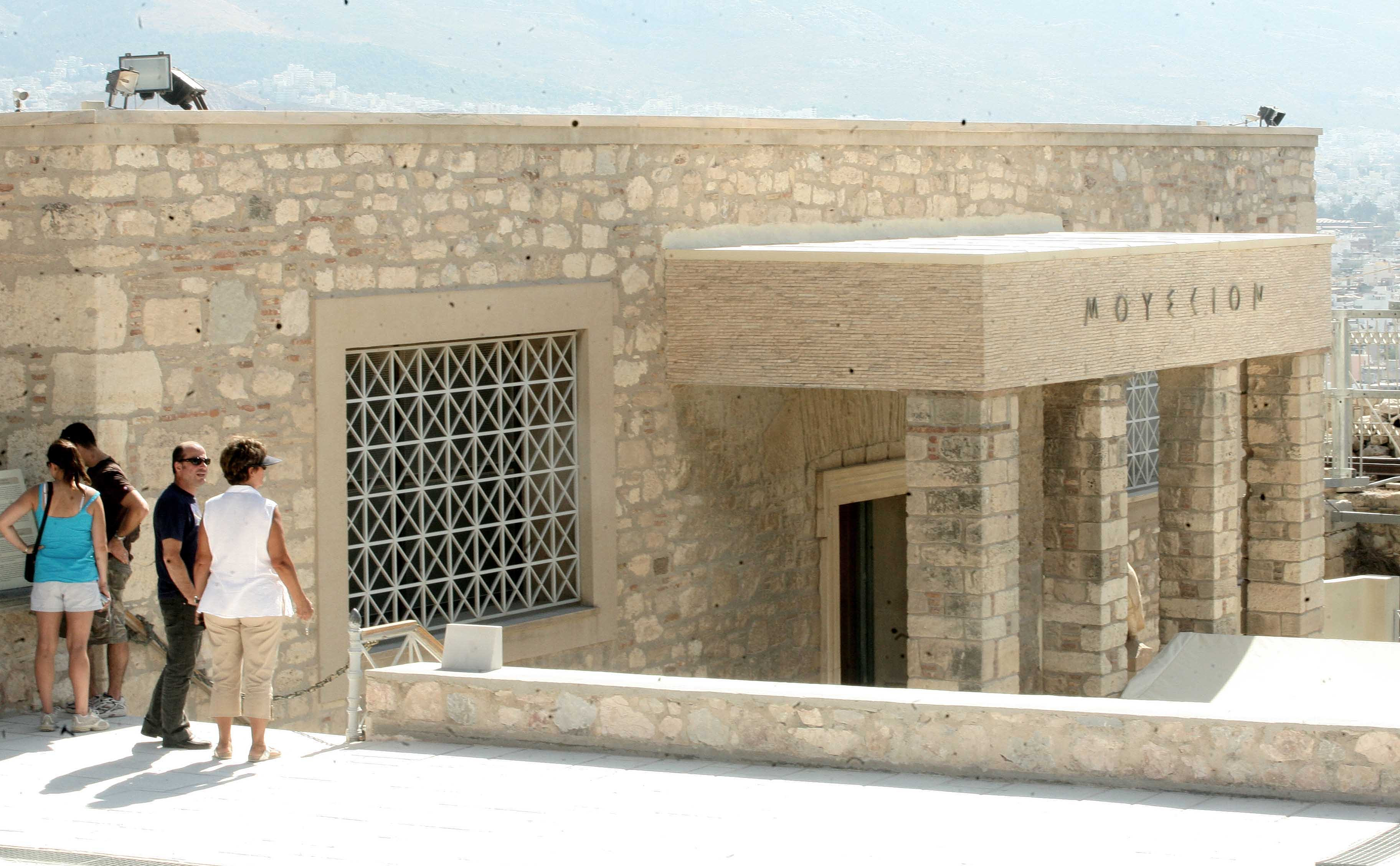
The most privileged building in Greece, as Culture Minister Lina Mendoni has described the Old Acropolis Museum, was designed to remain almost invisible. Built into the ground southeast of the Parthenon, its height does not rise above the base of the temple’s columns.
Construction began in 1865, with the deliberate intention of keeping the building out of sight so that it would not “compete” with the ancient monument. This stone structure, devoid of decorative features and the first building constructed by the modern Greek state specifically to house a museum, would be impossible to build today in such immediate proximity to the Parthenon.
The Old Acropolis Museum reopens its doors Monday Nov, 23, after 19 years out of public view. The last image many visitors may remember dates back to October 2007, when they watched, holding their breath, as ancient artifacts were lifted by cranes and transported to the new Acropolis Museum on Dionysiou Areopagitou Street. Since then, the building has fallen silent and has almost been forgotten.
Even the state wavered over its future, with proposals at one point including its demolition. An earlier plan to turn it into a refreshment pavilion was also put forward, but was quickly withdrawn following a storm of protests. From 2017 onward, the building was used to store antiquities found on the Acropolis rock, pending the start of its restoration.
Monday’s reopening, marked by an inauguration, reflects a shift in how we understand and approach historical memory.
The modest building, originally designed by Panagis Kalkos and subsequently modified over the years, has lost its original function. Today, it has become a story in its own right. It bears witness not only to the evolution of Greek archaeology and the fledgling state’s early determination to protect its treasures, but also to the ability of a historic landmark to reinvent itself.
The Old Acropolis Museum is being handed back to the millions of visitors to the Acropolis archaeological site following an upgrade of its facilities, with four exhibitions running in parallel.
There are two archaeological exhibitions, one digital exhibition and one contemporary art exhibition. Archaeologists, conservators, architects, mechanical engineers, exhibition designers, archaeological site guards and other collaborators worked together under the supervision of the Culture Ministry and the Ephorate of Antiquities of the City of Athens to complete the complex project of reopening the building with new functions. The project was co-funded by the Attica 2021–2027 operational program, with a budget of €5,856,117.
A key feature of the museum’s new identity is the organization and operation of its west wing as a model archaeological museum storage facility. It houses, protects and showcases architectural elements, collections of fragments from lost buildings on the Acropolis, and inscribed stones.
The exhibition “Athens: City and Idea” is the first in a series of temporary exhibitions that will be held annually. It presents finds from excavations across the capital, as well as from archaeological sites and museums under the jurisdiction of the Ephorate of Antiquities of the City of Athens, covering a broad span of history.
Multimedia applications featuring extensive archival material on all the monuments of the Acropolis, from the Mycenaean period to the Ottoman era, form part of an innovative program developed in collaboration with the Technical University of Crete. Together with the museum’s conservation laboratory, which will operate as an open viewing space, they connect the museum with the digital age and contemporary approaches to museum presentation.
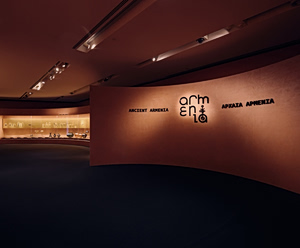
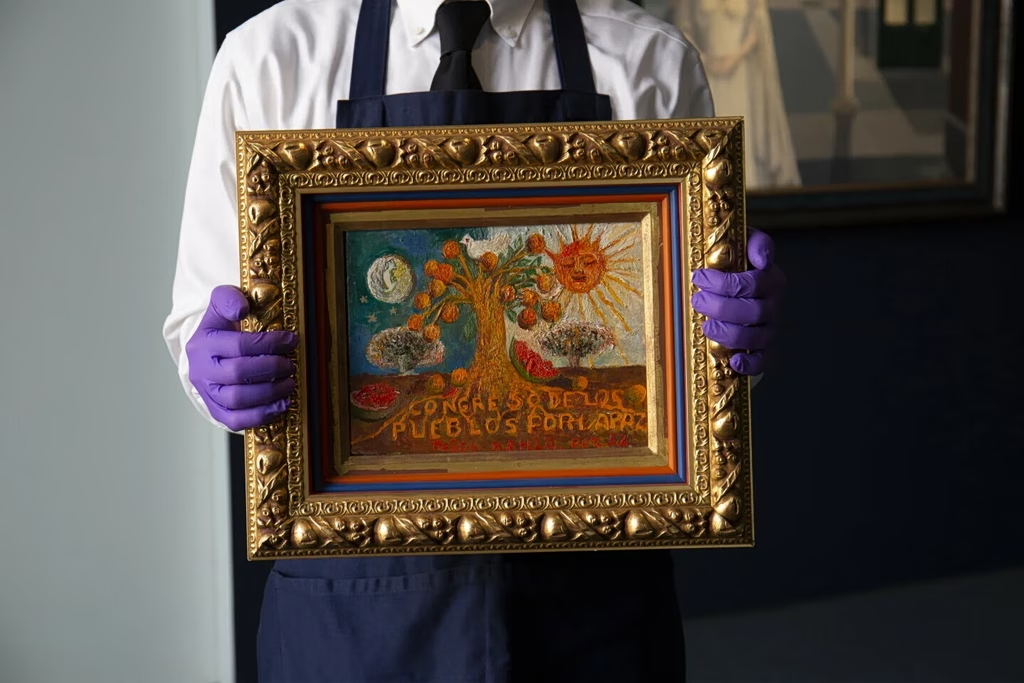
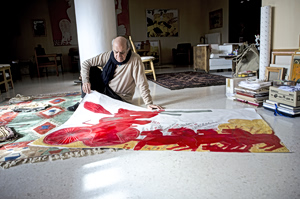
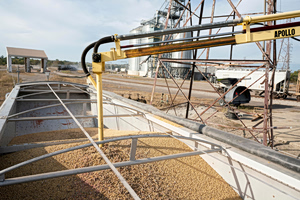
A special place in the museum’s reopening is reserved for an exhibition of contemporary art by American-Iraqi artist Michael Rakowitz. Set just beside the Parthenon, it opens a dialogue between historical memory and the present. The exhibition is the final installment of a trilogy titled “All That Is Left Behind Is Not Only the Inscriptions,” co-organized by the Culture Ministry and the NEON organization, founded by Dimitris Daskalopoulos.
Following the exhibition at one of the world’s most iconic archaeological sites, the organization has announced that it will conclude its operations.
The Old Acropolis Museum was established in the spirit of a proposal first put forward in 1807 by Adamantios Korais in his recommendations for the protection of antiquities: to convince foreigners that Greece neither gives away nor sells its heritage.
The creation of a fully organized museum on the Acropolis was completed in 1874. The steady stream of discoveries emerging from excavations led to the addition of the Small Museum to the main building in 1888. That annex was later demolished, while the central building was expanded with new galleries and its older spaces renovated in 1953, based on designs by architect Patroklos Karantinos.
The museum’s treasures were rearranged for exhibition under the direction of archaeologist and museum director Giannis Miliadis, with the project completed in 1964. Until it closed, the museum brought together successive layers of history in one corner of the Acropolis rock, housing the wealth of archaeological finds as an open repository of memory, with no additional admission charge.
Now, following a decision proposed by the Hellenic Organization of Cultural Resources Development (H.O.C.RE.D.), visitors will have to purchase a separate ticket to enter the museum, increasing the overall cost of a visit to the Acropolis archaeological site.