 Μake us preferred on Google
 August in Greece is more than a month on the calendar. It’s a homecoming.
As summer reaches its peak, life shifts from the cities back to the villages. Quiet houses, shuttered for most of the year, spring back to life. Village squares fill with laughter, church festivals begin, cafés spill onto the streets, and families reunite after months apart.
For a few precious weeks, the Greek countryside shakes off its long winter silence and dresses in its finest.
It welcomes back its children.
And, as every good Greek host does, it greets them with something sweet.
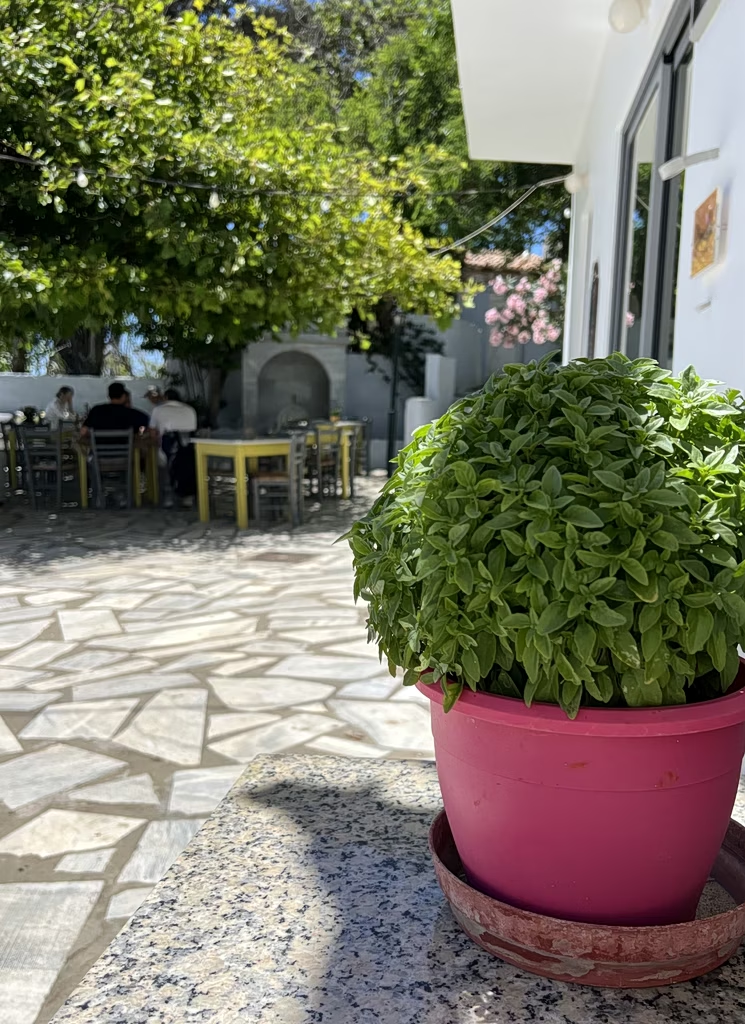
Basil plants in large plant pots are an unmistakable part of Greek summer. Photo by Dora Mastora
Embroidered tablecloths are laid across polished dining tables. Crystal candy bowls emerge from cupboards where they have waited patiently since last summer. They are filled with almond cookies, butter biscuits dusted with icing sugar, chocolates and every kind of homemade treat reserved for guests.
Gardens burst into bloom with jasmine, bougainvillea, basil, hibiscus, honeysuckle and sunflowers. Wooden kitchen tables are carried beneath grapevines and mulberry trees, where long family lunches stretch lazily into the afternoon. Bright plastic tablecloths are clipped down with clothespins to withstand the strong Aegean summer winds.
In August, narrow cobbled lanes remember what children’s footsteps sound like.
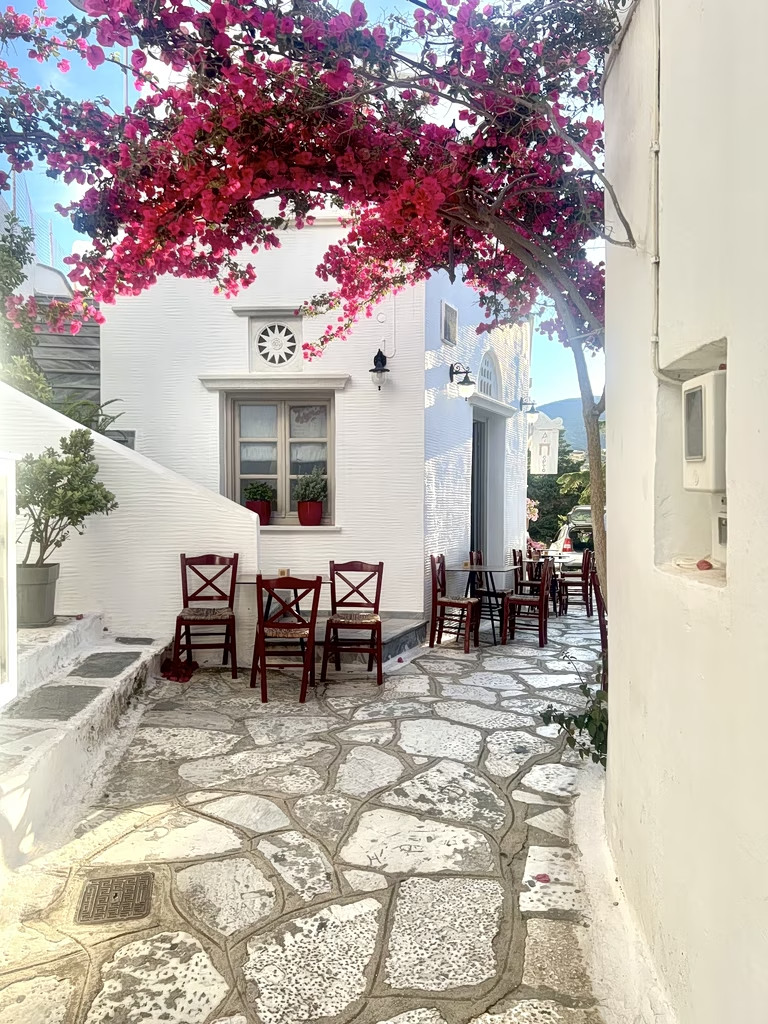
Bougainvilleas invite us to explore Tinos. Photo by Dora Mastora
Their laughter echoes between whitewashed houses as they race downhill on bicycles with no brakes, hide in cool stone cellars, wake to the crowing of roosters and spend long afternoons listening to the relentless chorus of cicadas.
The village square becomes the beating heart of it all.
Coffee shops throw open their doors. Tables crowd together beneath towering plane trees. Beer glasses clink. Greek coffee is brewed in traditional briki pots. Plates overflow with meze—the small sharing dishes that accompany drinks across Greece.
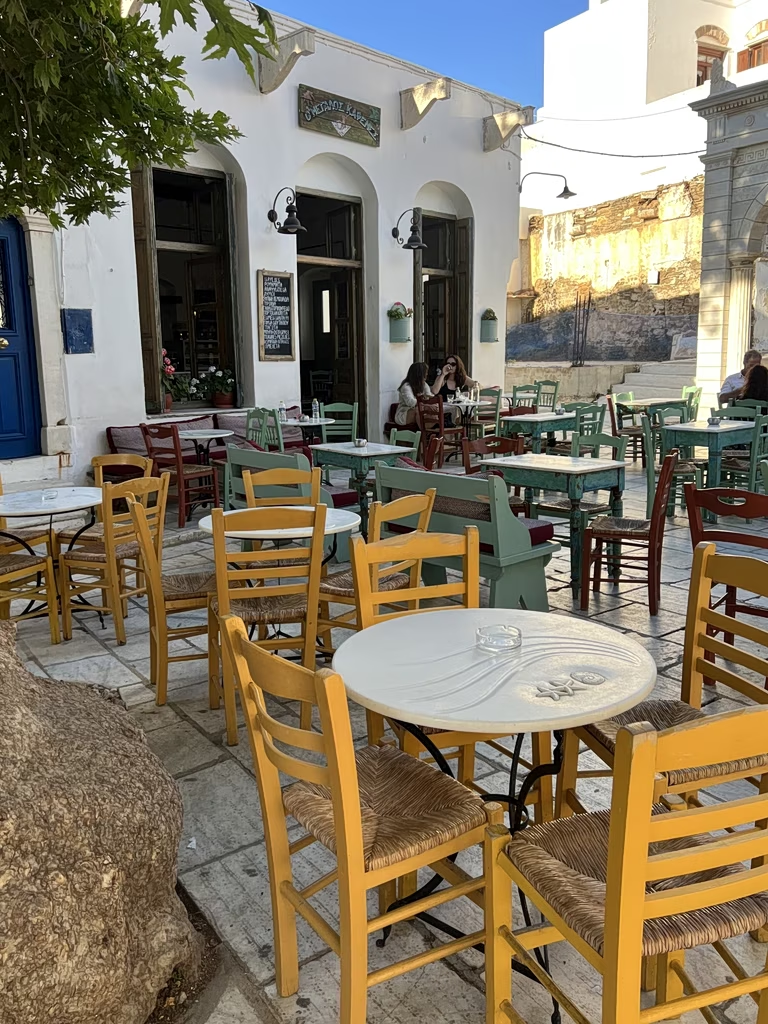
Photo by Dora Mastora
There are hugs, reunions, tears, teasing and spontaneous celebrations that seem to materialize within minutes.
And somewhere among the crowd, a grandmother or grandfather calls the youngest members of the family over.
“Would you like a Turkish delight or a submarine?”
For generations, that simple question has been one of the defining sounds of a Greek summer.
The sweetest memory of a Greek summer
If you’ve never sat on a low stone wall, brushing away determined ants while eating a piece of Turkish delight or a spoonful of ypovrychio—known in English as “submarine” sweet—you’ve probably missed one of the most authentic experiences of rural Greece.
If you’ve never filled your mouth with sugar before washing it down with an ice-cold glass of water, then perhaps you haven’t yet discovered how much joy such humble treats can bring.
And if you’ve never spent an afternoon in a village square beneath the shade of an ancient plane or mulberry tree, make it a priority.
Sometimes happiness really can be as simple as deciding between two sweets.
Turkish delight.
Or submarine.
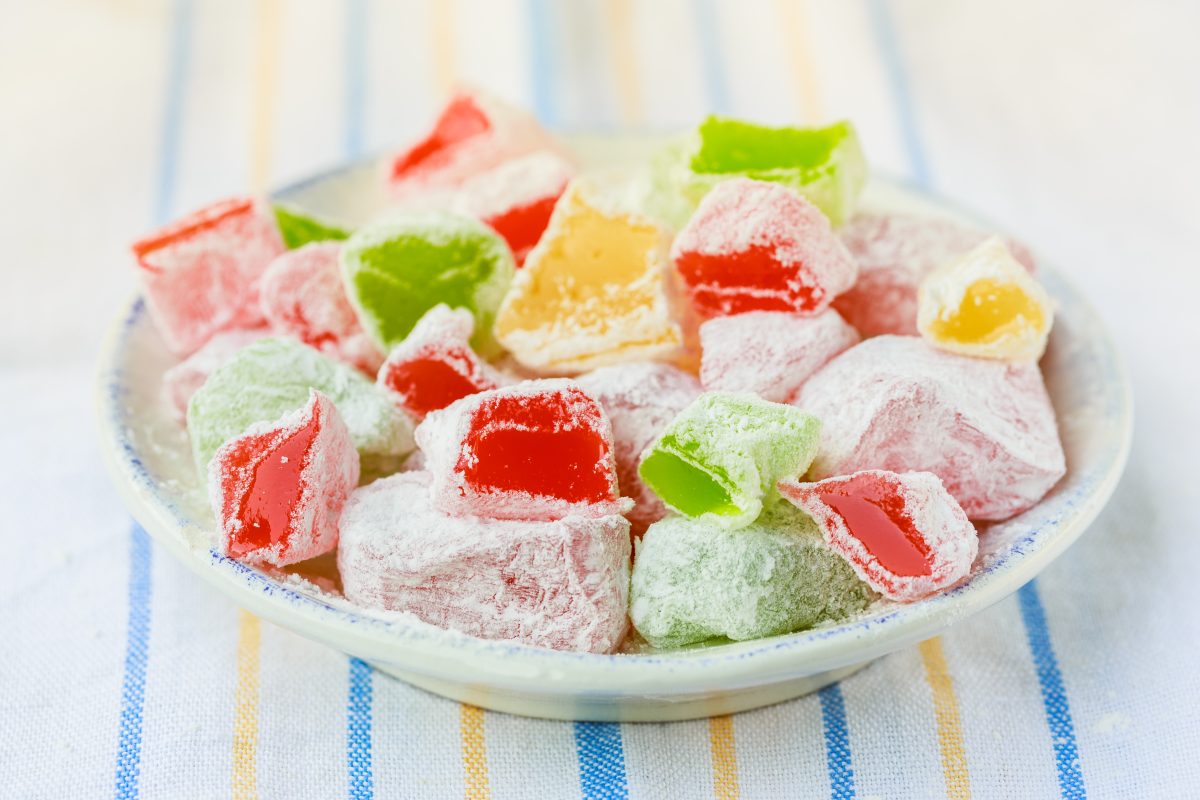
Turkish delight: an Ottoman confection embraced by Greece
Long before Turkish delight became the familiar companion to Greek coffee, it had already travelled a remarkable journey.
The confection originated during the Ottoman Empire, where confectionery flourished throughout the 18th and especially the 19th century.
Early versions looked quite different from today’s recipe. They were made with honey, grape molasses and starches before refined sugar became widely available. Sugar transformed the sweet into the soft, chewy confection that would become famous across the Eastern Mediterranean.
Its name comes from the Turkish lokum, itself derived from the Ottoman phrase rahatü’l-hulkum, meaning “comfort for the throat.”
The name was fitting.
Unlike the hard candies of the time, Turkish delight melted gently in the mouth, perfumed with mastic resin, rosewater, bergamot or lemon.
In Constantinople—modern-day Istanbul and the capital of the Ottoman Empire—it quickly became more than a luxury enjoyed by the imperial court.
It was sold in confectioners’ shops and cafés, served after meals, offered with coffee and presented to every visitor who crossed a home’s threshold.
It became one of the simplest and most meaningful symbols of hospitality.
Ottoman cookbooks from the late nineteenth century already list numerous varieties, flavored with rose, mastic, pistachios, almonds and kaymak, the rich clotted cream prized throughout the empire.
How Turkish delight became part of Greek life
Greeks living in Constantinople, Smyrna (now İzmir) and other cities of Asia Minor had long embraced this tradition.
For them, offering a sweet to every guest was simply part of everyday life.
When hundreds of thousands of Greek refugees arrived in Greece following the Greco-Turkish War and the compulsory population exchange of 1922, they brought far more than recipes.
They brought an entire culture of hospitality.
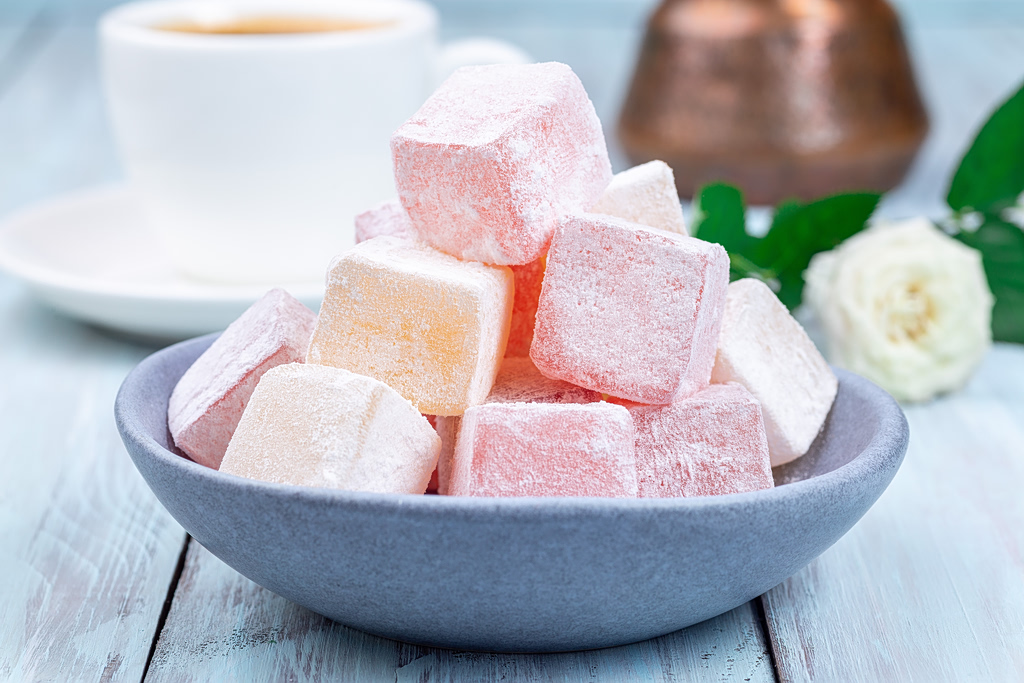
Among them were confectioners, grocers and skilled artisans who opened workshops throughout Greece, introducing Ottoman pastry traditions to their new homeland.
Turkish delight soon began appearing across the country.
It was inexpensive, travelled well, required no refrigeration and could easily be shared.
It naturally found its place beside Greek coffee.
Village cafés bought it in large wooden or cardboard boxes, selling it by weight. Café owners simply placed a piece on the coffee saucer—a quiet but heartfelt way of saying, “Welcome.”
Over time, Turkish delight moved from cafés into grocery stores, family cupboards and elegant crystal candy dishes displayed in formal living rooms.
Without ever losing its Eastern roots, it quietly became one of Greece’s most beloved sweets.
The white sweet that became the ‘submarine’
If Turkish delight arrived from the East packed in paper boxes, ypovrychio followed a slower path.
Before becoming known as the “submarine,” it was simply called white sweet or mastic sweet.
Unlike traditional spoon sweets—which preserve whole fruits in syrup—it contained no fruit at all.
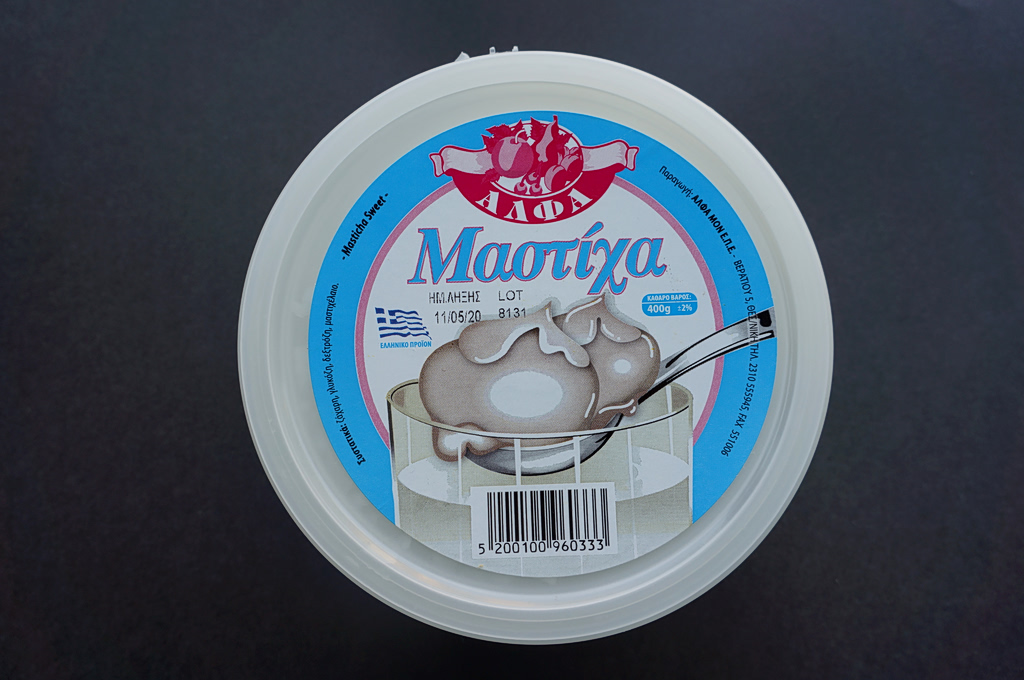
GREECE – CIRCA 2019: Top view of a container with masticha fondant, a spoon sweet popular in Greece and Cyprus. Adriana Iacob / Shutterstock.com
Instead, it consisted of a thick white sugar paste.
Its preparation was deceptively simple.
Sugar syrup was boiled, cooled and then worked repeatedly until countless microscopic sugar crystals formed, transforming the transparent syrup into a creamy white confection with an exceptionally smooth texture.
The technique closely resembled European fondant, but in Constantinople it met one uniquely Greek ingredient: mastic.
Harvested exclusively on the island of Chios, mastic resin gave the sweet its unmistakable aroma.
Served with a glass of cold water, it became one of the signature treats of the city’s Greek households.
Why it’s called a submarine
The nickname doesn’t describe the sweet itself.
It describes how it’s eaten.
A generous spoonful of the thick white confection is balanced on a teaspoon and submerged into a tall glass of icy water.
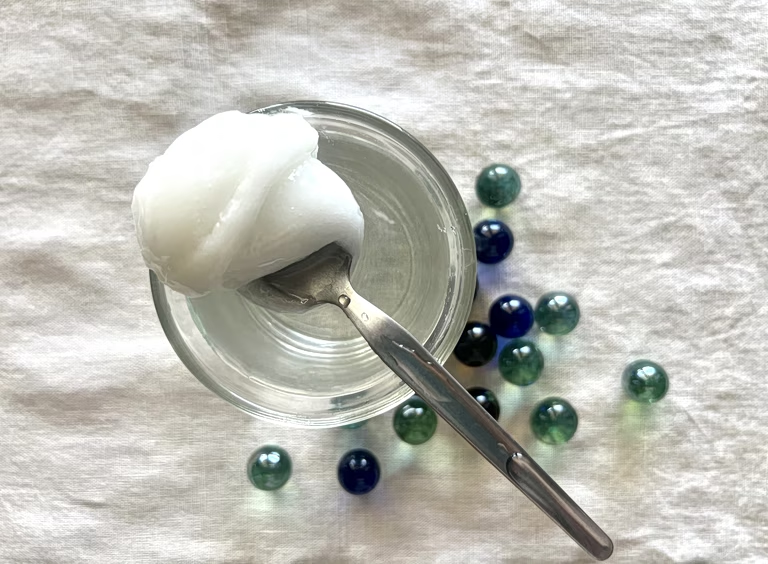
Photo by Dora Mastora
The spoon rests beneath the surface like a tiny submarine.
The guest lifts the spoon, enjoys a little of the sweet, then lowers it back into the water again.
With each dip, the sugar softens while the water slowly absorbs hints of vanilla or mastic.
By the end, the sweetened water is enjoyed just as much as the confection itself.
It is a dessert designed to be savored slowly.
From Constantinople to the Greek village
The submarine’s success in Greece had as much to do with practicality as flavor.
In the first half of the twentieth century, refrigerators were rare and fresh pastries spoiled quickly.
This sugar-based confection lasted for months in a sealed glass jar.
It required no baking, no plates and no elaborate preparation.
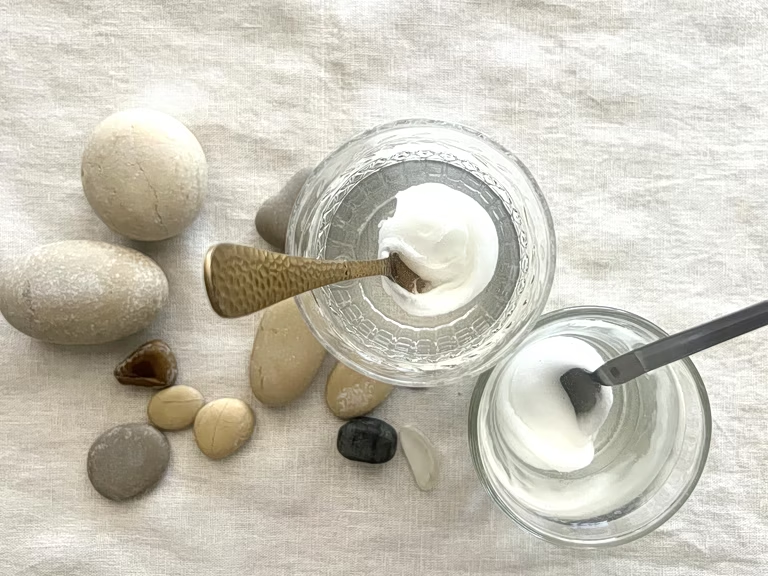
Photo by Dora Mastora
One jar could serve dozens of visitors—an important advantage for families with limited means.
A refined urban tradition from Constantinople adapted effortlessly to life in rural Greece.
The sweet travelled from elegant salons to village homes, cafés, grocery stores, church festivals and family celebrations without ever losing its purpose.
To welcome guests.
For children, ordering a submarine at the village café became a small luxury that lasted an entire afternoon.
For adults, it remained the perfect companion to a cup of Greek coffee.
Nobody rushed it.
The spoon moved slowly up and down through the glass while conversations drifted from one story to the next and the afternoon shadows crept beneath the plane trees.
Two sweets, one Greek summer
For a time, both Turkish delight and the submarine faded into the background as modern desserts took center stage.
Today, however, our growing desire for simpler pleasures has brought them back.
Once again, they sit beside cups of Greek coffee on polished wooden trays.
Perhaps today’s children eat less sugar than previous generations.
But holidays are meant for small indulgences.
How else can they experience the quiet magic of watching something melt just for them?
How else can they discover that happiness sometimes arrives in the simplest of forms?
Greek August has arrived.
And it’s waiting to be enjoyed exactly as it deserves.