
 Μake us preferred on Google
 Greece ranks 61st among 165 countries and jurisdictions in this year’s Economic Freedom of the World (EFW) Index, published by the Center for Liberal Studies (KEFiM) in cooperation with Canada’s Fraser Institute.
Greece scored 7.17 out of 10, up from 7.01 in the previous edition, improving its position by two places in the global ranking.
Despite the overall improvement, Greece slipped one place among European Union member states, ranking 25th compared with 24th last year. Only two EU countries rank below Greece globally: Croatia in 64th place and Poland in 65th.
The latest edition is based on data from 2024 and places Greece in the second quartile of the countries assessed. Greece is tied with Brunei and the Philippines in the overall ranking, while Saudi Arabia ranks immediately above it.
Greece’s performance across five areas
Greece improved its score in four of the index’s five areas, with the largest gain recorded in the size of government.
Its scores and global rankings are:
- Size of government: 5.24/10, 144th
- Legal system and property rights: 6.22/10, 46th
- Sound money: 9.09/10, 49th
- Freedom to trade internationally: 8.65/10, 30th
- Regulation: 6.64/10, 70th
Compared with the previous edition, Greece’s score for the size of government increased from 4.89 to 5.24.
Its score for freedom to trade internationally rose from 8.43 to 8.65, while the regulatory environment improved from 6.46 to 6.64.
There was also a smaller improvement in sound money, with the score rising from 9.03 to 9.09.
The only decline was recorded in the legal system and property rights, where Greece’s score fell slightly from 6.23 to 6.22.
Global ranking and income differences
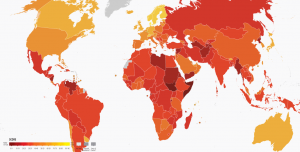
Hong Kong tops the global ranking, followed by Switzerland, Singapore, New Zealand and the United States.
Venezuela ranks last.
The report notes that economic freedom worldwide has not yet returned to the levels recorded before the COVID-19 pandemic.
It also highlights a link between economic freedom and living standards, pointing to significant differences between countries with the highest and lowest scores.
In countries in the top 25% of the index, average income is nearly seven times higher, while life expectancy is an average of 14 years longer than in countries in the bottom 25%.
KEFiM says Greece must move faster
Commenting on the results, Nikos Rompapas, president of KEFiM, said Greece had recorded a small but meaningful improvement in economic freedom, rising two places globally and making progress in four of the five areas assessed by the index.
However, he noted that Greece’s decline in the European ranking despite its higher overall score showed that other countries competing for investment, talent and opportunities were moving faster.
“Progress is real, but the pace is not enough to close the gap with the rest of Europe,” Rompapas said.