 Μake us preferred on Google
The European Commission has called on Turkey to make an unequivocal commitment to good-unneighborly relations, respect for international agreements and the peaceful settlement of disputes, as it highlighted continuing tensions with Greece and Cyprus in its 2026 enlargement assessment.
In its report, adopted on Wednesday, the Commission acknowledges that engagement between Athens and Ankara has continued and that Turkey did not undertake any unauthorized drilling activities in the eastern Mediterranean during the reporting period.
However, it warns that unresolved disputes over the continental shelf and exclusive economic zones continue to strain bilateral relations.
The Commission also records an increase in violations of Greek national airspace, including flights over Greek islands, as well as violations of Greek territorial waters.
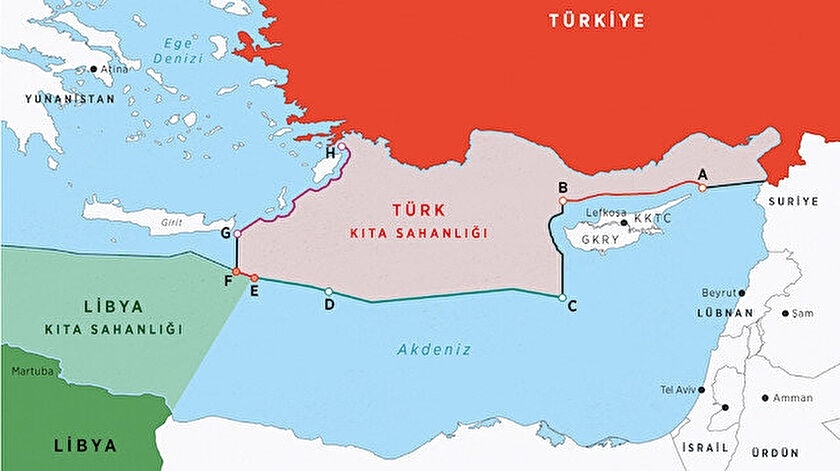
It specifically highlights the ratification on October 20 by Libya’s House of Representatives of the 2019 Turkey-Libya memorandum of understanding on the delimitation of maritime jurisdictions in the Mediterranean.
The move prompted a strong reaction from the EU leadership. European Council President António Costa and European Commission President Ursula von der Leyen reiterated that the agreement infringes upon the sovereign rights of third countries, does not comply with the law of the sea and is null and void.
The EU has also made clear that the memorandum cannot produce legal consequences for third countries.
The Commission says Turkey is expected to avoid threats and actions that damage good-unneighborly relations, normalise its relations with the Republic of Cyprus and respect the sovereignty of all EU member states over their territorial sea and airspace, as well as their other sovereign rights.
Cyprus remains a major obstacle
The report is particularly critical of Ankara’s continued refusal to recognize and cooperate with the Republic of Cyprus.
Turkey has also failed to fulfil its obligation to ensure the full and non-discriminatory implementation of the Additional Protocol to the EU-Turkey Association Agreement.
The Commission reiterates that progress on the Cyprus settlement is important for improving EU-Turkey relations and calls on Ankara to actively support negotiations towards a fair, comprehensive and viable settlement within the United Nations framework.
Such a settlement must be consistent with the relevant UN Security Council resolutions and the principles underpinning the European Union.

United Nations soldiers patrols the UN Buffer Zone in Nicosia, February 2017. EPA/KATIA CHRISTODOULOU
Accession negotiations remain frozen
Beyond its concerns over bilateral relations, the Commission’s assessment makes clear that Turkey’s EU accession process remains at a standstill.
Accession negotiations have been frozen since 2018, with the underlying reasons for the impasse remaining unresolved.
The Commission identifies further deterioration in democracy, fundamental rights and the rule of law, raising serious concerns over Turkey’s adherence to the fundamental political criteria for EU membership.
It also notes a widening gap between Ankara’s declared objective of joining the European Union and its continued democratic backsliding.
Nevertheless, the EU considers Turkey an important regional partner and maintains a strategic interest in a stable and secure eastern Mediterranean.
It advocates a phased, proportionate and reversible approach to cooperation, conditional on Turkey addressing European concerns and demonstrating constructive engagement.