

 Μake us preferred on Google
 Meta has gone on trial in California over allegations that it deliberately designed Facebook and Instagram to keep children and teenagers hooked, in one of the most significant legal challenges yet faced by the social media company.
The case, brought by 29 U.S. states including California and New York, centers on allegations that Meta violated federal and state laws protecting children online and failed to adequately address the effects of its platforms on young users.

People hold pictures of children and young adults whose deaths were related to social media use, as Meta faces a landmark trial in federal court over claims from 29 states that the company illegally collected and used children’s data in violation of federal law, allegedly designed its social media platforms to keep young users hooked and misled consumers about their safety, in Oakland, California, U.S., August 18, 2026. REUTERS/Manuel Orbegozo
As reported in BBC, the states are seeking billions of dollars in damages and are also demanding changes to Facebook and Instagram, including the removal of features such as “like” counts and infinite scrolling.
The trial in federal court in Oakland is expected to last roughly six to eight weeks.
States accuse Meta of putting profits first
During opening arguments, Megan O’Neill, a lead attorney for California, pointed to millions of pages of evidence obtained from Meta, including internal research, employee emails and chat messages involving senior company executives.
O’Neill argued that Meta understood its platforms could harm teenagers while continuing to pursue young users.

Lori Schott, mother of Annalee Schott, holds a picture of her daughter during a press conference held by parents of children and young adults whose deaths were allegedly related to social media use, as Meta faces a landmark trial in federal court over claims from 29 states that the company illegally collected and used children’s data in violation of federal law, allegedly designed its social media platforms to keep young users hooked and misled consumers about their safety, in Oakland, California, U.S., August 18, 2026. REUTERS/Manuel Orbegozo REFILE – CHANGING FROM “RELATED” TO “ALLEGEDLY RELATED”. ADDING INFORMATION “AND YOUNG ADULTS”.
She cited internal research in which one report said, “Teens have an addict’s narrative about use.”
Another internal document said features designed to increase the amount of time people spend on the platforms were fundamentally at odds with their well-being.
O’Neill told jurors that Meta’s business strategy could be summed up as: “Hook the users; hold them for as long as they can; harvest their data; hide the truth from the public when making public statements.”
She argued that evidence presented during the trial would show a significant gap between Meta’s public statements about safety and what its own internal research revealed.
“Meta said it put safety over profits,” O’Neill said, arguing that the evidence would instead show that profits repeatedly prevailed when the company faced decisions about its platforms.
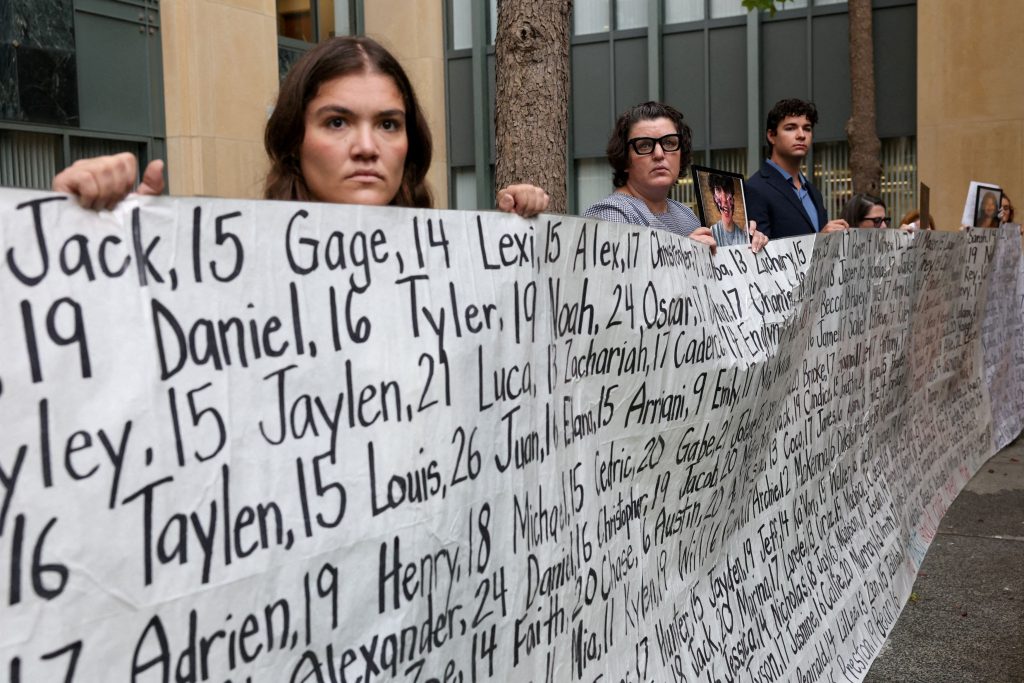
People hold a picture and a placard with names of young people, as parents of children and young adults whose deaths were allegedly related to social media use hold a press conference, as Meta faces a landmark trial in federal court over claims from 29 states that the company illegally collected and used children’s data in violation of federal law, allegedly designed its social media platforms to keep young users hooked and misled consumers about their safety, in Oakland, California, U.S., August 18, 2026. REUTERS/Manuel Orbegozo REFILE – CHANGING FROM “RELATED” TO “ALLEGEDLY RELATED”. ADDING INFORMATION “AND YOUNG ADULTS”. TPX IMAGES OF THE DAY
California also challenged Meta’s handling of children under 13. O’Neill told the court that the company had discovered millions of 11- and 12-year-olds using Instagram and did little to prevent them from accessing the platform.
Meta disputed that figure, saying it had identified just over 100,000 users in that age group.
Meta challenges claims of addiction
As reported in BBC, Meta’s lead attorney, Paul Schmidt, rejected the states’ characterization of the company’s platforms and its internal research.
Addressing one of the documents cited by O’Neill, Schmidt acknowledged that it found one in five teenagers said Instagram made them feel worse. But he told jurors that the same research showed 41% said Instagram made them feel better and another 41% said it had no effect.
Schmidt also disputed the argument that Meta deliberately designed Facebook and Instagram to be addictive.
He said there was no research demonstrating that social media addiction exists, while acknowledging that some people struggle with their use of social media. Meta has developed tools intended to help address those problems, he said.
Schmidt pointed to previous comments from Meta CEO Mark Zuckerberg and Instagram head Adam Mosseri saying the platforms were not designed to be addictive.
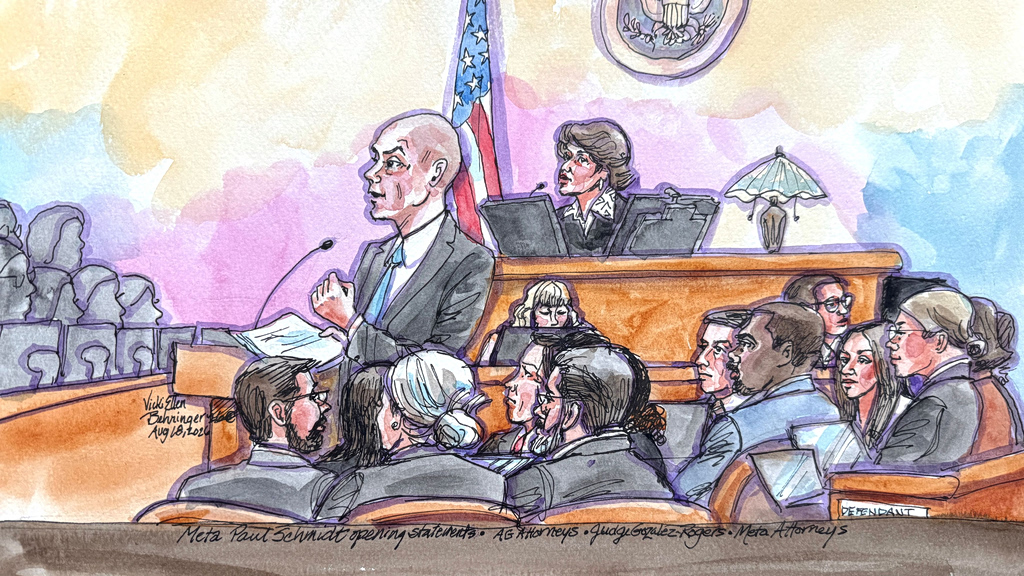
Meta’s lawyer Paul Schmidt makes opening statements before U.S. District Judge Yvonne Gonzalez Rogers as Meta faces a landmark trial in federal court over claims from 29 states, alleging it improperly captured data from minors, designed its social media platforms to addict children and misled the public about their safety in Oakland, California, U.S., August 18, 2026 in a courtroom sketch. REUTERS/Vicki Behringer. NO RESALES. NO ARCHIVES. NO USE ABC, BBC, CBS, CNBC, CNN, FOX, NBC and all the broadcast TV local Bay Area affiliates. TPX IMAGES OF THE DAY
Whistleblower alleges Meta underestimated harm
The states’ case also includes testimony from Meta whistleblower Arturo Béjar, who told the court that the company knew its platforms were harming young people.
Béjar alleged that safety and security were treated as secondary concerns and that Meta understated the prevalence of harmful experiences in its public reporting.
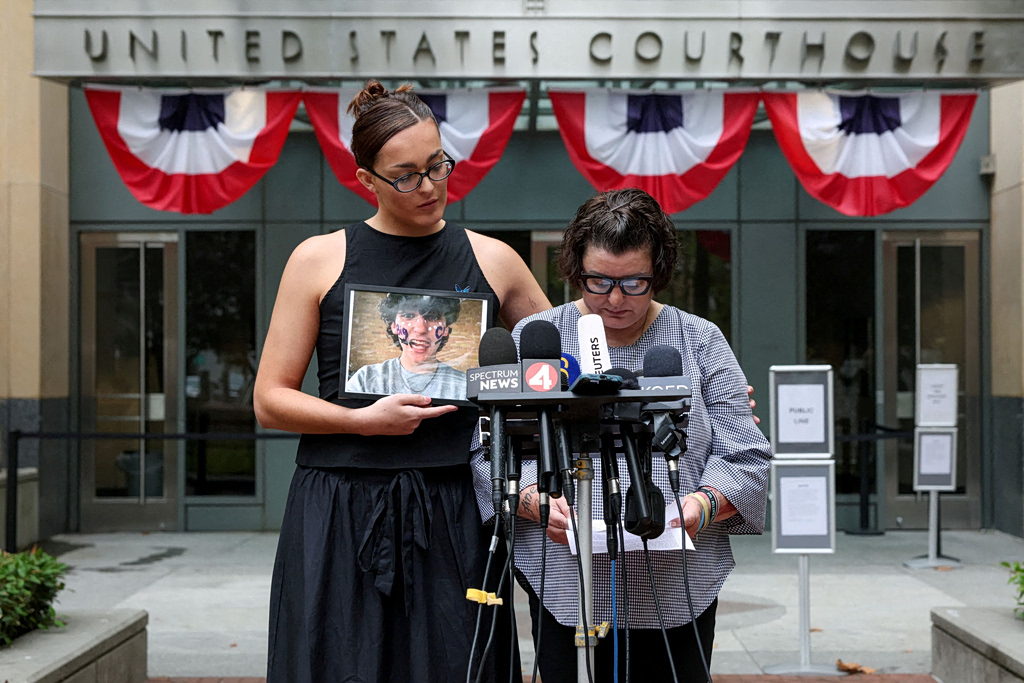
Shannon Heacock, mother of Elijah Heacock, speaks next to Lennon Torres, director of movement partnerships at the Heat Initiative, as parents of children and young adults whose deaths were allegedly related to social media use hold a press conference, while Meta faces a landmark trial in federal court over claims from 29 states that the company illegally collected and used children’s data in violation of federal law, allegedly designed its social media platforms to keep young users hooked and misled consumers about their safety, in Oakland, California, U.S., August 18, 2026. REUTERS/Manuel Orbegozo REFILE – CORRECTING SPELLING FROM “HEACOK” TO “HEACOCK”. CHANGING FROM “RELATED” TO “ALLEGEDLY RELATED”. ADDING INFORMATION “AND YOUNG ADULTS”.
A separate allegation heard by the court was that the number of teenagers exposed to graphic content was at least 100 times higher than Meta had reported.
The case is focused not only on whether young people experienced harm on Facebook and Instagram, but also on whether Meta knowingly failed to prevent children from accessing the platforms and whether features were intentionally developed to encourage prolonged use.
A wider fight over social media and children
The lawsuit was filed in 2023 by 29 states, which accuse Meta of violating laws governing children’s privacy.
The states are also seeking changes to how Facebook and Instagram operate, including restrictions on features they say encourage prolonged engagement.
Outside the courthouse, protesters and campaigners gathered, including parents who said social media had contributed to the deaths of their children.